09-06-2026 18:32
Camille MertensSur morceau de roseau immergé 0,5 - 0,7 mm de dia
08-06-2026 10:16
 Spooren Marco
I don`t have a clou about this fungus,it is not in
08-06-2026 17:00
François BartholomeeusenGood day everyone, On June 5 2026, I collected de
07-06-2026 15:10
 William Slosse
Hello everyone,On 05-06-26, I found following asco
05-06-2026 11:02
Thomas Læssøehttps://svampe.databasen.org/observations/10596691
07-06-2026 12:09
 François Freléchoux
Bonjour, Voici une brève description de ce qui m
07-06-2026 12:43
Steve ClementsBojour. This was a strange find on a stick on my
12-07-2015 00:05
 Nedim Jukic
This one from the same locality as the previous on
06-06-2026 17:44
Steve ClementsBonjour, This disco was on planed wood 3 x 1.5 cm
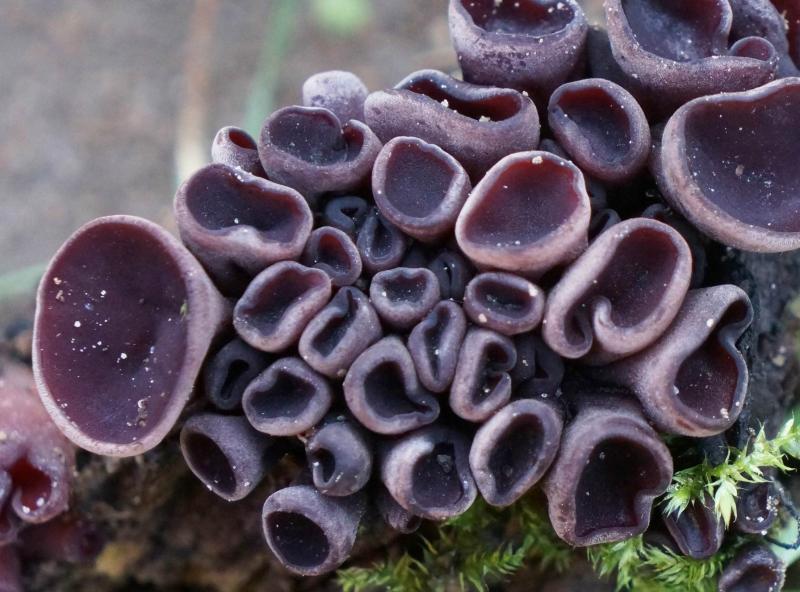
(edit) Ascocoryne cylichnium
Marek Capoun,
30-10-2021 21:43
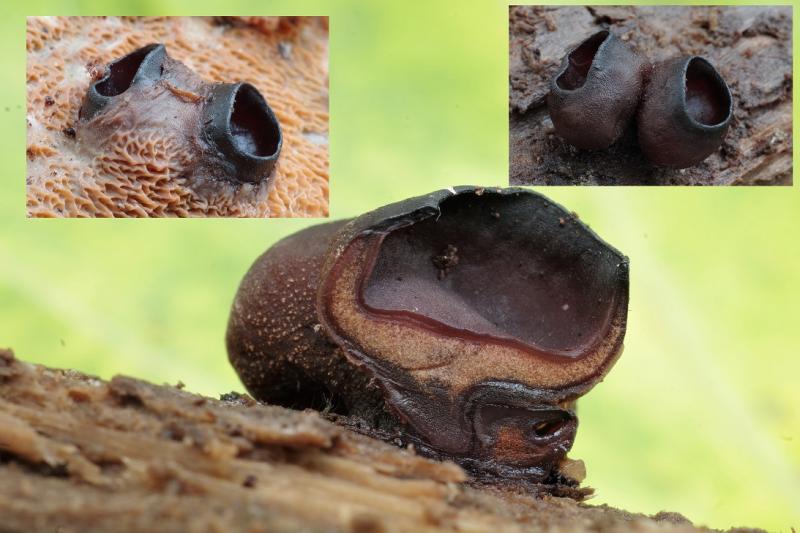
 Hello everybody, I need help with the determination of this Sclerotiniaceae (?)
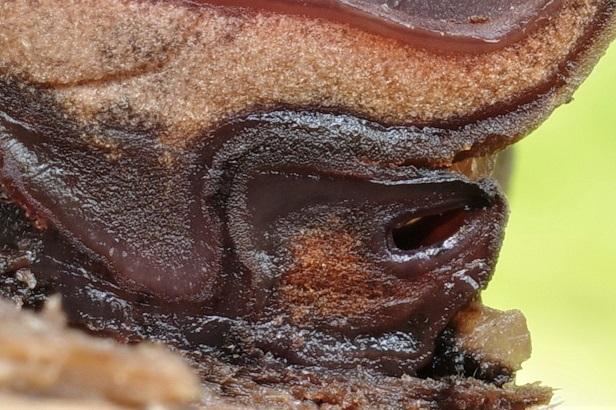
Collected 2 weeks ago in a mixed, mainly deciduous forest on the rotten trunk of a deciduous tree (probably Tilia). Cluster of 3 apos surrounded by the fruit body of Phlebia tremellosa. Apothecia max. 10 mm in diameter, shortly stipitate.
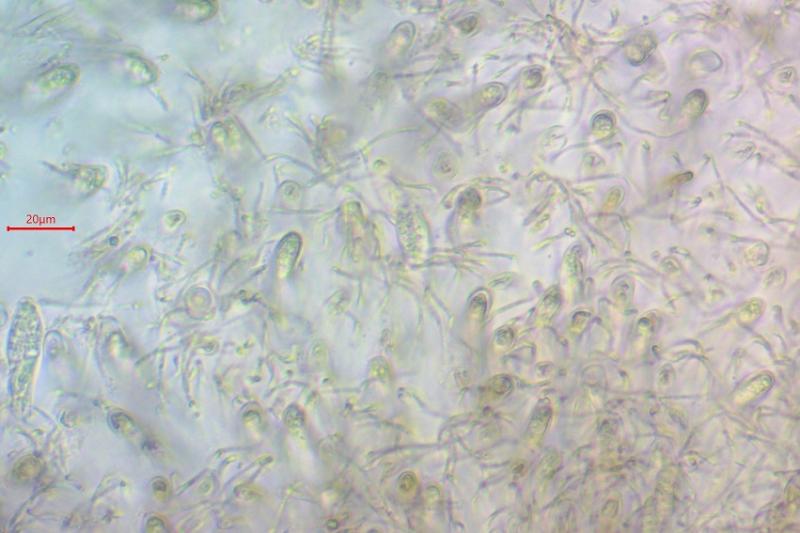
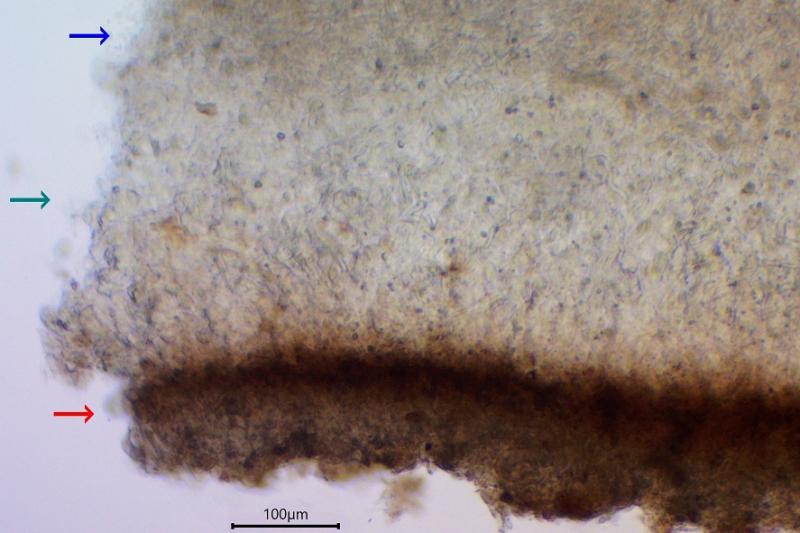
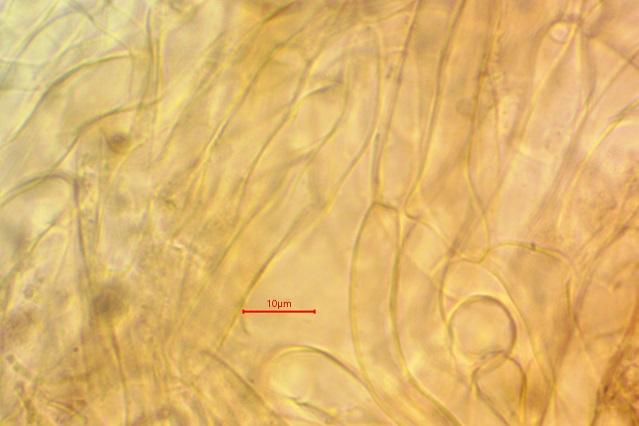
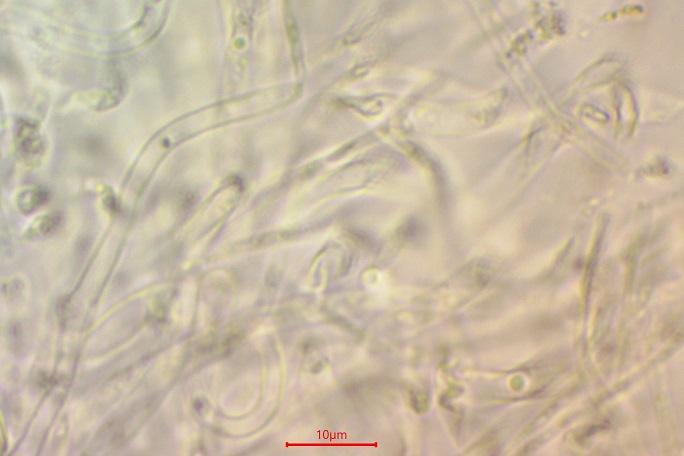
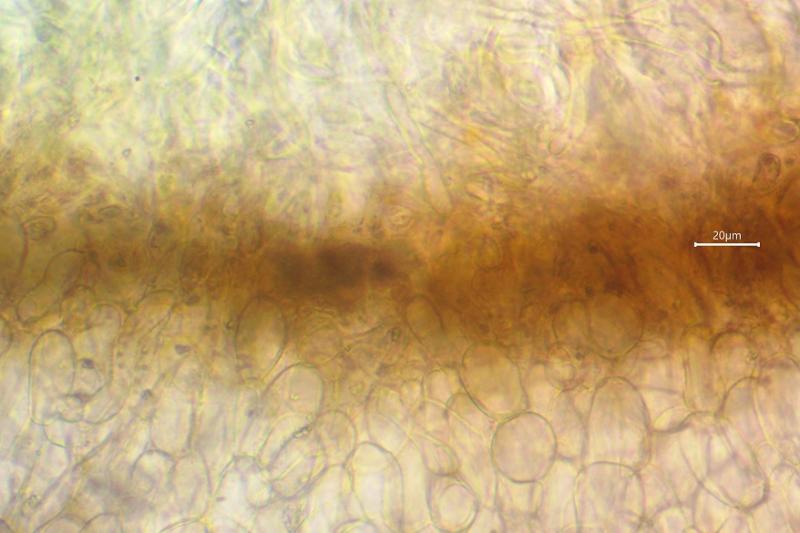
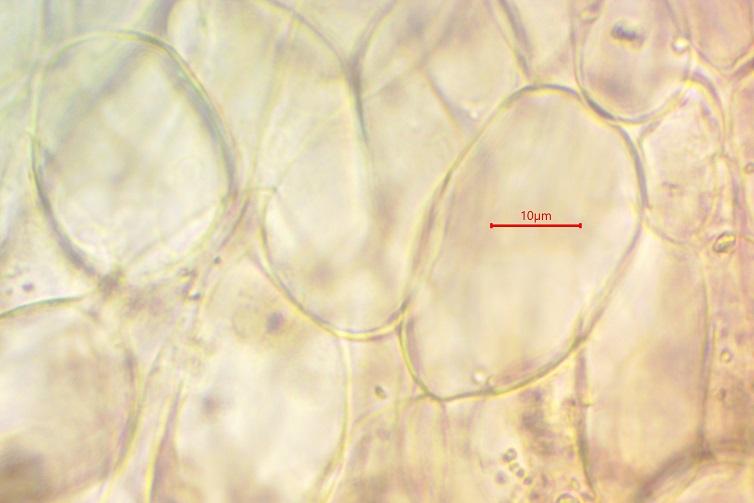
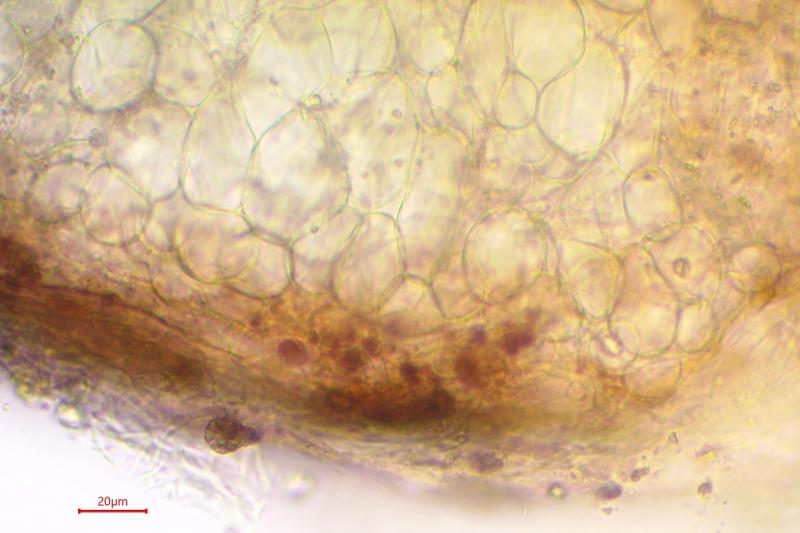
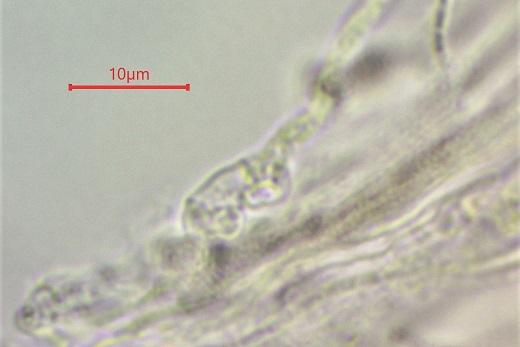
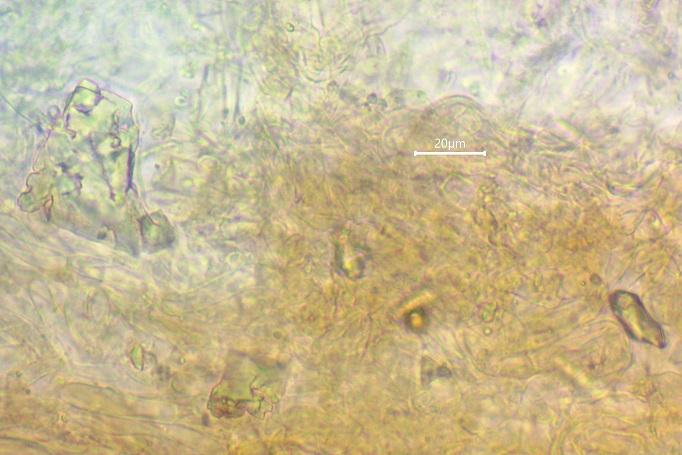
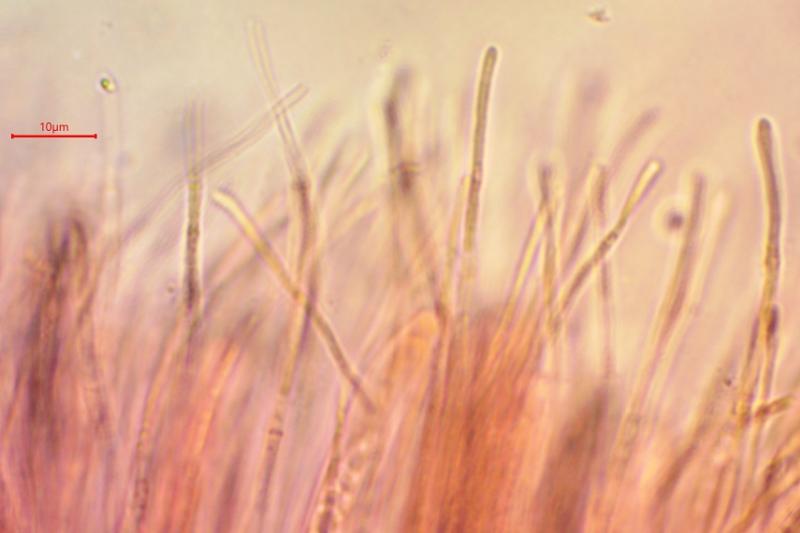
Unfortunately, attempts to make a solid and undivided cut failed. Upper medullary excipulum consists of a thick layer of textura porrecta, and a gelatinous layer is deposited below it. Ectal excipulum is formed by textura globulosa separated with a dark layer from the medulla. Some crystals and maybe some exudates (?)...
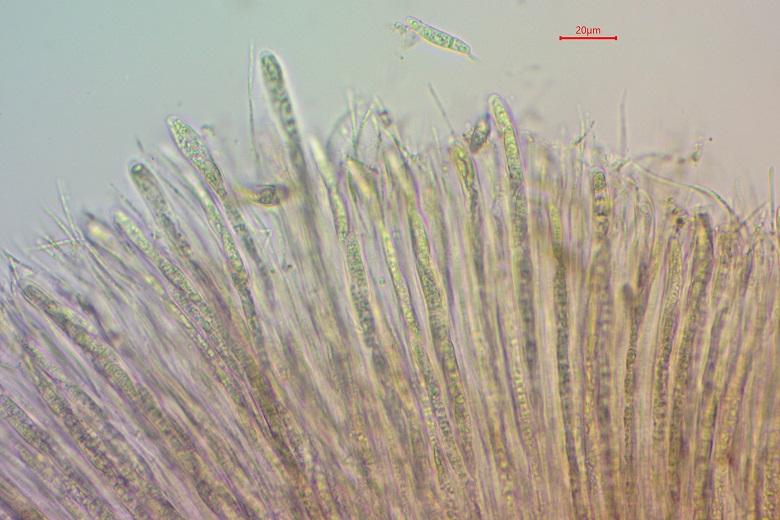
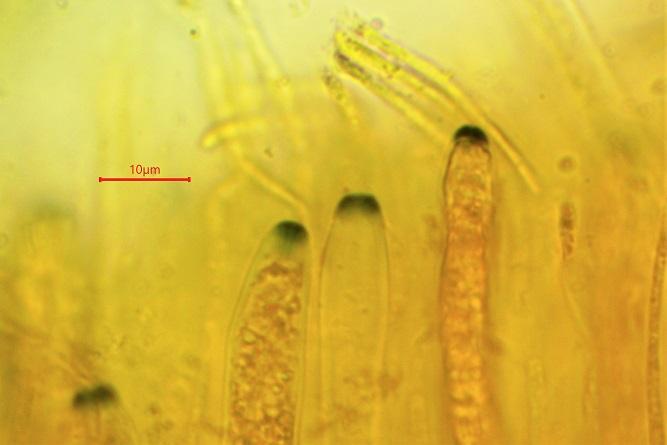
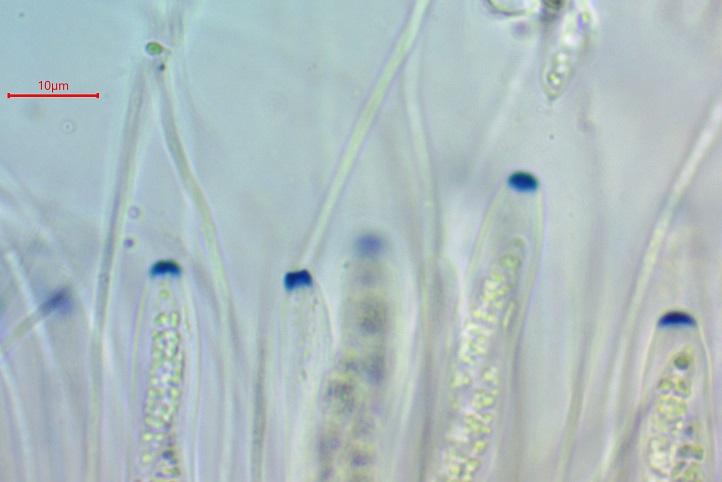
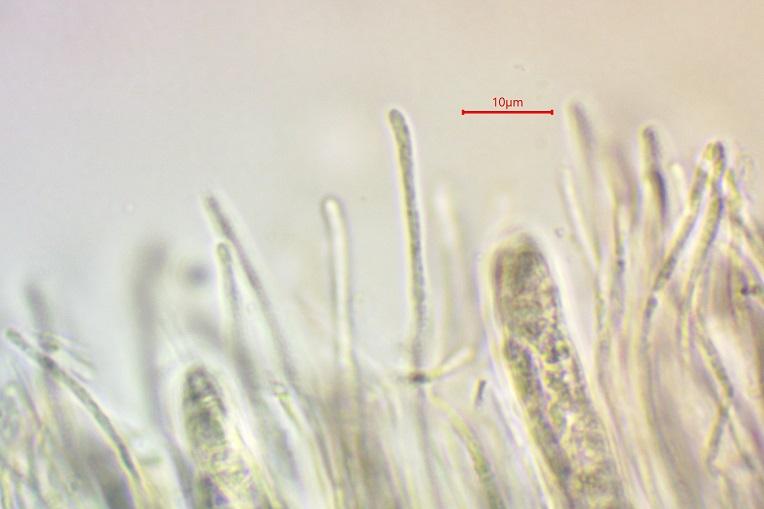
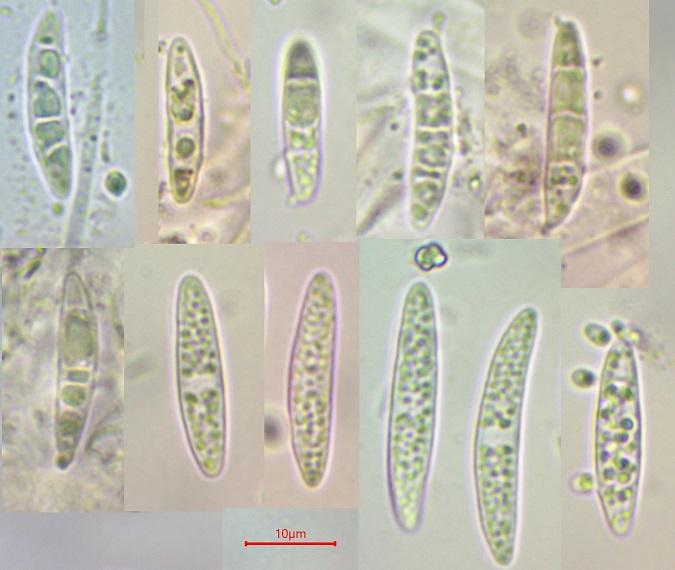
Asci with croziers, IKI +, paraphyses filiform. Ascospores cylindrical, sometimes unequilateral, maybe a little semiallantoid, 23.9 × 5 µm, Qe = 4.8; multiguttulate, 0-3 septate, produced conidia.
Thank you for your answers.
Marek
Hans-Otto Baral,
30-10-2021 21:56

Re : Sclerotiniaceae?
This is the frequent Ascocoryne cylichnium. If ypou want to give me the collection data, I would include your record in our study of the genus.
The excipular structure is very typical. And yes, there are crystals in the medulla.
Marek Capoun,
30-10-2021 23:49
Re : Sclerotiniaceae?
:-D
I didn't realize this trivial possibility. Such chubby-shaped fruit bodies to A. cylichnium don't fit me at all.
Thanks.
Collection data:
Czech Republic, South Moravia, 11.5 km NNW of Znojmo, 2.2 km S of Bojanovice, near "Kravecká cesta", 48.9492842°N, 15.9898103°E, alt. 340 m, dead trunk of deciduous tree (?Tilia), assoc. Phlebia tremellosa, 15. Oct. 2021, leg. Markéta Capounová. The herbarium number is not yet, if necessary, I will send later.
M.
I didn't realize this trivial possibility. Such chubby-shaped fruit bodies to A. cylichnium don't fit me at all.
Thanks.
Collection data:
Czech Republic, South Moravia, 11.5 km NNW of Znojmo, 2.2 km S of Bojanovice, near "Kravecká cesta", 48.9492842°N, 15.9898103°E, alt. 340 m, dead trunk of deciduous tree (?Tilia), assoc. Phlebia tremellosa, 15. Oct. 2021, leg. Markéta Capounová. The herbarium number is not yet, if necessary, I will send later.
M.
Hans-Otto Baral,
31-10-2021 06:44
Re : Sclerotiniaceae?
Thanks, splendid! When they are young they may look so dark and cupshaped, for instance in this sample phptpgraphed by Torsten Richter.
B.t.w, the amyloid ring is different from the Sclerotiniaceae-type.
If you succeed to photograph a cross section of the wood at about 20x I could perhaps say if it is Tilia, which would be a new substrate in my list.
Yes, a herbarium number would be useful.