
21-05-2026 17:01
Pierre RepellinBonjour à toutes et à tous,Je recherche l'articl
20-05-2026 21:49
Margot en Geert VullingsWe found this Lachnum on Juncus stems mown last ye
20-05-2026 20:08
 Andreas Millinger
Good evening,another quite distinctive find from M
20-05-2026 12:57
 Ingo Ibelshäuser
Hello everybody, on decayed hardwood e.g. Quercus
20-05-2026 17:47
Margot en Geert VullingsWe found this Mollisia on dead Juncus stems mown l
22-04-2026 20:54
 Enrique Rubio
Hi to everybody.This Pyrenopeziza grew in moist le

19-05-2026 12:55
 Hardware Tony
After checking Gminder and Otto's library I cannot
 Hello,
On pieces of acorn cap buried in the ground were these cups. Fb about 4mm. Apothecium brown, very fibrillose all over. Not a real (longer) stem, but stem-like attached to the substrate.
Edge curled inwards. Hymenium black. I had everything ready to look through microscope: unfortunatly it broke down .. again.
I have no idea of what to think, thanks for your help!
Maria
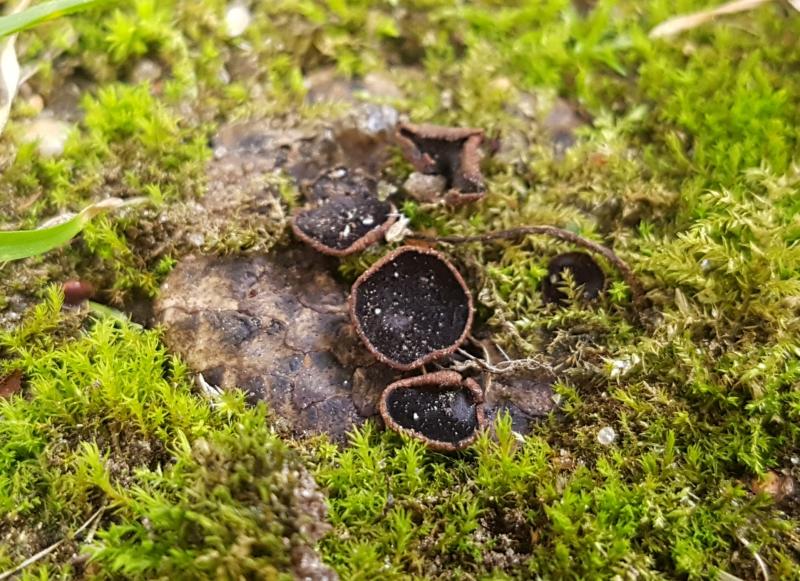
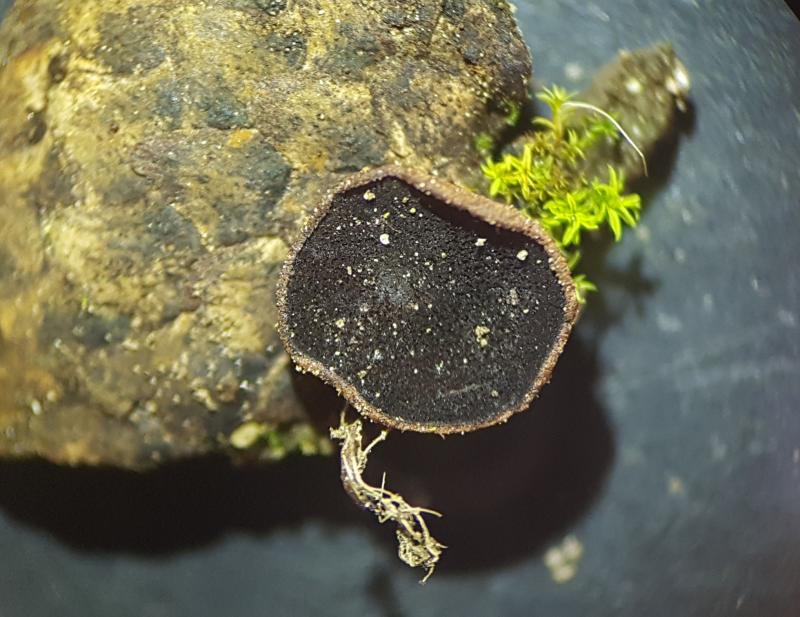
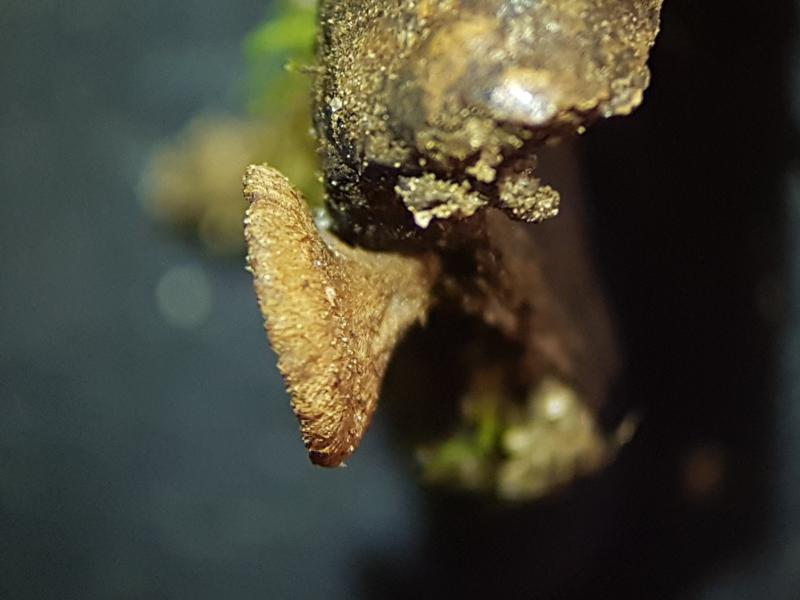
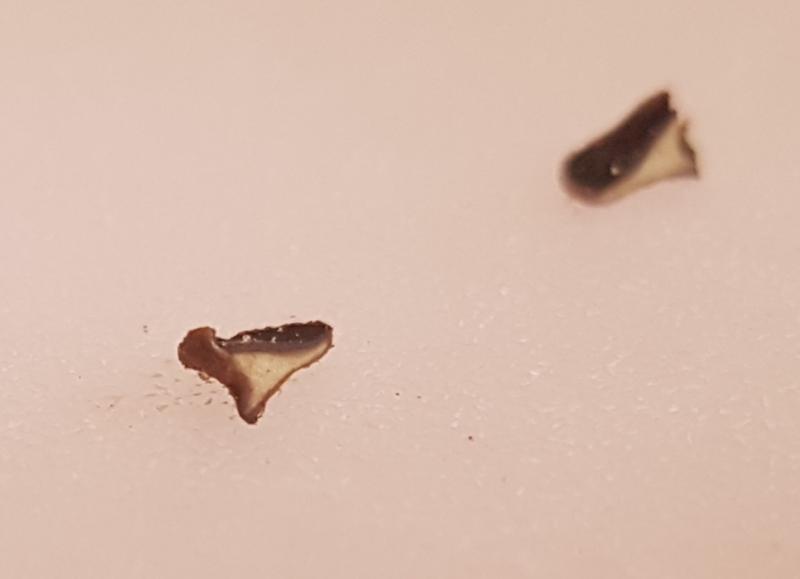

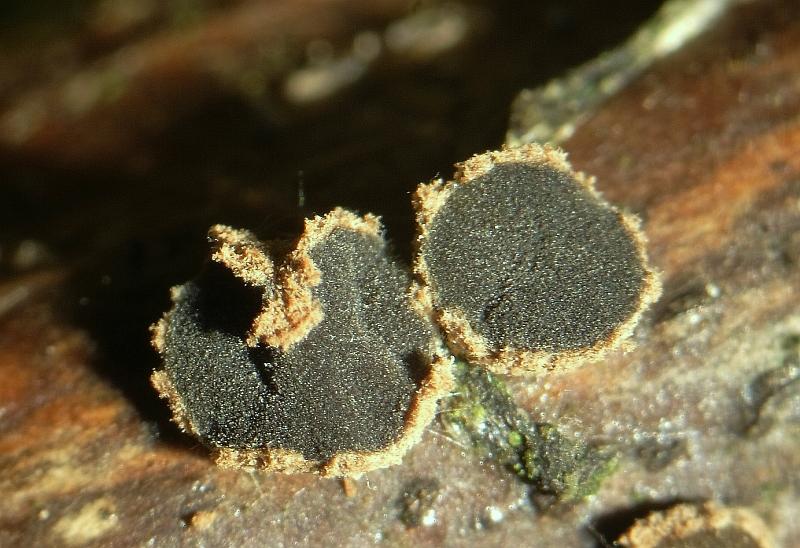
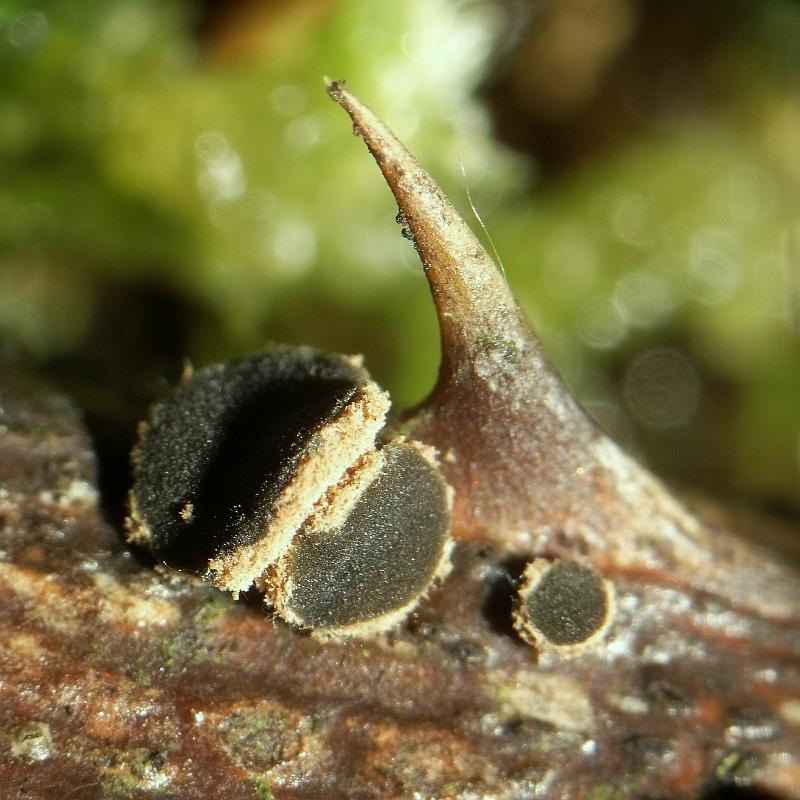
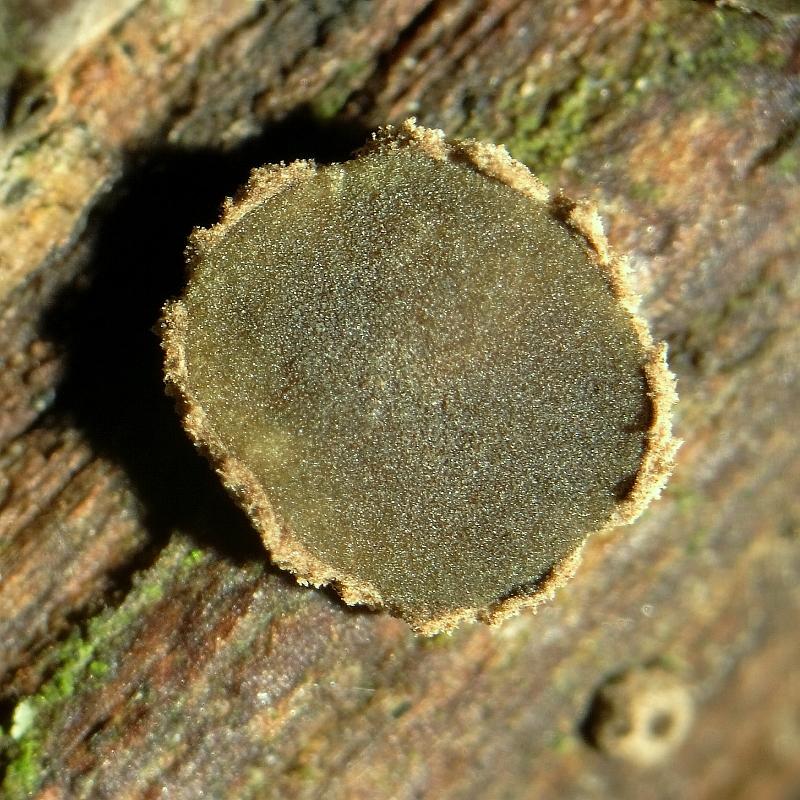
Thanks again!
Maria

based on macro photo, I would consider Rutstroemia echinophila too. It can have rather dark hymenium sometimes (drying?).
Viktorie
Due to the strongly hairy external space, I would be prone to Peter's opinions. Firmly mature velutarina have hymenium colors of almost black. I have such a collection in my atlas:
https://grzyby-pk.pl/gat_v/gat_velutarina_rufo_olivacea.php
I also have a Rutstroemia Echinophila collection from Quercus, it looks completely different:
https://grzyby-pk.pl/gat_r/gat_rutstroemia_echinophila_quercus.php
Black Hymenium also has Catinella Olivacea but it looks different.
Hymenium Neodasyscypha cerina also darkens with age. I commonly occurs in the oak. I met them on wood but it's possible that it also grows on acorns?
You can compare:
https://grzyby-pk.pl/gat_n/gat_neodasyscypha_cerina.php
regards
Mirek
Maria
It was checked under mic on Sunday and to my big surprise it shows all the features of Rutstroemia echinophila like Viktorie suggested! But just to be sure I would like your second opinion very much.
Spores 17-21,5 x 5-5,5. Septated and with guttules. Some with conidia. Paraphyses with enlarged apex, filled dark brown. Asci 8-spored, 110-115 x 12-13.
What draw attention was the fact that quite a lot of the spores became brown in H2O.
Searching for R. echinophila I did see some pictures where it looked the same.
What would be your opinion?
Thanks!!! Maria
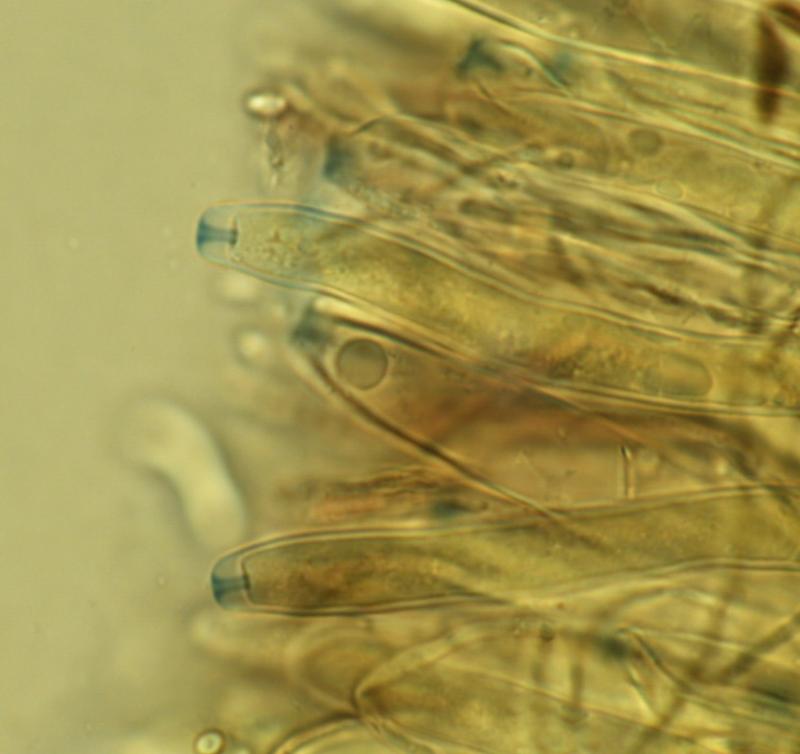
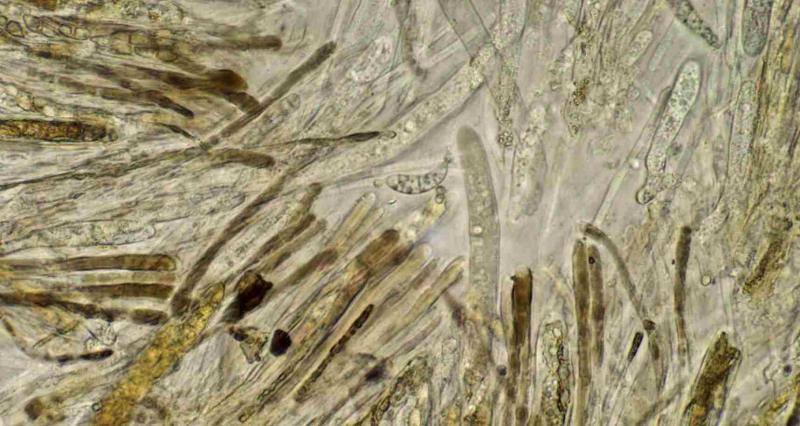
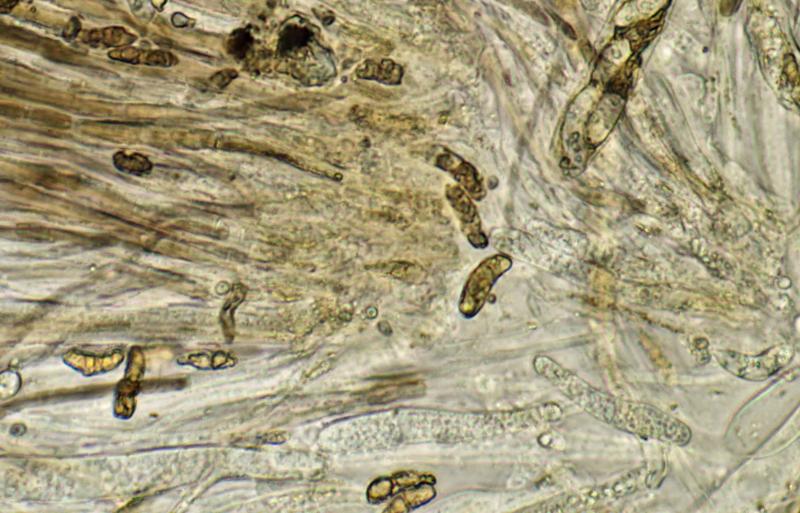
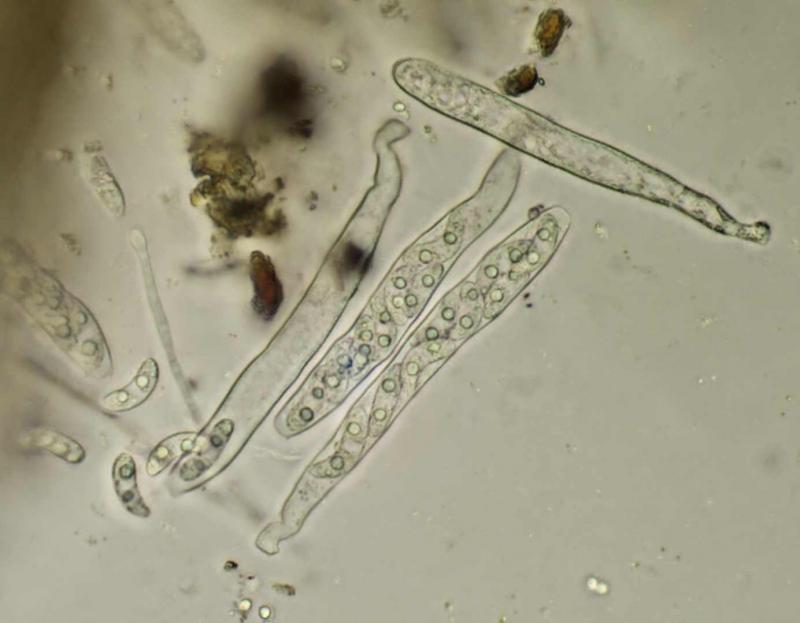
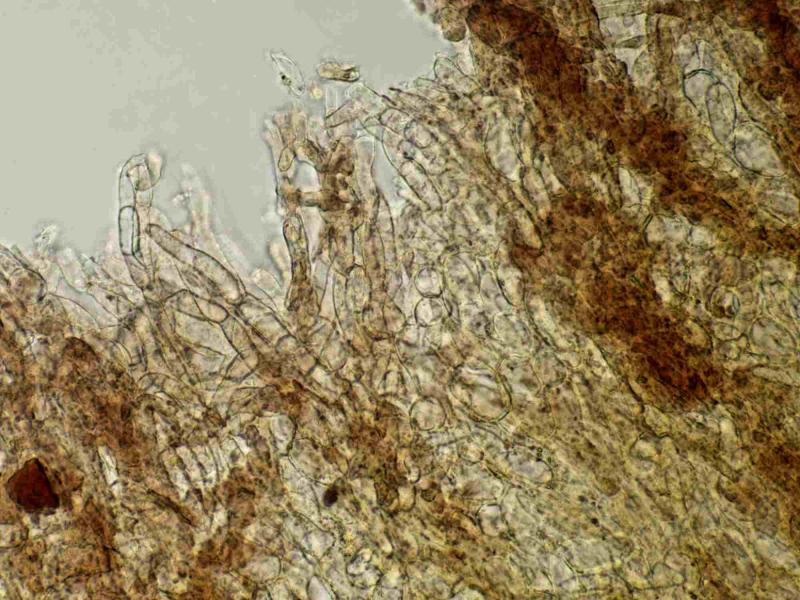
And this is beautiful in Ascomycota, which still surprise us :)
I congratulate the interesting collection and Viktorie for such an accurate designation.
Without watching microscopic features, I would never think that this species belongs to Rutstroemia.
Thanks to you, we still learn something new :)
regards
Mirek
Thank you for your reaction! I also thank all of you for helping me with this strange but educational puzzle hahaha!
And agree: they keep surprising and challenging us: and that's what makes it never dull.
We keep on learning, with help from people like Peter, Viktorie, you and all the others.
Maria