
09-06-2026 18:32
Camille MertensSur morceau de roseau immergé 0,5 - 0,7 mm de dia
08-06-2026 10:16
 Spooren Marco
I don`t have a clou about this fungus,it is not in
08-06-2026 17:00
François BartholomeeusenGood day everyone, On June 5 2026, I collected de
07-06-2026 15:10
 William Slosse
Hello everyone,On 05-06-26, I found following asco
05-06-2026 11:02
Thomas Læssøehttps://svampe.databasen.org/observations/10596691
07-06-2026 12:09
 François Freléchoux
Bonjour, Voici une brève description de ce qui m
07-06-2026 12:43
Steve ClementsBojour. This was a strange find on a stick on my
12-07-2015 00:05
 Nedim Jukic
This one from the same locality as the previous on
06-06-2026 17:44
Steve ClementsBonjour, This disco was on planed wood 3 x 1.5 cm
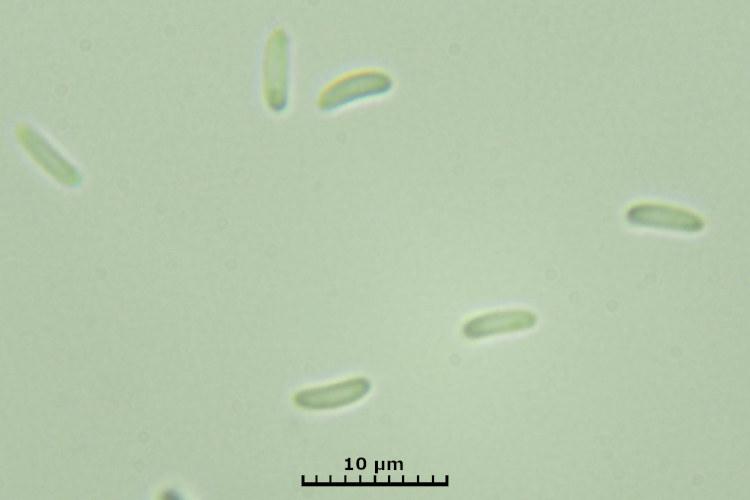
Spore measurements:
(14.3) 15 - 17.9 × (2.9) 3.2 - 3.6 (3.7) µm
Q = (4.2) 4.7 - 5.36 (5.4) ; N = 10
Me = 16.7 × 3.4 µm ; Qe = 5
I think this is Valsa or something like that, but further i can't tell. Maybe someone knows the species?
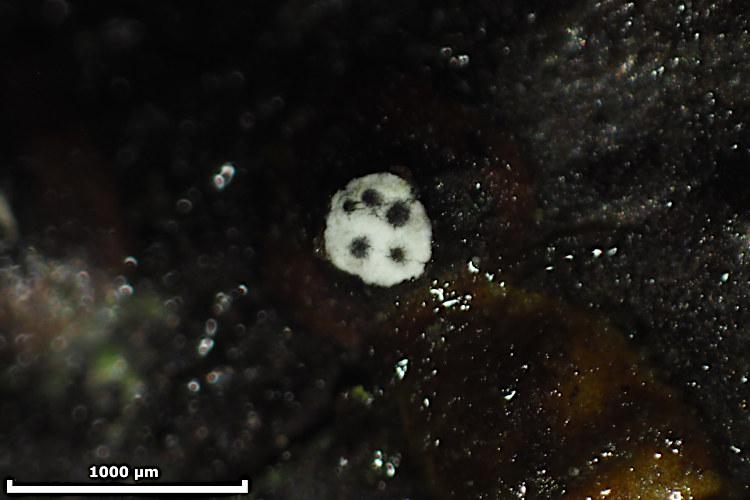
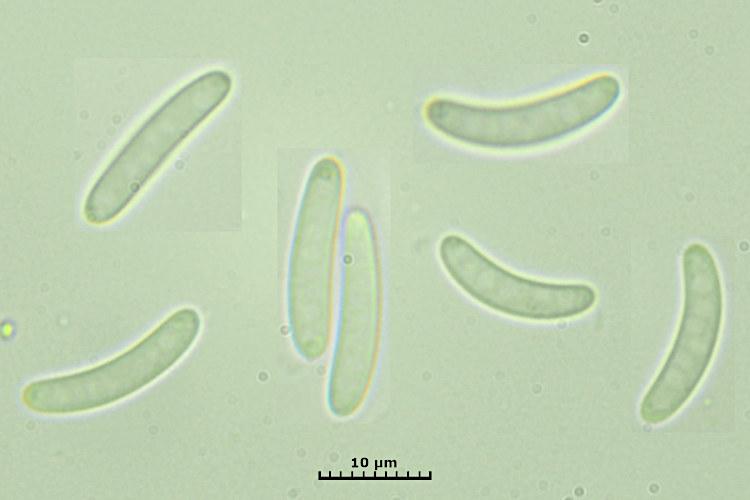
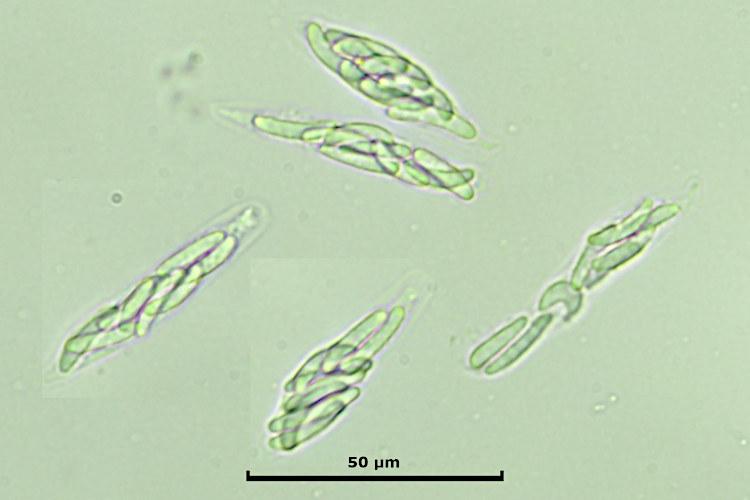

Best, Lothar
The link leads to a paper with 4 Leucostoma-species, L. niveum on Salicaceae (key), exactly on Salix (description).
Populus and Salix are closely related and share a lot of fungi.
If the spores are too large, this is another point. Somebody else has to comment this.
Best, Lothar
Are you sure it couldn't be Sorbus aucuparia? What were the dimensions of the Ascii?
Best, Pavol
This fungus does not look like Leucostoma niveum, although spore dimensions fit well. Plus, L. niveum has also 4-spored asci, not only 8-spored. And you are not sure the host is Salix.
Most probably, the host belongs to any Rosaceae and the fungus may be Leucostoma persoonii (or Cytospora leucostoma now).
Best regards,
Vera
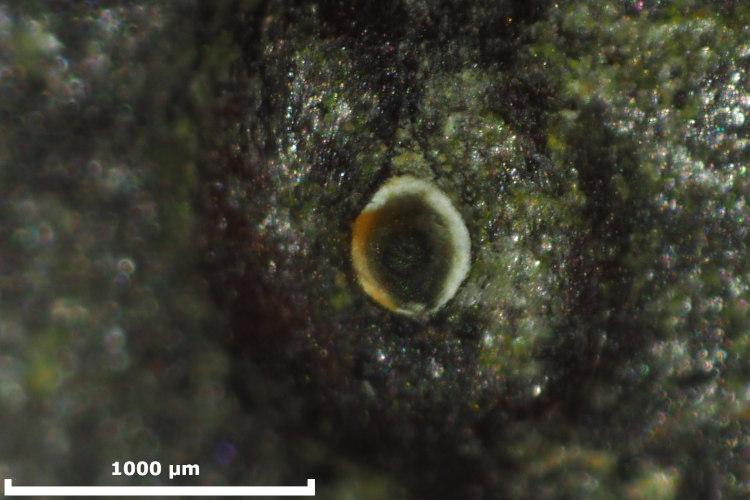
Try to compare with Leucostoma massarianum
Best, Pavol

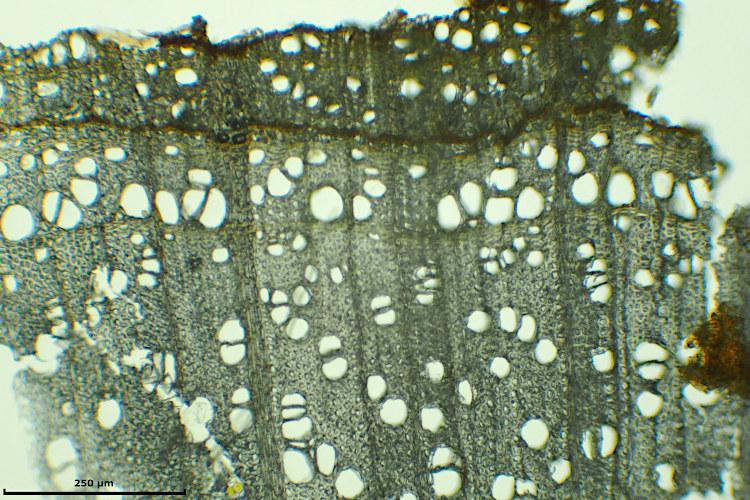
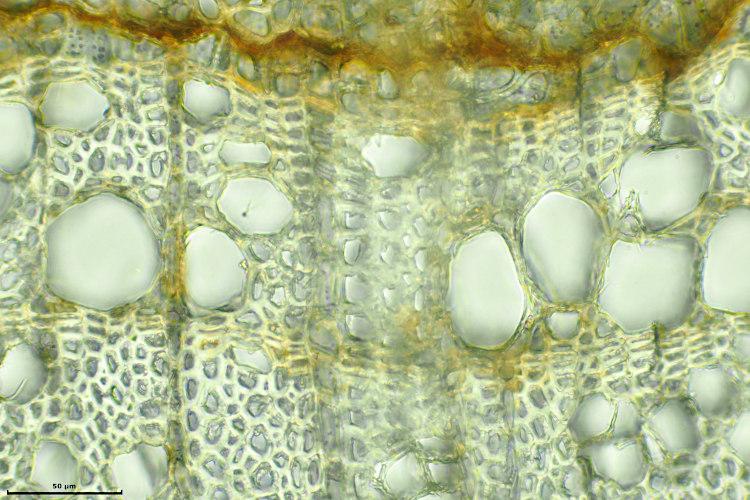
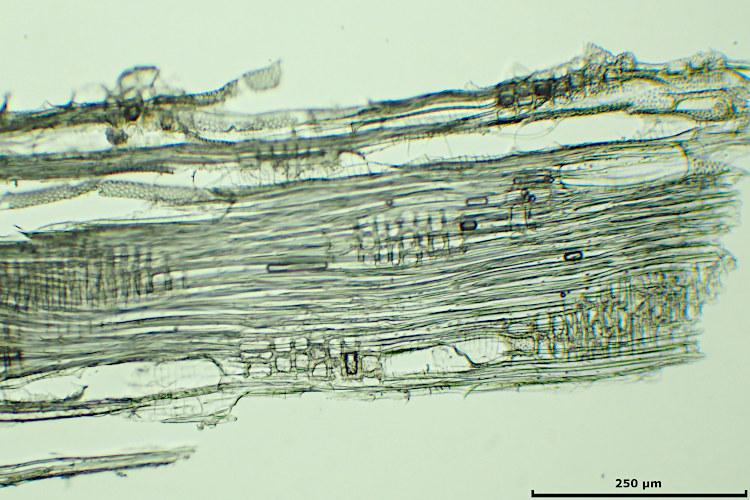
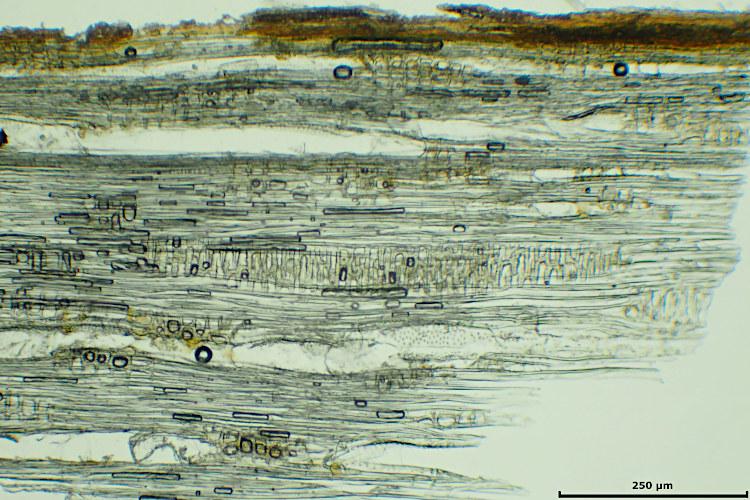
I tried to ID your wood with the key here: http://www.woodanatomy.ch/ident_key.html (if I interpret it correctly: wood semi-ring-porous wood, radial pore clusters present, rays bi- or triseriate, 7-10(-20?) cells long, maybe heterogenous rays?, simple perforation plates?, spiral thickenings present).
Some good matches seem to be Prunus padus or P. mahaleb (mutually indistinguishable, http://www.woodanatomy.ch/species.php?code=PNPA), maybe Frangula (http://www.woodanatomy.ch/species.php?code=FRAL), maybe Ligustrum (http://www.woodanatomy.ch/species.php?code=LGVU). Others like Viburnum, Sambucus or Sorbus aucuparia seem to me less probably, Sorbus is rather diffuse-porous, but better check them too, I'm not that much experienced in wood anatomy.
Best wishes,
Viktorie