09-06-2026 18:32
Camille MertensSur morceau de roseau immergé 0,5 - 0,7 mm de dia
10-06-2026 21:16
 François Freléchoux
Bonsoir,Le dernier du jour, en attendant votre avi
10-06-2026 21:07
François Freléchoux
Toutes les tiges de gentianes jaunes de l'an passÃ
10-06-2026 13:41
François Freléchoux
Bonjour à nouveau, Voici une trouvaille d'hier.
10-06-2026 11:53
Steve ClementsBonjour, This disco is abundant on dead stems of
10-06-2026 12:54
Steve ClementsBonjour encore, Pouvez-vous m'aider, s'il vous pl
10-06-2026 10:45
François Freléchoux
Bonjour à nouveau, Encore une détermination qui
08-06-2026 10:16
 Spooren Marco
I don`t have a clou about this fungus,it is not in
10-06-2026 09:24
François Freléchoux
Bonjour, J'imagine que cette détermination ne do
08-06-2026 17:00
François BartholomeeusenGood day everyone, On June 5 2026, I collected de
Podospora anserina/pauciseta
Joop van der Lee,
30-12-2020 11:38
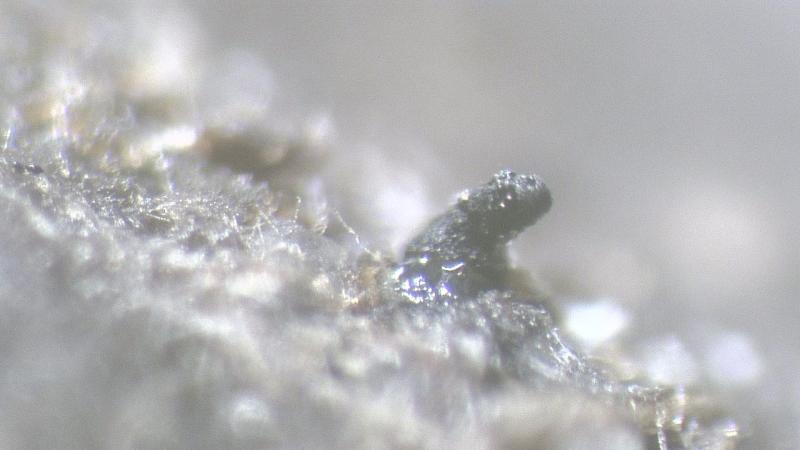
 Found on cow dung.
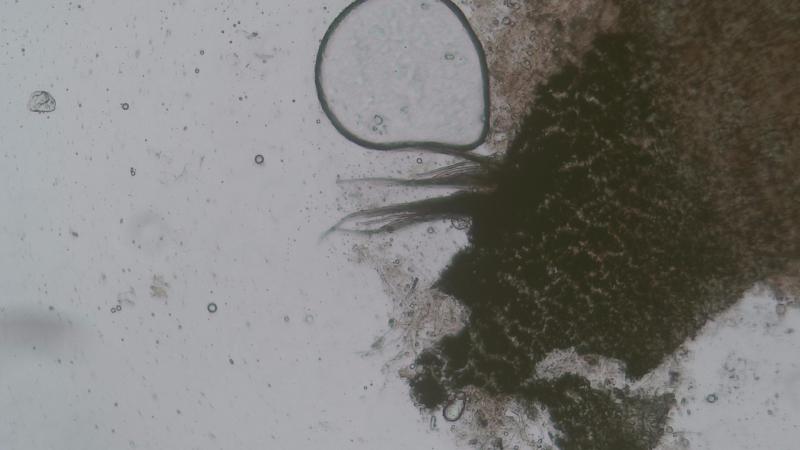
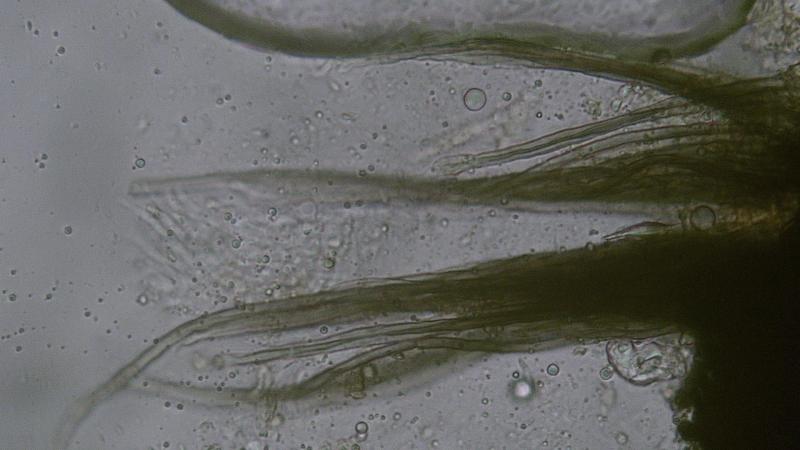
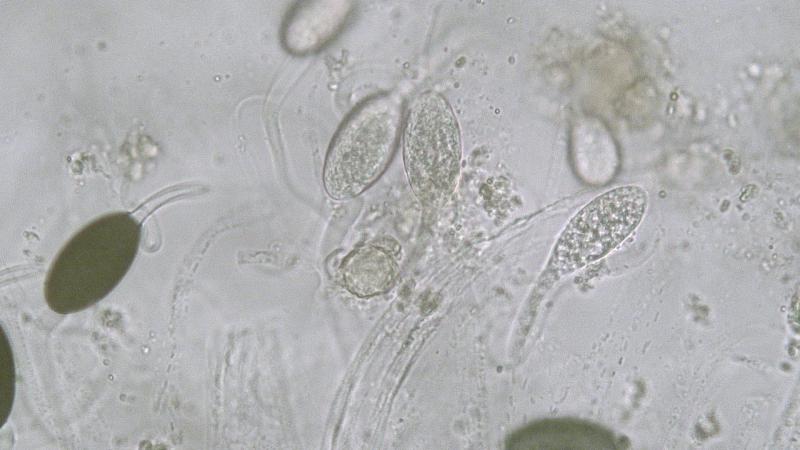
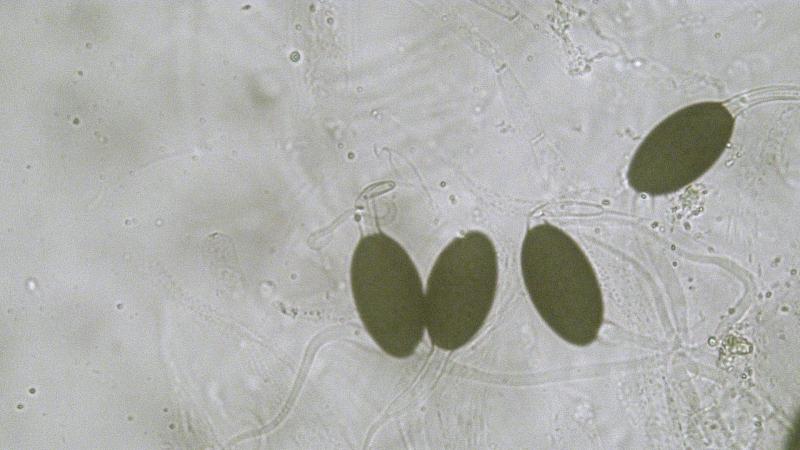
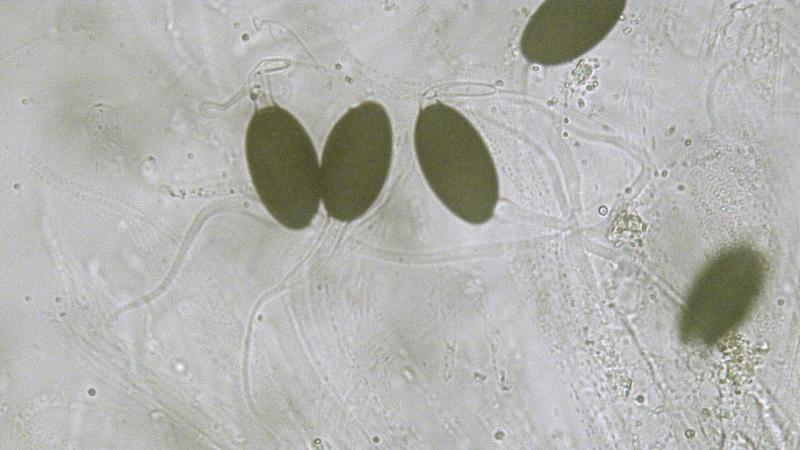
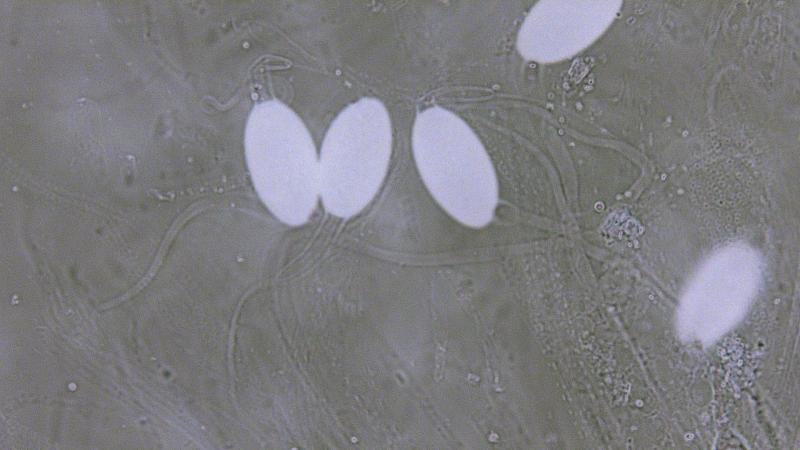
Yesterday I managed to make some photos of P. anserina especially from the pedicel and connected caudae. This is very rare because the pedicel mostly collaps and the caudae easily disconnect from their connection point or they break and will therefore not be (completely)visible.
Mirze & Cain did not mention the measurements of the caudae but they happen to be much longer than those of P. pauceiseta as described by Lundqvist.
Based on the circular shaped connection of the lateral cauda on the pedicel and the view of the other caudae I assume that all caudae are cylindrical.
The pedicel is also much longer than the ones from P. pauciseta.
Measured data:
Pedicel: 24.6-27.2x 5.0-6.0 um (P. pauciseta 16-18x3.5-5 um)
Upper cauda: 115-159x3.8-4.2 um (P. pauciseta 65-90x8-8.5x6.7 um)
Secondary cauda at the end of the pedicel 43.0x2.0 (P. pauciseta 75x3-5 um)
Two lateral caudae connected to the pedicel 48x3.3 um (P. pauciseta 3-4 caudae 25x2-3 um)
All caudae do end in some sort of a tail.
Spores: 35-36.7x19-19.5 um (P. pauciseta 35-40x18-19 um)
The neck of the perithecium is completely covered with whall thickenings and tuffs of septated hyaline hairs but sometimes only with some single hairs or no hairs at all.
I also did find an interesting article (released the 25th of november 2020) about the namechange for P. anserina in Triangularia anserina that can be found on mycokeys. pensoft.net/article/55968/, I can also provide it as a full PDF file.
Greetings,
Joop