11-05-2026 12:32
 Bernard CLESSE
Pourriez-vous m'aider à identifier cette héloti
13-05-2026 15:26
 François Freléchoux
Bonjour,Voici une récolte faite il y a quelques j
12-05-2026 15:41
 Nicolas VAN VOOREN
Dear Ascolovers, especially interested in Pezizale
13-05-2026 12:05
 Thierry Blondelle
Bonjour à tous,J'aimerais avoir confirmation de c
10-05-2026 23:17
 Andreas Gminder
Hello,today we found in a moist steep decidous for
28-04-2026 20:07
 Lothar Krieglsteiner
... on twig in the air at standing Ceratonia siliq
27-04-2026 20:52
Lothar Krieglsteiner
Found on hanging tiwg of Olea europaea in dried-ou
11-05-2026 20:22
Lothar Krieglsteiner
on attached twig of standing Ficus caricaquite uns
29-04-2026 10:44
Lothar Krieglsteiner
growing at moist, drying-out soil at the side of a
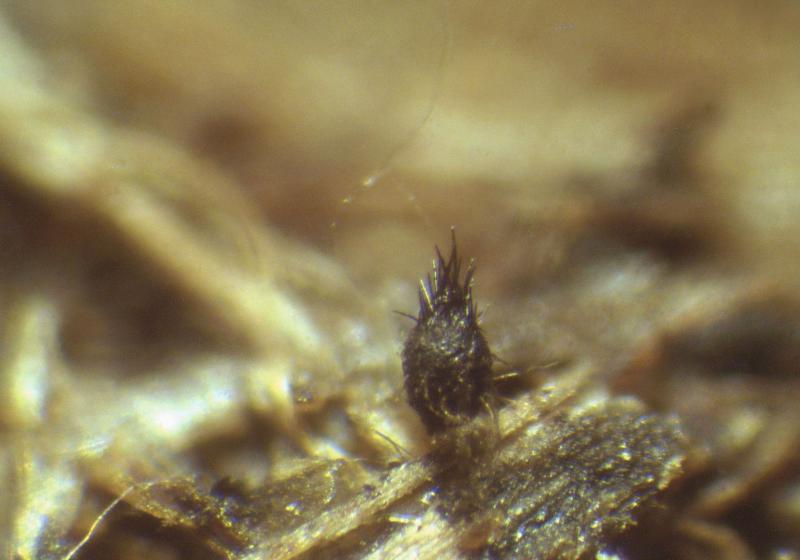
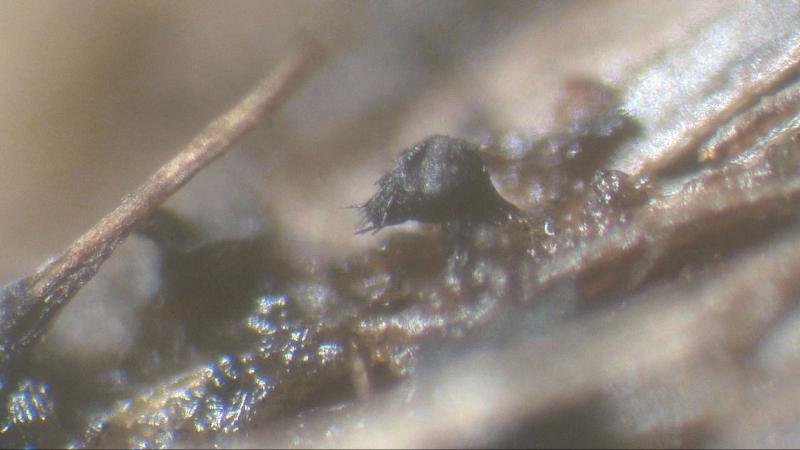
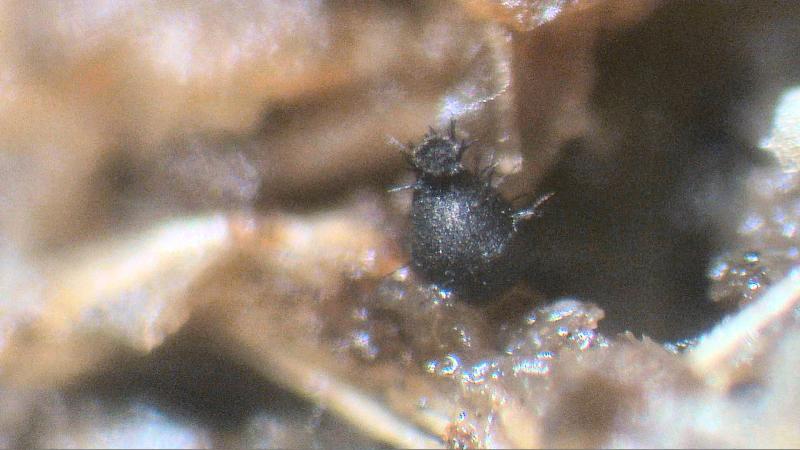
 Pseudothecia are deeply emmersed with only the neck and top of the pseudothecia visible, for a total view one has to carefully dig them out of the dung.
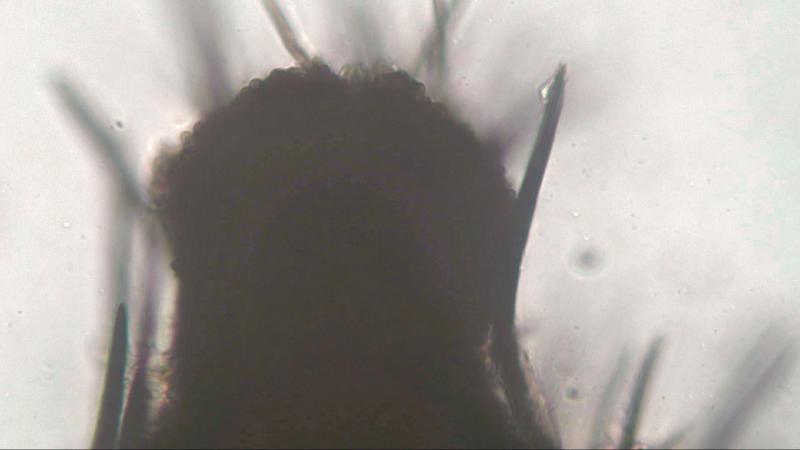
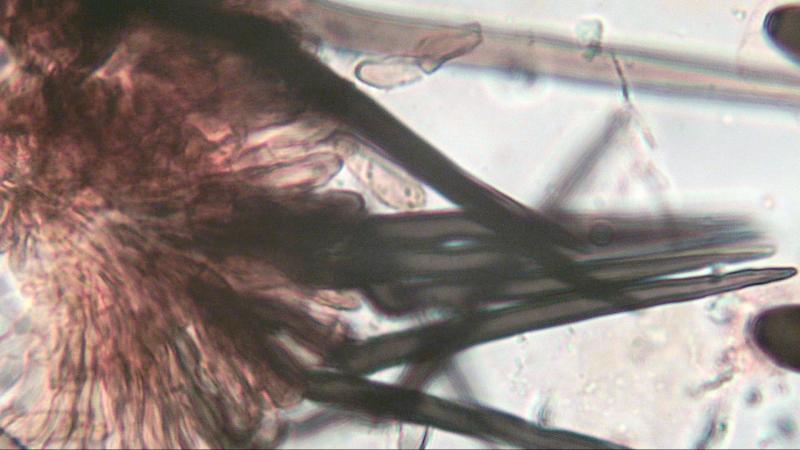
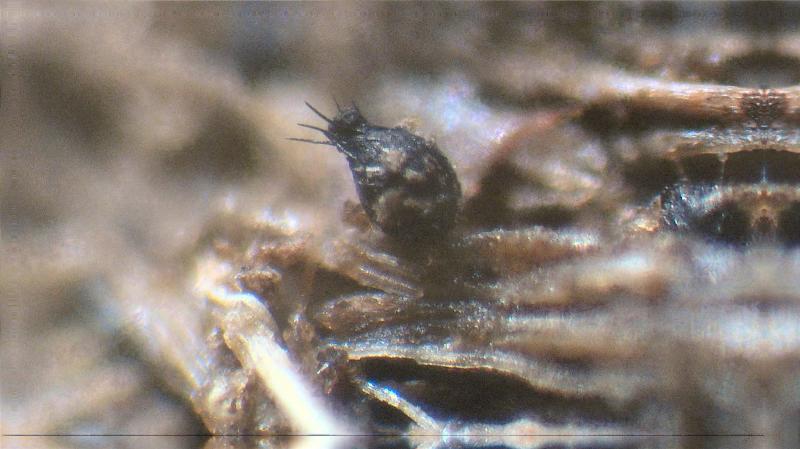
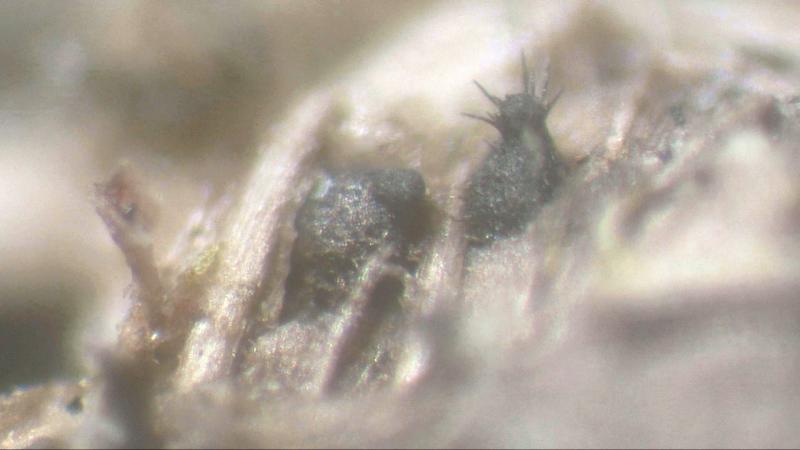
At fist the body is conical (190-259x146-190 um) with a stunted neck and a top covered with long dark brown upwards growing setae (photo-1 & 2). The upper part of the body is mostly covered with small, dark brown, buckled setae.
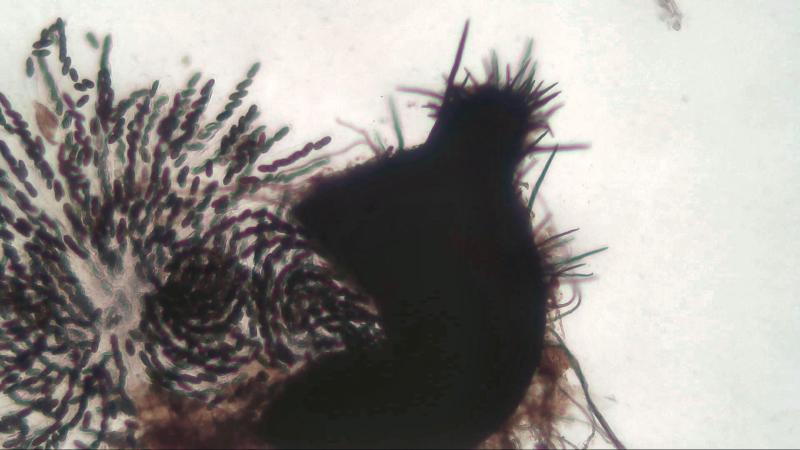
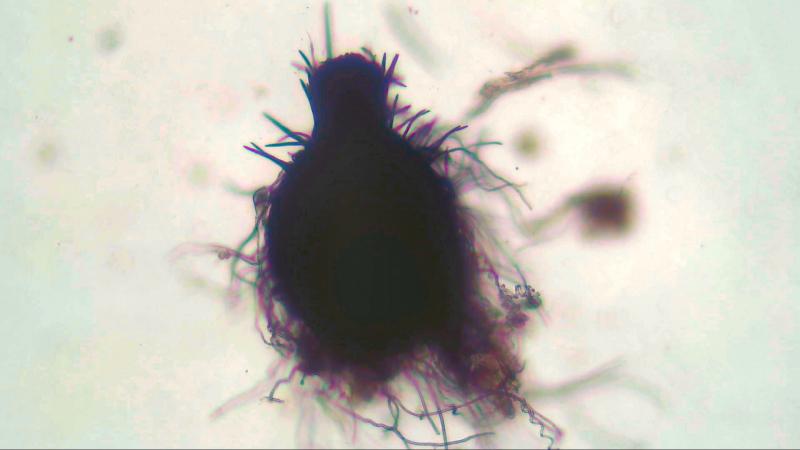
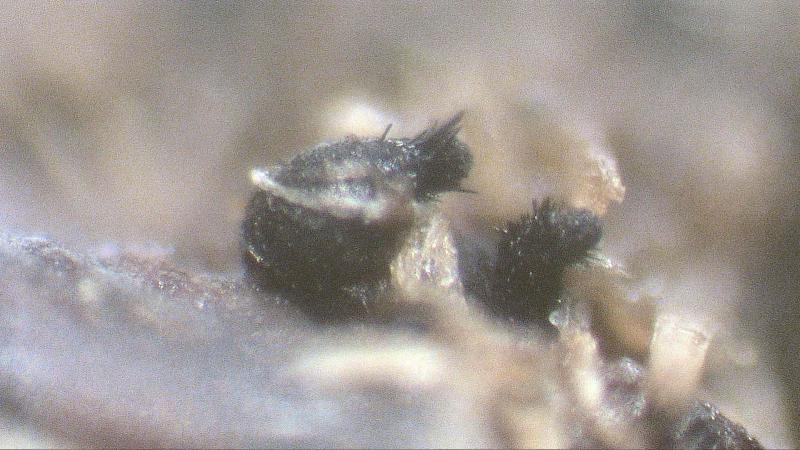
Eventhough we cannot see them because the body of the pseudothecia is emmersed, setae also occur on the body itself. (photo-3).
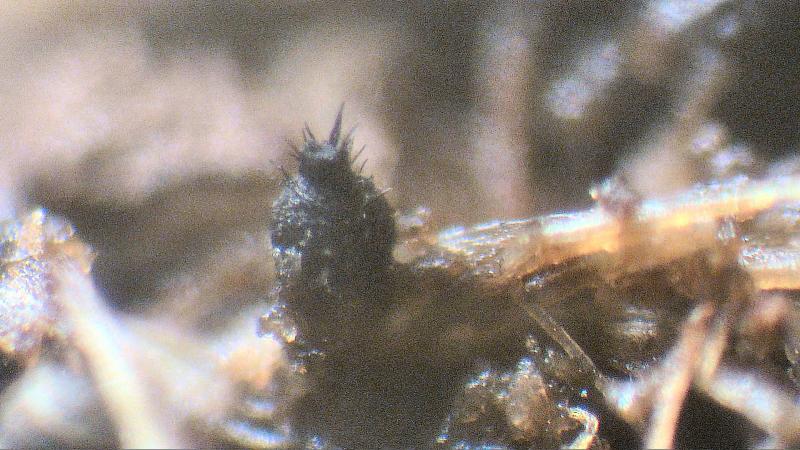
When the body becomes bulbous it measures (305-385x250-305 um) the mature neck transforms into a diabolo like structure forcing the setea to grow sideways (photo-4).
In 2D the top of the cone looks like an isosceles trapezium with the long basis on top measuring 88-102 um forming, the short basis measures (82-86 um), the bottom will have the opposite shape with the same measurements. Total length of the neck is 60-63 um (photo-5), the neck in between measures 20-23x82-86 um.
On the plateau uniseptated hyphae will arise (27-28.5x3.5-3.75 um) and short setae (30-40x2.5-3.5 um) will form a collar just below the top accompanied by remaining long setae. (photo-6)
When observing (photo-7) we are looking at a visual illusion because of the angle of view. The plateau is not spherical but flat surrounded by a ridge. (photo-8 & 9). The diameter for the plateau of photo-9 = 88.6 um.
Also bald pseudothecium have been seen with a few setae left on the body. (photo 10 & 11)
Note:
von Niessl already observed the collar of short setae in 1875 (D. moravica)
Joop