
11-05-2026 12:32
 Bernard CLESSE
Pourriez-vous m'aider à identifier cette héloti
13-05-2026 15:26
 François Freléchoux
Bonjour,Voici une récolte faite il y a quelques j
12-05-2026 15:41
 Nicolas VAN VOOREN
Dear Ascolovers, especially interested in Pezizale
13-05-2026 12:05
 Thierry Blondelle
Bonjour à tous,J'aimerais avoir confirmation de c
10-05-2026 23:17
 Andreas Gminder
Hello,today we found in a moist steep decidous for
28-04-2026 20:07
 Lothar Krieglsteiner
... on twig in the air at standing Ceratonia siliq
27-04-2026 20:52
Lothar Krieglsteiner
Found on hanging tiwg of Olea europaea in dried-ou
11-05-2026 20:22
Lothar Krieglsteiner
on attached twig of standing Ficus caricaquite uns
29-04-2026 10:44
Lothar Krieglsteiner
growing at moist, drying-out soil at the side of a
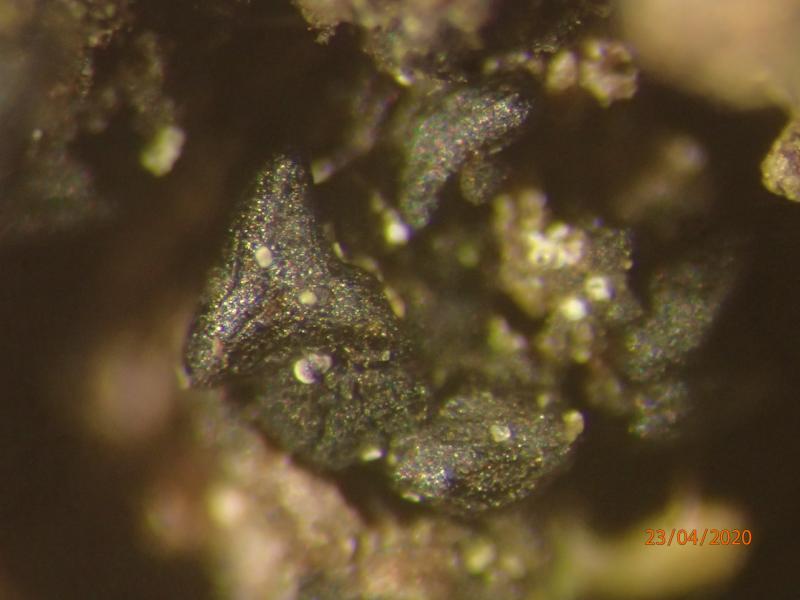
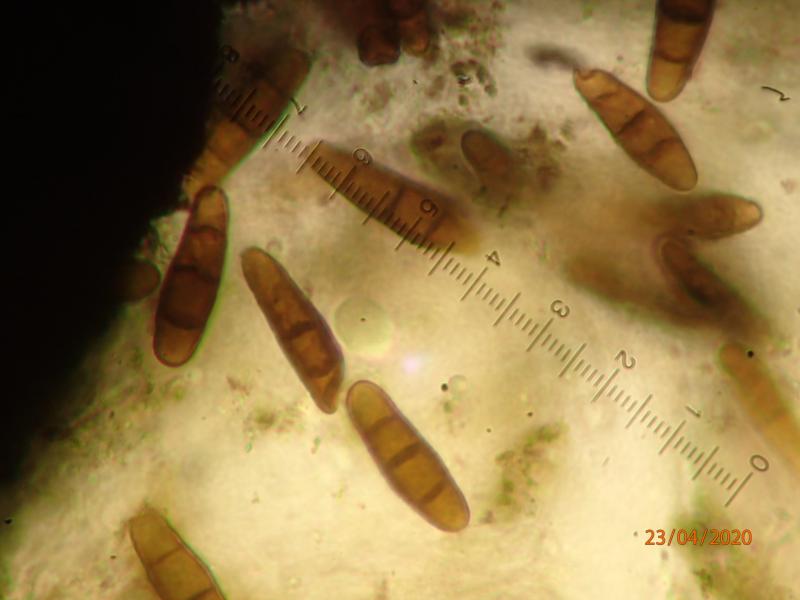
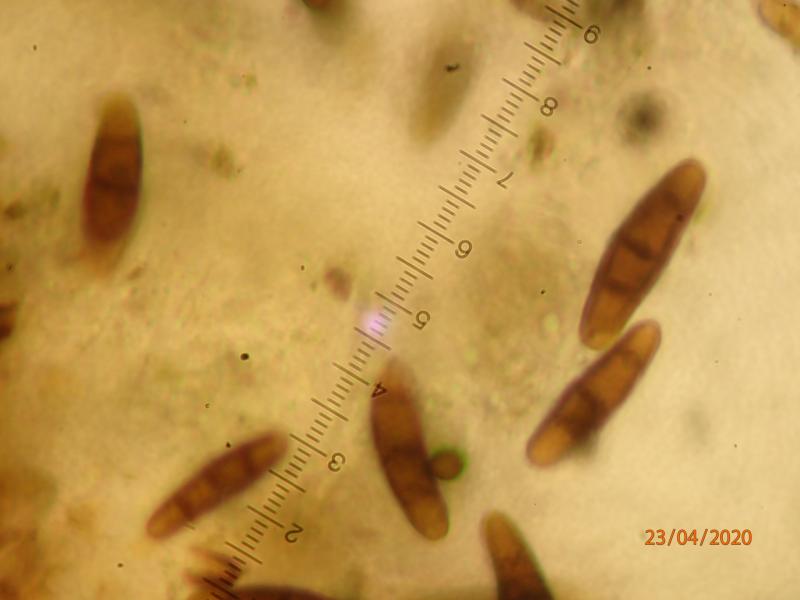
 I have a Hysterium on resin from bark of Picea abies. It deviates from H. pulicare found on a nearby tree. The ascomata are narrower and more upright with a slightly "sharper" apical edge, and a narrower base. Spores measure 20-26 x 6-8 microns, 3-septate without constrictions and end-cells not notably paler (only on a few of the spores). Could it be H. angustatum? (Is H. angustatum synonymous with H. acuminatum?). Or is this within the variability of H. pulicare?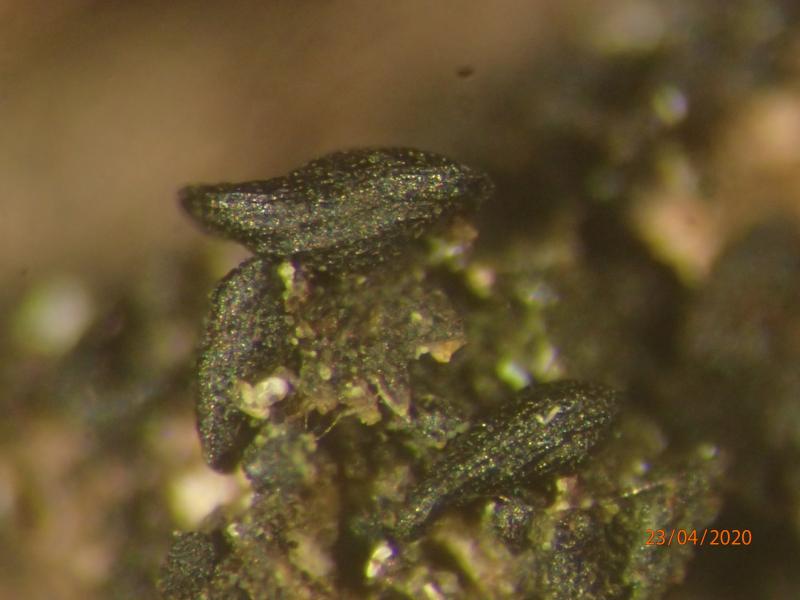
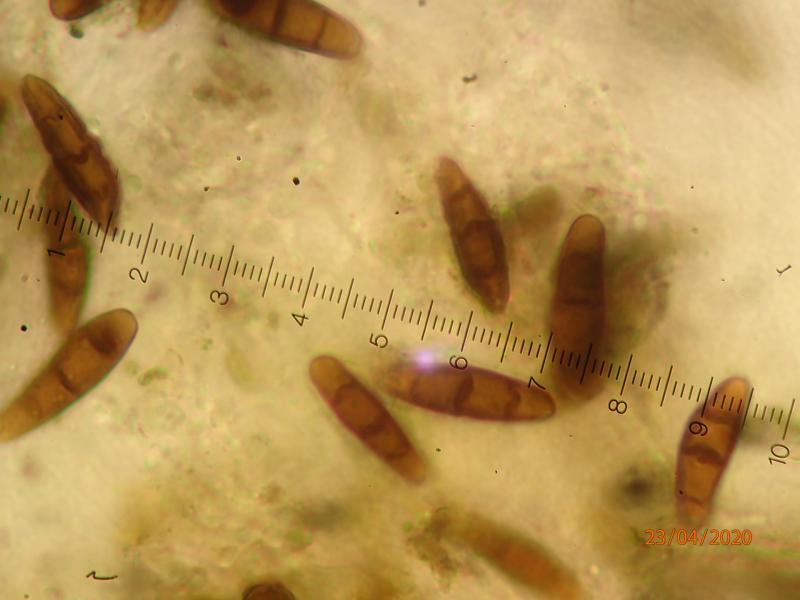

Hi Edvin,
To my mind, it's definitively not H. pulicare.
H. angustatum is considered to be the most widespread species, in a variety of substrates (including Picea). But your collection, which I would link to H. angustatum, is still atypical. Perhaps a serious study would be necessary to better understand what H. angustatum really is.
Getting molecular data could be an excellent idea, as an anticipation.
Alain