
28-04-2026 20:07
 Lothar Krieglsteiner
... on twig in the air at standing Ceratonia siliq
04-05-2026 18:13
 Stephen Martin Mifsud
ID request for what seems to be a true aquatic fun
04-05-2026 16:39
Stephen Martin Mifsud
ID request: This specimen was collected in Malta o
04-05-2026 09:50
 Castillo Joseba
Me mandan el material seco de Galicia,(España) re
02-05-2026 12:42
Alain BRISSARDBonjour à tousJeuidi 30 avril dernier on m'a remi
02-05-2026 13:06
Pauline. PennaBonjour Please can someone help me with this id
01-05-2026 22:45
 Thierry Blondelle
Bonjour à tous, Une récolte sur bouse séchée d
14-04-2026 05:32
Ethan CrensonHi all, A few weeks back a friend pointed out som
28-04-2026 20:33
Vitus SchäfftleinHello, I found Trochila ilicina on Ilex aquifoliu
Orbilia tremulae?
Viktorie Halasu,
10-04-2020 20:15
 Hello,
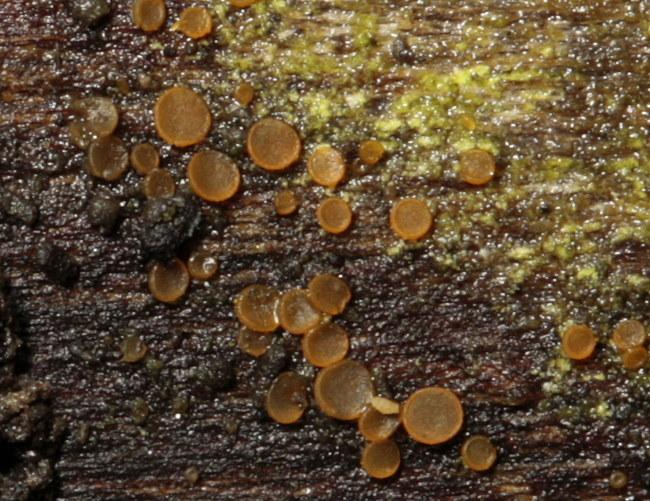
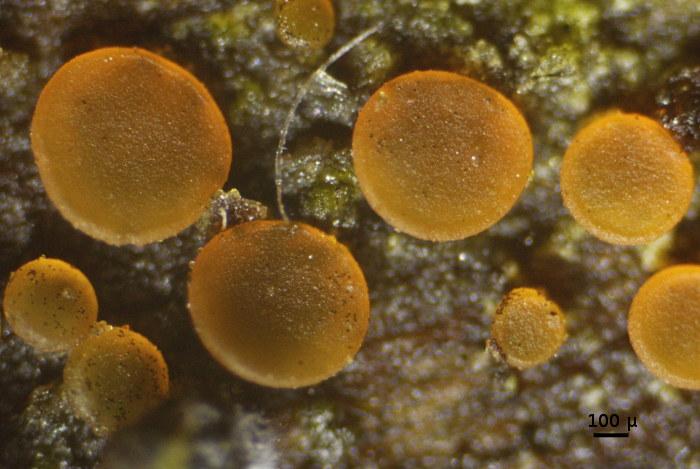
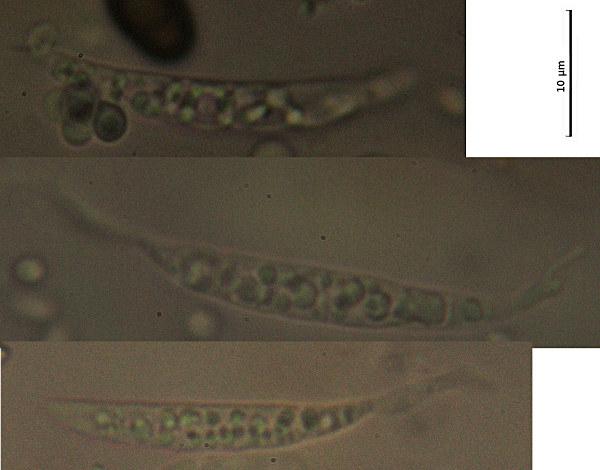
I've found this Orbilia on wet decorticated wood (probably Salix), on the ground.
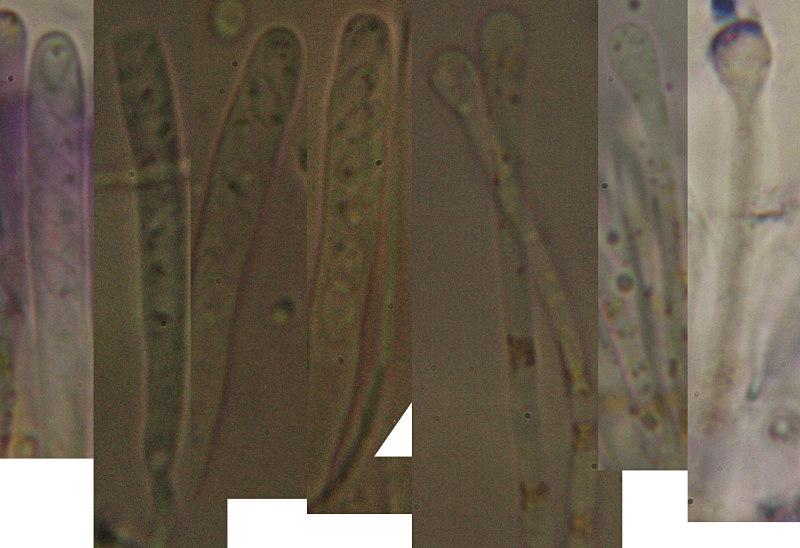
Only a little refractive exudate on paraphyses top + scattered on cells near margin.
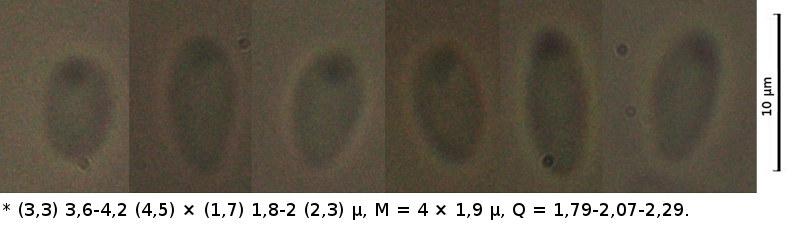
Uppermost spore mostly with SB up, but not always (3rd ascus from left is with SB down).
I'm not sure if the anamorph belongs to it.
Given the habitat and spore size, could it be Orbilia tremulae? Isn't it too much orange?
Thank you in advance.
Viktorie
Hans-Otto Baral,
10-04-2020 21:55

Re : Orbilia tremulae?
Hi Viktorie
Could be, but sure we cannot be. These fusiform spores might be ascospores?
The Dicranidion conidia of O. tremulae would be characteristic.
O. tremulae is probably a common species, but I am often not sure, and our concept is only tentative. With DNA it would be easy - or with a culture or conidia from near apothecia.
Zotto
Lothar Krieglsteiner,
11-04-2020 09:54
Re : Orbilia tremulae?
... das hätte ich (früher) als coccinella bestimmt. Aber vermutlich ist dies eine Sammelart geworden, wie so vieles.
LG von Lothar
LG von Lothar
Hans-Otto Baral,
11-04-2020 10:03
Re : Orbilia tremulae?
Ja, das ist kompliziert geworden. O. coccinella ha hörnchenförmige Sporen in 16-sporigen Asci. O. tremulae hat eigentlich als NFF das japanische Dicranidion inaequale, aber das passt nur morphologisch. Neben der häufigen O. eucalypti gibt es noch ein paar weitere mit ellipsoiden bis subglobosen Sporen.