28-04-2026 20:07
 Lothar Krieglsteiner
... on twig in the air at standing Ceratonia siliq
04-05-2026 18:13
 Stephen Martin Mifsud
ID request for what seems to be a true aquatic fun
04-05-2026 16:39
Stephen Martin Mifsud
ID request: This specimen was collected in Malta o
04-05-2026 09:50
 Castillo Joseba
Me mandan el material seco de Galicia,(España) re
02-05-2026 12:42
Alain BRISSARDBonjour à tousJeuidi 30 avril dernier on m'a remi
02-05-2026 13:06
Pauline. PennaBonjour Please can someone help me with this id
01-05-2026 22:45
 Thierry Blondelle
Bonjour à tous, Une récolte sur bouse séchée d
14-04-2026 05:32
Ethan CrensonHi all, A few weeks back a friend pointed out som
28-04-2026 20:33
Vitus SchäfftleinHello, I found Trochila ilicina on Ilex aquifoliu
Hypoxylon on Alnus sp.?
Mirek Gryc,
28-03-2020 10:01
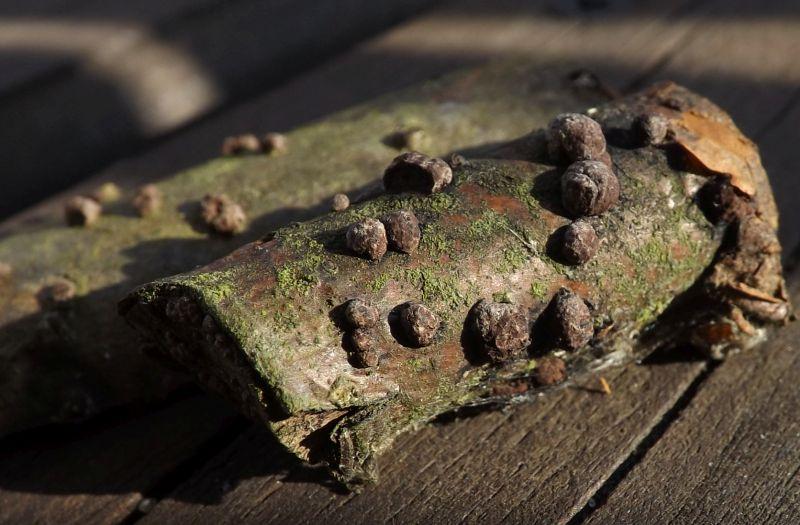
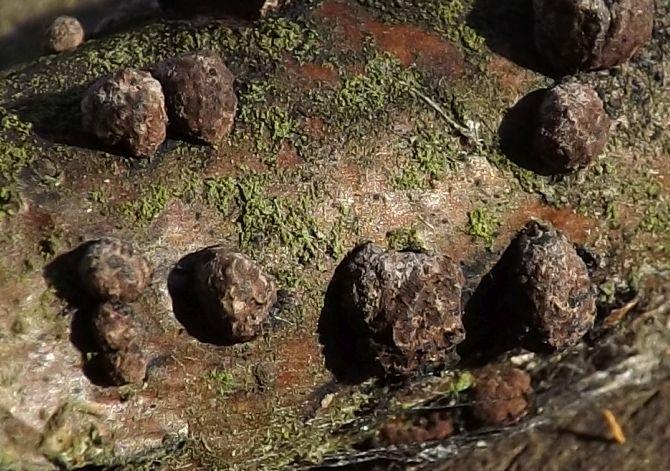
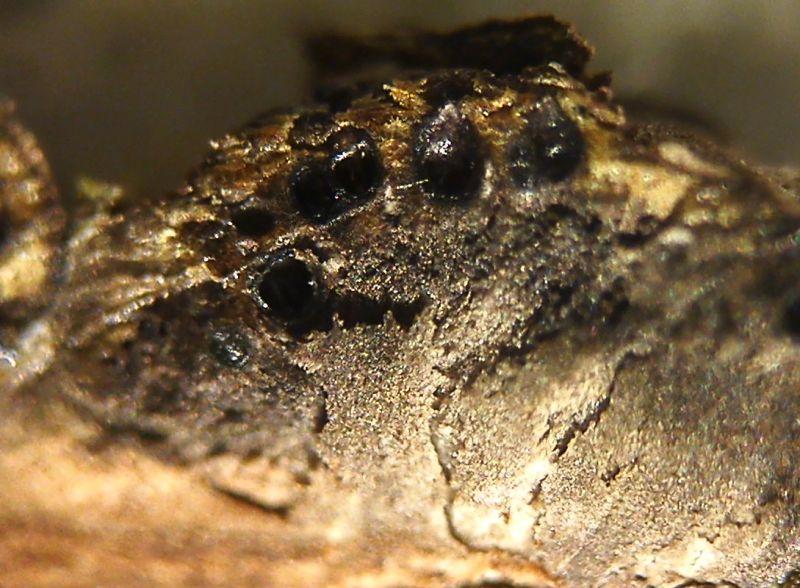
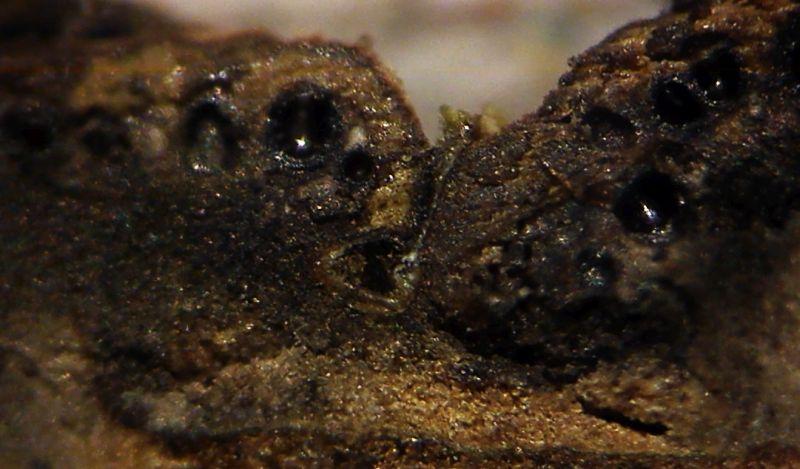
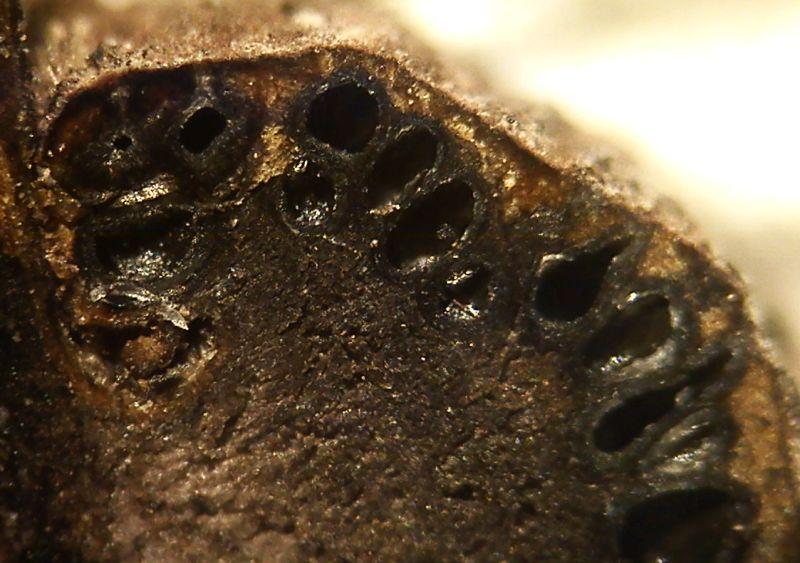
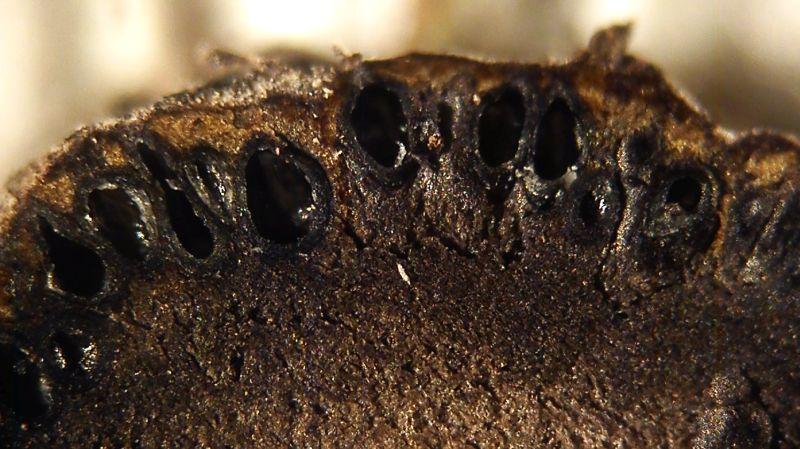
I have a problem with Hypoksylon growing on dead wood (bark) Alnus sp.
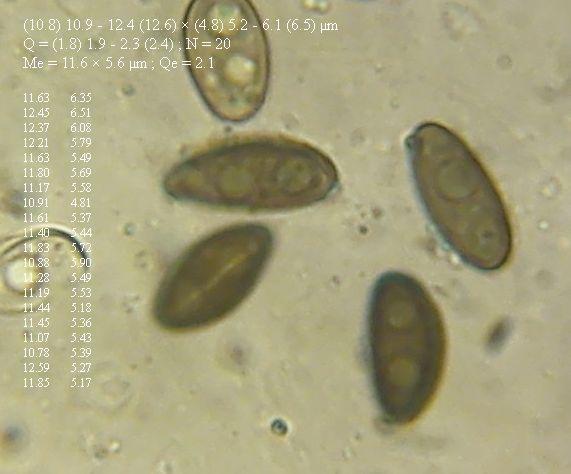
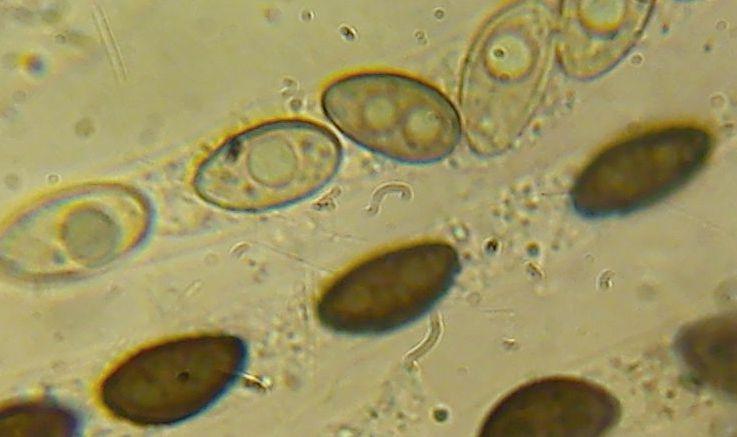
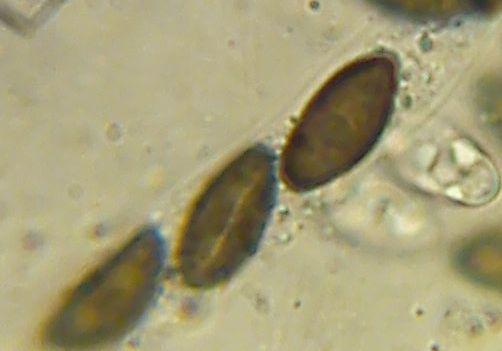
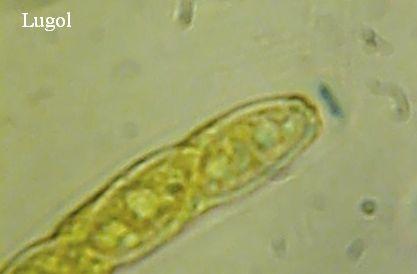
I could consider him Hypoxylon fuscum but the measured spores are very small for this species?
I only measured mature. However, even in this case, their length only in very rare cases exceeds 12um.
In addition, it is difficult for me to assess the color of the stromata. It is quite yellow but is it enough to suspect H. porphyreum which is limited to Quercus!?
I have no idea!
Thank you in advance for your help.
Mirek
Andgelo Mombert,
28-03-2020 10:13

Re : Hypoxylon on Alnus sp.?
Bonjour,
Peut-être Hypoxylon fuscoides ?
Andgelo
Mirek Gryc,
28-03-2020 10:36
Re : Hypoxylon on Alnus sp.?
Hi Andgelo
I took it into account but ...
Mirek
Jacques Fournier,
28-03-2020 10:38

Re : Hypoxylon on Alnus sp.?
Hello Mirek,
looks like a good fuscum, with slightly smaller spores. H. fuscoides has purple pigments.
It remains a poorly resolved taxon. I encourage you to study as many collections as you can, perhaps you will resolve it!
Best,
Jacques
Mirek Gryc,
28-03-2020 10:50
Re : Hypoxylon on Alnus sp.?
Hi Jacques
If you think that the other features match H. fuscum, I will gladly accept such an offer. I don't have experience with Hypoxylon so every tip is very valuable to me.
I have enough Alnus dead wood so in the near future I will check a few collections to compare the features.
Thank you very much and best regards
Mirek
I have enough Alnus dead wood so in the near future I will check a few collections to compare the features.
Thank you very much and best regards
Mirek
Viktorie Halasu,
28-03-2020 10:50

Re : Hypoxylon on Alnus sp.?
Hello,
the pigment in H. fuscoides have been observed to change in time. A collection of H. fuscoides with purple pigments was checked again 1,5 year later and gave just dull gray (slightly purplish) pigments. See here: http://www.czechmycology.org/_cmo/CM69106.pdf
(I'm not saying anything about this collection, not enough experience with Xylariales.)
Viktorie
the pigment in H. fuscoides have been observed to change in time. A collection of H. fuscoides with purple pigments was checked again 1,5 year later and gave just dull gray (slightly purplish) pigments. See here: http://www.czechmycology.org/_cmo/CM69106.pdf
(I'm not saying anything about this collection, not enough experience with Xylariales.)
Viktorie
Mirek Gryc,
28-03-2020 11:59
Re : Hypoxylon on Alnus sp.?
Hi Viktorie
Very interesting study and especially the comments included in the description! According to them, most of the features of my collection go well with H. fuscoides (substrate, small sporocarps, spore dimensions).
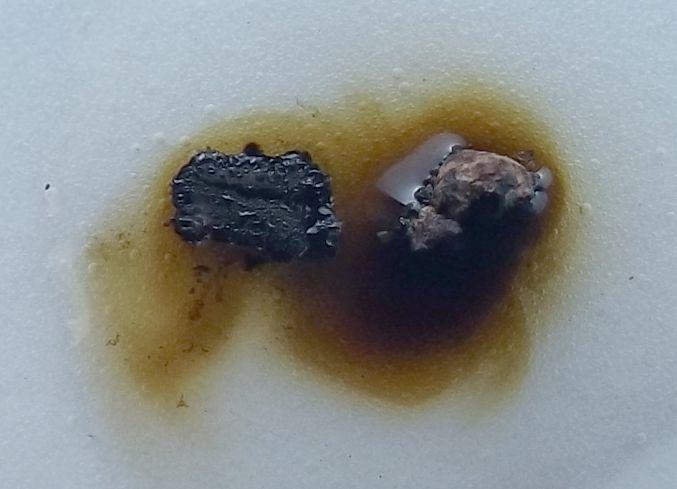
However, even a little bit of purple is missing during the KOH test. Yesterday I carried out the test on about 10% KOH so today I repeated it with diluted (about 3%). However, the effect remained the same.
Therefore, it is difficult to decide which criterion is more important: the size of the spores or the color of the KOH extract?
However, because the color of the extract does not completely correspond to H. fuscoides, so my collection cannot be considered as this species. Even though the color changes with age, this purple shade remains minimal.
Therefore, since other features are compatible with H. fuscum and spores despite their small size, however, are within the lower limit for H. fuscum, it is safer to consider my collection as H. cf. fuscum?
Thank you and best regards
Mirek
Very interesting study and especially the comments included in the description! According to them, most of the features of my collection go well with H. fuscoides (substrate, small sporocarps, spore dimensions).
However, even a little bit of purple is missing during the KOH test. Yesterday I carried out the test on about 10% KOH so today I repeated it with diluted (about 3%). However, the effect remained the same.
Therefore, it is difficult to decide which criterion is more important: the size of the spores or the color of the KOH extract?
However, because the color of the extract does not completely correspond to H. fuscoides, so my collection cannot be considered as this species. Even though the color changes with age, this purple shade remains minimal.
Therefore, since other features are compatible with H. fuscum and spores despite their small size, however, are within the lower limit for H. fuscum, it is safer to consider my collection as H. cf. fuscum?
Thank you and best regards
Mirek
Mirek Gryc,
28-03-2020 12:35
Re : Hypoxylon on Alnus sp.?
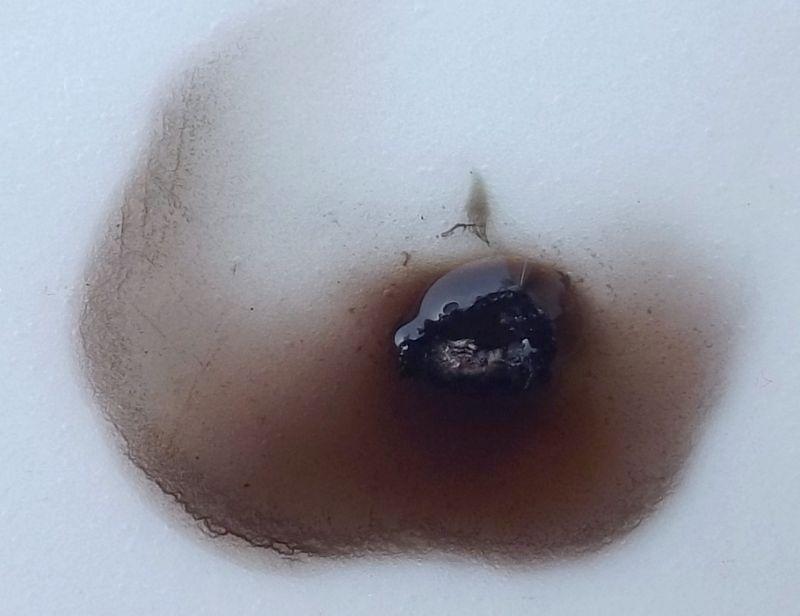
I must include a small correction to my previous statement.
Immediately after placing the fruiting sample in KOH, a reaction similar to the 10% solution occurred.
However, before I wrote the previous post and checked the reaction again (about 20 minutes later), it turned out that its color changed a lot.
Can the concentration of KOH have such a big impact on the color ???
Today, I used a sample of the same fruiting body as before.
In this sample I see a shade of purple.
What is your opinion on this subject?
Mirek
Immediately after placing the fruiting sample in KOH, a reaction similar to the 10% solution occurred.
However, before I wrote the previous post and checked the reaction again (about 20 minutes later), it turned out that its color changed a lot.
Can the concentration of KOH have such a big impact on the color ???
Today, I used a sample of the same fruiting body as before.
In this sample I see a shade of purple.
What is your opinion on this subject?
Mirek
Viktorie Halasu,
28-03-2020 12:47
Re : Hypoxylon on Alnus sp.?
This is in that 3-5% KOH? Both pieces from the same stroma?
Personally, I'm using 3% KOH in both Xylariales and Otidea, works ok. I heard from someone that in very high concentrations (like 30 %) the colors are less distinct, lighter, perhaps because the pigment is both extracted and altered/damaged. But really, Jacques (and others) is the specialist here. ;-)
Personally, I'm using 3% KOH in both Xylariales and Otidea, works ok. I heard from someone that in very high concentrations (like 30 %) the colors are less distinct, lighter, perhaps because the pigment is both extracted and altered/damaged. But really, Jacques (and others) is the specialist here. ;-)
Mirek Gryc,
28-03-2020 13:07
Re : Hypoxylon on Alnus sp.?
Thanks for explanation.
I never used KOH too much, so I didn't pay too much attention to its concentration.
I wonder, however, why it was at low concentration that a variable response occurred and not at high? Perhaps it was the purple pigment in high concentration that was destroyed?
Although it is not a pure purple shade, it is only quite strong darkening the preparation.
I will make a few more samples at different KOH concentrations and see how it looks.
Thank you
Mirek
I never used KOH too much, so I didn't pay too much attention to its concentration.
I wonder, however, why it was at low concentration that a variable response occurred and not at high? Perhaps it was the purple pigment in high concentration that was destroyed?
Although it is not a pure purple shade, it is only quite strong darkening the preparation.
I will make a few more samples at different KOH concentrations and see how it looks.
Thank you
Mirek
Mirek Gryc,
28-03-2020 18:02
Re : Hypoxylon on Alnus sp.?
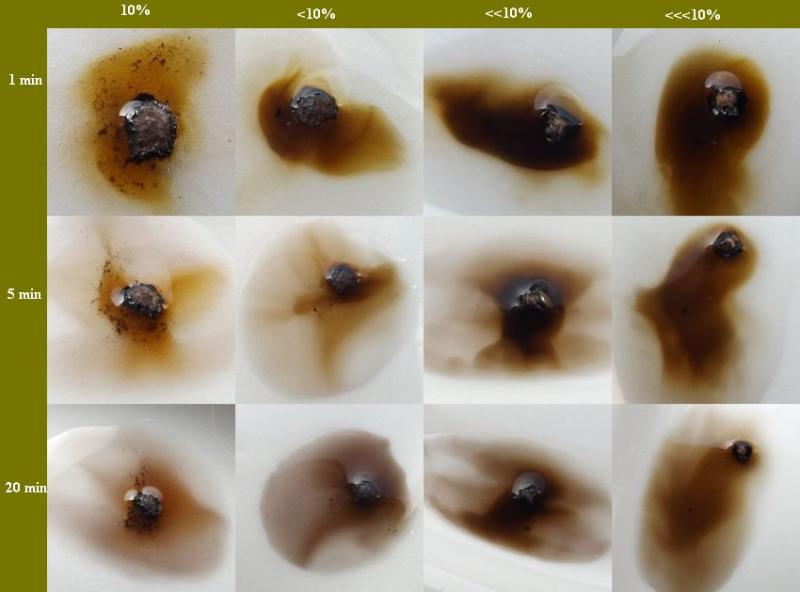
I made several samples at different KOH concentrations.
On the left is a sample placed in about 10% KOH solution. The further to the right the lower the concentration. Unfortunately I did not measure.
It turns out that the concentration has an effect on the color obtained. Also the time after which we watch the sample.
On the left is a sample placed in about 10% KOH solution. The further to the right the lower the concentration. Unfortunately I did not measure.
It turns out that the concentration has an effect on the color obtained. Also the time after which we watch the sample.
At the same time I noticed that the sample with the highest concentration stained the slowest, as did the last sample from the right with a very.
Mirek