
10-03-2012 13:17
Aouali SouhilaBonjour,Je tente d'arriver au genre, mais sans suc
04-03-2012 21:07
Aouali SouhilaBonjour,J'ai retrouvé cet ascomycète sur du libe
08-03-2012 11:56
Ron BronckersHi to all,I am searching the following page:Arnoul

07-03-2012 11:09
 Björn Wergen
Hi all,a few days ago I have found a small, single
07-03-2012 11:34
 Alessio Pierotti
Qualcuno può aiutarmi ? Sto cercando il seguente

07-03-2012 12:35
Marja Pennanenbut suppose mali came to me ;)Hi,I found these hai

Disques oranges
Louis DENY,
13-02-2020 10:14
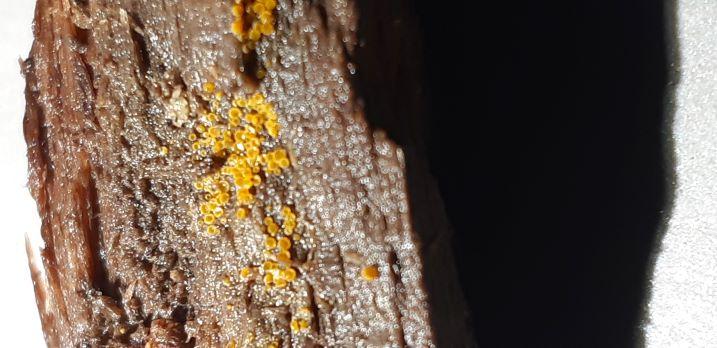
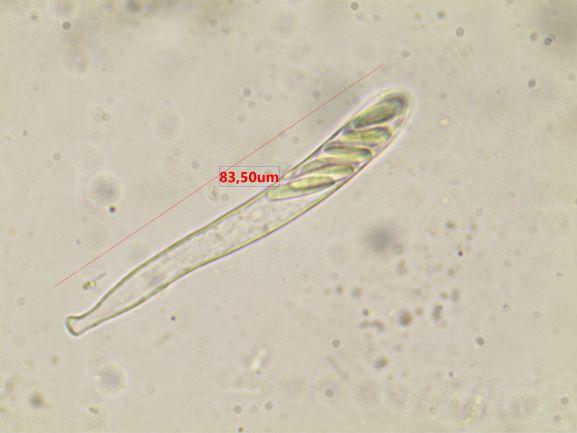
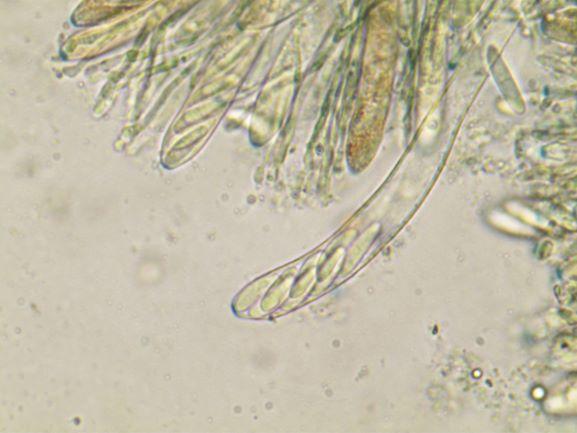
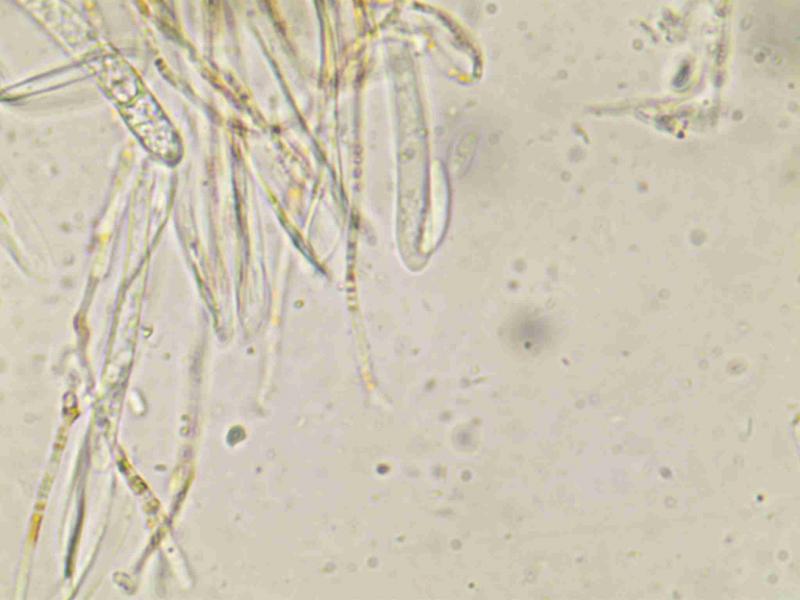
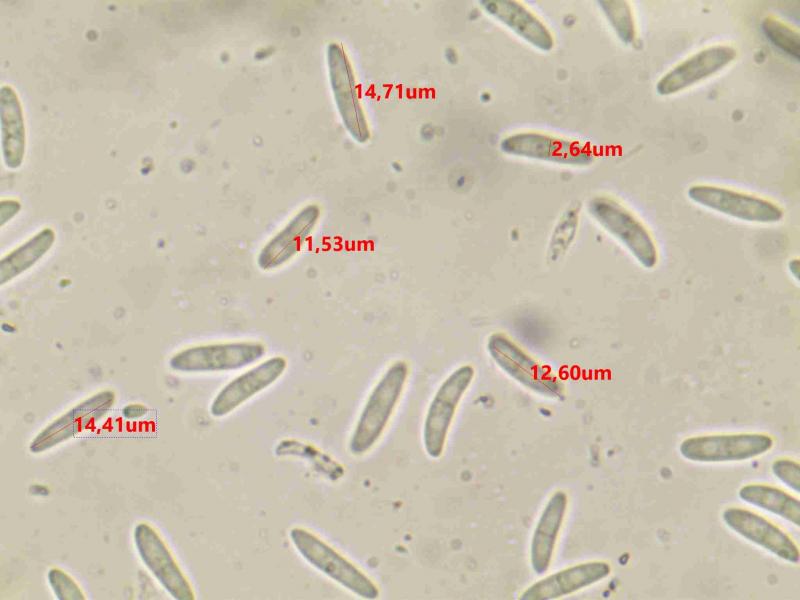
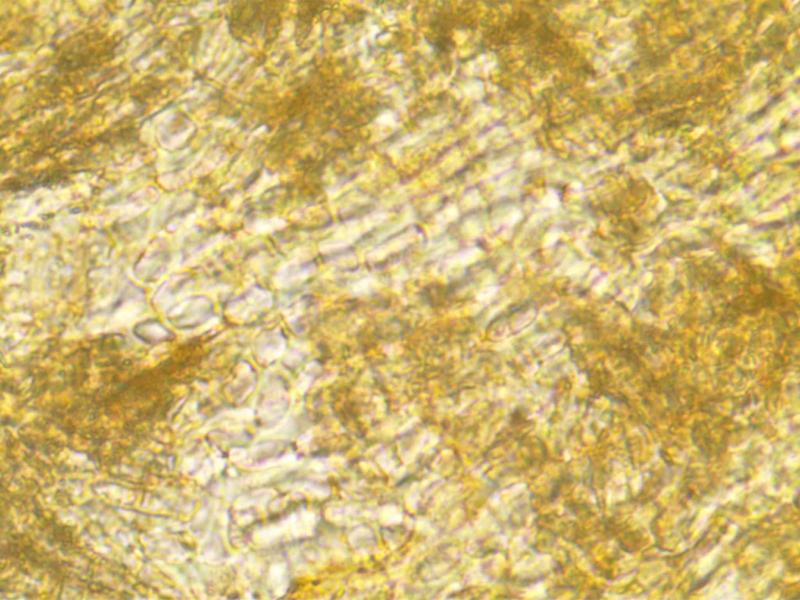
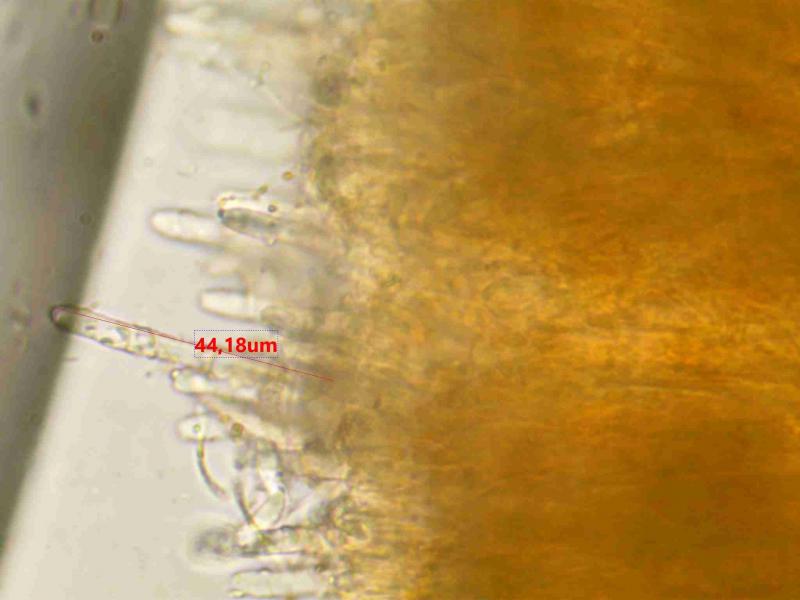
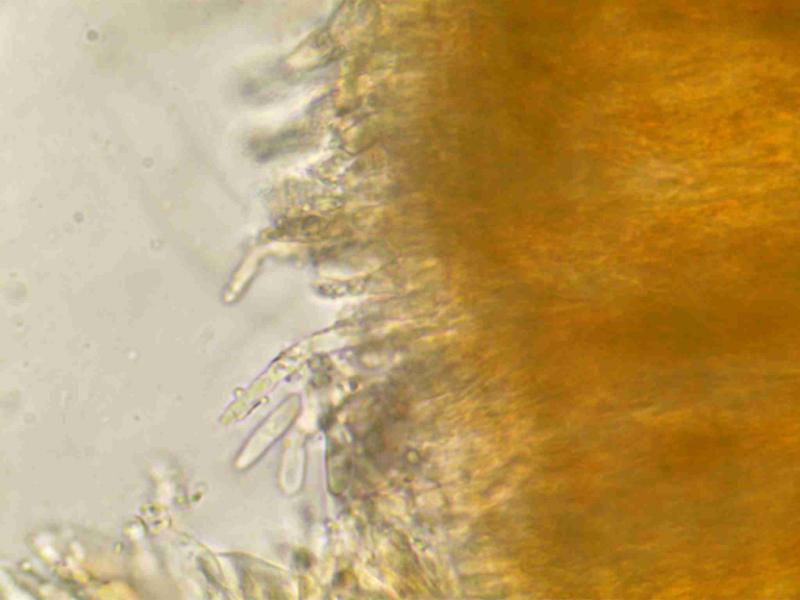
Sur bois très décomposé et imbu de feuillu (Betula?), petits disque oranges (diamètre 0.4/0.7 mm) en groupe dense. Poils à apex arrondi, 50µ, avec quelques granulations me semble-t-il. Asques à crochet, J+, spore biseriées, L=80µ. Paraphyses filiformes, à contenu huileux. Spores hyalines, sans gouttes, 1X septées y compris dans l'asque, 11-15 X 2.5-3 µ, legèrement incurvées. Excipulum prismatique.
Merci pour votre aide
Hans-Otto Baral,
13-02-2020 10:47

Re : Disques oranges
Cher Louis!
your micros are very useful, the macro needs more magnification. This must be Arachnopeziza cornuta (= A. trabinelloides). The fungus was repeatedly in this forum.
Zotto
Kosonen Timo,
13-02-2020 10:56

Re : Disques oranges
I agree with Zotto. Practically nonexistent subiculum would fit to A. trabinelloides. If the sample is still fresh, make a mount in water (small drop only), put it to 40X or so and then add excess MLZ on the side of the mount so that it runs under the cover glass. The resin should turn blue, but the reaction lasts only for some minutes and is not visible in dry/herbarium material. ---or if it is only resin that turns blue, I am not 100% sure. I havent seen fresh material that often.
Timo
Hans-Otto Baral,
13-02-2020 11:24
Re : Disques oranges
Interesting! I only know a bluegreen reaction of the orange lipids (carotenoids) in Lugol (or MLZ).
See HB 9256
Zotto
Louis DENY,
13-02-2020 18:39
Re : Disques oranges
Thanks to both of you! I was misled by the lack of subiculum.