
28-04-2026 20:07
 Lothar Krieglsteiner
... on twig in the air at standing Ceratonia siliq
04-05-2026 18:13
 Stephen Martin Mifsud
ID request for what seems to be a true aquatic fun
04-05-2026 16:39
Stephen Martin Mifsud
ID request: This specimen was collected in Malta o
04-05-2026 09:50
 Castillo Joseba
Me mandan el material seco de Galicia,(España) re
02-05-2026 12:42
Alain BRISSARDBonjour à tousJeuidi 30 avril dernier on m'a remi
02-05-2026 13:06
Pauline. PennaBonjour Please can someone help me with this id
01-05-2026 22:45
 Thierry Blondelle
Bonjour à tous, Une récolte sur bouse séchée d
14-04-2026 05:32
Ethan CrensonHi all, A few weeks back a friend pointed out som
28-04-2026 20:33
Vitus SchäfftleinHello, I found Trochila ilicina on Ilex aquifoliu
Patellaria atrata ou Claussenomyces atrovirens ??
Bernard CLESSE,
09-02-2020 20:39
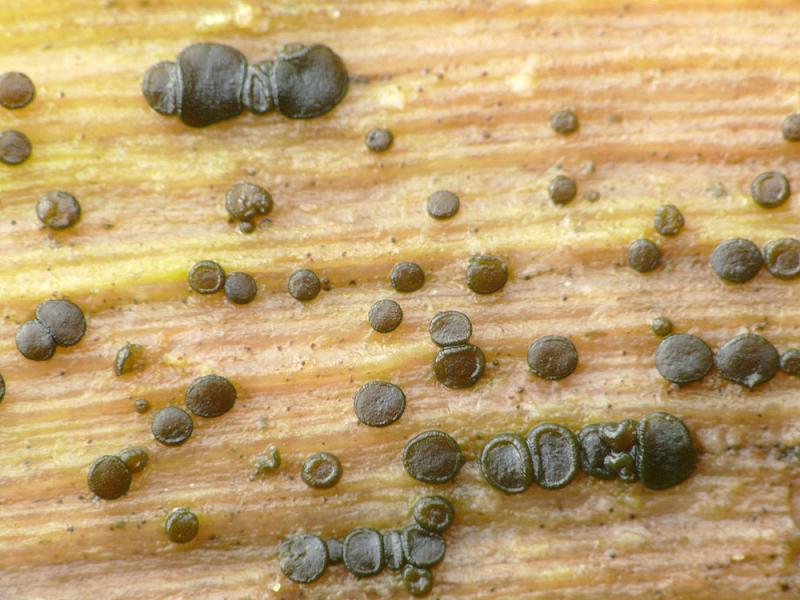
 Sur tronc mort et décortiqué de chêne en ambiance humide.
 Je pensais à Patellaria atrata mais Raul Tena Lahoz propose Claussenomyces atrovirens, que je ne connaissais pas.
Pourriez-vous donner votre avis et me dire quelle est la différence entre ces deux taxons ?
Grand merci d'avance !
Bernard
Hans-Otto Baral,
09-02-2020 20:45

Re : Patellaria atrata ou Claussenomyces atrovirens ??
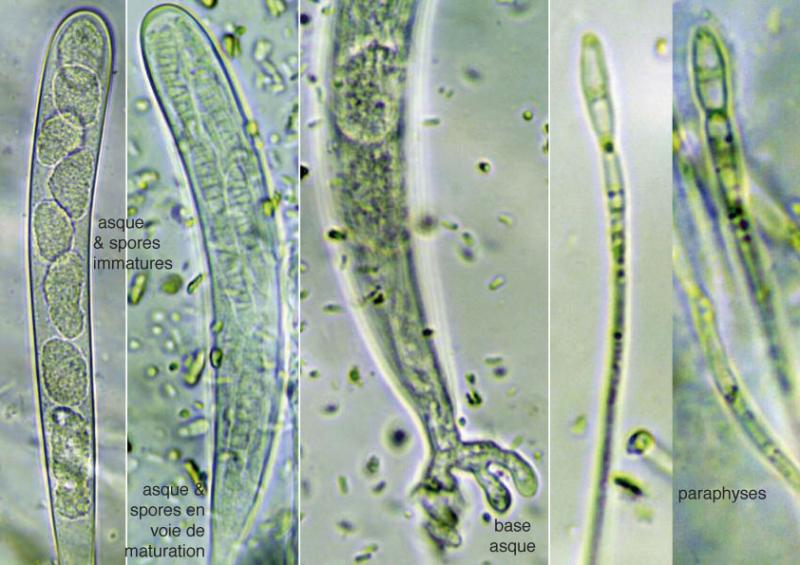
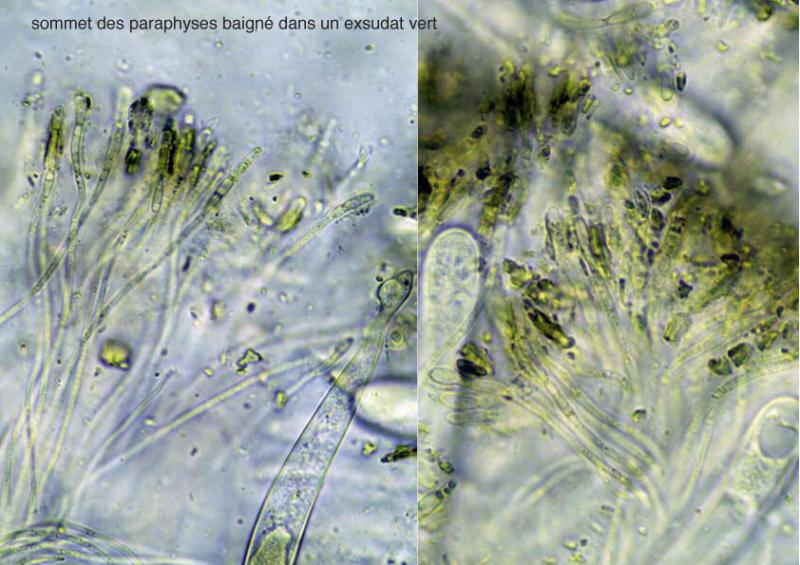
Thsi difference is huge: Patellaria forms septate spores with a high oil content that are ejected as such. Clauss. atrovirens and related species forms septate spores with low oil content (see your photo) and these spores germinate inside the immature asci to form numerous minute conidia. The conidia aggregate in balls, see your photo. The balls are ejected. Some conidia are floating in your preparation. they are rod-shaped and also the possible absence of longisepta in the ascospores (only cross-septa) point against atrovirens.
A difficult genus with some undescribed species. Look in my folde and compare e.g. C. munathinus and C. xylophilus.
The genus stands in the Phacidiales, Tympanidaceae.
Raúl Tena Lahoz,
09-02-2020 20:59

Re : Patellaria atrata ou Claussenomyces atrovirens ??
In fact, my anwser to Bernard was to draw his attention to Claussenomyces... I didn't try to get deeper in this difficult genus.
Cheers,
Raúl
Cheers,
Raúl
Bernard CLESSE,
09-02-2020 21:22
Re : Patellaria atrata ou Claussenomyces atrovirens ??
Great thanks Peter, Raul and Zotto !!
I learned a lot of new things again! What an extraordinary forum!
And sorry to have generated two discussions instead of one (a handling error!)
Bernard