
11-05-2026 12:32
 Bernard CLESSE
Pourriez-vous m'aider à identifier cette héloti
13-05-2026 15:26
 François Freléchoux
Bonjour,Voici une récolte faite il y a quelques j
12-05-2026 15:41
 Nicolas VAN VOOREN
Dear Ascolovers, especially interested in Pezizale
13-05-2026 12:05
 Thierry Blondelle
Bonjour à tous,J'aimerais avoir confirmation de c
10-05-2026 23:17
 Andreas Gminder
Hello,today we found in a moist steep decidous for
28-04-2026 20:07
 Lothar Krieglsteiner
... on twig in the air at standing Ceratonia siliq
27-04-2026 20:52
Lothar Krieglsteiner
Found on hanging tiwg of Olea europaea in dried-ou
11-05-2026 20:22
Lothar Krieglsteiner
on attached twig of standing Ficus caricaquite uns
29-04-2026 10:44
Lothar Krieglsteiner
growing at moist, drying-out soil at the side of a
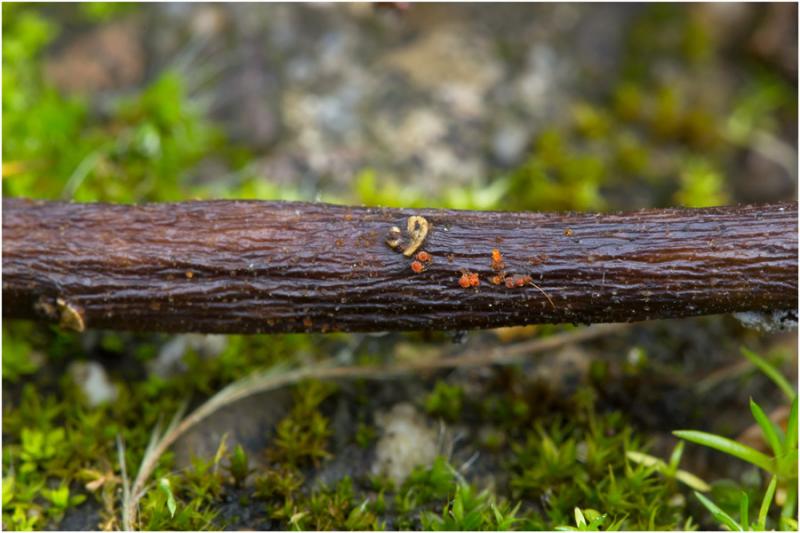
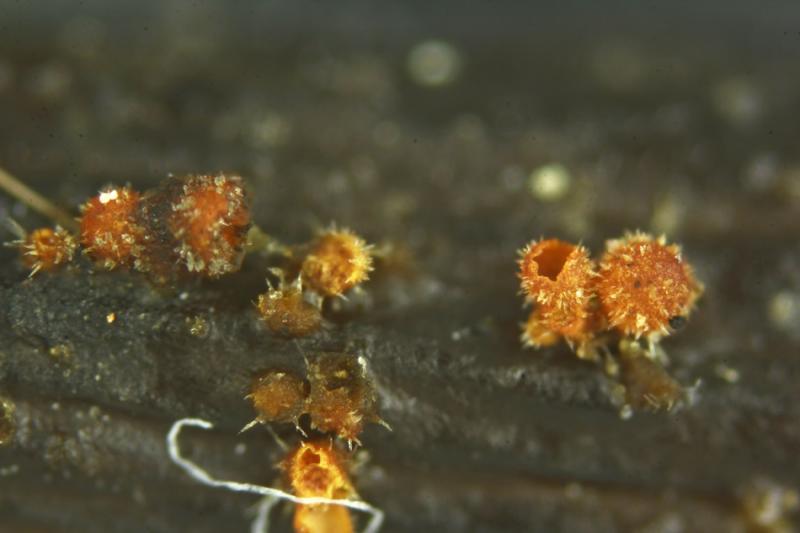
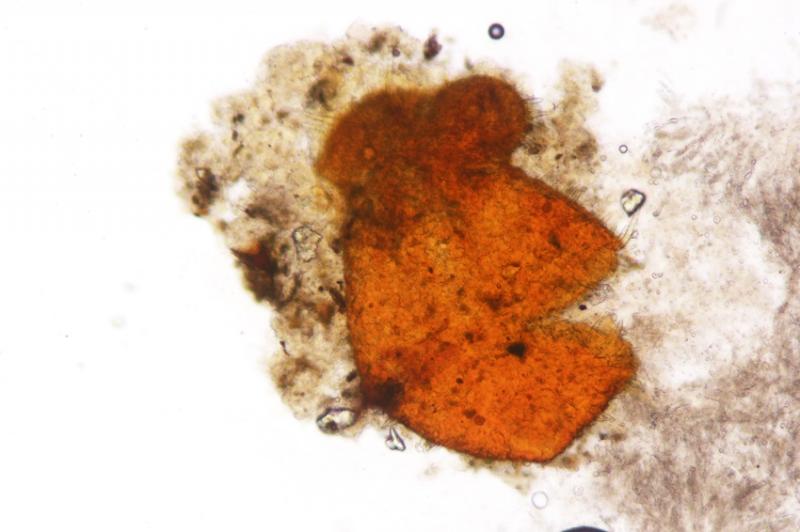
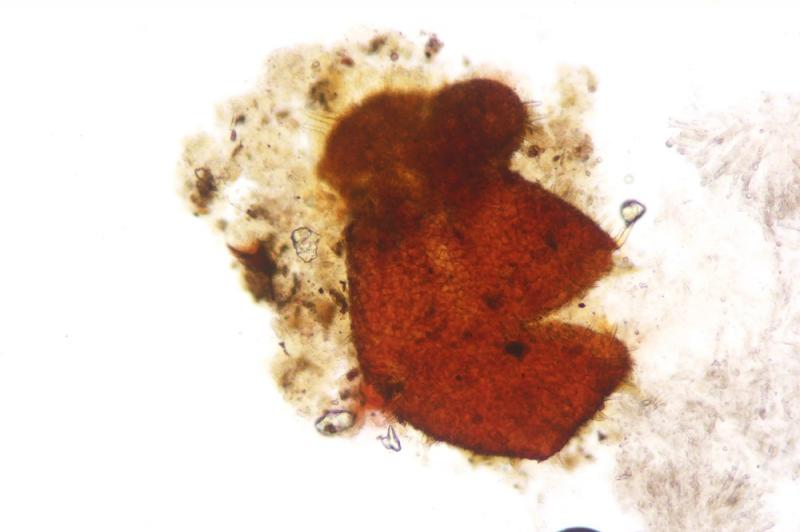
yesterday i found this Nectria-like fungus on stems of Pachysandra terminalis.
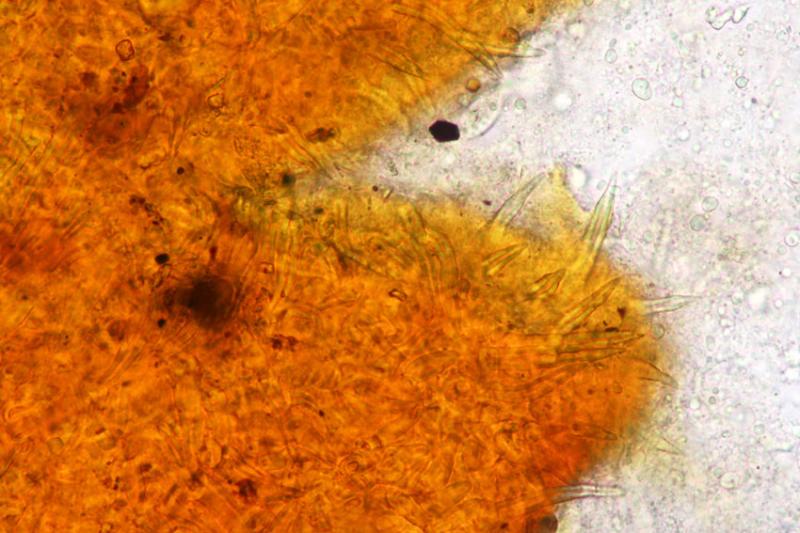
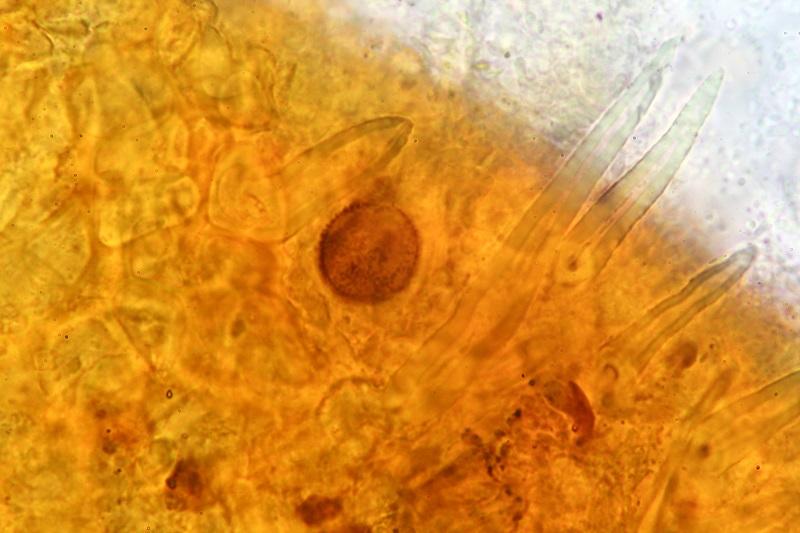
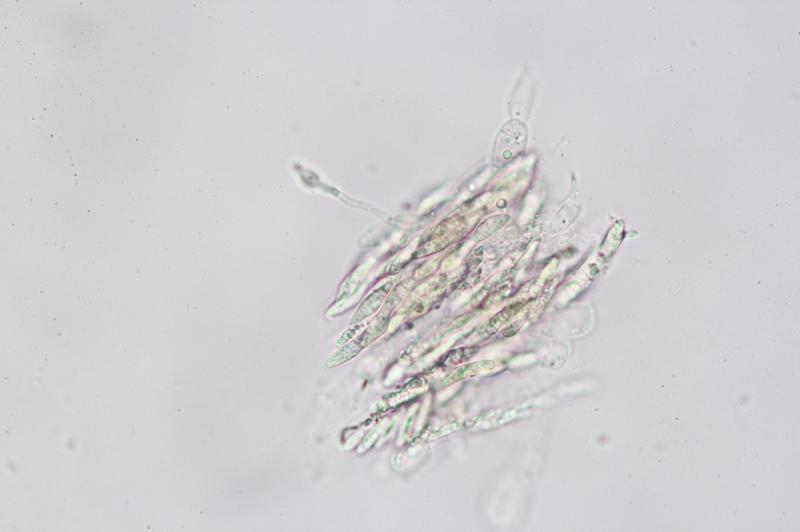
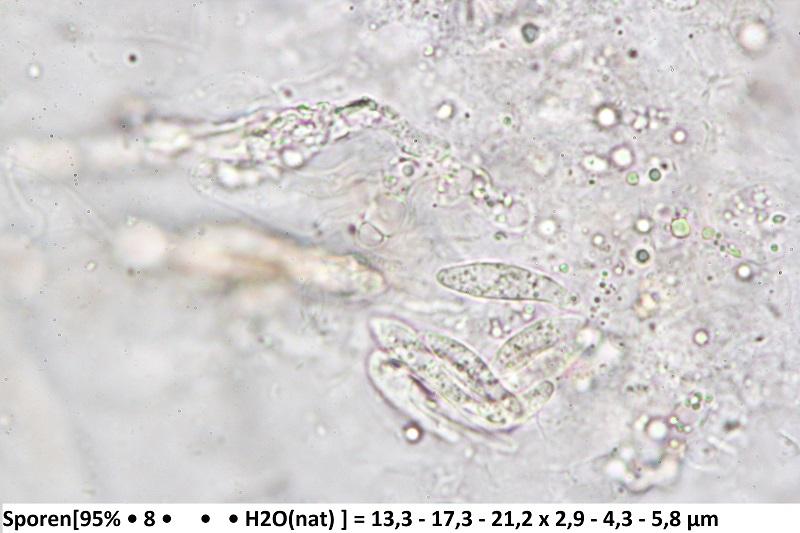
I couldn't see if a spore oranament was there or not and measurements include many immature spores.
Very interesting are the spines on the fruitbody and that the fruitbody react red in KOH.
Any idea what that could be ?
best regards,
Thorben
Hallo Thorben,
es gibt eine Pseudonectria pachysandricola - vgl.z.B.hier:
Du musst selber sehen, ob die in Frage kommt.
LG von Lothar
ich glaube das könnte, zumindest Makroskopisch, passen, leider gibt es keine Funde mit denen man Vergleichen kann.
Was mich nur stört ist, dass Dogde (1944) eine Sporenmaße von 10-15 x 3-5 Mikrometer angibt.
Das wäre dann deutlich kleiner als bei meinem Fund.
Viele Grüße
Thorben