11-05-2026 12:32
 Bernard CLESSE
Pourriez-vous m'aider à identifier cette héloti
13-05-2026 15:26
 François Freléchoux
Bonjour,Voici une récolte faite il y a quelques j
12-05-2026 15:41
 Nicolas VAN VOOREN
Dear Ascolovers, especially interested in Pezizale
13-05-2026 12:05
 Thierry Blondelle
Bonjour à tous,J'aimerais avoir confirmation de c
10-05-2026 23:17
 Andreas Gminder
Hello,today we found in a moist steep decidous for
28-04-2026 20:07
 Lothar Krieglsteiner
... on twig in the air at standing Ceratonia siliq
27-04-2026 20:52
Lothar Krieglsteiner
Found on hanging tiwg of Olea europaea in dried-ou
11-05-2026 20:22
Lothar Krieglsteiner
on attached twig of standing Ficus caricaquite uns
29-04-2026 10:44
Lothar Krieglsteiner
growing at moist, drying-out soil at the side of a
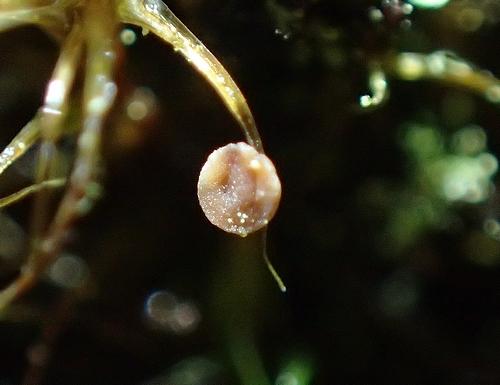
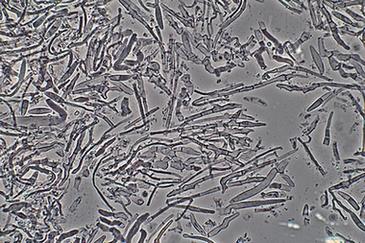
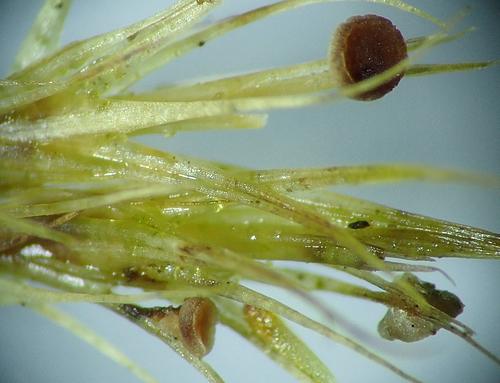
Sur tiges mortes de la mousse Campylopus flexuosus en milieu humide.
Apothécies max 1,5mm, courtement stipitées.
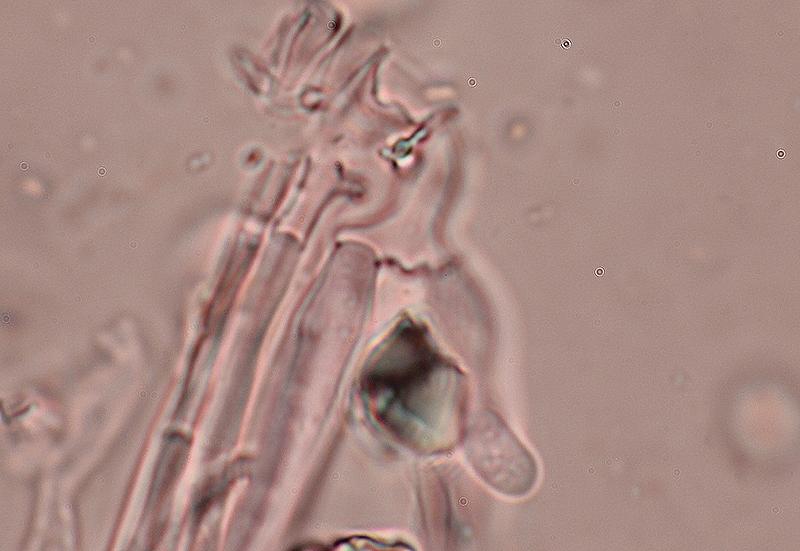
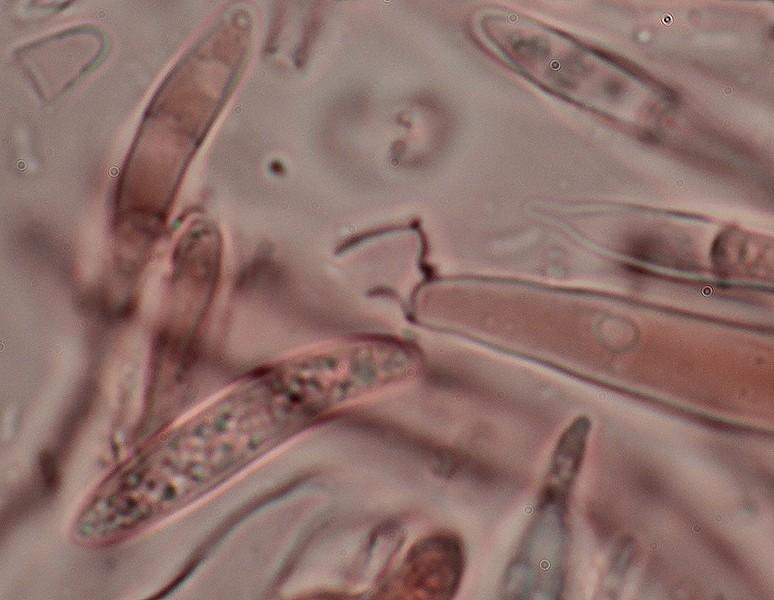
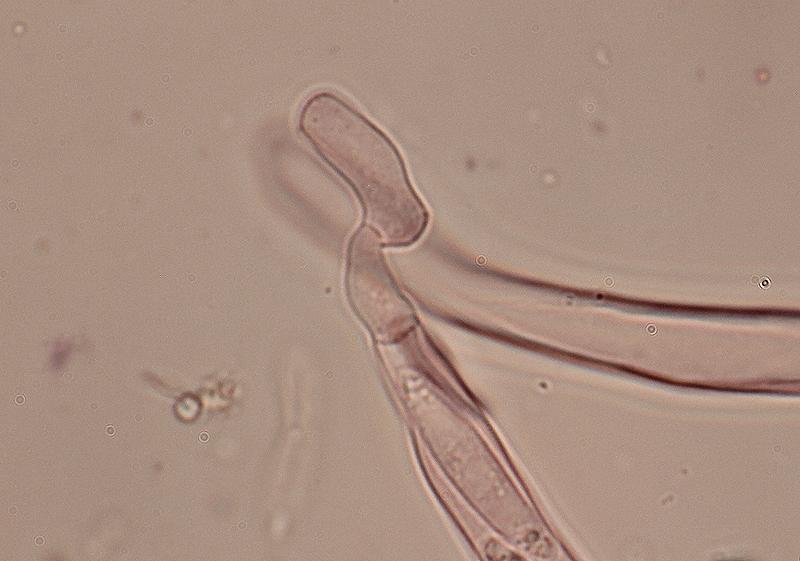
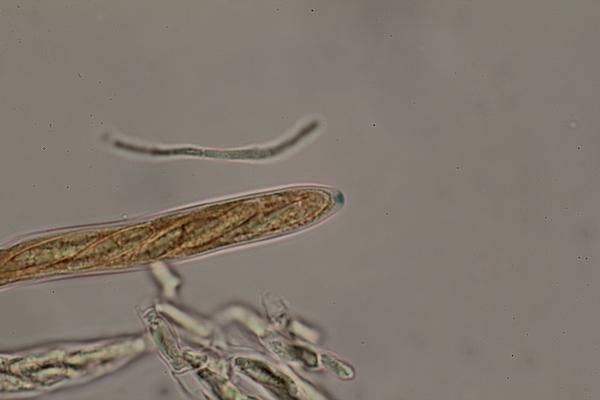
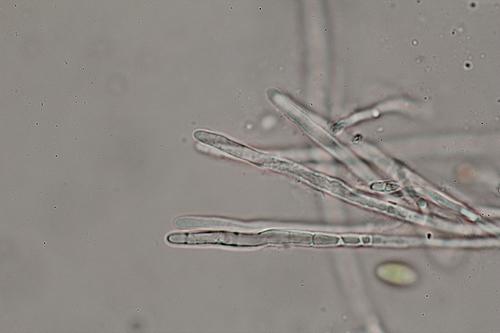
Asques jusqu'à 100x8 mµ, octosporés, bisériés, IKI +, boucles +, appareil apical de type calycina.
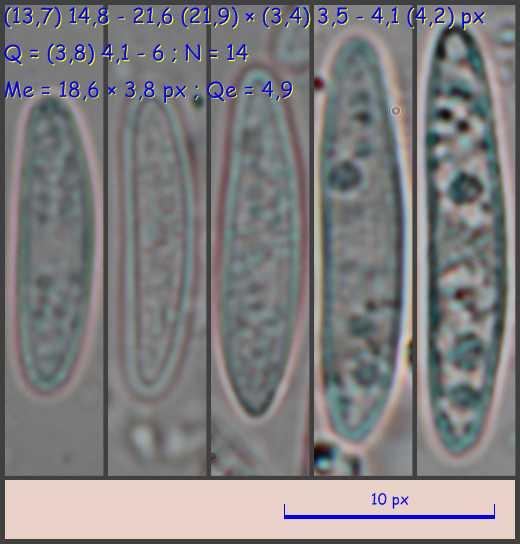
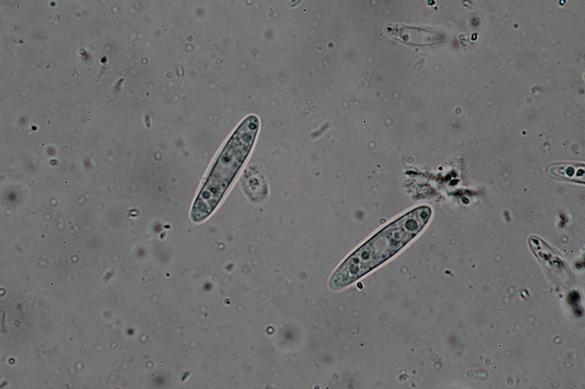
Spores 14-21 x 3,4-4 mµ, pluriguttulées, certaines flexueuses, septées (1) à maturité.
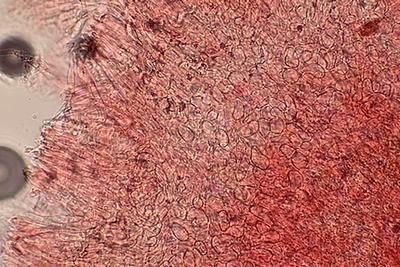
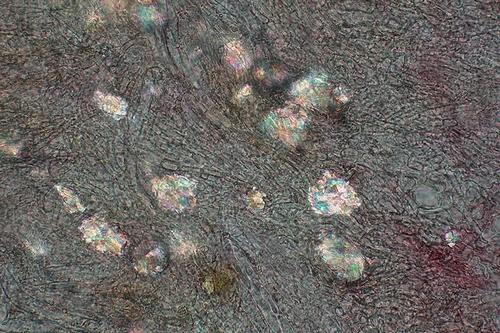
Sous-hyménium de structure intricata. Excipulum ectal constitué d'hyphes globuleuses-allongées.
Présence d'hyphes étroites et ramifiées (structure gélifiée?) et d'amas de cristaux.
Paraphyses filiformes, pluriseptées dépassant les asques (extrémité se colorant en violet foncé au CrB)
Je pense à une Ombrophila du groupe pileata.
D'avance merci pour vos avis.

Bonjour Camille,
Ta récolte a déjà été évoquée sur ce forum et désignée sous le nom de Bryoscphus turbinatus.
L'appartenance à ce genre n'est d'ailleurs pas évidente et mérite sans doute une reconsidération.
Amiriés. Michel
Compte de la plante hote, j'avais initialement pensé qu'il pouvait s'agir d'un Bryoscyphus, mais rien, dans ma modeste documentation, ne "collait" au genre.
J'aurais dû aller puiser plus loin dans le forum.
Un grand merci de m'avoir mis sur le droit chemin.
Une question cependant, les espèces du genre Bryoscyphus contiennent-elles une structure gélifiée?
Amitiés.
Camille
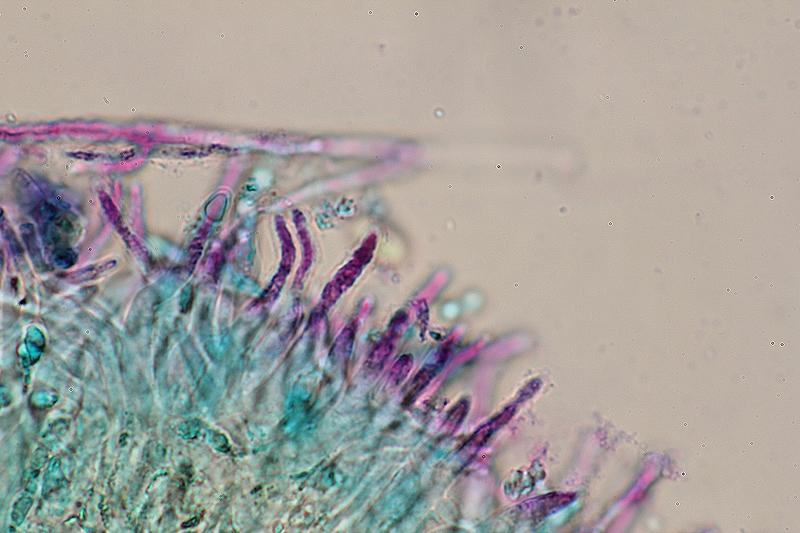

You're undoubdetly right, no croziers at the ascus base.
The shape of the apical ring leads me to Ombrophila.
Therefore I was looking for croziers but took a lot of time to found something alike.
Herewith some other pictures hoping they will help.
Many thanks.