11-05-2026 12:32
 Bernard CLESSE
Pourriez-vous m'aider à identifier cette héloti
13-05-2026 15:26
 François Freléchoux
Bonjour,Voici une récolte faite il y a quelques j
12-05-2026 15:41
 Nicolas VAN VOOREN
Dear Ascolovers, especially interested in Pezizale
13-05-2026 12:05
 Thierry Blondelle
Bonjour à tous,J'aimerais avoir confirmation de c
10-05-2026 23:17
 Andreas Gminder
Hello,today we found in a moist steep decidous for
28-04-2026 20:07
 Lothar Krieglsteiner
... on twig in the air at standing Ceratonia siliq
27-04-2026 20:52
Lothar Krieglsteiner
Found on hanging tiwg of Olea europaea in dried-ou
11-05-2026 20:22
Lothar Krieglsteiner
on attached twig of standing Ficus caricaquite uns
29-04-2026 10:44
Lothar Krieglsteiner
growing at moist, drying-out soil at the side of a
dark brown Otidea
Chris Yeates,
13-12-2019 16:20

Bonjour tous
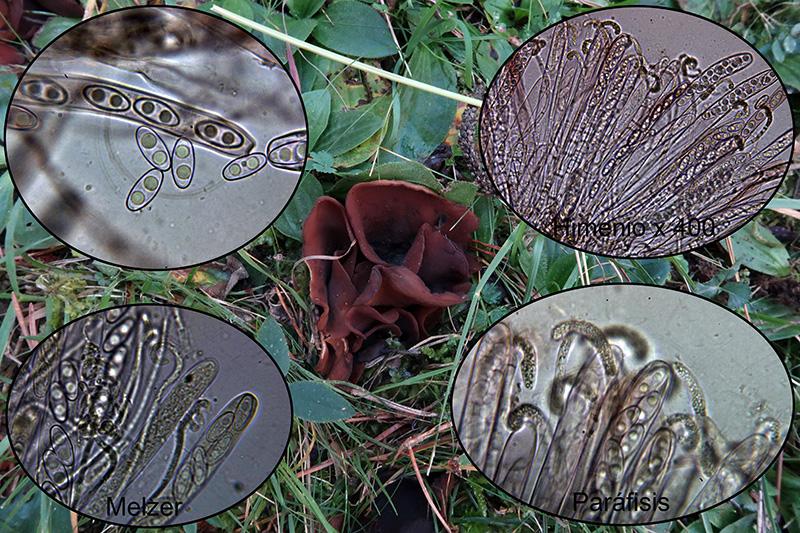
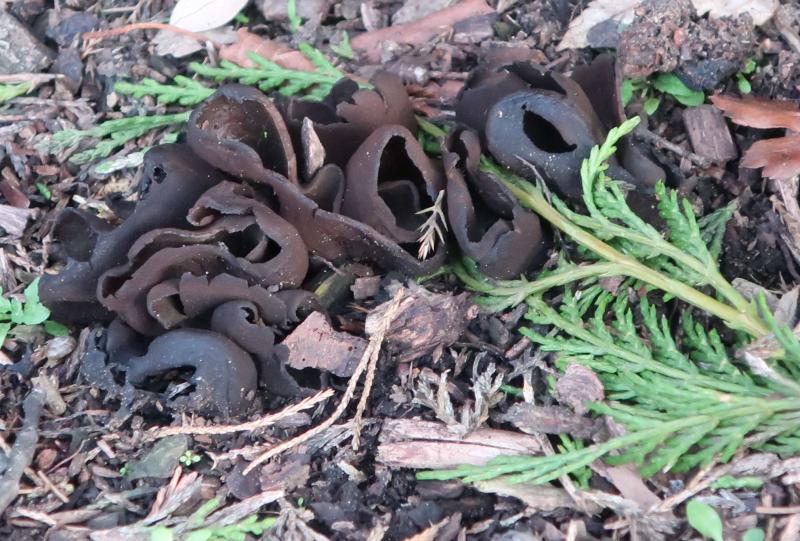
this is an area I feel rather ignorant about, rarely encountering this genus. This very dark Otidea was growing at the edge of a large garden, on soil amongst Cupressus litter, almost certainly Cupressus x leylandii. I was struck by the dark colour and initially assumed it was a Peziza. However closer examination showed it to be an Otidea, although a rather cupulate one.
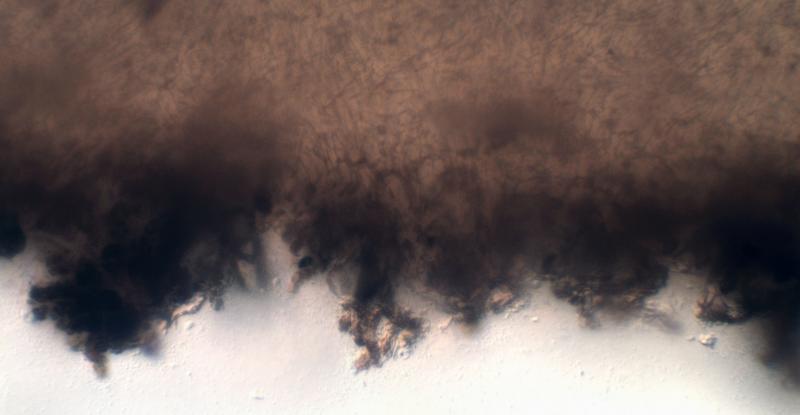
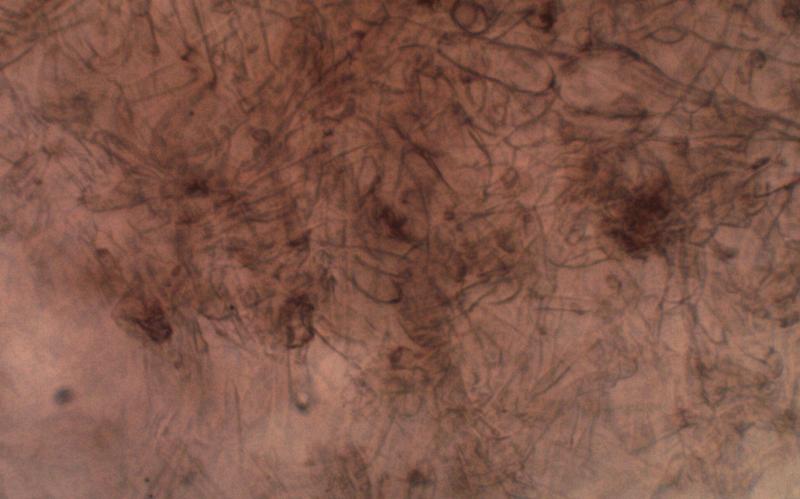
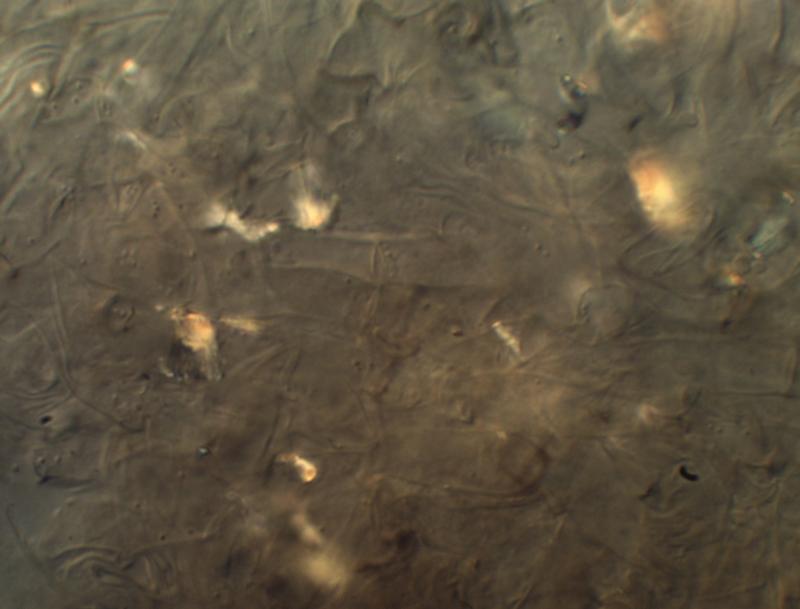
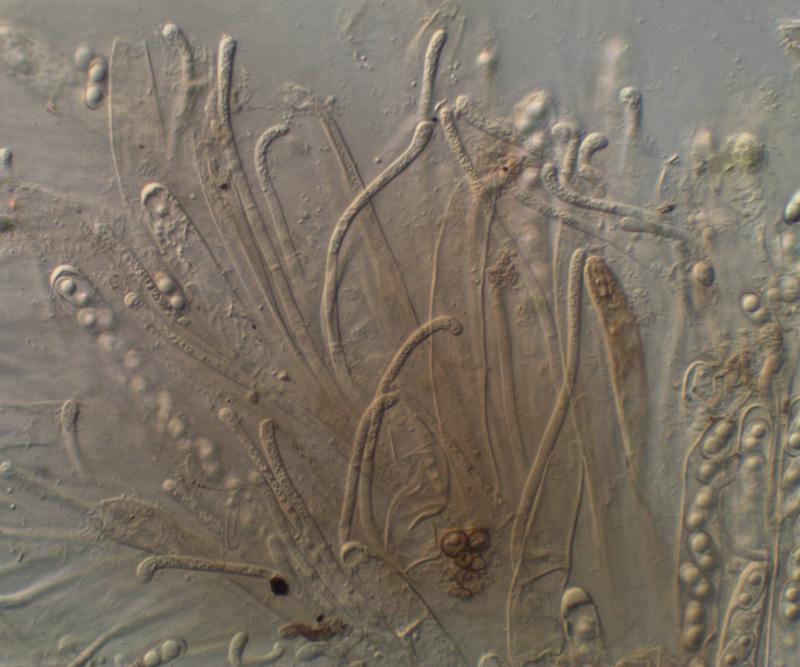
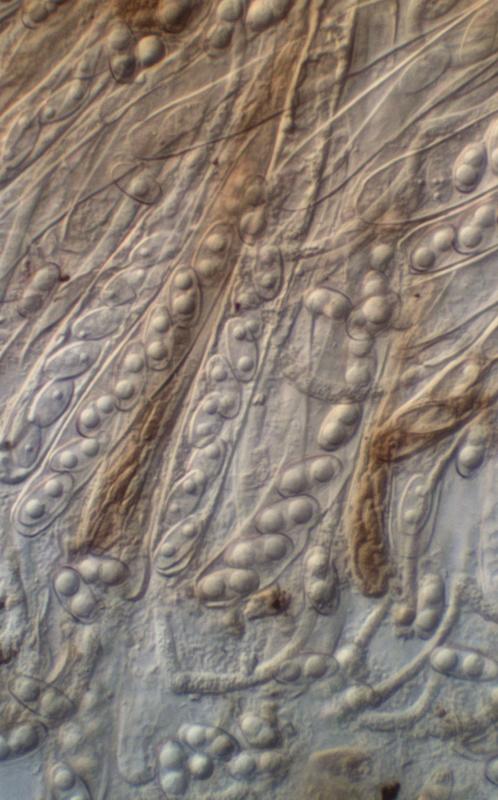
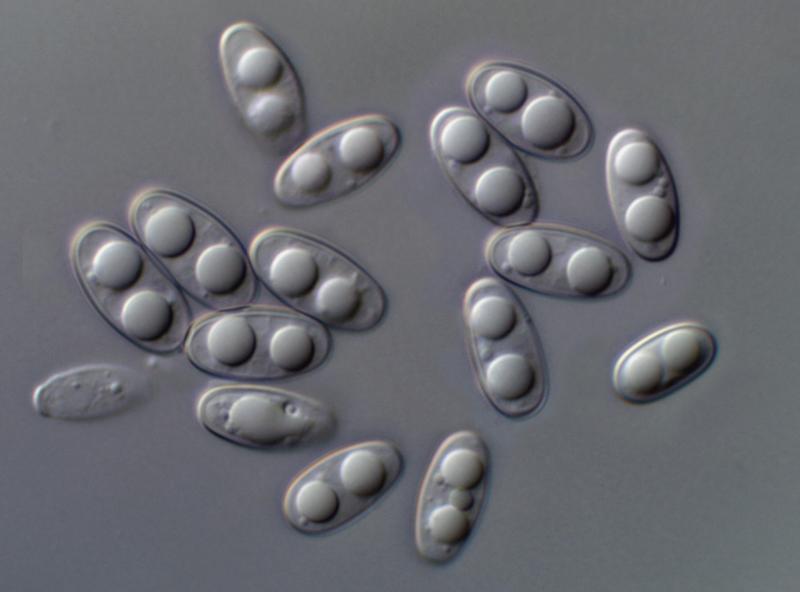
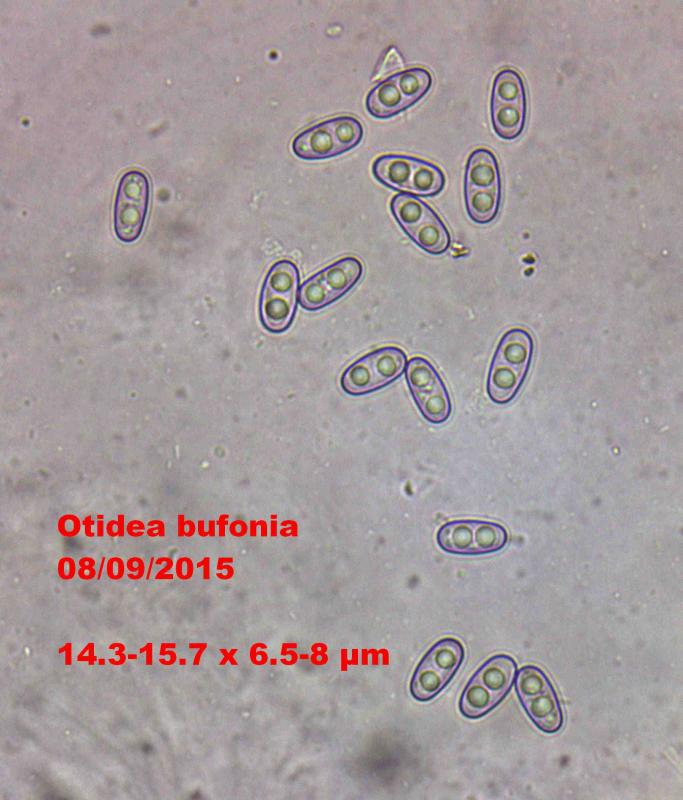
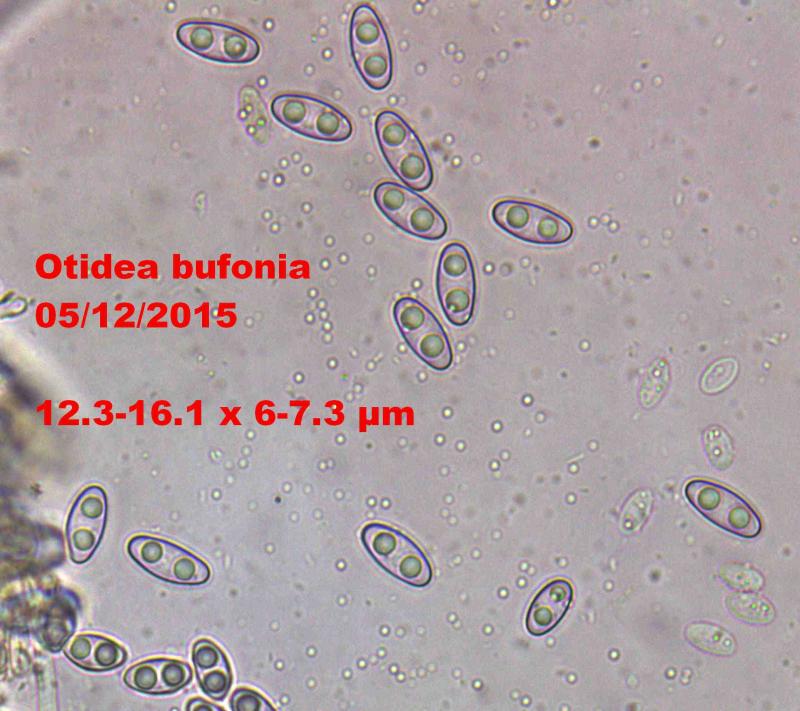
Paraphyses were curved at the apex, and contained tiny granules. I noticed that a number of asci contained shrunken aborted spores which had gone brown (see photo) although whether this is of taxonomic importance I don't know. The medulla contained dark encrustations and also scattered crystals (see image, in polarised light). The "warts" on the ectal margin were made up of more dark encrustations. The ascospores measured 13.2-14.8 x 6.6-7.6µm. All photographs are of living material in water.
Reference to the Persoonia monograph has led me to Otidea bufonia, my only concern is the shape of the spores, which seem to differ from others I have seen of that species. Any comments would be welcome.
Cordaliement
Chris
Chris Yeates,
17-12-2019 01:05
Re : dark brown Otidea
Aucune idées?
François Bartholomeeusen,
17-12-2019 22:16
Re : dark brown Otidea
Hi Chris,
Compare with my finds, seems your right!
Greetings,
François
Compare with my finds, seems your right!
Greetings,
François
Josep Torres,
18-12-2019 07:18

Re : dark brown Otidea
Hola Chris, de acuerdo con la determinación, aunque yo le sigo llamando Otidea umbrina, al parecer hay diversidad de opiniones en cuanto a la denominación actual, segúm Mycobank debemos llamarla Otidea bufonia y según Index Fungorum Otidea cochleata, así que prefiero llamarla por su nombre anterior, es decir Otidea umbrina.
A esta la he estudiado hasta en cuatro ocasiones, dejo las medidas esporales de mis tres estudios anteriores, en mi último estudio aún tengo pendiente la medición de las esporas.´13,7;15,1 X 6,3;7,2, 14,4;15,2 x 6,2;6,6 y 15;16,8 X 6,6;8 micras.
Saludos cordiales.
A esta la he estudiado hasta en cuatro ocasiones, dejo las medidas esporales de mis tres estudios anteriores, en mi último estudio aún tengo pendiente la medición de las esporas.´13,7;15,1 X 6,3;7,2, 14,4;15,2 x 6,2;6,6 y 15;16,8 X 6,6;8 micras.
Saludos cordiales.