
11-05-2026 12:32
 Bernard CLESSE
Pourriez-vous m'aider à identifier cette héloti
13-05-2026 15:26
 François Freléchoux
Bonjour,Voici une récolte faite il y a quelques j
12-05-2026 15:41
 Nicolas VAN VOOREN
Dear Ascolovers, especially interested in Pezizale
13-05-2026 12:05
 Thierry Blondelle
Bonjour à tous,J'aimerais avoir confirmation de c
10-05-2026 23:17
 Andreas Gminder
Hello,today we found in a moist steep decidous for
28-04-2026 20:07
 Lothar Krieglsteiner
... on twig in the air at standing Ceratonia siliq
27-04-2026 20:52
Lothar Krieglsteiner
Found on hanging tiwg of Olea europaea in dried-ou
11-05-2026 20:22
Lothar Krieglsteiner
on attached twig of standing Ficus caricaquite uns
29-04-2026 10:44
Lothar Krieglsteiner
growing at moist, drying-out soil at the side of a
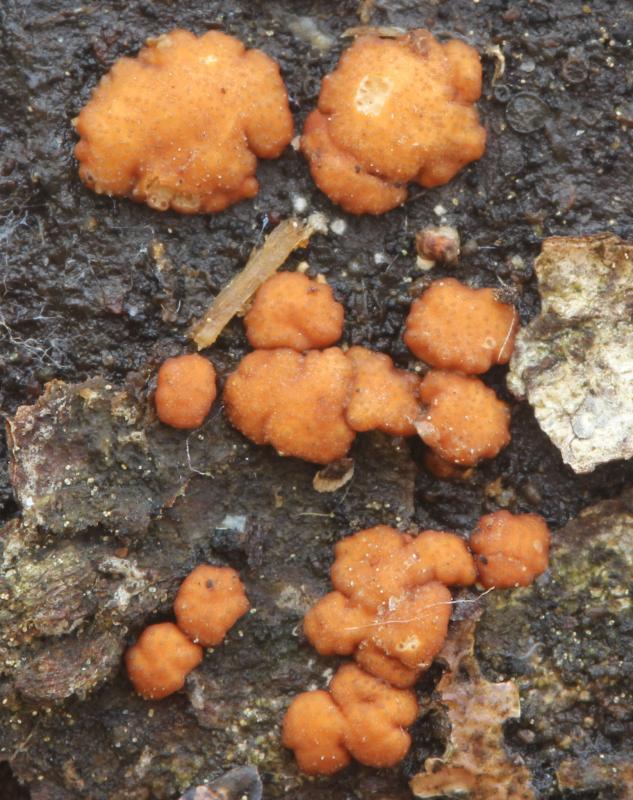
Trichoderma sp. # 50724 (Hypocrea splendens ?)
Roland Labbé,
12-12-2019 18:36
Bonjours !
Voici un Trichoderma (Hypocrea) inconnu de nous.
C'est possiblement un Tricholerma splendens.
Merci de nous aider à son identification.
Amitiés ! Roland
Données :
Substrat : écorce de hêtre mort
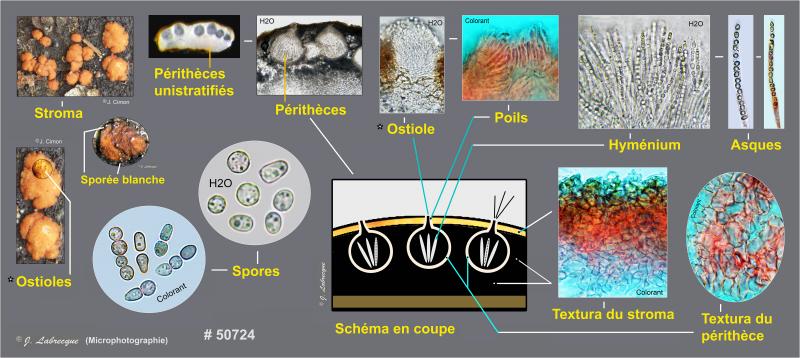
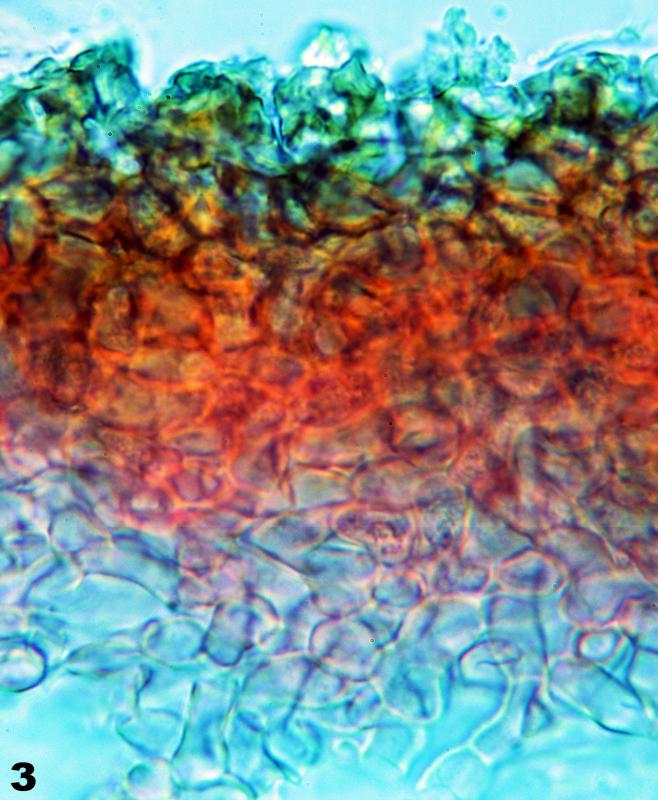
Stroma 2,8-3 mm de diam., étalé, un peu arrondi au sommet, jaune orangé, irrégulièrement et légèrement surmonté des ostioles, avec cortex pseudoparanchymateux
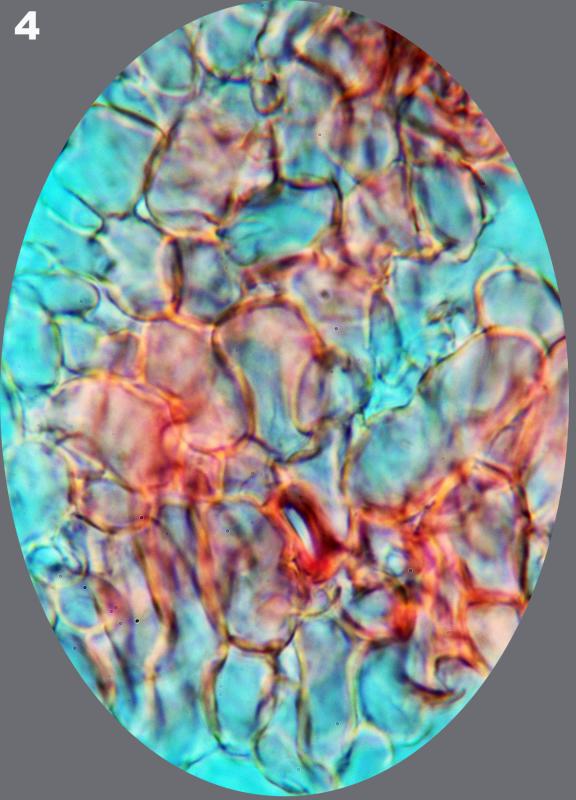
Paroi périthéciale en textura ± globulosa-angularis, formé de cellules hyalines, 5,6-17,2 x 7-14 µm
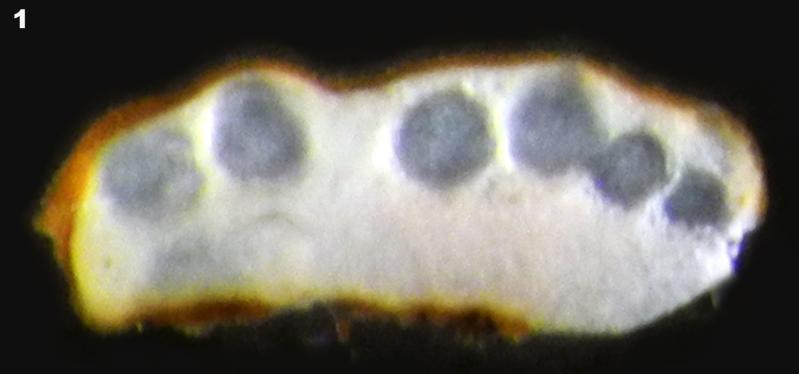
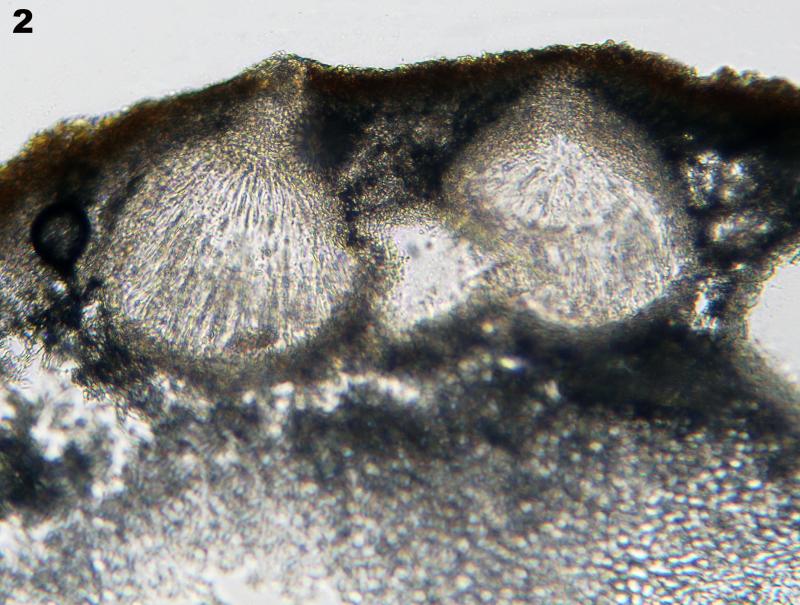
Périthèces jusqu'à 303,4 µm de hauteur totale et jusqu'à 260 µm de diam., irrégulièrement distribués, parfois alignés ou dispersés, immergés dans le stroma, unistratifiés, globuleux, rarement piriformes, avec col étroit jusqu'à 34 µm de diam. et 65 µm de hauteur, s'ouvrant sur un ostiole
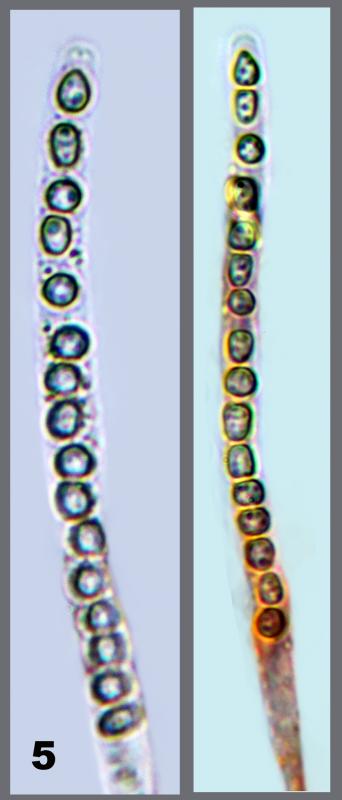
Asques cylindriques, à 16 spores unisériées, en formes alternantes souvent arrondies ou parfois anguleuses et rectangulaires, inamyloïdes, 121-146 x 5-6,9 µm
Paraphyses absentes
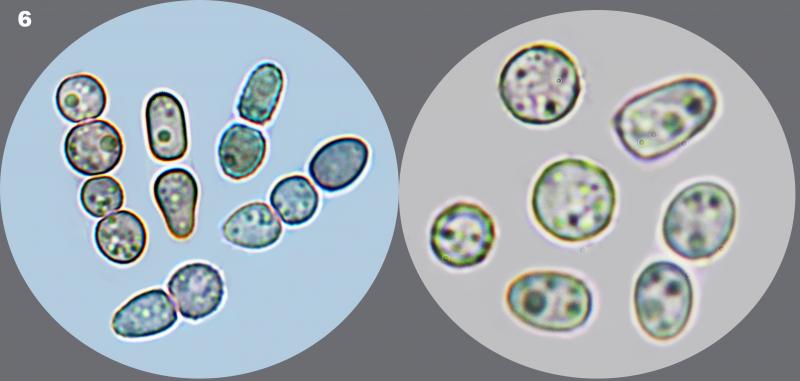
Spores (bi)tricellulaires, ponctuées à spinuleuses, hyalines, à cellule proximale ± rectangulaire avec une extrémité légèrement élargie, jusqu'à 7,8 x 4 µm, et cellule distale ellipsoïde tronquées avec une extrémité jusqu'à 7,8 x 4,7 µm, avec septum jusqu'à 0,5 µm de diam.
Poils de l'ostiole cylindriques, septés à la base, hyalins, 10,1-16,5 x 1,3-2,1 µm
Stroma 2,8-3 mm de diam., étalé, un peu arrondi au sommet, jaune orangé, irrégulièrement et légèrement surmonté des ostioles, avec cortex pseudoparanchymateux
Paroi périthéciale en textura ± globulosa-angularis, formé de cellules hyalines, 5,6-17,2 x 7-14 µm
Périthèces jusqu'à 303,4 µm de hauteur totale et jusqu'à 260 µm de diam., irrégulièrement distribués, parfois alignés ou dispersés, immergés dans le stroma, unistratifiés, globuleux, rarement piriformes, avec col étroit jusqu'à 34 µm de diam. et 65 µm de hauteur, s'ouvrant sur un ostiole
Asques cylindriques, à 16 spores unisériées, en formes alternantes souvent arrondies ou parfois anguleuses et rectangulaires, inamyloïdes, 121-146 x 5-6,9 µm
Paraphyses absentes
Spores (bi)tricellulaires, ponctuées à spinuleuses, hyalines, à cellule proximale ± rectangulaire avec une extrémité légèrement élargie, jusqu'à 7,8 x 4 µm, et cellule distale ellipsoïde tronquées avec une extrémité jusqu'à 7,8 x 4,7 µm, avec septum jusqu'à 0,5 µm de diam.
Poils de l'ostiole cylindriques, septés à la base, hyalins, 10,1-16,5 x 1,3-2,1 µm
Christian Lechat,
12-12-2019 20:04

Re : Trichoderma sp. # 50724 (Hypocrea splendens ?)
Bonjour Roland,
pourrais-tu envoyer les images séparées et non en photomontage?
Merci,
Amitiés,
Christian
Roland Labbé,
13-12-2019 03:02
Re : Trichoderma sp. # 50724 (Hypocrea splendens ?)
Voici une première série de photos individuelles :
1. périthèces; 2. périthèces agrandis
Roland Labbé,
13-12-2019 03:03
Re : Trichoderma sp. # 50724 (Hypocrea splendens ?)
Voici une deuxième série de photos individuelles :
3. textura du stroma; 4 textura du périthèce
Roland Labbé,
13-12-2019 03:05
Re : Trichoderma sp. # 50724 (Hypocrea splendens ?)
Voici une troisième série de photos individuelles :
5. asques; 6. spores
Roland
Mlcoch Patrik,
15-12-2019 21:38

Re : Trichoderma sp. # 50724 (Hypocrea splendens ?)
Is need to see of conidia and to know Q parametre.
Hermann Voglmayr,
17-12-2019 14:53

Re : Trichoderma sp. # 50724 (Hypocrea splendens ?)
Compare with Trichoderma (=Hypocrea) rogersonii - in Europe found mostly on Fagus sylvatica
Roland Labbé,
21-12-2019 00:57
Re : Trichoderma sp. # 50724 (Hypocrea splendens ?)
Merci Hermann !
J'ai vérifié et ça pourrait correspondre.
J'ai vérifié et ça pourrait correspondre.
Vous, est-ce que vous croyez que c'est H. rogersonii ?
Salutations !
Roland
Hermann Voglmayr,
21-12-2019 16:12
Re : Trichoderma sp. # 50724 (Hypocrea splendens ?)
Yes, it is likely, as it is not so uncommon on beech. However, identification of white- spored pulvinate Trichoderma is often impossible with certainty, without sequence data. E.g.also T. koningii has orange stromata which are very similar to rogersonii, but it is rarer (at least the teleomorph). Best, Hermann
Roland Labbé,
21-12-2019 17:14
Re : Trichoderma sp. # 50724 (Hypocrea splendens ?)
Merci, Hermann !
Roland