10-05-2026 23:17
 Andreas Gminder
Hello,today we found in a moist steep decidous for
14-05-2026 05:36
Ethan CrensonHi all, I haven't paid much attention to Lachnu
16-03-2011 14:31
roman vargas albertoHi. I would like some opinion about this Peziza
11-05-2026 12:32
 Bernard CLESSE
Pourriez-vous m'aider à identifier cette héloti
13-05-2026 15:26
 François Freléchoux
Bonjour,Voici une récolte faite il y a quelques j
12-05-2026 15:41
 Nicolas VAN VOOREN
Dear Ascolovers, especially interested in Pezizale
13-05-2026 12:05
 Thierry Blondelle
Bonjour à tous,J'aimerais avoir confirmation de c
28-04-2026 20:07
 Lothar Krieglsteiner
... on twig in the air at standing Ceratonia siliq
27-04-2026 20:52
Lothar Krieglsteiner
Found on hanging tiwg of Olea europaea in dried-ou
11-05-2026 20:22
Lothar Krieglsteiner
on attached twig of standing Ficus caricaquite uns
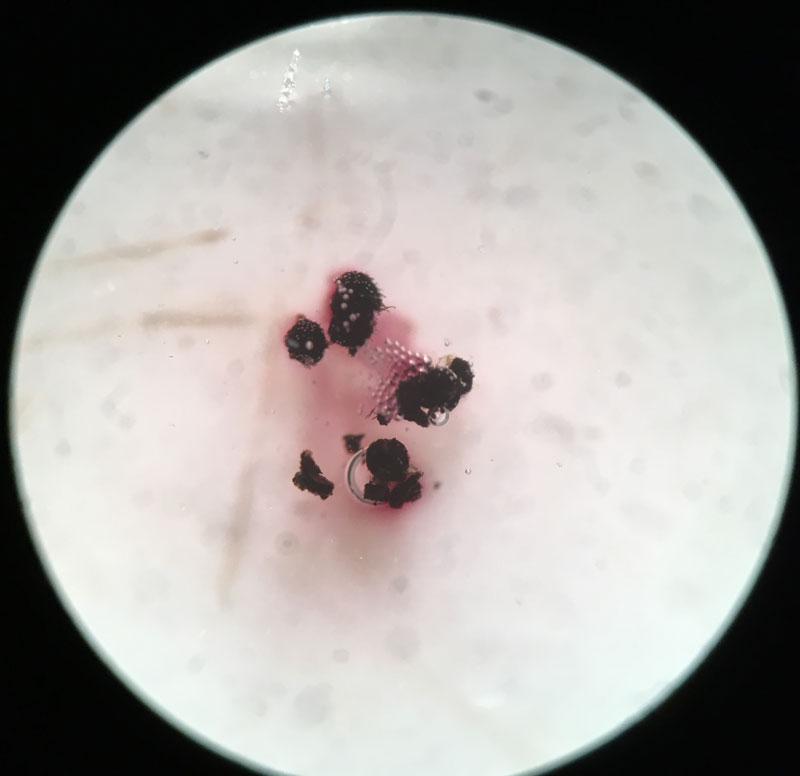
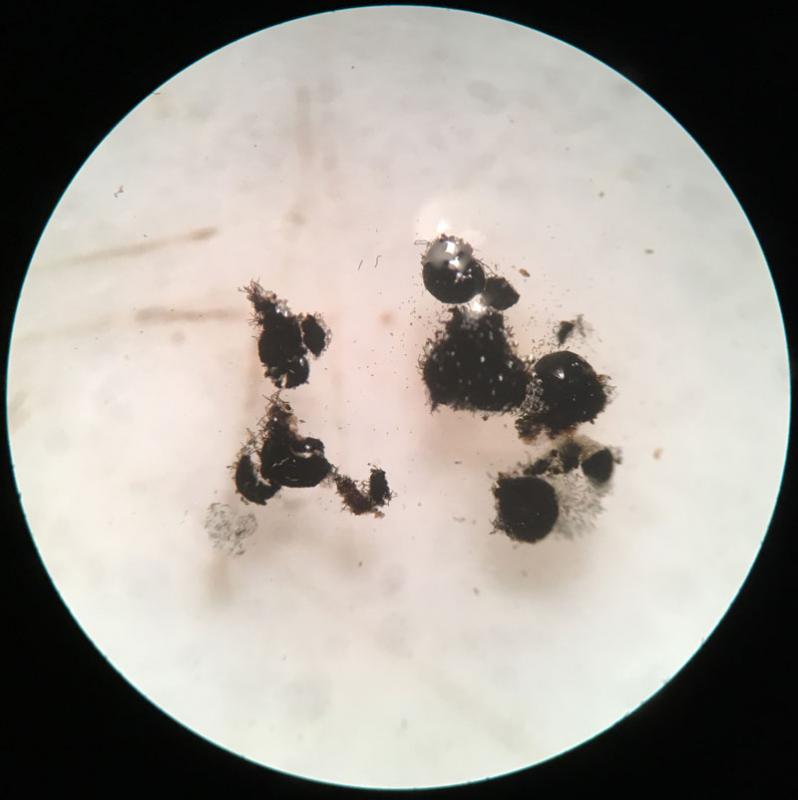
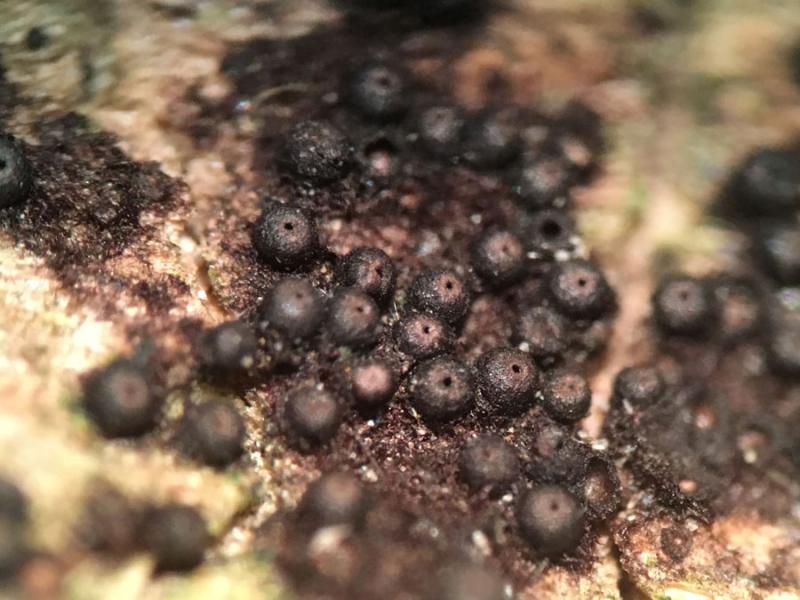
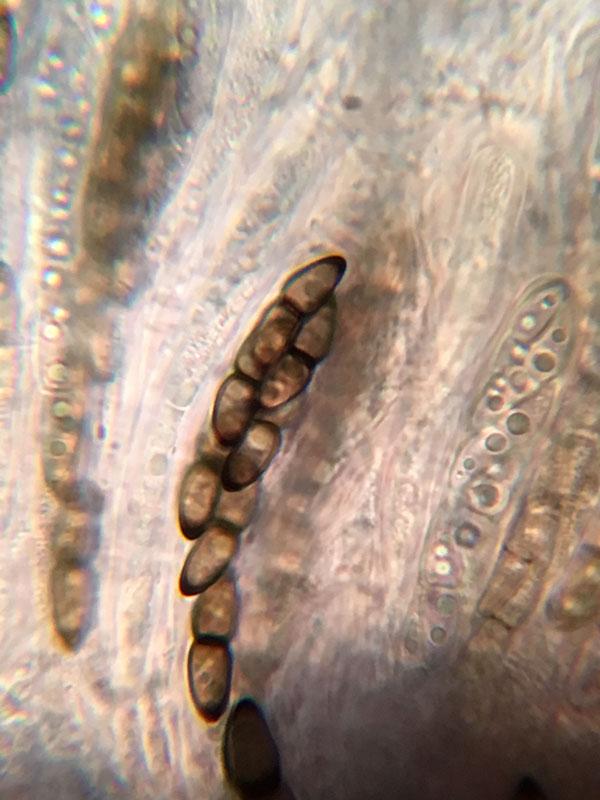
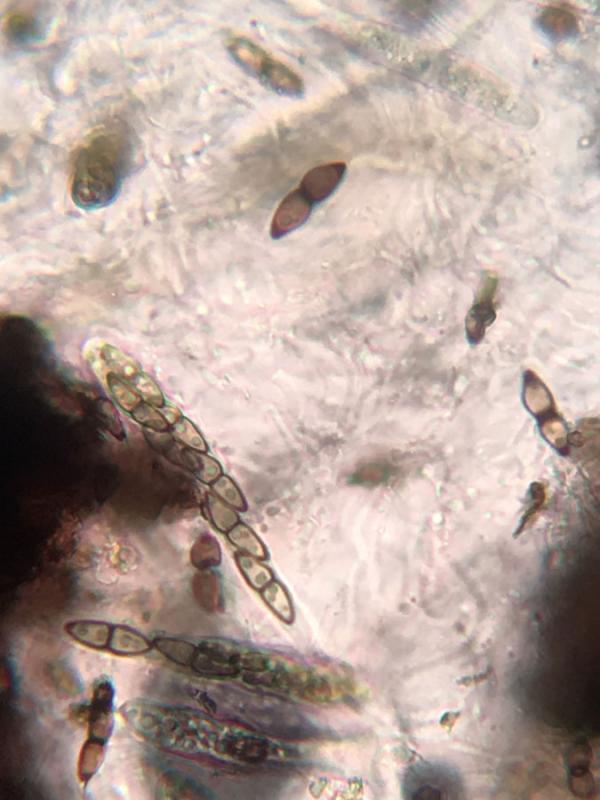
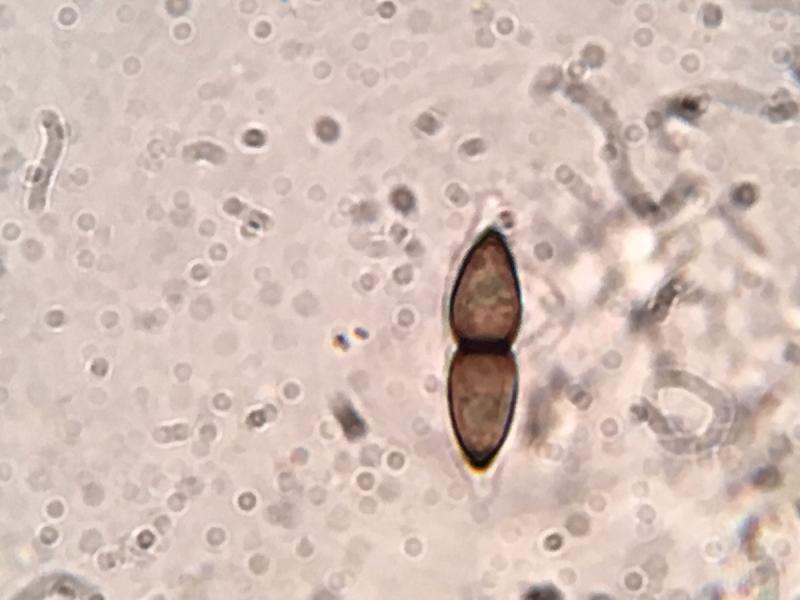
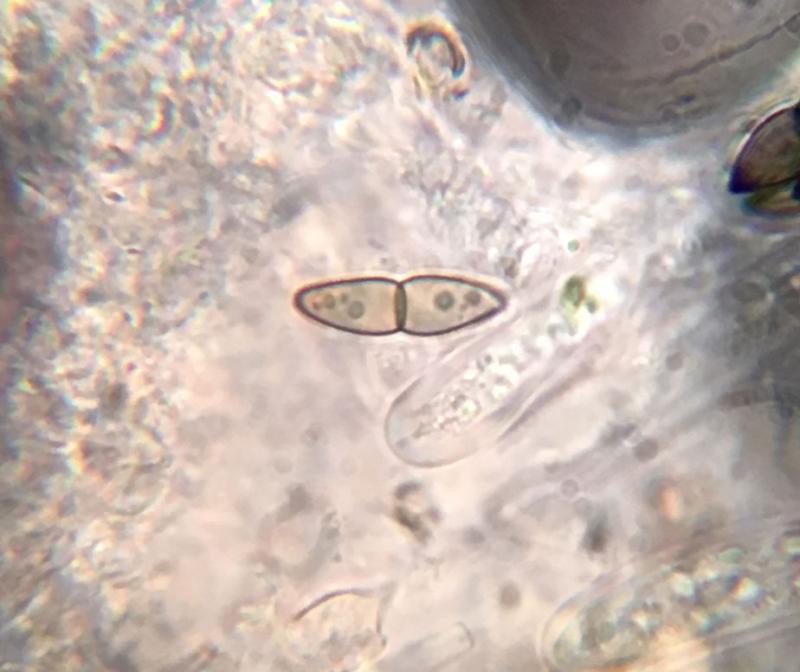
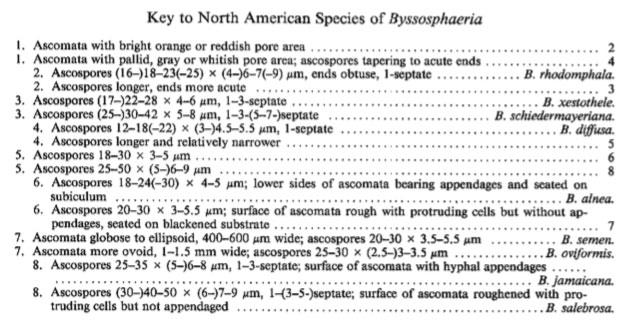
I recently found what I think is Byssosphaeria sp. near New York City. I frequently collect B. rhodomphala in many NYC parks, but this collection seems a different to me. For one thing the red pigments around the ostiole are not pronounced--this is a fairly large collection and I usually see some red somewhere. The spores seem quite a bit darker brown with the ends of the cells quite dark brown. I see a sheath around the spores and/or hyaline spore appendages at the ends of the spores. Spores measure 17.5-23 x 5-6µm. Asci about 109 x 11µm. Perhaps I simply collected over-mature fruiting bodies of B. rhodomphala that lost the red pigmentation around the ostioles. But I have been going through Barr's key in her Melanommatales paper (key pictured) and puzzling over other possibilities. Does anyone have any input they can provide? Thank you in advance.
Ethan

Hi Ethan,
You have analyzed the situation very well
In addition, maybe you should also compare it to B. xestothele ?
I attach a small synthesis work that I had done about the existing Byssosphaeria.
If you don't have the Mexican paper, I can send it to you.
Best wishes,
Alain
 Byssosphaeria-synthese-0001.xls