
10-05-2026 23:17
 Andreas Gminder
Hello,today we found in a moist steep decidous for
14-05-2026 05:36
Ethan CrensonHi all, I haven't paid much attention to Lachnu
16-03-2011 14:31
roman vargas albertoHi. I would like some opinion about this Peziza
11-05-2026 12:32
 Bernard CLESSE
Pourriez-vous m'aider à identifier cette héloti
13-05-2026 15:26
 François Freléchoux
Bonjour,Voici une récolte faite il y a quelques j
12-05-2026 15:41
 Nicolas VAN VOOREN
Dear Ascolovers, especially interested in Pezizale
13-05-2026 12:05
 Thierry Blondelle
Bonjour à tous,J'aimerais avoir confirmation de c
28-04-2026 20:07
 Lothar Krieglsteiner
... on twig in the air at standing Ceratonia siliq
27-04-2026 20:52
Lothar Krieglsteiner
Found on hanging tiwg of Olea europaea in dried-ou
11-05-2026 20:22
Lothar Krieglsteiner
on attached twig of standing Ficus caricaquite uns
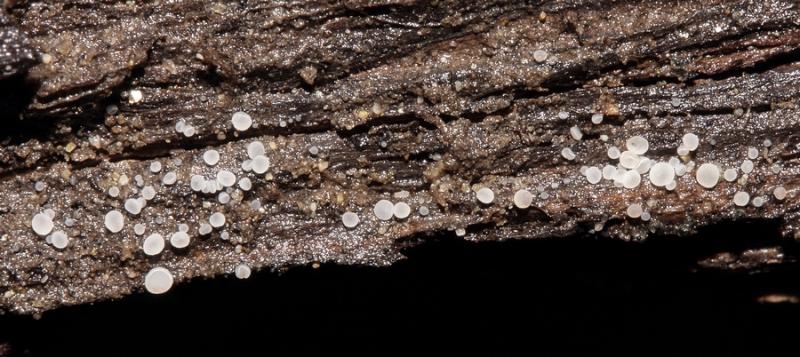
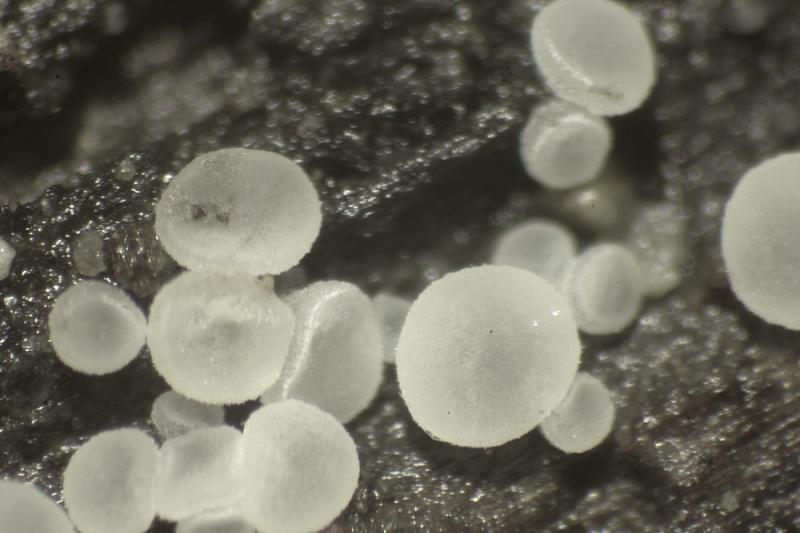
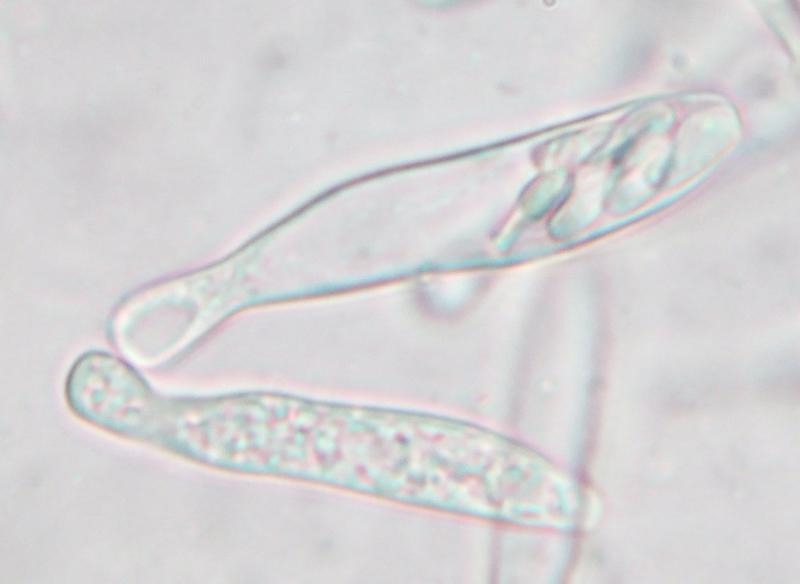
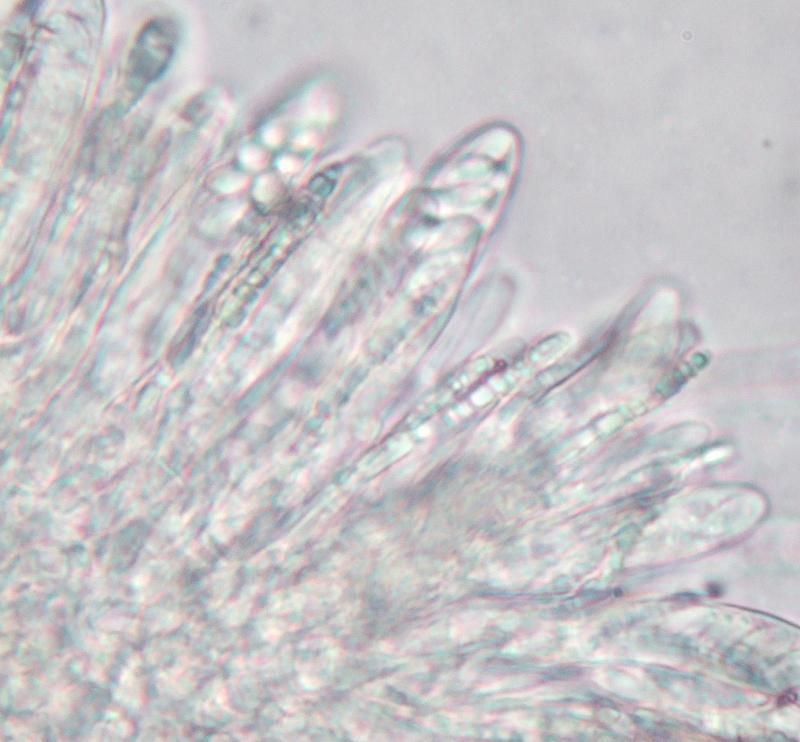
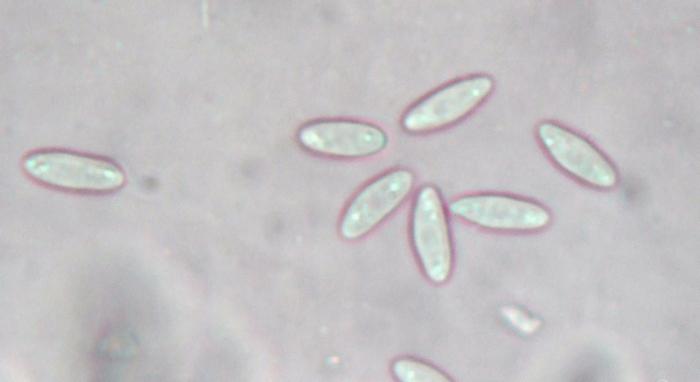
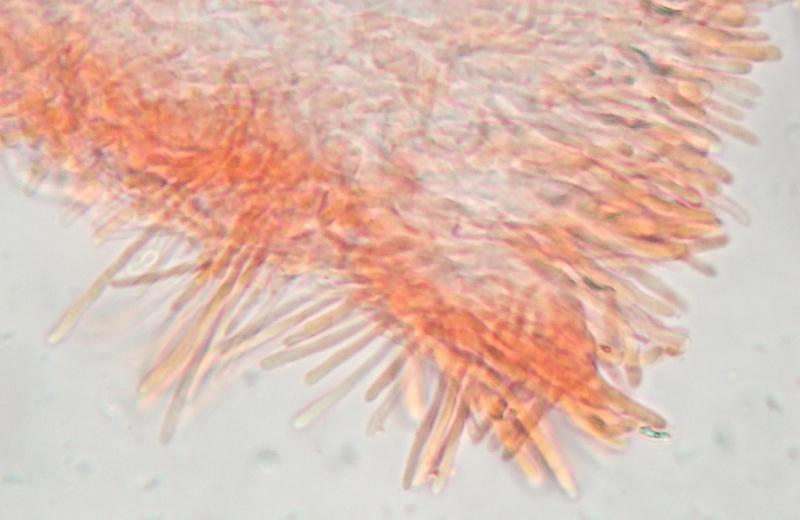

SAlut Pascal
As tu une image de la réaction de l'apex des asques dans le lugol ? Cela permettrait de vérifier l'appartenance à un genre selon le type de réaction . Vérifier aussi la présence ou non de crochets
La chair est vraiment gélatineuse ?
Michel
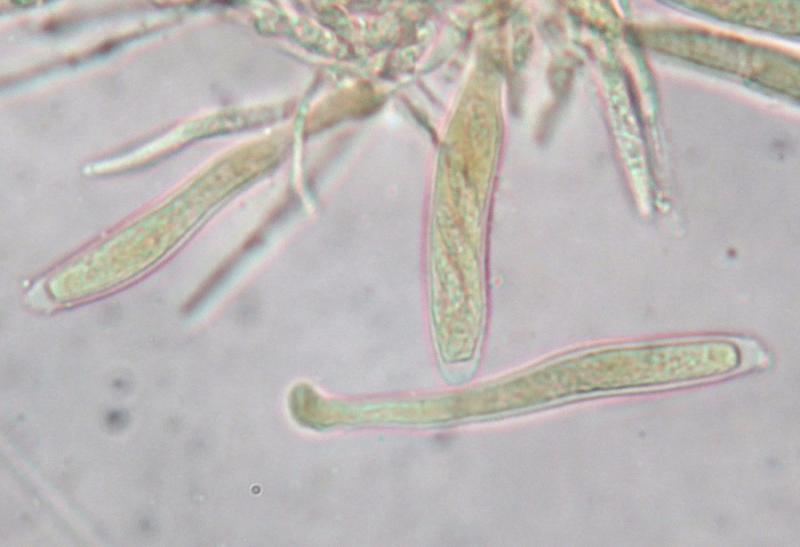
Si tu as du bleu de crésyl aqueux, tu peux aussi vérifier la coloration des guttules présentes dans les paraphyses.

The paraphysis content exclude any Hyaloscypha (incl. Parorbiliopsis). What would help is a median section showing the excipulum and marginal hair-like structures.
2 mm is very large for such a fungus, I would estimate the maximum to 0.5 mm.
Zotto
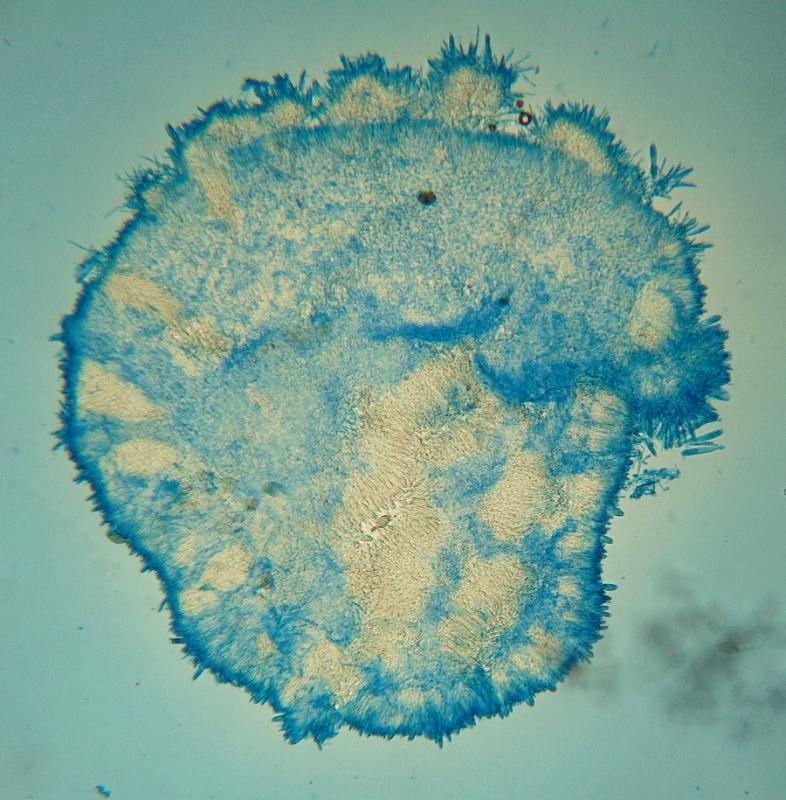
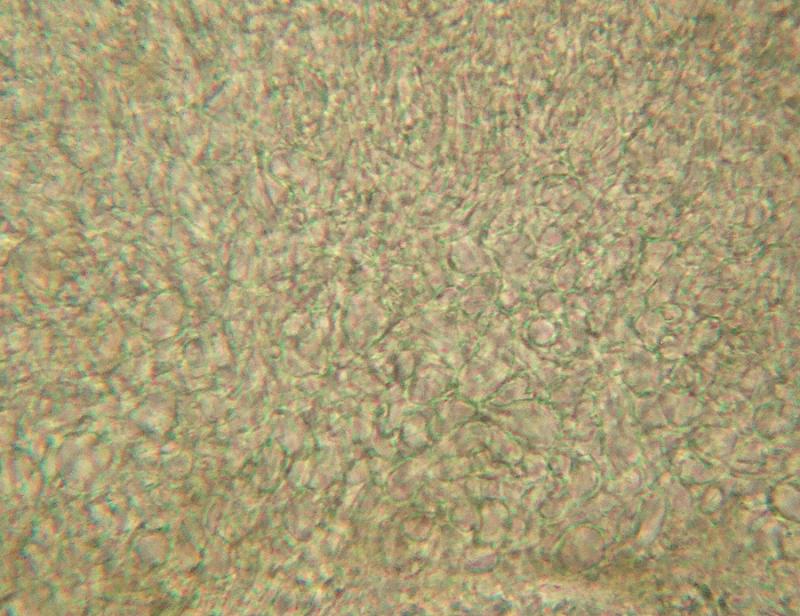
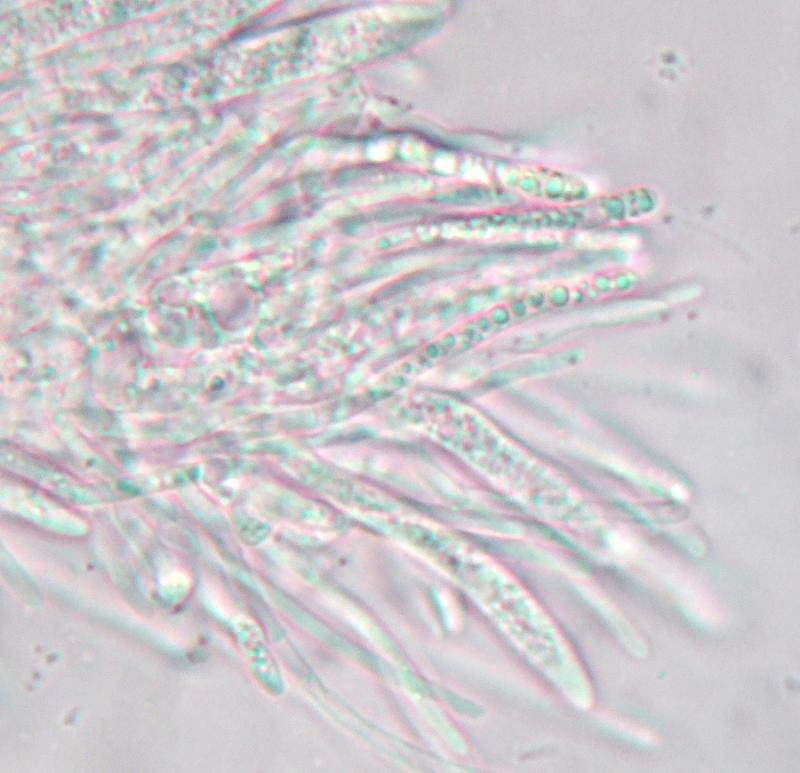
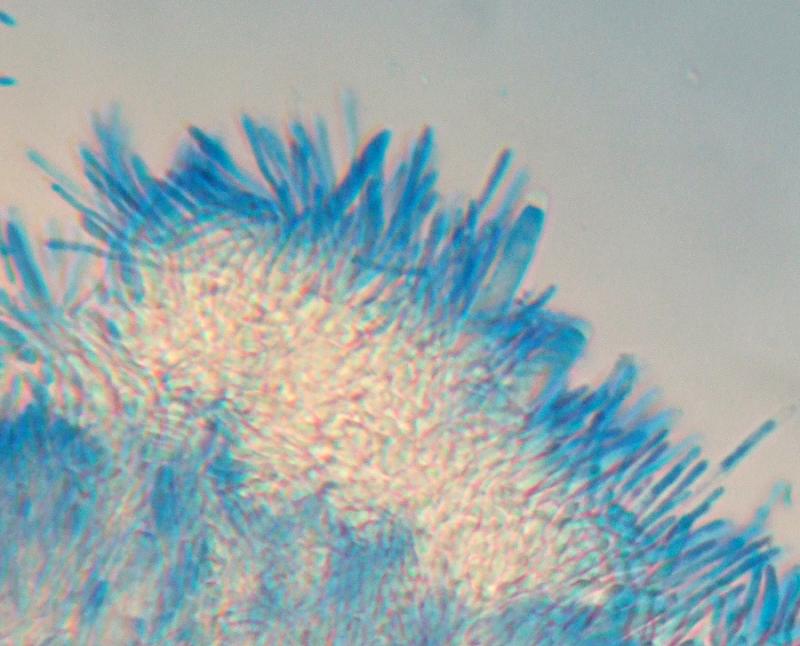
The CRB test requires oil immersion, but it is clear to me that these drops in the paraphyses are vacuoles, not oil drops.
One idea I got i the group of Phaeohelotium imberbe, which usually has amyloid ascus apical rings. But the macro does not look like, and the spores are perhaps too narrow (we even do not know their width).