10-05-2026 23:17
 Andreas Gminder
Hello,today we found in a moist steep decidous for
14-05-2026 05:36
Ethan CrensonHi all, I haven't paid much attention to Lachnu
16-03-2011 14:31
roman vargas albertoHi. I would like some opinion about this Peziza
11-05-2026 12:32
 Bernard CLESSE
Pourriez-vous m'aider à identifier cette héloti
13-05-2026 15:26
 François Freléchoux
Bonjour,Voici une récolte faite il y a quelques j
12-05-2026 15:41
 Nicolas VAN VOOREN
Dear Ascolovers, especially interested in Pezizale
13-05-2026 12:05
 Thierry Blondelle
Bonjour à tous,J'aimerais avoir confirmation de c
28-04-2026 20:07
 Lothar Krieglsteiner
... on twig in the air at standing Ceratonia siliq
27-04-2026 20:52
Lothar Krieglsteiner
Found on hanging tiwg of Olea europaea in dried-ou
11-05-2026 20:22
Lothar Krieglsteiner
on attached twig of standing Ficus caricaquite uns
Nectria?
Guy Buddy,
19-09-2019 22:08
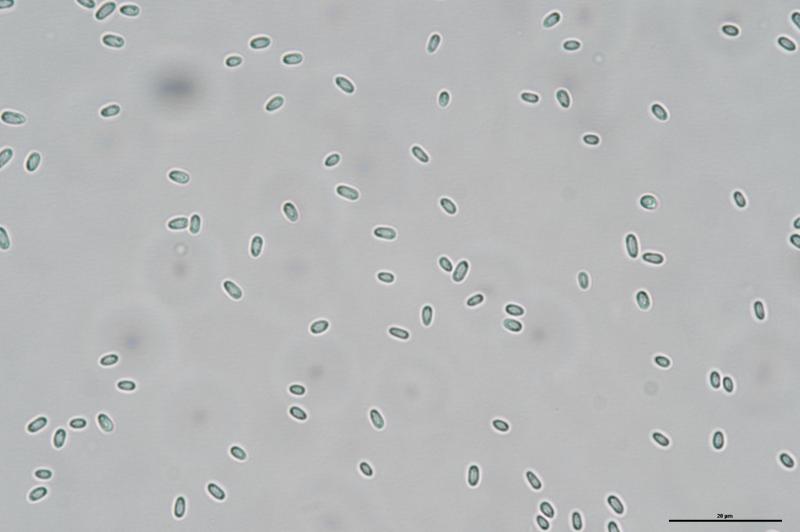
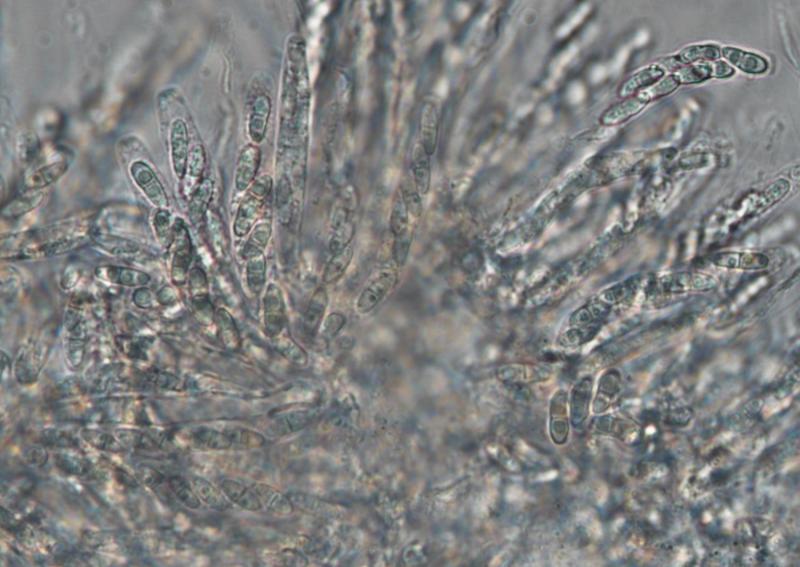
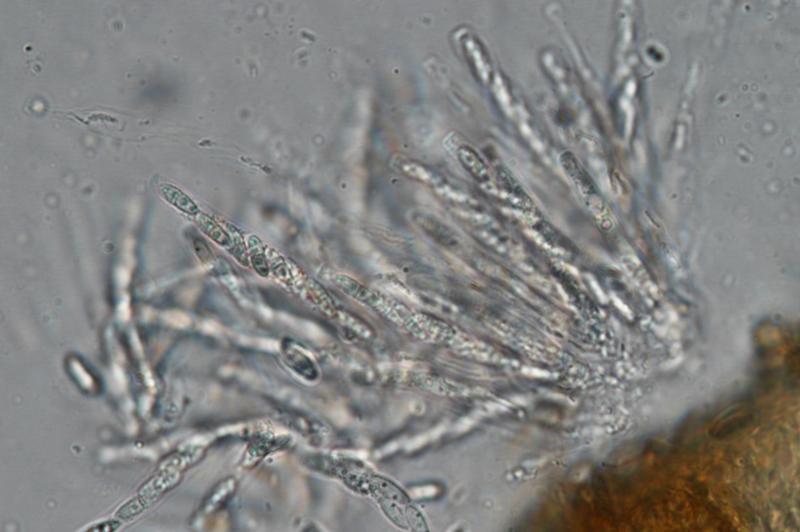
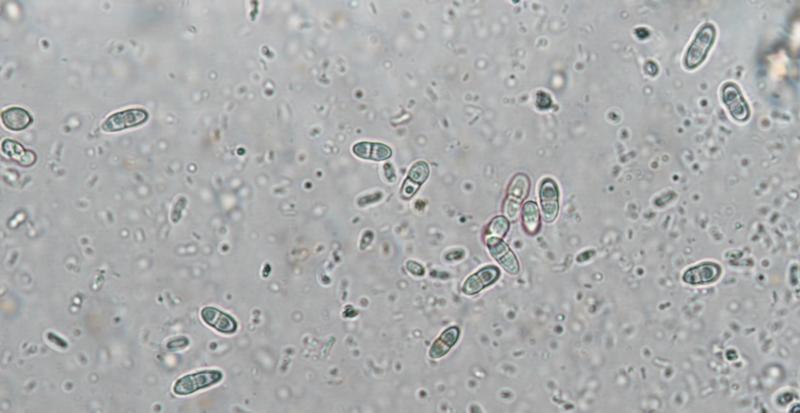
I was referring to: "Three Species of Hypomyces Growing on Basidiomata of Stereaceae", by Kadri Põldmaa, Mycologia Vol. 95, No. 5 (Sep. - Oct., 2003), pp. 921-933. But ascospores do not have warts. After reading this I am leaning back to Nectriaceae.
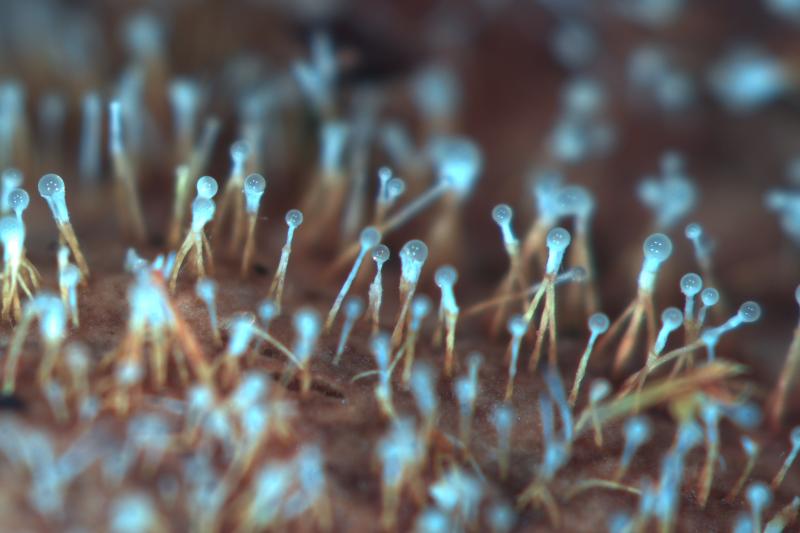
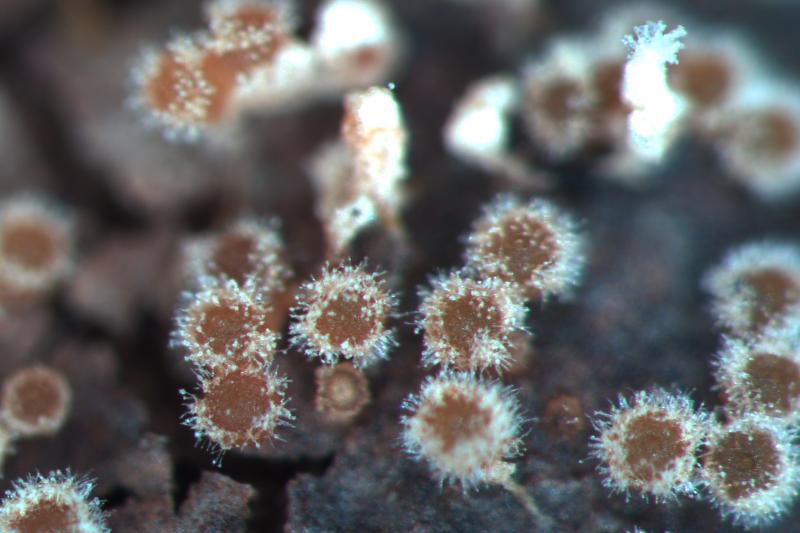
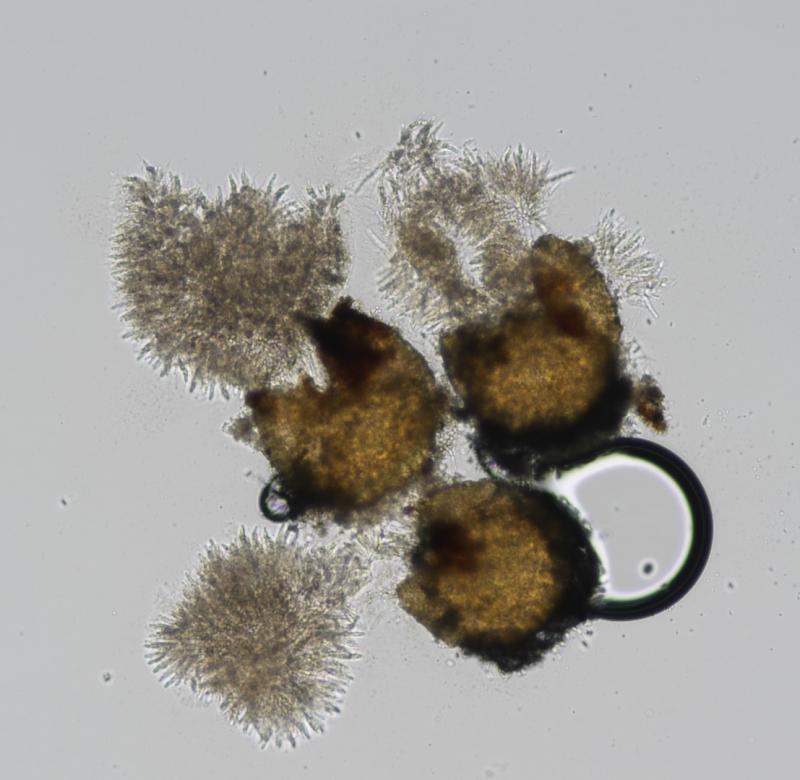
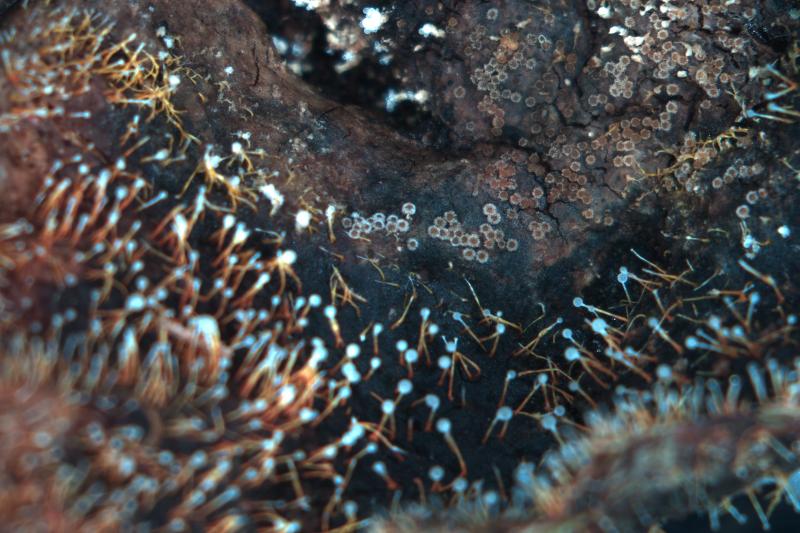
There are some other options such as Sphaerostilbella, but I am not familiar with any of these. Do you think the synnemata and the perithecia are related, and that this a species of Nectria?
Thanks,
Devin
Josep Torres,
20-09-2019 07:53

Re : Nectria?
Hola Guy, sobre Stereum y con estas esporas solo se me ocurre la Nectriopsis oropensoides, aunque no lo tengo del todo claro.
Saludos cordiales
Saludos cordiales
Guy Buddy,
20-09-2019 17:52
Re : Nectria?
Hi Josep,
Nectriopsis is possible, but macroscopically it does look a bit different. I think the perithecia are covered in some kind of hyphomycete ( or the real anamorph), without a subiculum that I see from photos of Nectriopsis. I will look into it though, thanks for the suggestion.
Nectriopsis is possible, but macroscopically it does look a bit different. I think the perithecia are covered in some kind of hyphomycete ( or the real anamorph), without a subiculum that I see from photos of Nectriopsis. I will look into it though, thanks for the suggestion.
Guy Buddy,
26-09-2019 18:15
Re : Nectria?
For the moment, I believe the synnemata are Gliocladium, described as a anamorph of Sphaerostilbella. I am refering to "Genera in Bionectriaceae, Hypocreaceae, and Nectriaceae (Hypocreales) proposed for acceptance or rejection". IMA Fungus. 2013 Jul; 4(1): 41–51, which declares Gliocladium as the anamorph for Sphaerostilbella.
Looking at some pictures from:
"Sphaerostilbella broomeana-group (Hypocreales, Ascomycota)", Kadri Põldmaa, Gerald Bills, David P. Lewis, Heidi Tamm. February 2019, Volume 18, Issue 1–2, pp 77–89. It looks like the anamorph is covering the perithecia.
If the anamorph is covering the perithecium, how is the Gliocladium synnemata related? Does anyone know?
Thanks,
Devin
Looking at some pictures from:
"Sphaerostilbella broomeana-group (Hypocreales, Ascomycota)", Kadri Põldmaa, Gerald Bills, David P. Lewis, Heidi Tamm. February 2019, Volume 18, Issue 1–2, pp 77–89. It looks like the anamorph is covering the perithecia.
If the anamorph is covering the perithecium, how is the Gliocladium synnemata related? Does anyone know?
Thanks,
Devin