
10-05-2026 23:17
 Andreas Gminder
Hello,today we found in a moist steep decidous for
14-05-2026 05:36
Ethan CrensonHi all, I haven't paid much attention to Lachnu
16-03-2011 14:31
roman vargas albertoHi. I would like some opinion about this Peziza
11-05-2026 12:32
 Bernard CLESSE
Pourriez-vous m'aider à identifier cette héloti
13-05-2026 15:26
 François Freléchoux
Bonjour,Voici une récolte faite il y a quelques j
12-05-2026 15:41
 Nicolas VAN VOOREN
Dear Ascolovers, especially interested in Pezizale
13-05-2026 12:05
 Thierry Blondelle
Bonjour à tous,J'aimerais avoir confirmation de c
28-04-2026 20:07
 Lothar Krieglsteiner
... on twig in the air at standing Ceratonia siliq
27-04-2026 20:52
Lothar Krieglsteiner
Found on hanging tiwg of Olea europaea in dried-ou
11-05-2026 20:22
Lothar Krieglsteiner
on attached twig of standing Ficus caricaquite uns
 Hola.
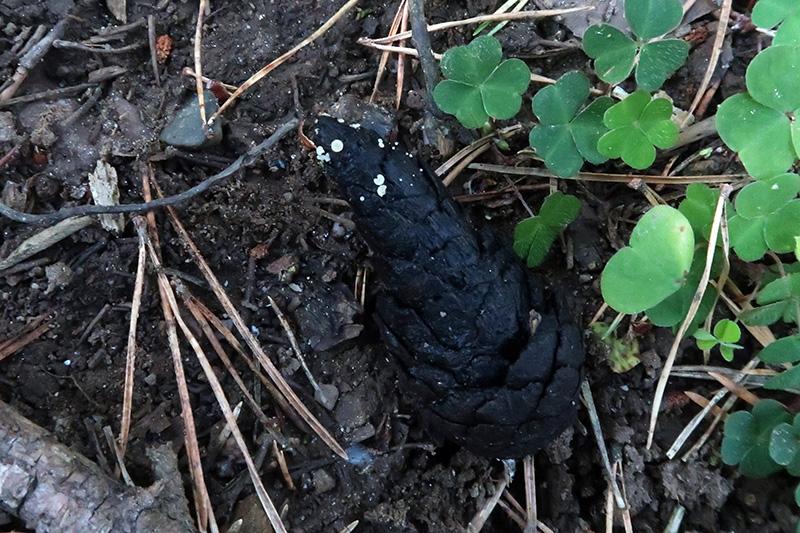
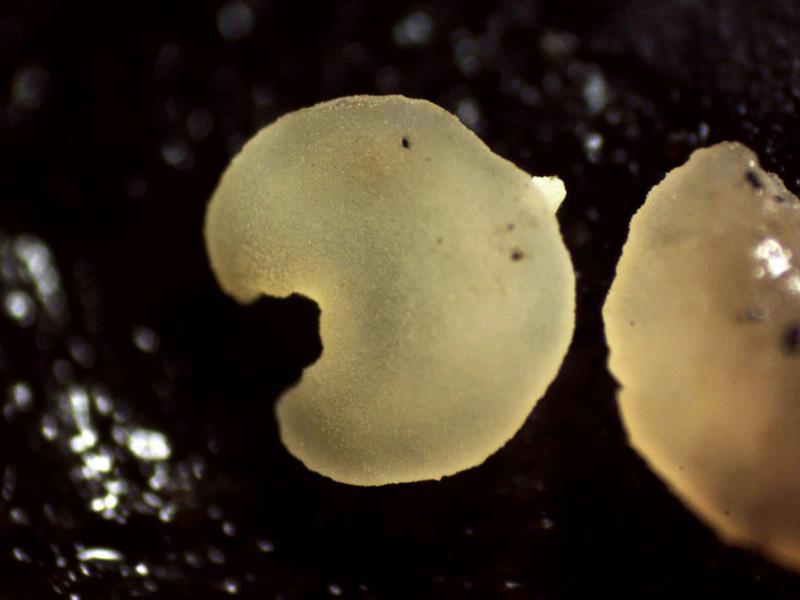
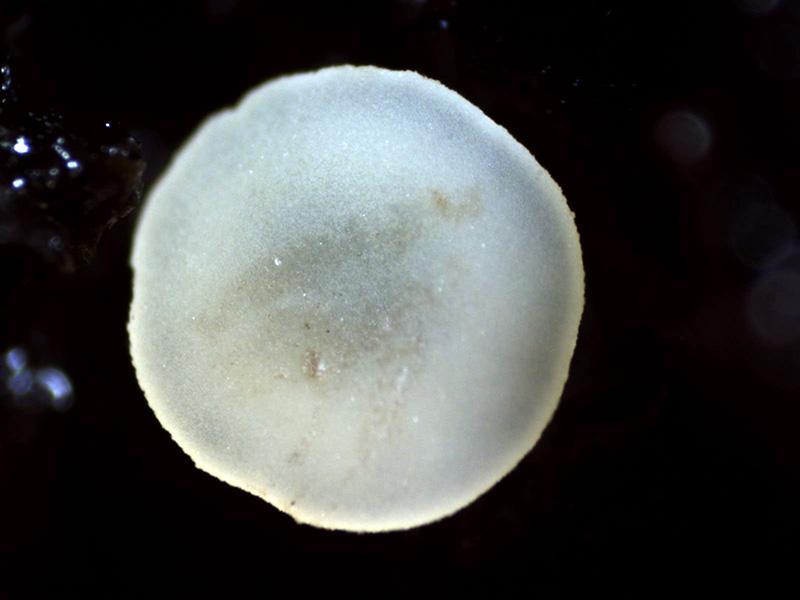
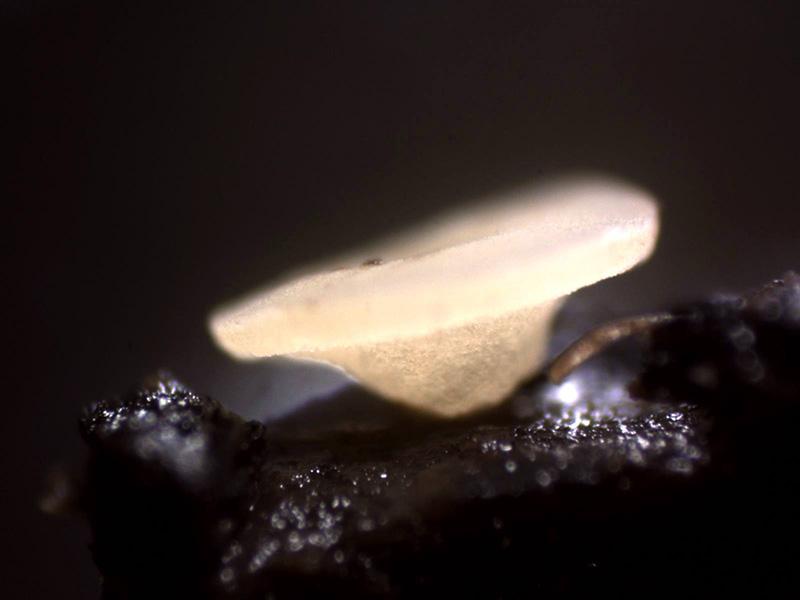
Hola.Un Helotial del pasado 8 de Septiembre sobre una piña muy degradada de Pinus sylvestris, semisumergida en un arroyo de agua limpia.
Apotecios de color blanco de entre 1,3 a 1,5 mm. en forma de disco con un corto y rudimentario pié.
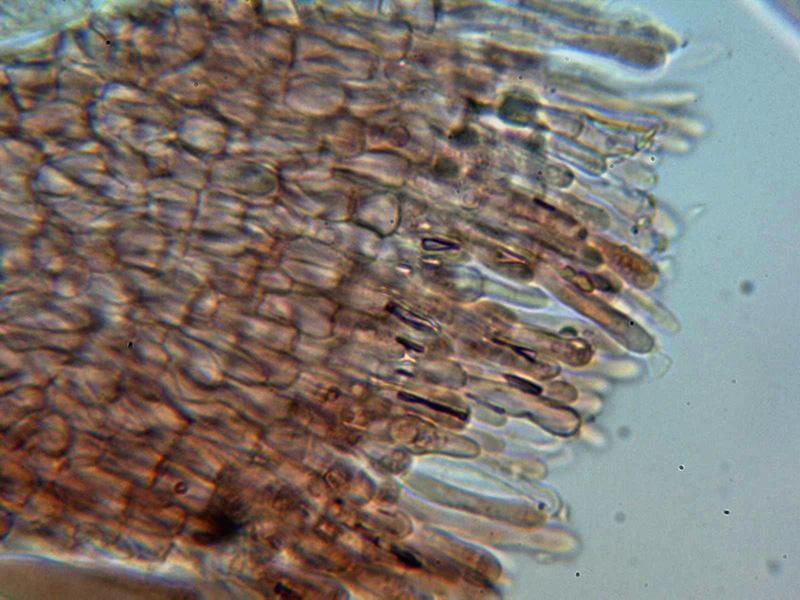
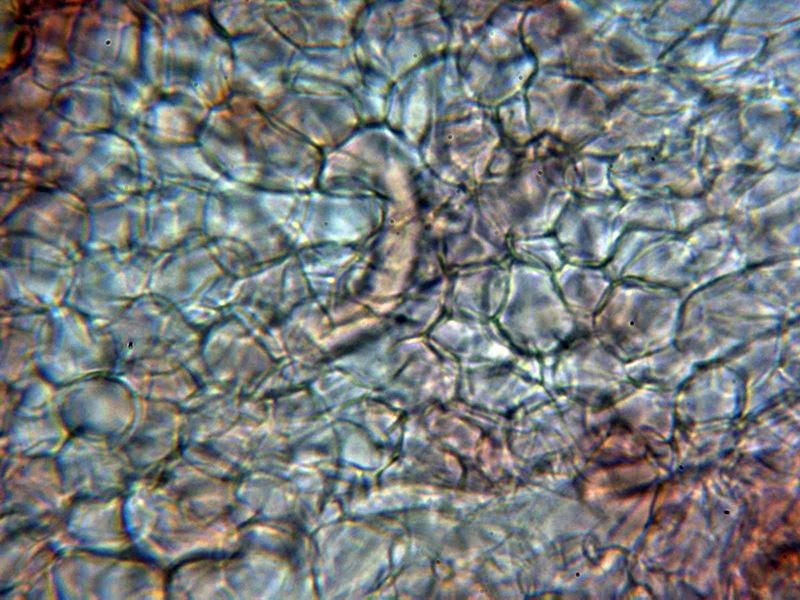
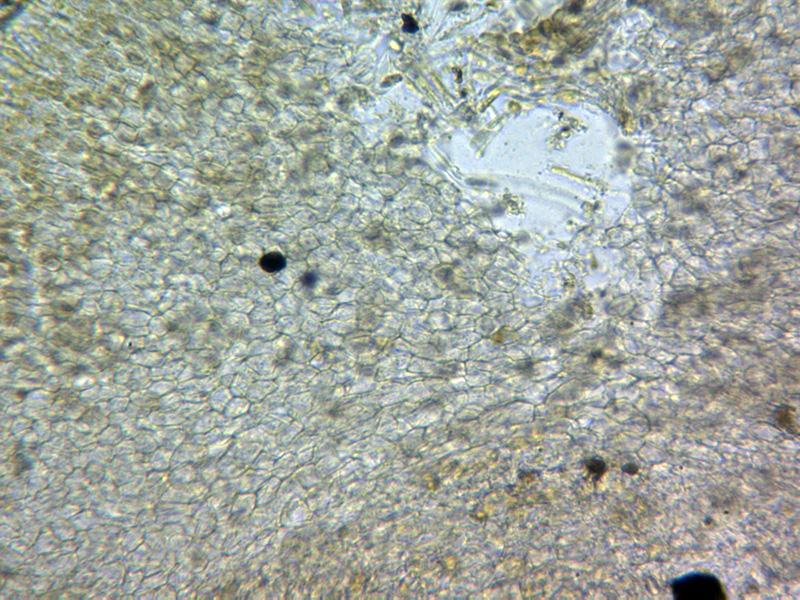
Hifas del excípulo ectal de textura angularis de entre 8,3 a 16,4 µm.
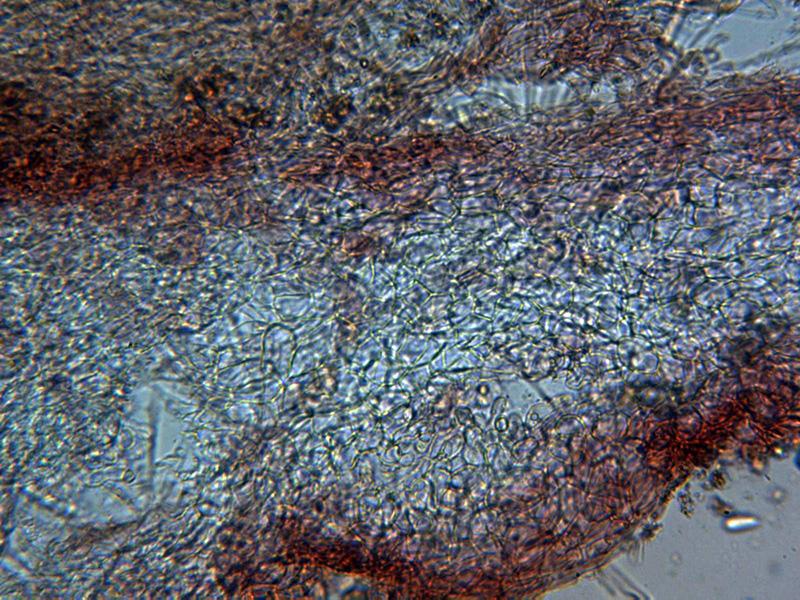
Hifas del excípulo medular de estructura intricada, con tabiques simples y con una anchura de entre 3,2 a 4,4 µm.
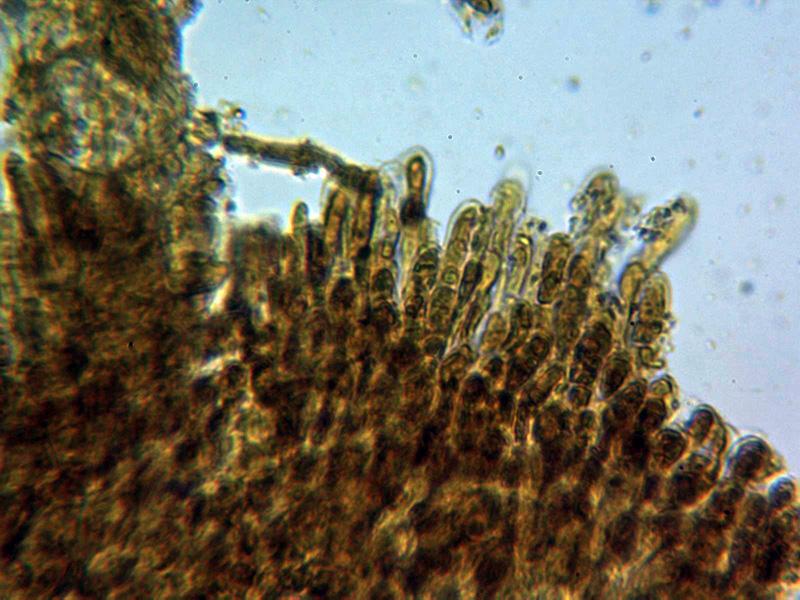
Contorno con unas hifas terminales a modo de rudimentarios pelos con unas medidas de entre 29 a 37 µm. de largo por 3,2 a 3,9 µm. de ancho.
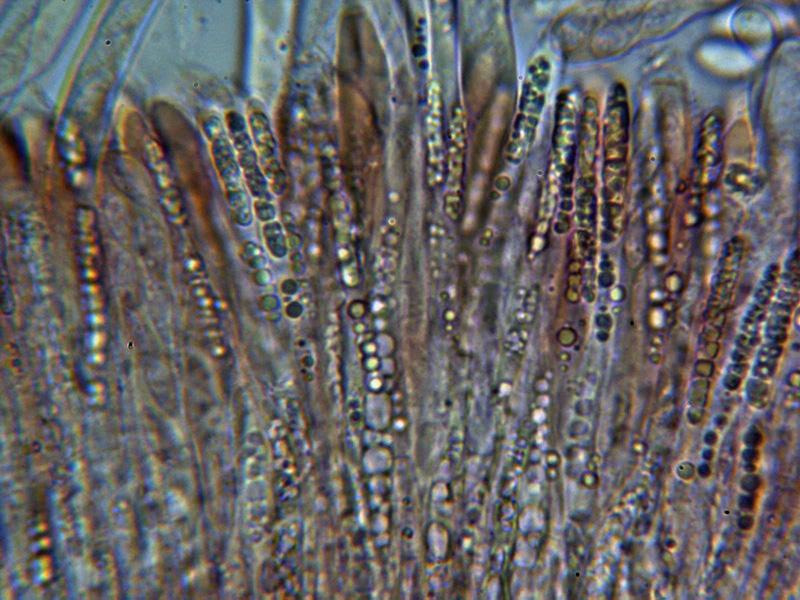
Ascas octospóricas de entre 66 a 77 µm. por 8,2 a 10,6 µm., con reacción amiloide del aparato apical al IKI (+) y al parecer sin uncínulos (croziers -) en su base.
Paráfisis con contenido VO, y con una anchura de entre 3,2 a 4,7 µm.
No se observa reacción amiloide en la base (-)
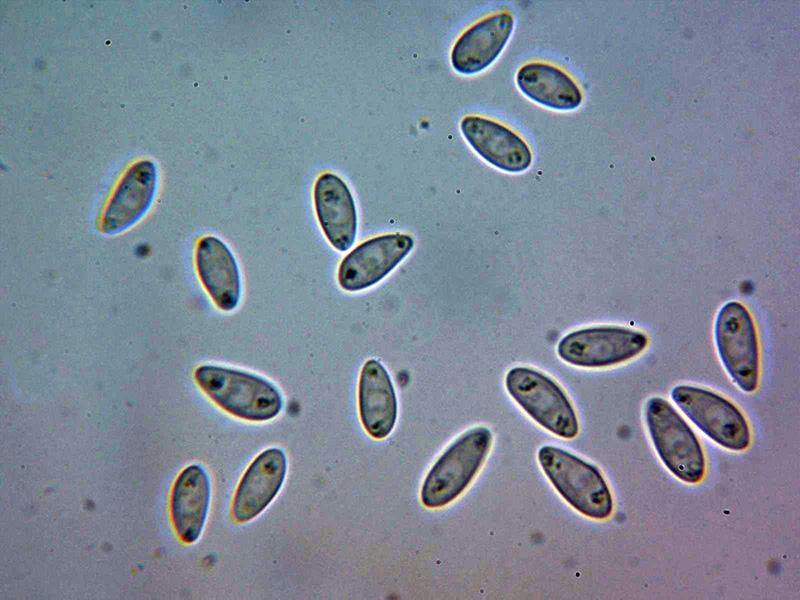
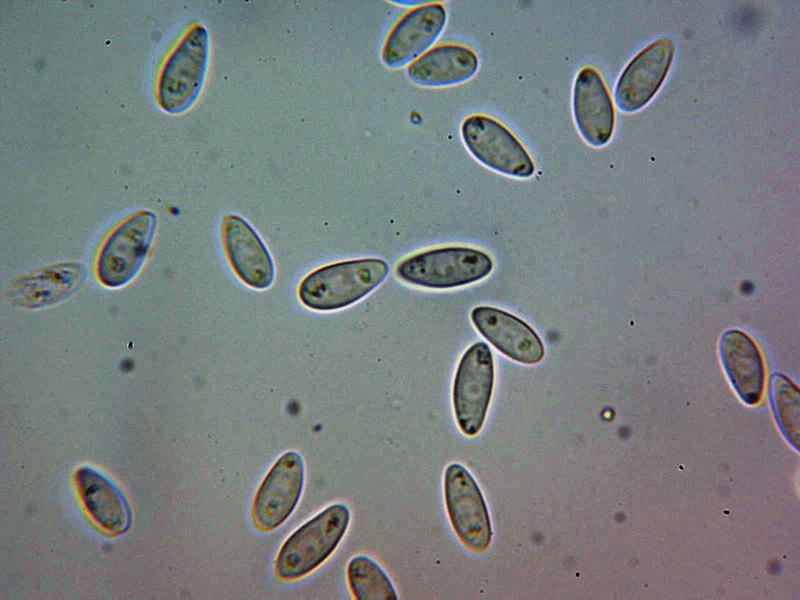
Ascosporas entre elipsoides y fusiformes, con un extremo mas apuntado y pequeñas gotas en su interior, con unas medidas de:
(9.2) 10 - 12.5 (13) × (4.7) 4.9 - 5.3 (5.7) µm
Q = (1.8) 2.1 - 2.5 (2.6) ; N = 30
Me = 11.2 × 5.1 µm ; Qe = 2.2
Intuyo que podría tratarse quizás de Phaeohelotoium, aunque no termina de encajarme con ninguno, sobre todo por el hecho de aparecer sobre una `piña de conífera y la no reacción de la base del mismo al yodo.
Cualquier sugerencia será bien recibida.
Muchas gracias de antemano.
Saludos cordiales.
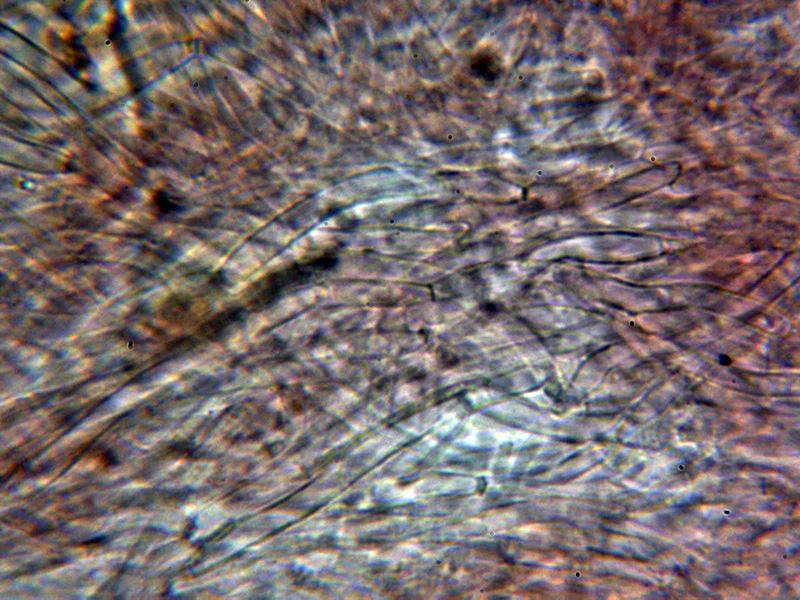
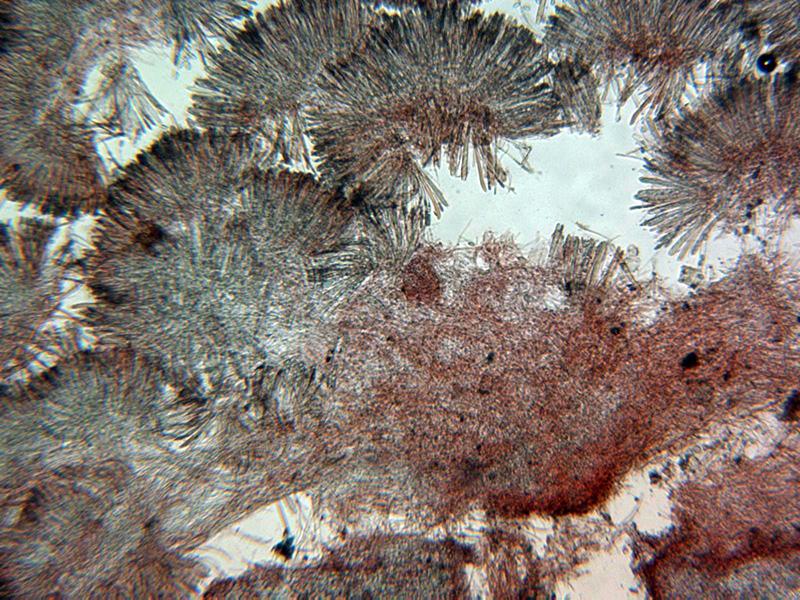
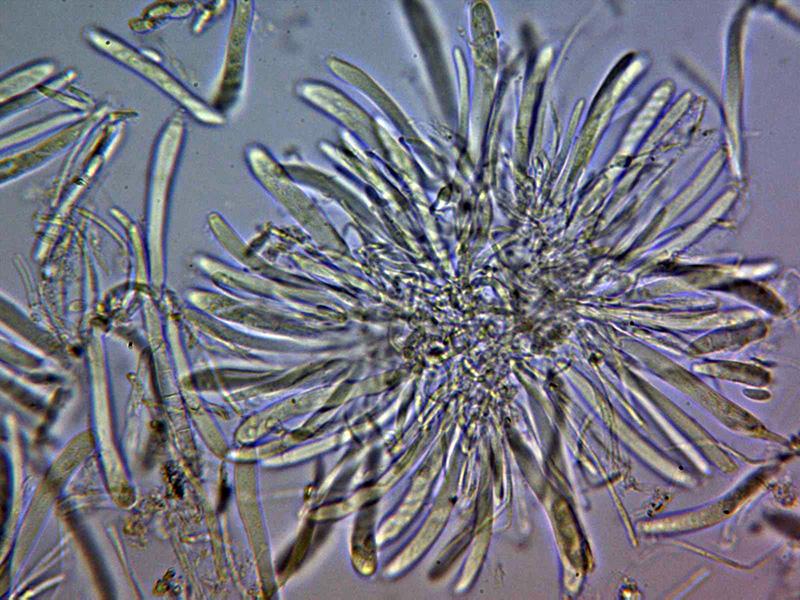
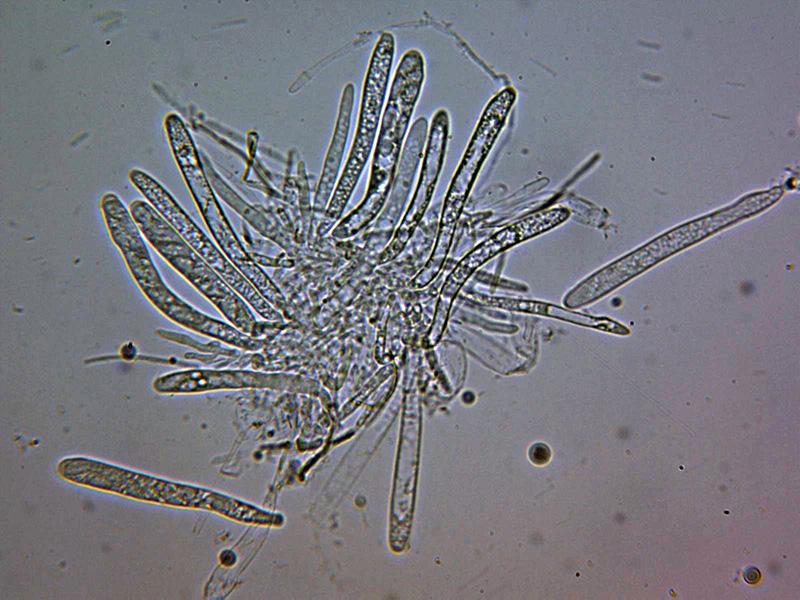
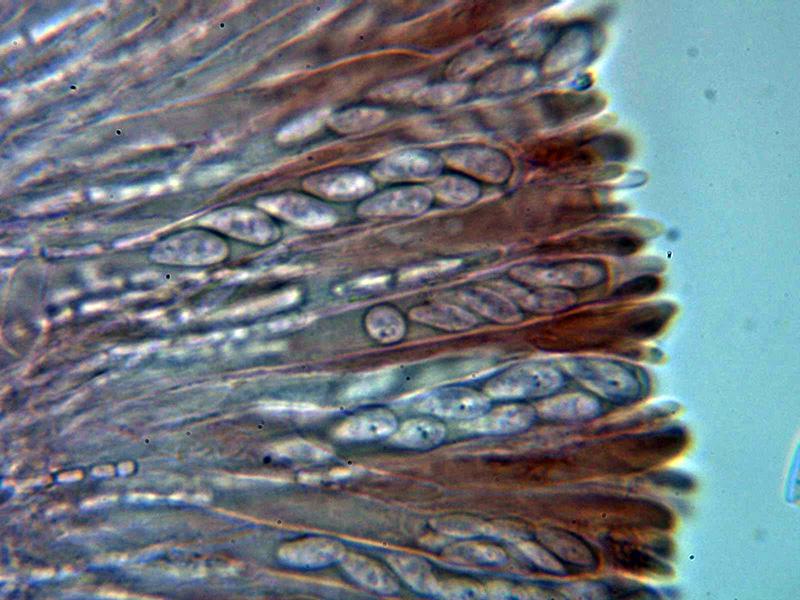
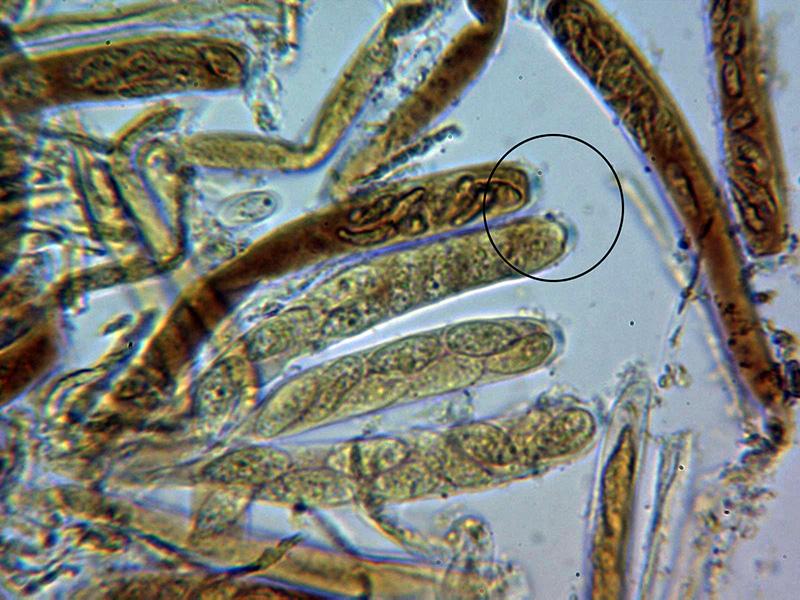
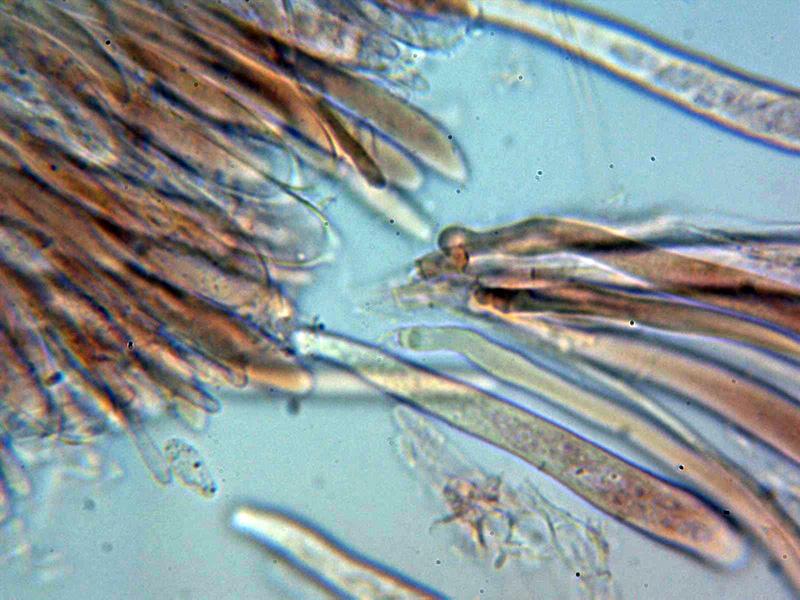
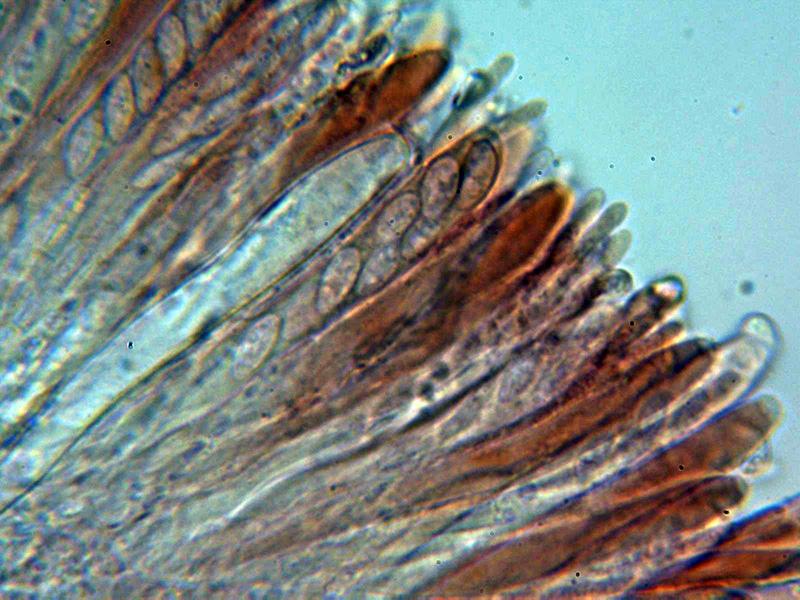

Zotto
Ya había pensado en Hymenoscyphus imberbis = Phaeohelotium imberbe, aunque en este caso ¿No debería reacciónar la base al IKI?. y además sobre cono de conífera.
de nuevo MUCHAS GRACIAS
Saludos cordiales.
Saludos cordiales
I wasn't sure?
Oil drops in the spores indicate Hymenoscyphus imberbis.
Spore dimensions are more suitable for H. katiae?
I forgot about my 2018 collection.
Spores slightly smaller but I described it as H. imberbis :)
best regards
Mirek
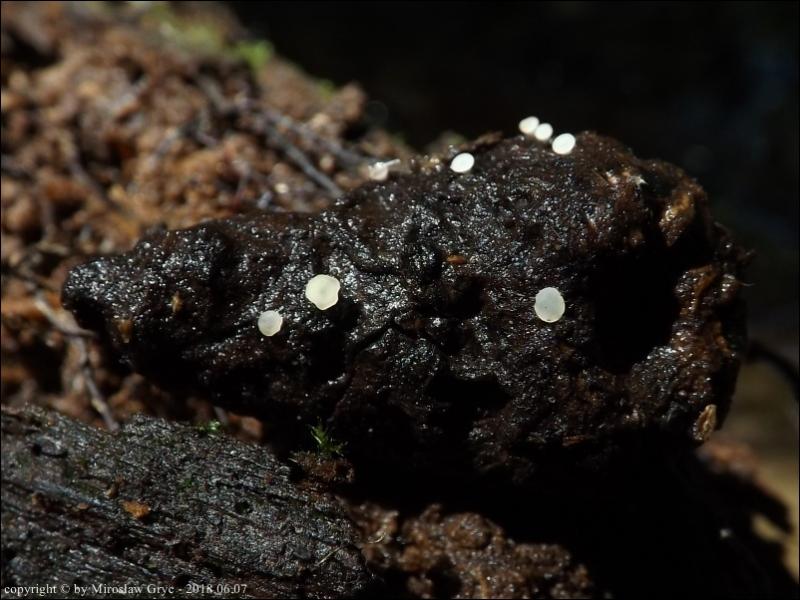
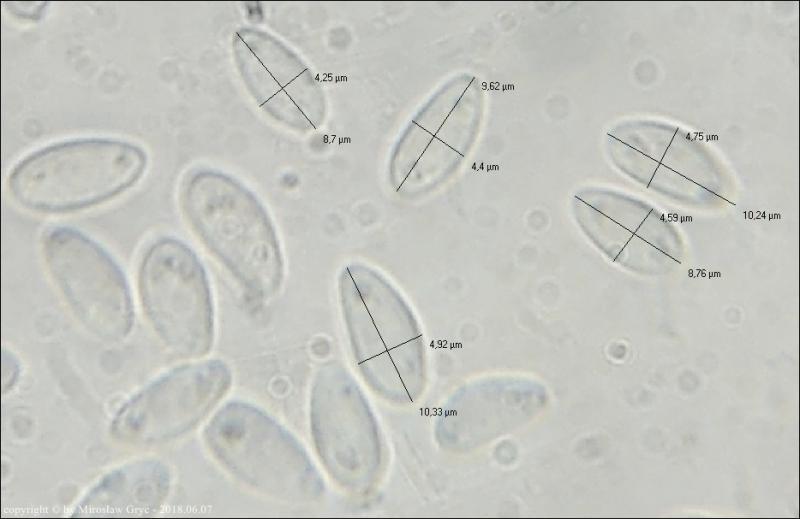
H. katiae> 10 um
H. imberbis <10 um
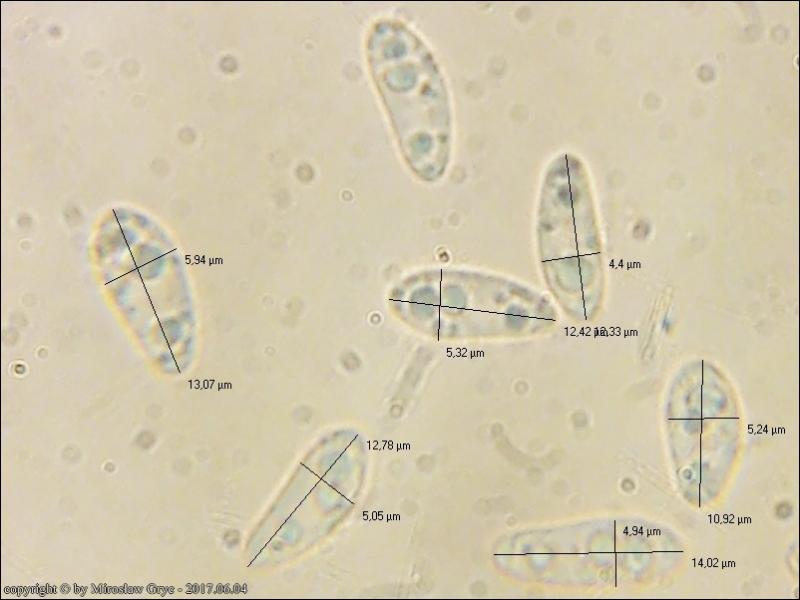
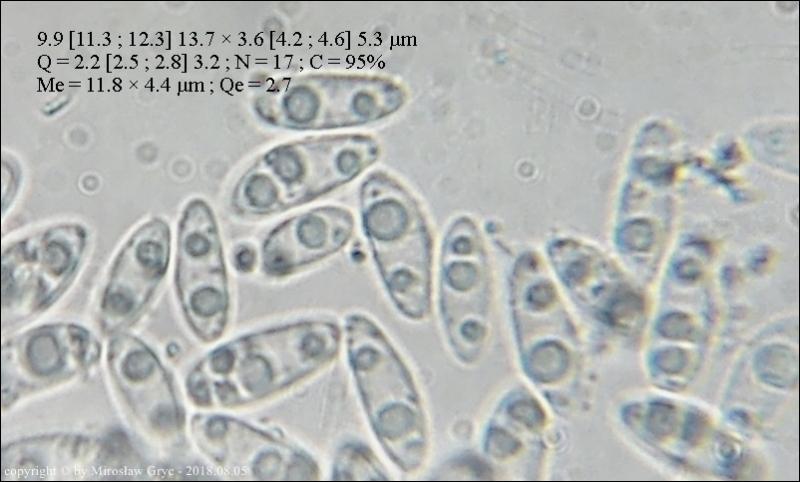
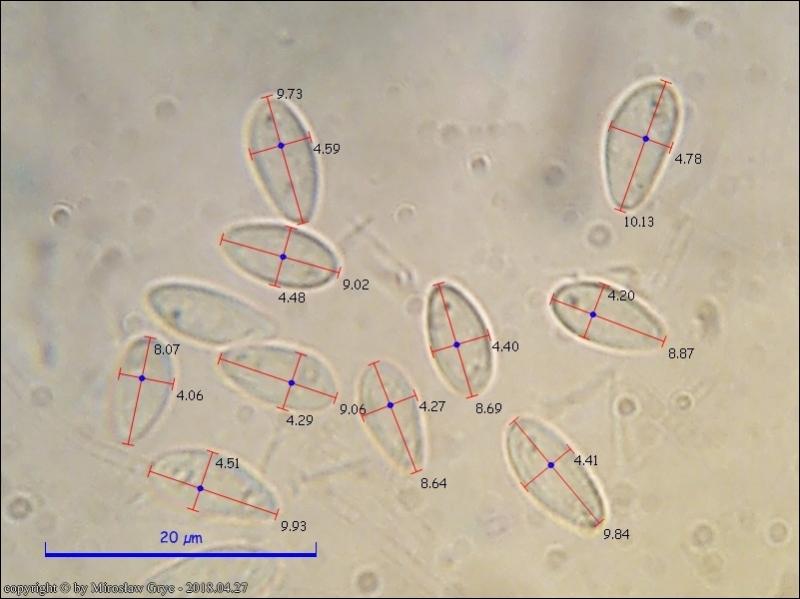
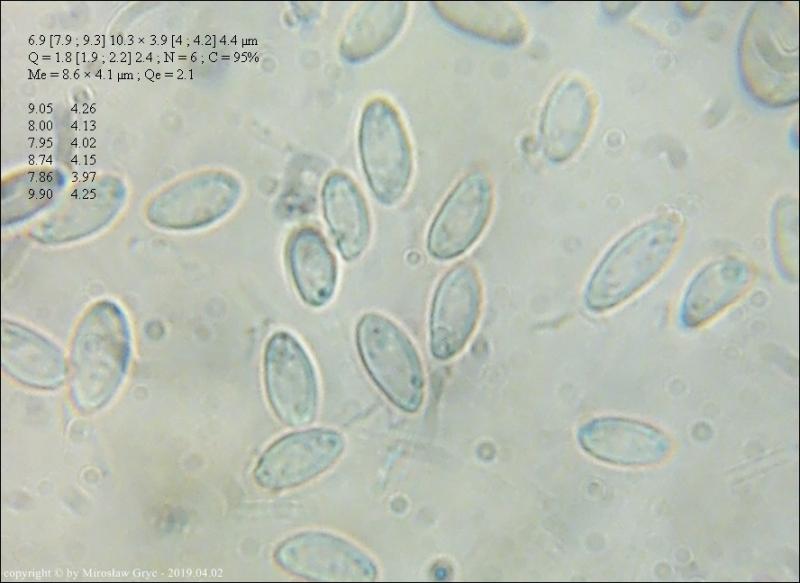
That's why I put photos of spores only those collections whose other features are 100% compatible with this species.
I used to send you pictures of fruiting bodies in which spores were about 1 um narrower. Other features were consistent with this species.
For me, H. imberbis, H. katiae and H. vernus are common species, but from the collections collected about 70-80% correspond exactly to these species. In others, there are features that are not typical of them?
Spain has a completely different atmosphere, so there may be slight differences in construction? :)
I only study fresh fruiting bodies!
That's right! - your collections have longer spores but other features are compatible with my :)
I have stopped microscoping them but the topic seems interesting enough to download a few more collections and compare their features more accurately!
best regards
Mirek