
10-05-2026 23:17
 Andreas Gminder
Hello,today we found in a moist steep decidous for
14-05-2026 05:36
Ethan CrensonHi all, I haven't paid much attention to Lachnu
16-03-2011 14:31
roman vargas albertoHi. I would like some opinion about this Peziza
11-05-2026 12:32
 Bernard CLESSE
Pourriez-vous m'aider à identifier cette héloti
13-05-2026 15:26
 François Freléchoux
Bonjour,Voici une récolte faite il y a quelques j
12-05-2026 15:41
 Nicolas VAN VOOREN
Dear Ascolovers, especially interested in Pezizale
13-05-2026 12:05
 Thierry Blondelle
Bonjour à tous,J'aimerais avoir confirmation de c
28-04-2026 20:07
 Lothar Krieglsteiner
... on twig in the air at standing Ceratonia siliq
27-04-2026 20:52
Lothar Krieglsteiner
Found on hanging tiwg of Olea europaea in dried-ou
11-05-2026 20:22
Lothar Krieglsteiner
on attached twig of standing Ficus caricaquite uns
Hymenoscyphus foliicole
Andgelo Mombert,
06-09-2019 21:49

Bonsoir,
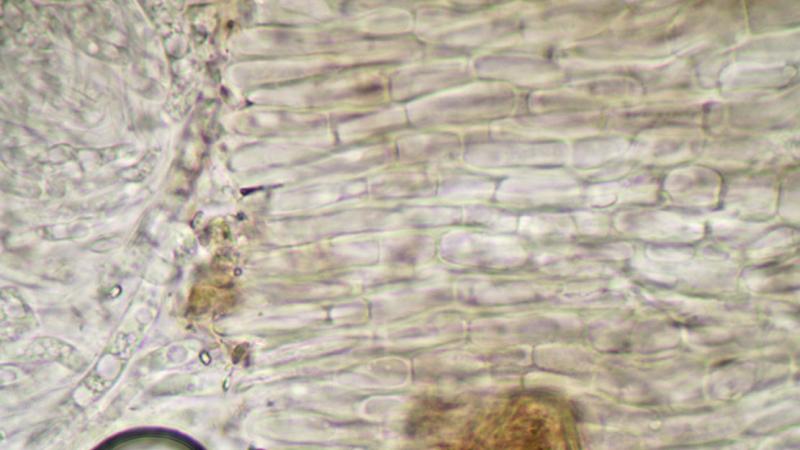
Sur feuille de Alnus alnobetula, vers 1500 m d'altitude.
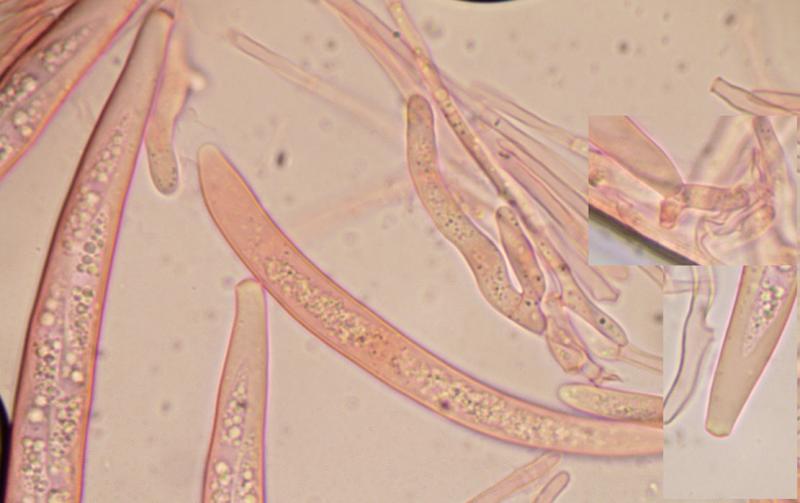
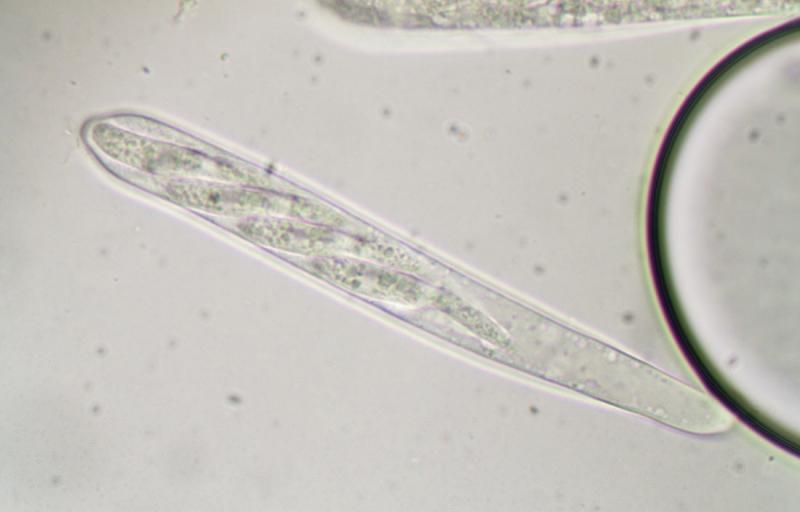
Spores : 18-22 x 4,5-5,2 µm, scutuloïdes, garnies de guttules sauf au niveau du centre, hyalines, lisses.
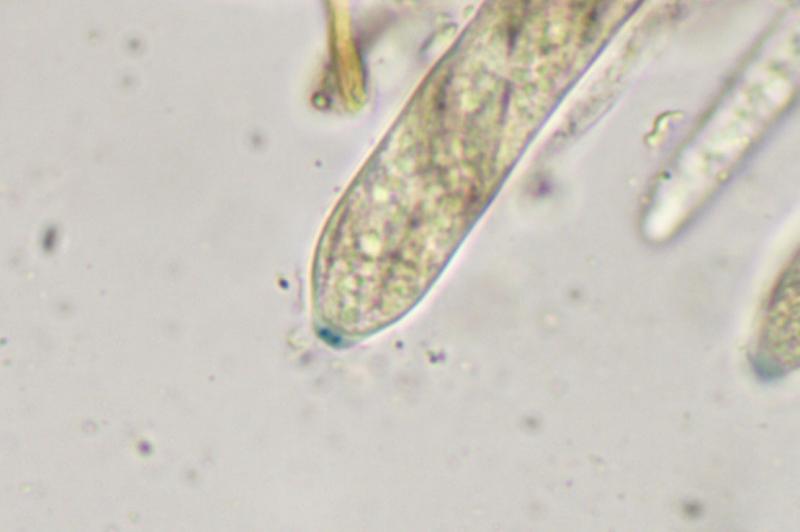
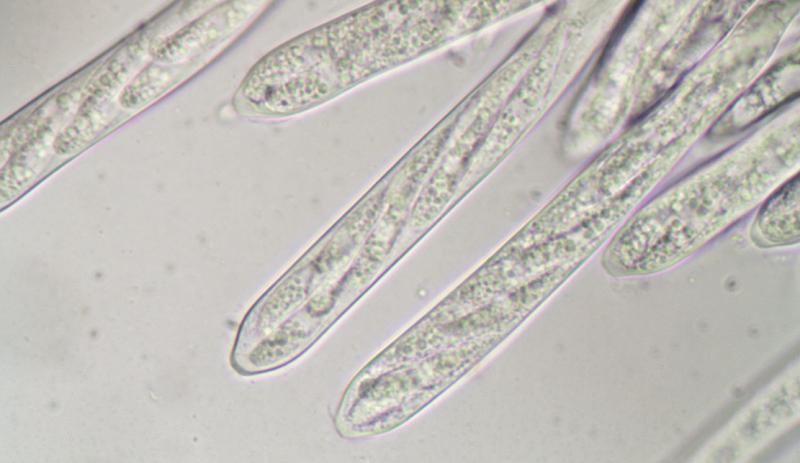
Asques : 90-100 x 8-9 µm, cylindriques, à sommet souvent ogival, avec appareil apical amyloïde, sans crochet, contenant huit spores bisériées.
Paraphyses : cylindriques, larges de 3-4 µm, hyalines, contenant une grosse vacuole réfringentes.
Je tourne autour de caudatus... Merci d'avance pour votre aide.
Andgelo
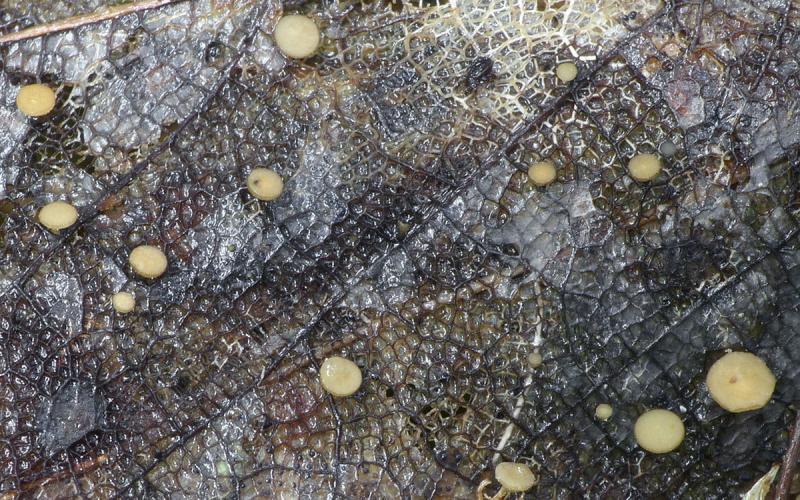
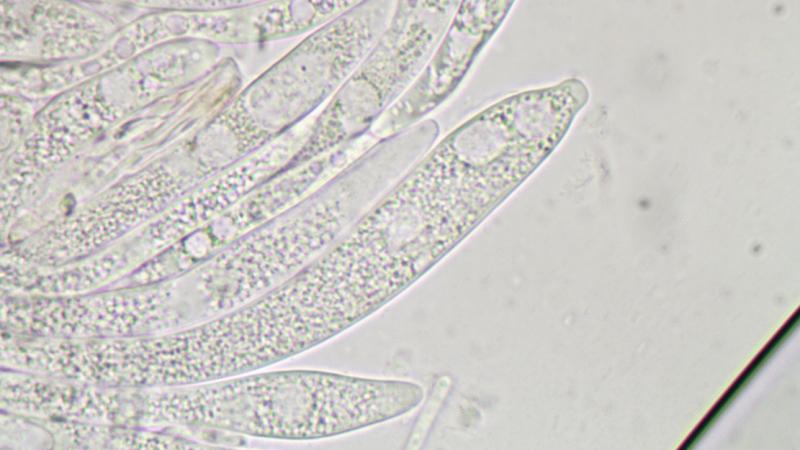
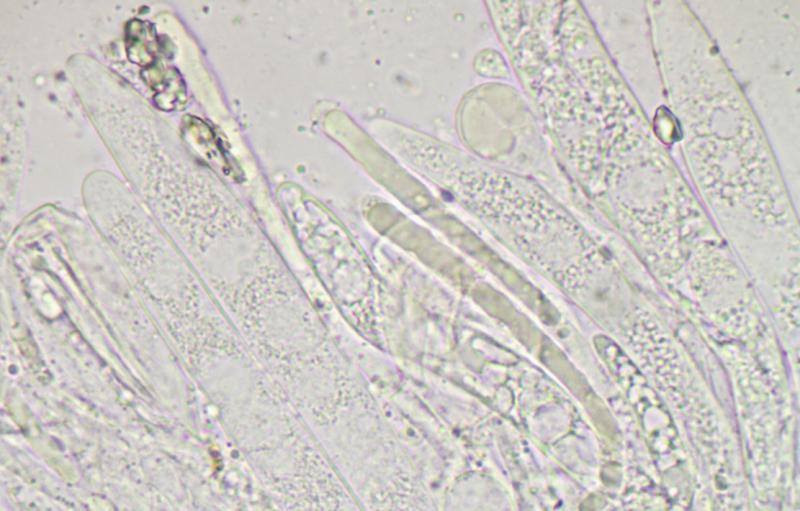
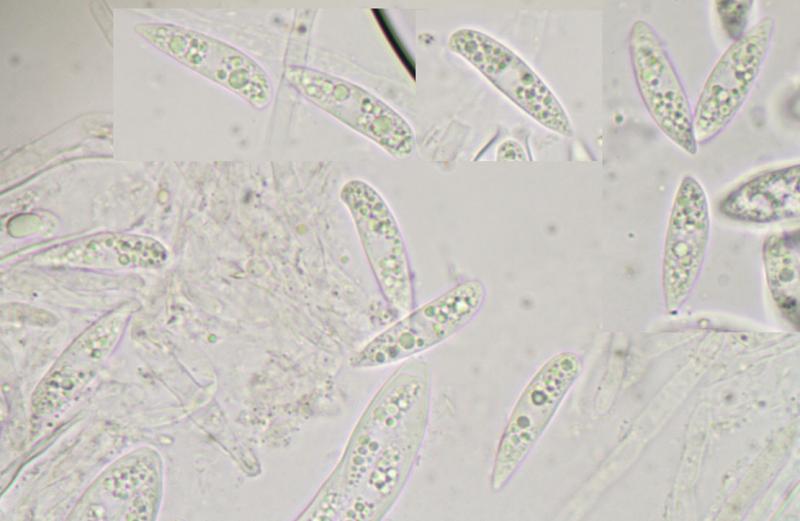
Hans-Otto Baral,
06-09-2019 21:54

Re : Hymenoscyphus foliicole
I could not find the spore size. H. caudatus agg. I agree. 0
Andgelo Mombert,
06-09-2019 22:00
Re : Hymenoscyphus foliicole
Je l'ai ajoutée.
Andgelo
Hans-Otto Baral,
06-09-2019 22:02
Re : Hymenoscyphus foliicole
o.k., I think this fits one of the interpretations of H. caudatus.
Andgelo Mombert,
06-09-2019 22:06
Re : Hymenoscyphus foliicole
Merci !
Bernard Declercq,
19-09-2019 13:23

Re : Hymenoscyphus foliicole
Hi Andgelo,
The species you collected has yellow apothecia even when young and strongly refractive vacuolar bodies in its paraphyses. This is a reddening species.
What we in Belgium and the Nederlands collect as H. caudatus is a species with small white apothecia and low refractive vacuolar bodies in its paraphyses. The apothecia are never reddening and are only yellowish to ochraceous when dry.
As Zotto said, your collection fits only one of the interpretations of H. caudatus.
I am afraid that the examination of Karsten's type collection will not resolve our problem and need to neotypify H. caudatus.
Bernard
Hans-Otto Baral,
19-09-2019 13:33
Re : Hymenoscyphus foliicole
Hi Bernard
I am not sure that a restudy of the type would not clarify the matter. maybe the oil content and shape & size of the spores would make it easier to select an epitype.
Did White restudy the type?
Zotto
I am not sure that a restudy of the type would not clarify the matter. maybe the oil content and shape & size of the spores would make it easier to select an epitype.
Did White restudy the type?
Zotto
Mirek Gryc,
19-09-2019 14:42
Re : Hymenoscyphus foliicole
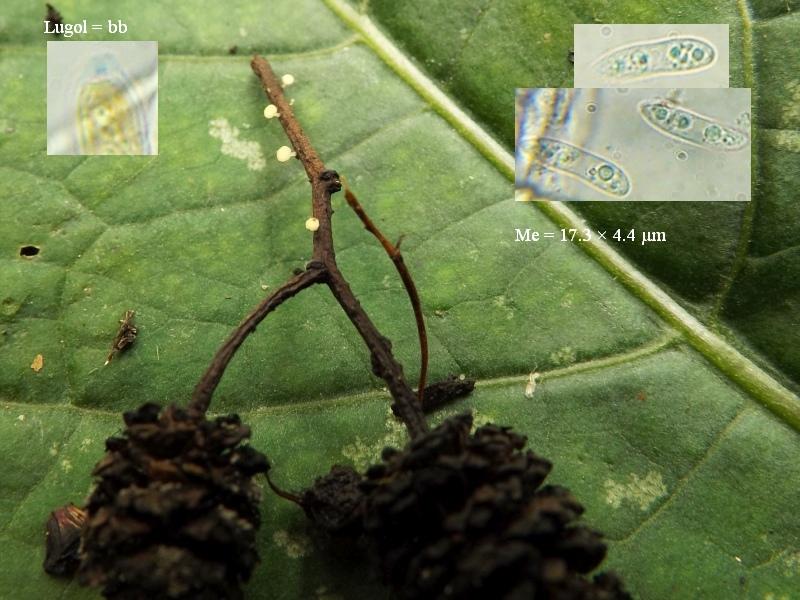
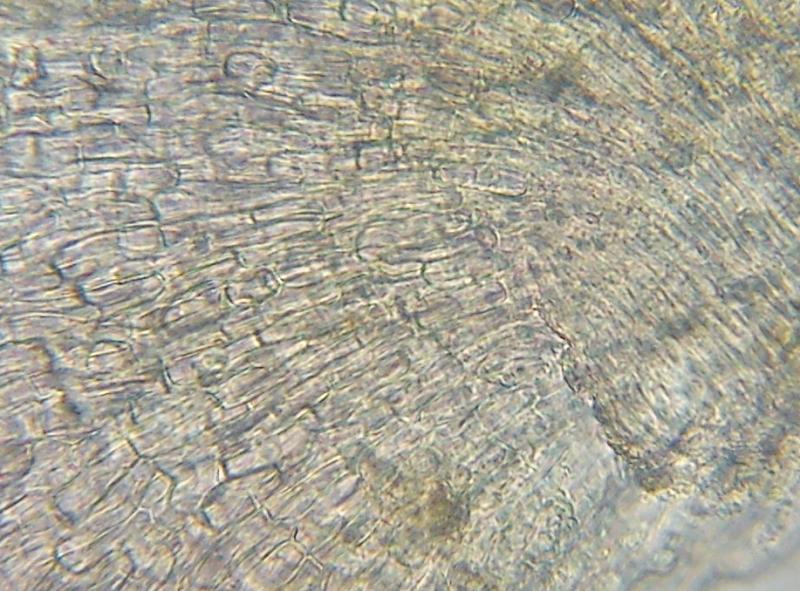
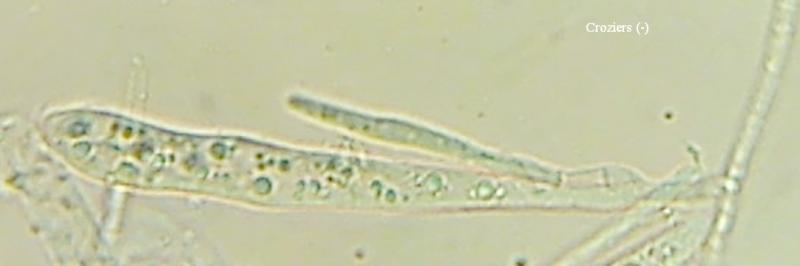
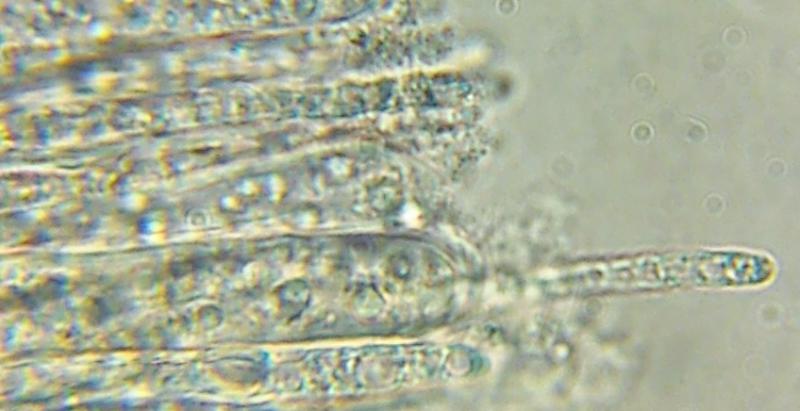
I am sorry to interfere in the discussion but recently I found a Hymenoscyphus whose features only fit into H. caudatus?
For the first time in his case I am dealing with yellow fruitbodies. The substrate is also not typical ???
What do you think about this collection?
Mirek
For the first time in his case I am dealing with yellow fruitbodies. The substrate is also not typical ???
What do you think about this collection?
Mirek
Hans-Otto Baral,
19-09-2019 17:38
Re : Hymenoscyphus foliicole
The group around H. caudatus and H. fructigenus is very complex. The characters are few, and I can only see good species in a few cases, such as maybe on Carpinus fruits or typical H. caudatus with low-refractive VBs as Bernard pointed out. In your fungus I assume the Vbs in the paraphyses were strongly refractive, but now they are distorted.
Only a molecular study combined with careful vital study will clarify this jungle. I think sequences for typical H. caudatus and H. fructigenus that could serve as a reference are so far lacking, as the avaiable sequences are not conform.
I looked in White 1943 and see that he studied several types of synonyms of H. caudatus but not that of Karsten, but he did not illustrate these types (his Fig. 8 is of little use and I cannot find which collection it belongs). White saw no clear differences even to H. scutula, but kept H. caudatus as distinct for the time being.
Only a molecular study combined with careful vital study will clarify this jungle. I think sequences for typical H. caudatus and H. fructigenus that could serve as a reference are so far lacking, as the avaiable sequences are not conform.
I looked in White 1943 and see that he studied several types of synonyms of H. caudatus but not that of Karsten, but he did not illustrate these types (his Fig. 8 is of little use and I cannot find which collection it belongs). White saw no clear differences even to H. scutula, but kept H. caudatus as distinct for the time being.
Mirek Gryc,
19-09-2019 19:31
Re : Hymenoscyphus foliicole
Thank you for your comprehensive answer.
Mirek
Andgelo Mombert,
20-09-2019 17:35
Re : Hymenoscyphus foliicole
Merci à vous.
Andgelo