
10-05-2026 23:17
 Andreas Gminder
Hello,today we found in a moist steep decidous for
14-05-2026 05:36
Ethan CrensonHi all, I haven't paid much attention to Lachnu
16-03-2011 14:31
roman vargas albertoHi. I would like some opinion about this Peziza
11-05-2026 12:32
 Bernard CLESSE
Pourriez-vous m'aider à identifier cette héloti
13-05-2026 15:26
 François Freléchoux
Bonjour,Voici une récolte faite il y a quelques j
12-05-2026 15:41
 Nicolas VAN VOOREN
Dear Ascolovers, especially interested in Pezizale
13-05-2026 12:05
 Thierry Blondelle
Bonjour à tous,J'aimerais avoir confirmation de c
28-04-2026 20:07
 Lothar Krieglsteiner
... on twig in the air at standing Ceratonia siliq
27-04-2026 20:52
Lothar Krieglsteiner
Found on hanging tiwg of Olea europaea in dried-ou
11-05-2026 20:22
Lothar Krieglsteiner
on attached twig of standing Ficus caricaquite uns
Monilinia on Prunus padus
Johan Myhrer,
14-08-2019 09:30
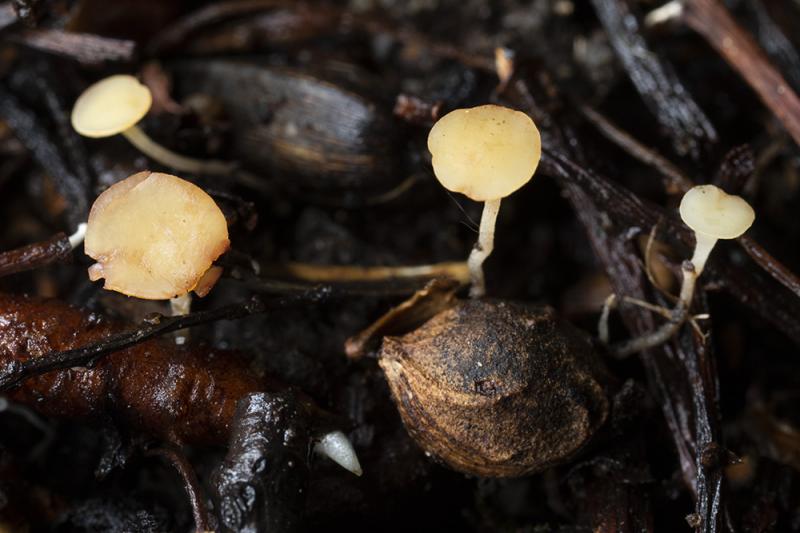
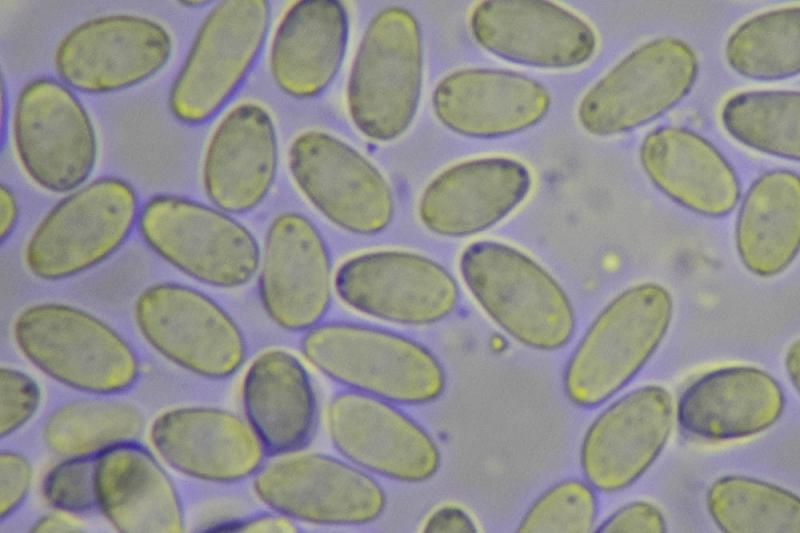
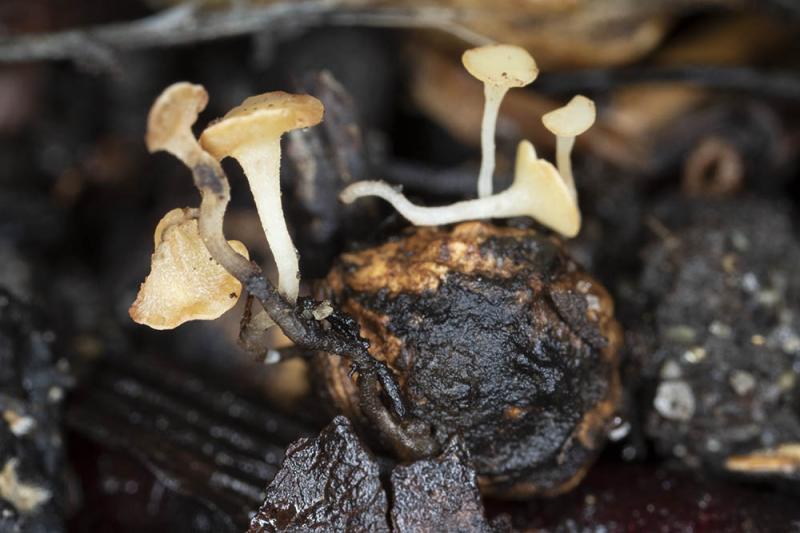
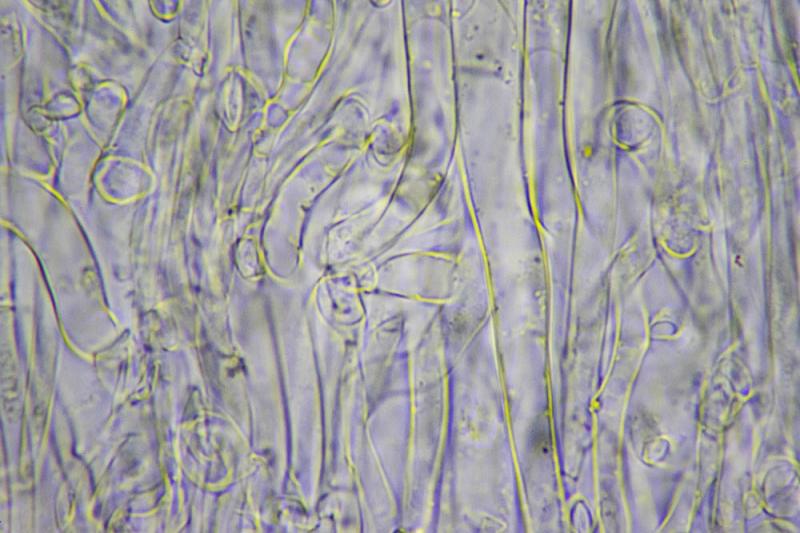
Collection from central Sweden 2019-08-12, light brown discs araising from blackishbrown mycelium covering the stones from Prunus padus fruits laying on the ground. Spores 6-8x3,5-4µm.
My first thought was Monilinia padi but thats a species of spring with larger spores? Could it be M. fructicola?
Hans-Otto Baral,
14-08-2019 10:35

Re : Monilinia on Prunus padus
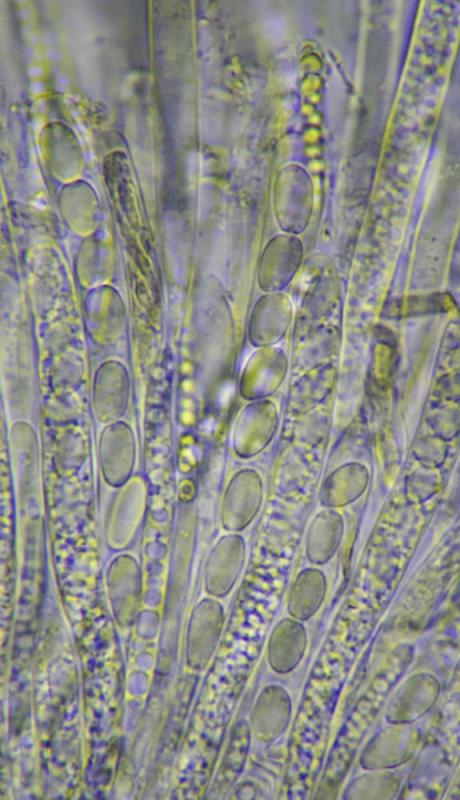
the paraphyses contain very refractive VB-guttules which are unknown in Monilinia. Could you please check the iodine reaction and photograph the apical ring if present? I think the spores are uninucleate.
My guess is that it is a Hymenoscyphus.
My guess is that it is a Hymenoscyphus.
Johan Myhrer,
14-08-2019 13:21
Re : Monilinia on Prunus padus
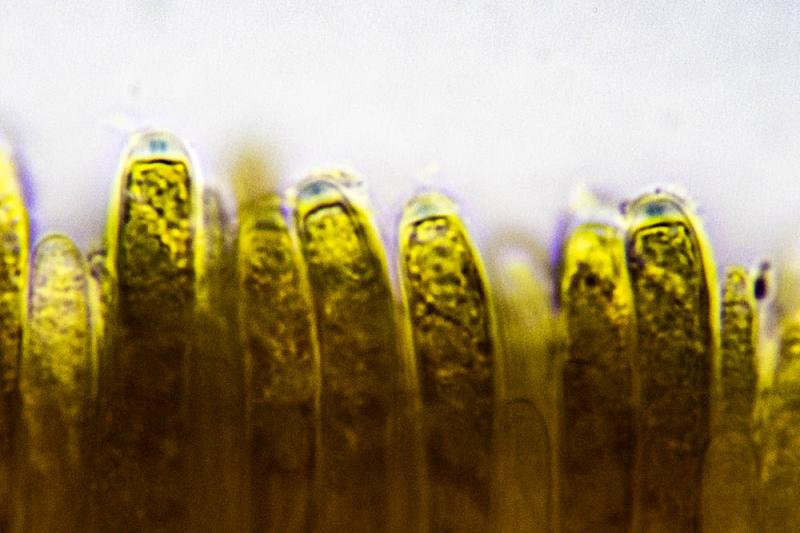
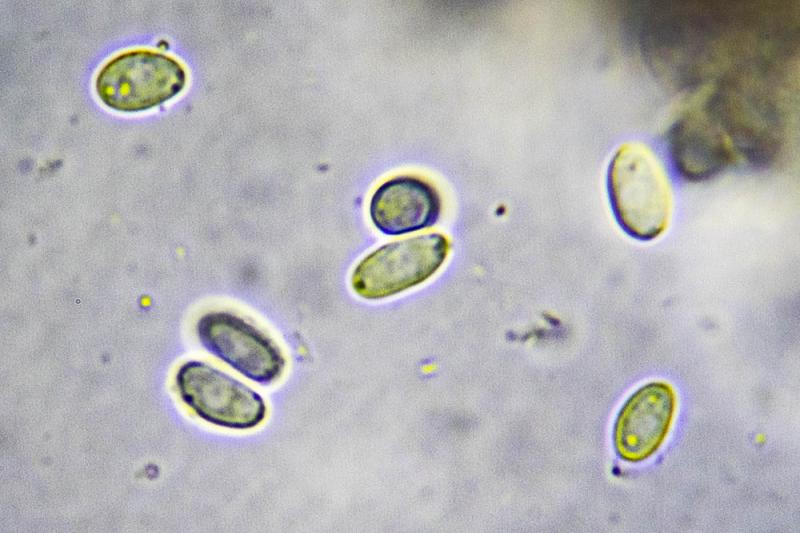
Some more pictures. Asci with Lugols solution, spores with pushed contrast.
Hans-Otto Baral,
14-08-2019 13:54
Re : Monilinia on Prunus padus
Yes, clearly Hymenoscyphus-type and spores uninucleate.
Further necessary data include asus base (croziers) and excipulum structure (prismatica?).
I know a Hymenoscyphus species on Cornus seeds, but remember narrower spores for that.
Further necessary data include asus base (croziers) and excipulum structure (prismatica?).
I know a Hymenoscyphus species on Cornus seeds, but remember narrower spores for that.
Johan Myhrer,
14-08-2019 14:34
Re : Monilinia on Prunus padus
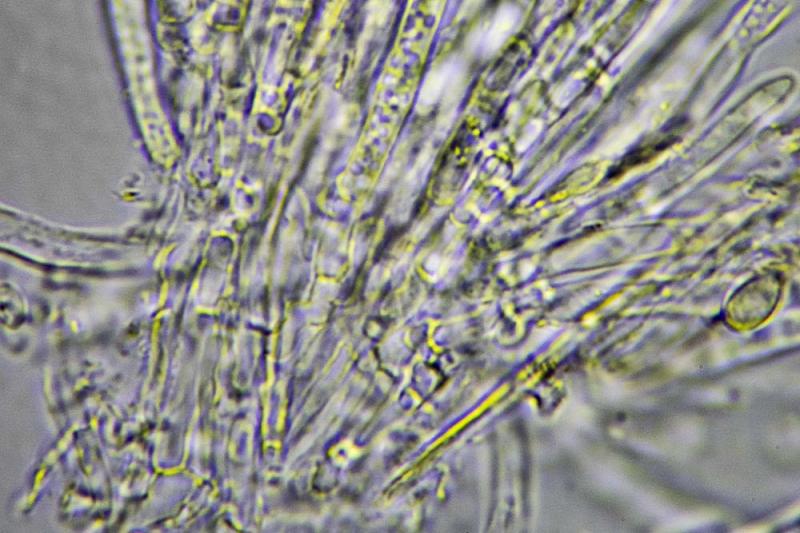
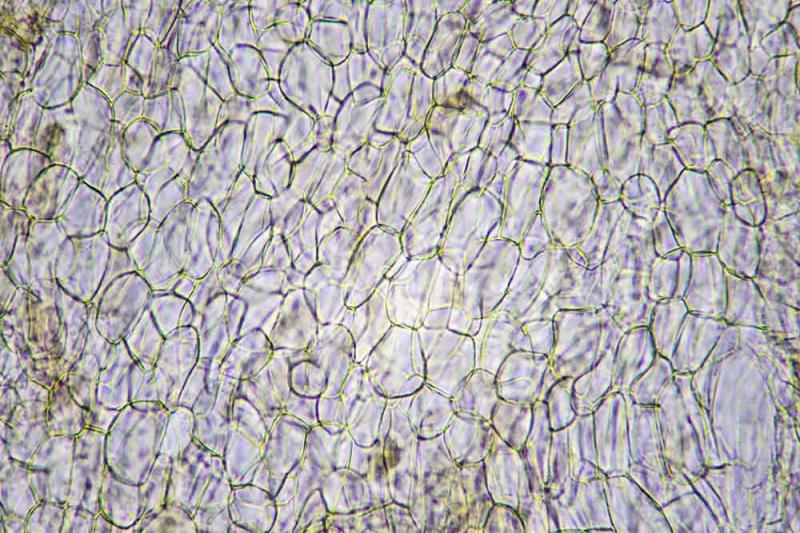
Ascus on croziers. Excipulum textura prismatica indeed, sometimes almost globulosa. Habitus is not much like Monilinia at all when I compare pictures...
Hans-Otto Baral,
14-08-2019 21:09
Re : Monilinia on Prunus padus
Clearly with croziers.
I find noting in my database on seeds/fruits of Prunus that might fit. Ciboria aestivalis is the only one, but it is sclerotiniaceous, obviously, when checking data in GenBank.
But I remembered wrong: The Hymenoscyphus on Cornus seeds fits yours in spore size (6-10 x 3-4). I have it as H. corni-maris in my folder Hymenosc Cudoniella. In another folder ("cornicola Asia") is a similar species differing in being without croziers. This folder contains also "Lanzia" glandicola, which might be the same.
Could it be that your seeds belong to Cornus rather than Prunus? - No, sorry, I did not remember your clear photo. We actually have a sequence of the Cornus fungus (ITS), so a comparison with yours would be interesting.
I compared this aggregate also with Gloeotinia and Symphyosirinia, and the latter was suggested to me also by Peter Püwert regarding your sample.
Zotto
I find noting in my database on seeds/fruits of Prunus that might fit. Ciboria aestivalis is the only one, but it is sclerotiniaceous, obviously, when checking data in GenBank.
But I remembered wrong: The Hymenoscyphus on Cornus seeds fits yours in spore size (6-10 x 3-4). I have it as H. corni-maris in my folder Hymenosc Cudoniella. In another folder ("cornicola Asia") is a similar species differing in being without croziers. This folder contains also "Lanzia" glandicola, which might be the same.
Could it be that your seeds belong to Cornus rather than Prunus? - No, sorry, I did not remember your clear photo. We actually have a sequence of the Cornus fungus (ITS), so a comparison with yours would be interesting.
I compared this aggregate also with Gloeotinia and Symphyosirinia, and the latter was suggested to me also by Peter Püwert regarding your sample.
Zotto
Johan Myhrer,
15-08-2019 07:15
Re : Monilinia on Prunus padus
Corni-maris looks very similar! I'm 100% sure about the substrate, a HUGE Prunus padus :-)
Anyone working with these? I would be happy to send a sample for sequencing.
/Johan
Hans-Otto Baral,
15-08-2019 08:47
Re : Monilinia on Prunus padus
At some time I intend to clarify this Cornus fungus, but at the moment it is impossible. Various people have the opportunity to do such molecular work, but it is a bit of inflationary today, how many species and samples need sequencing. Important is to keep the dried sample.
Johan Myhrer,
15-08-2019 09:43
Re : Monilinia on Prunus padus
Dried sample will be deposited in Herbarium UPS for future studies :-)
Thank you Zotto!