
10-05-2026 23:17
 Andreas Gminder
Hello,today we found in a moist steep decidous for
14-05-2026 05:36
Ethan CrensonHi all, I haven't paid much attention to Lachnu
16-03-2011 14:31
roman vargas albertoHi. I would like some opinion about this Peziza
11-05-2026 12:32
 Bernard CLESSE
Pourriez-vous m'aider à identifier cette héloti
13-05-2026 15:26
 François Freléchoux
Bonjour,Voici une récolte faite il y a quelques j
12-05-2026 15:41
 Nicolas VAN VOOREN
Dear Ascolovers, especially interested in Pezizale
13-05-2026 12:05
 Thierry Blondelle
Bonjour à tous,J'aimerais avoir confirmation de c
28-04-2026 20:07
 Lothar Krieglsteiner
... on twig in the air at standing Ceratonia siliq
27-04-2026 20:52
Lothar Krieglsteiner
Found on hanging tiwg of Olea europaea in dried-ou
11-05-2026 20:22
Lothar Krieglsteiner
on attached twig of standing Ficus caricaquite uns
Orbilia orange
Viktorie Halasu,
07-08-2019 12:40
 Hello forum,
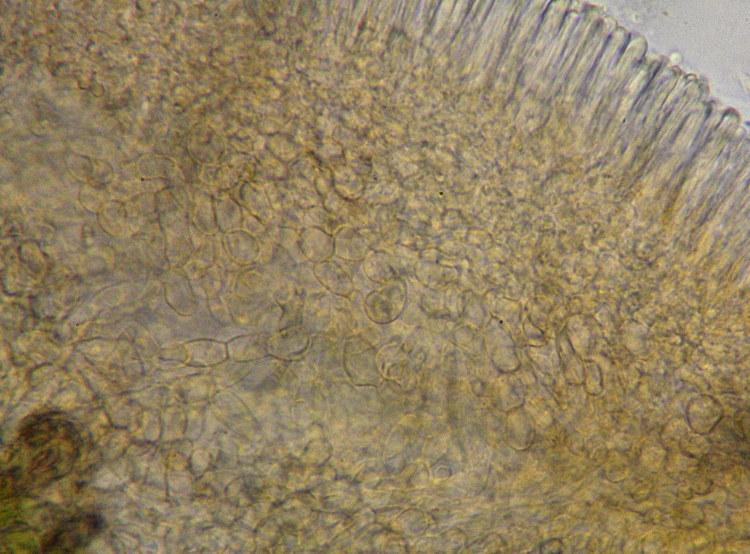
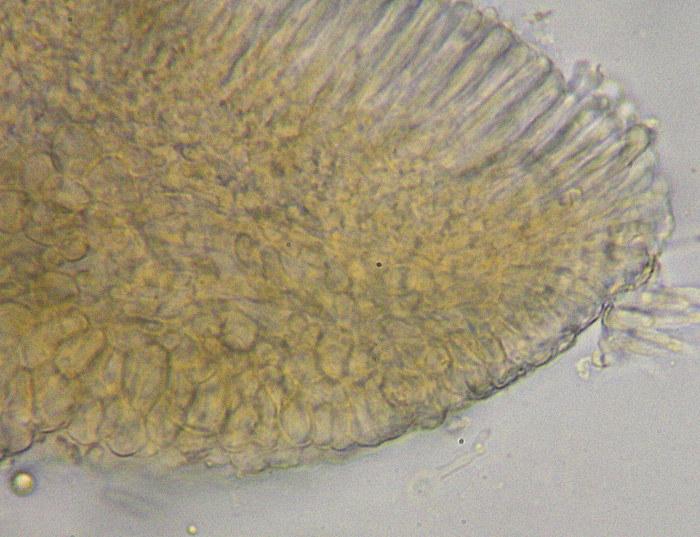
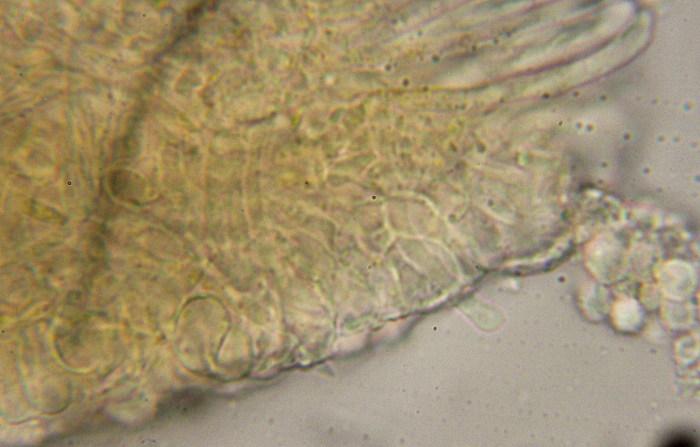
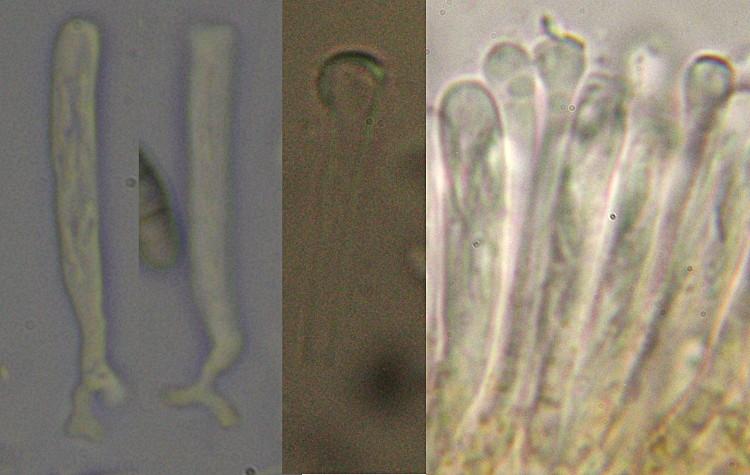
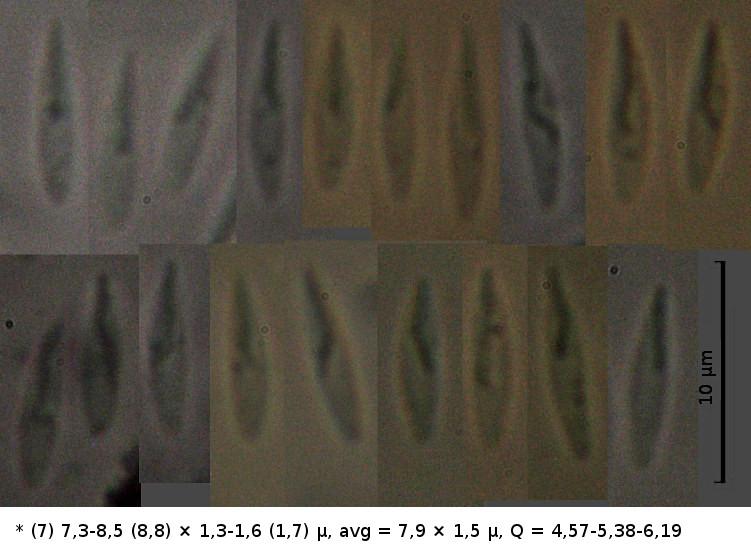
this orange Orbilia was growing on decorticated wood, lowland alluvial forest, periodically flooded place, coll. 30.5.2019. Capitate paraphyses with some incrustation. Anamorph not observed. I'm sorry I don't have any macro photo. Would anyone recognize it from such sparse data?
Thank you in advance.
Viktorie
Hans-Otto Baral,
07-08-2019 12:46

Re : Orbilia orange
Dear Victorie
the colour of the apos is important. You say orange which more or less would exclude Orbilia rosea which we consider typically with rose apothecia although the name derives from the rose culture colour.
O. luteorubella is then the choice, although the spores are a bit short (did you evaluate spore size?).
Alluvial means that there is a running water? O. luteorubella prefers standing water (ponds etc.), but this is not obligatory.
The two species are hardly separable except using the ITS or LSU marker.
I see you had luteorubella in Ölmütz with also short spores and more pinkish apos.
Zotto
the colour of the apos is important. You say orange which more or less would exclude Orbilia rosea which we consider typically with rose apothecia although the name derives from the rose culture colour.
O. luteorubella is then the choice, although the spores are a bit short (did you evaluate spore size?).
Alluvial means that there is a running water? O. luteorubella prefers standing water (ponds etc.), but this is not obligatory.
The two species are hardly separable except using the ITS or LSU marker.
I see you had luteorubella in Ölmütz with also short spores and more pinkish apos.
Zotto
Viktorie Halasu,
11-08-2019 16:47
Re : Orbilia orange
Dear Zotto,
thank you very much and sorry for late answer.
What do you mean by "evaluating spore size"? It was measured on 42 spores, although I admit that it's be a bit approximate because of the unsharp photos. I could at least photograph rehydrated exsiccate, but unfortunately it's already in the freezer and will stay there for next few months (to get rid of some larvae etc in the wood).
The locality is Cernovirske slatiniste in Olomouc-Cernovir. You've already seen/determined O. aurantiorubra, Hymenoscyphus aff caudatus (H+) and H. aff imberbis (H-) from there. No running water (except for slightly acidic Fe3+ spring), but several more boggy places, filled with water after rains - this was in one of them. Maybe "riparian" is better word than "aluvial", I'm not very versed in english terminology yet. I found also some Hymenoscyphus(?) on caddisfly (Limnephilidae) cases in the same place, but it didn't survive in fridge. :-/
Best regards,
Viktorie
thank you very much and sorry for late answer.
What do you mean by "evaluating spore size"? It was measured on 42 spores, although I admit that it's be a bit approximate because of the unsharp photos. I could at least photograph rehydrated exsiccate, but unfortunately it's already in the freezer and will stay there for next few months (to get rid of some larvae etc in the wood).
The locality is Cernovirske slatiniste in Olomouc-Cernovir. You've already seen/determined O. aurantiorubra, Hymenoscyphus aff caudatus (H+) and H. aff imberbis (H-) from there. No running water (except for slightly acidic Fe3+ spring), but several more boggy places, filled with water after rains - this was in one of them. Maybe "riparian" is better word than "aluvial", I'm not very versed in english terminology yet. I found also some Hymenoscyphus(?) on caddisfly (Limnephilidae) cases in the same place, but it didn't survive in fridge. :-/
Best regards,
Viktorie
Hans-Otto Baral,
11-08-2019 20:54
Re : Orbilia orange
Sorry, I overlooked your spore data below the photo collage.
For the wood you did not indicate if it is angiospermic and what it could be?
A log?
The pinkish apothecia are on another piece of wood?
For the wood you did not indicate if it is angiospermic and what it could be?
A log?
The pinkish apothecia are on another piece of wood?