
11-05-2026 12:32
 Bernard CLESSE
Pourriez-vous m'aider à identifier cette héloti
13-05-2026 15:26
 François Freléchoux
Bonjour,Voici une récolte faite il y a quelques j
12-05-2026 15:41
 Nicolas VAN VOOREN
Dear Ascolovers, especially interested in Pezizale
13-05-2026 12:05
 Thierry Blondelle
Bonjour à tous,J'aimerais avoir confirmation de c
10-05-2026 23:17
 Andreas Gminder
Hello,today we found in a moist steep decidous for
28-04-2026 20:07
 Lothar Krieglsteiner
... on twig in the air at standing Ceratonia siliq
27-04-2026 20:52
Lothar Krieglsteiner
Found on hanging tiwg of Olea europaea in dried-ou
11-05-2026 20:22
Lothar Krieglsteiner
on attached twig of standing Ficus caricaquite uns
29-04-2026 10:44
Lothar Krieglsteiner
growing at moist, drying-out soil at the side of a
Black Asco Immersed in Stem of Carex
Peter Thompson,
29-06-2019 15:10
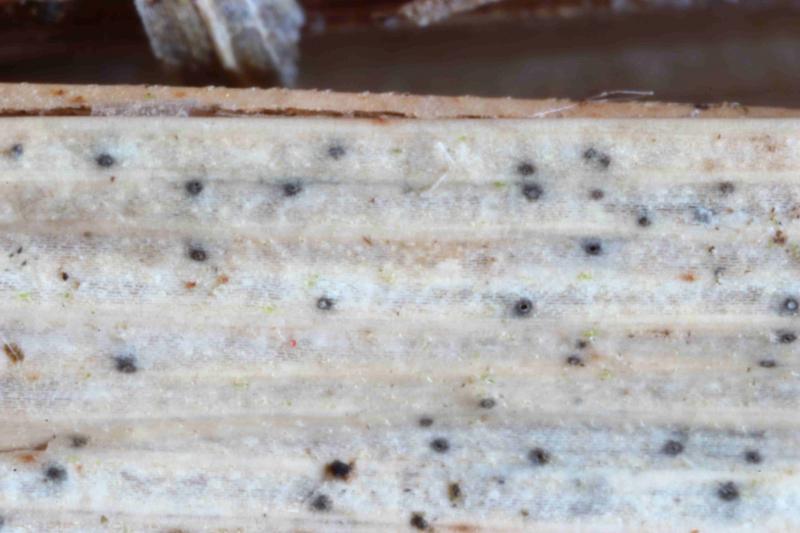
I have found a puzzling ascomycete with tiny spheres embedded just beneath the surface of a sedge stem, within an alder and willow carr environment. The perithecia are scattered, with ostioles just piercing the surface of their host.
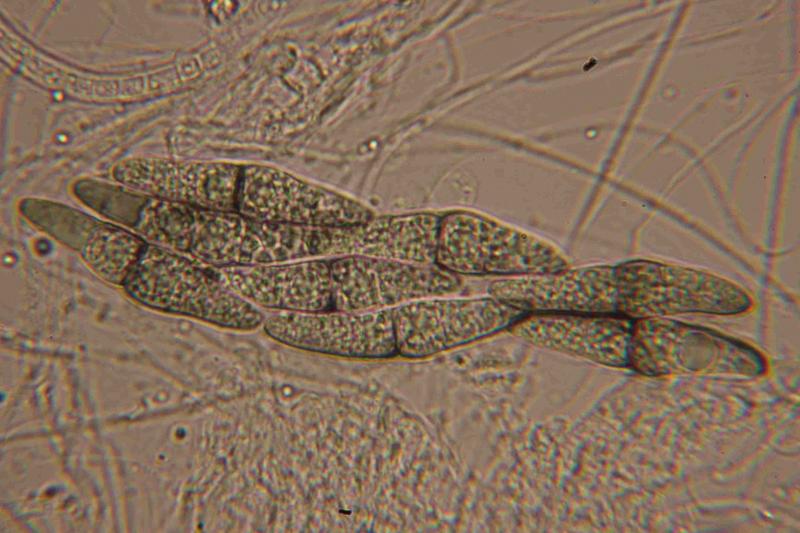
The spores begin hyaline, filled with drops and with one central septum. By the time that they mature they have become olivaceous brown with three septa. They typically measure between 35 to 37.5 x 8 um. The 8-spored asci do not react to lugol.
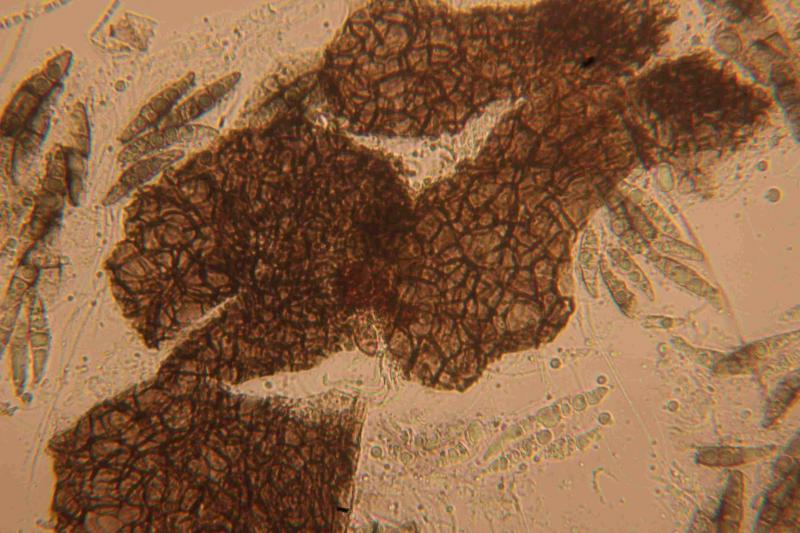
I have attached a photo of the fruit bodies as seen, peppering their host. Also, a photo, under immersion oil, of immature spores contained in an ascus and another showing mature spores and the structure of the excipulum.
I wonder if anyone has any idea as to which species they might be?
Thank You,
With Best Wishes,
Peter.
Peter Wilberforce,
09-07-2019 10:00
Re : Black Asco Immersed in Stem of Carex
Hello Peter,
The spores remind me of the genus Astrosphaerella.
I have seen only the species A.stellata from old bamboo.
Regards,
Peter