
02-05-2026 13:06
Pauline. PennaBonjour Please can someone help me with this id
02-05-2026 12:42
Alain BRISSARDBonjour à tousJeuidi 30 avril dernier on m'a remi
01-05-2026 22:45
 Thierry Blondelle
Bonjour à tous, Une récolte sur bouse séchée d
28-04-2026 20:07
 Lothar Krieglsteiner
... on twig in the air at standing Ceratonia siliq
14-04-2026 05:32
Ethan CrensonHi all, A few weeks back a friend pointed out som
28-04-2026 20:33
Vitus SchäfftleinHello, I found Trochila ilicina on Ilex aquifoliu

30-04-2026 10:28
Rot BojanHello, by appearance I would say that I am dealing
27-04-2026 18:48
Tony MoverleyCollected 23rd April 2026, Norfolk, EnglandSwarms
27-04-2026 20:52
Lothar Krieglsteiner
Found on hanging tiwg of Olea europaea in dried-ou

Dear forum,
On the bark of Larix I found some some small cup-shaped apothecia 0.2-0.25mm on a copious whitish cobwebby subiculum. The hyphae showed some warts. Clamps were not present. Among the hyphae I found a lot of conidiospores of about 16x11µ.
The asci were uni- to irregularly biseriate and measured about 46x6µ. Spores were hyaline, allantoid and measured 7x2.5µ. The cylindrical paraphyses showed some small drops. Hairs were smooth, 20-30µ, and ended in a pointed tip.
Could this be Hyaloscypha fuckelii on hyphae of an anamorf fungus or belong anamorph and telemorph to the same species?
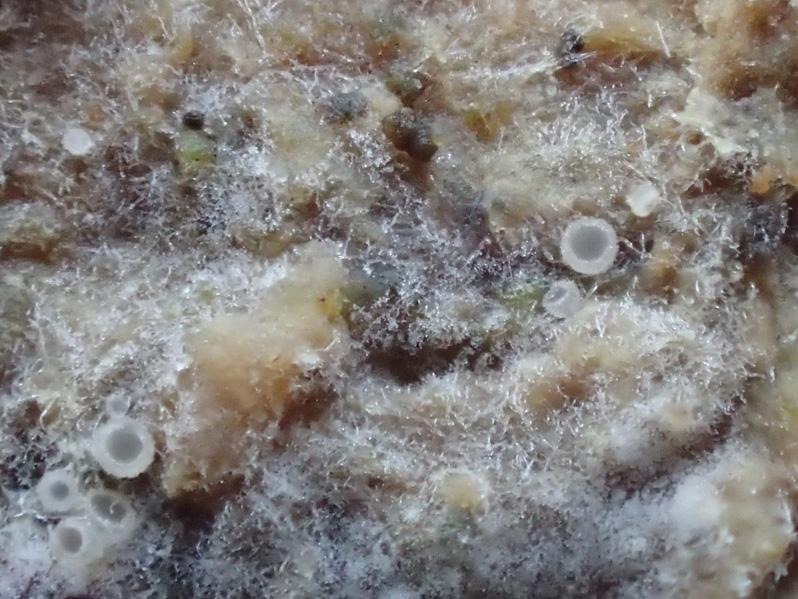
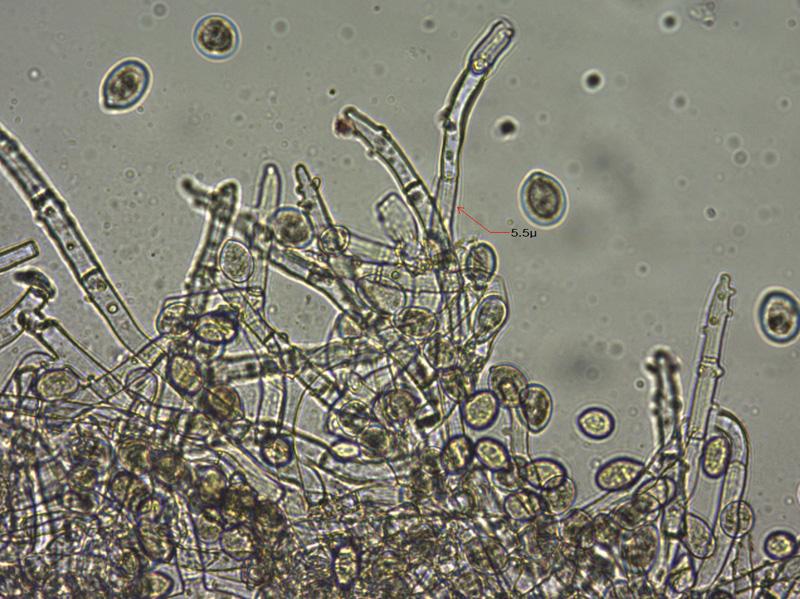
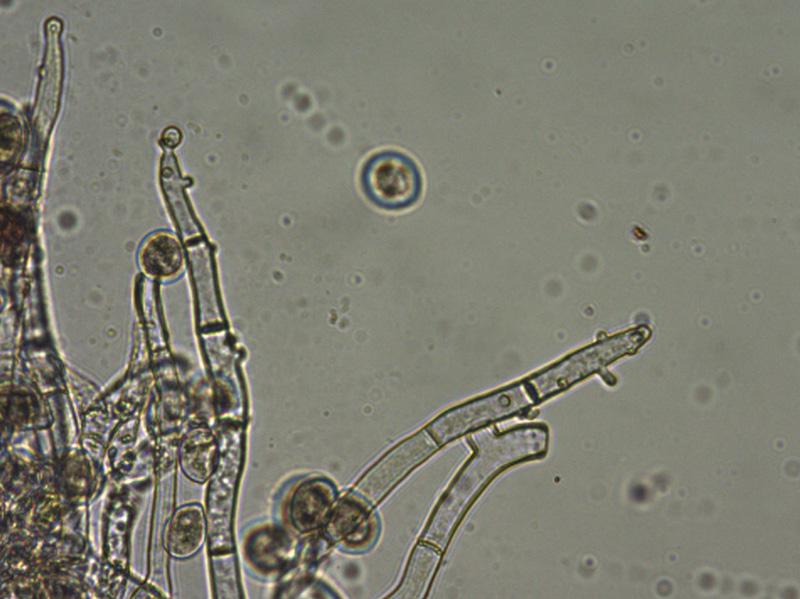
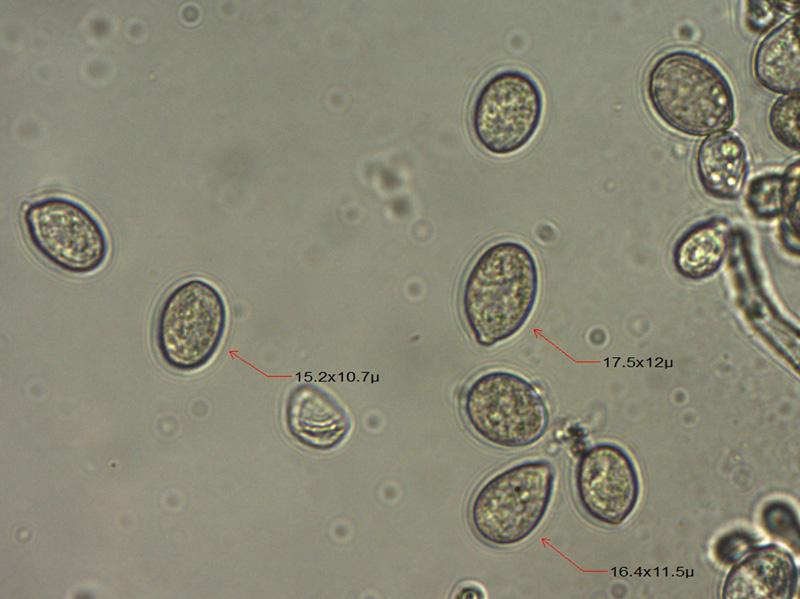
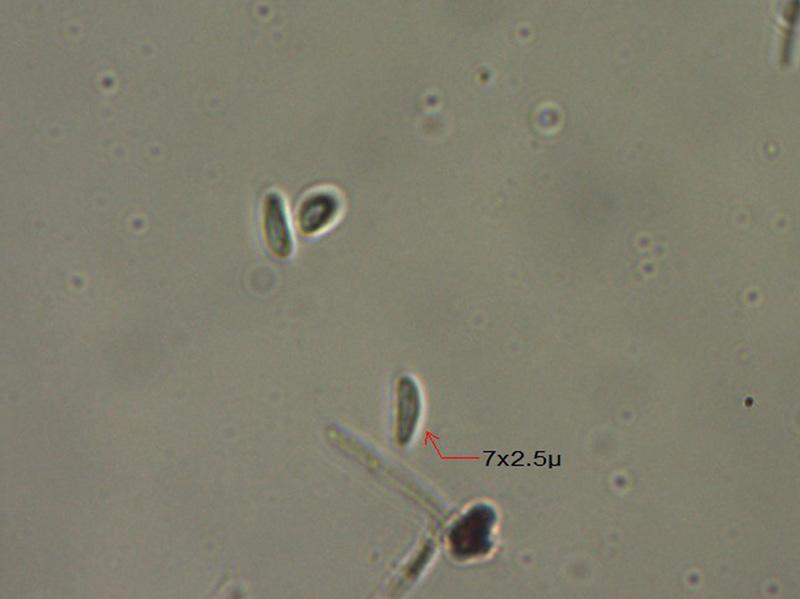
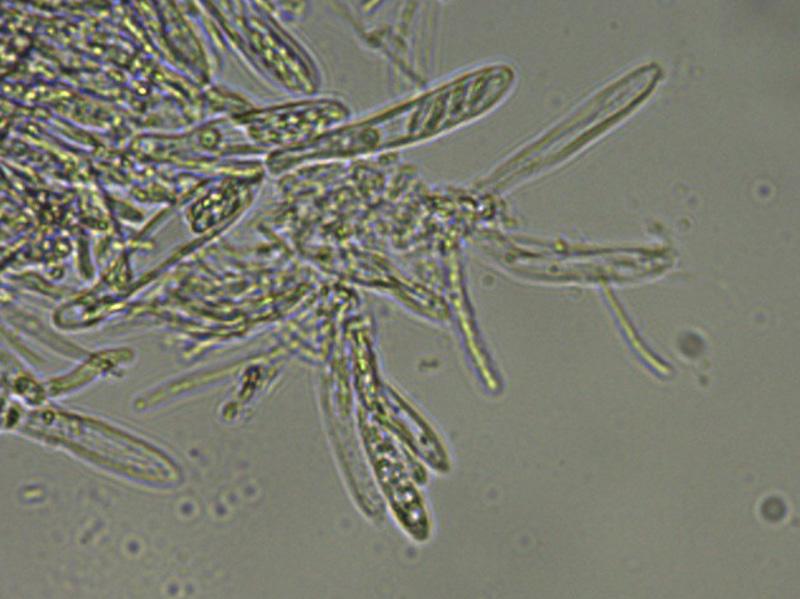
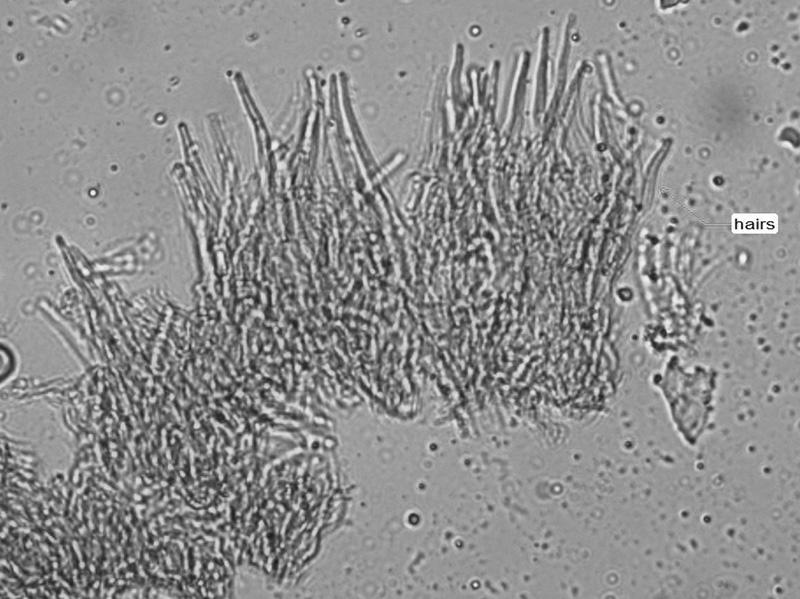
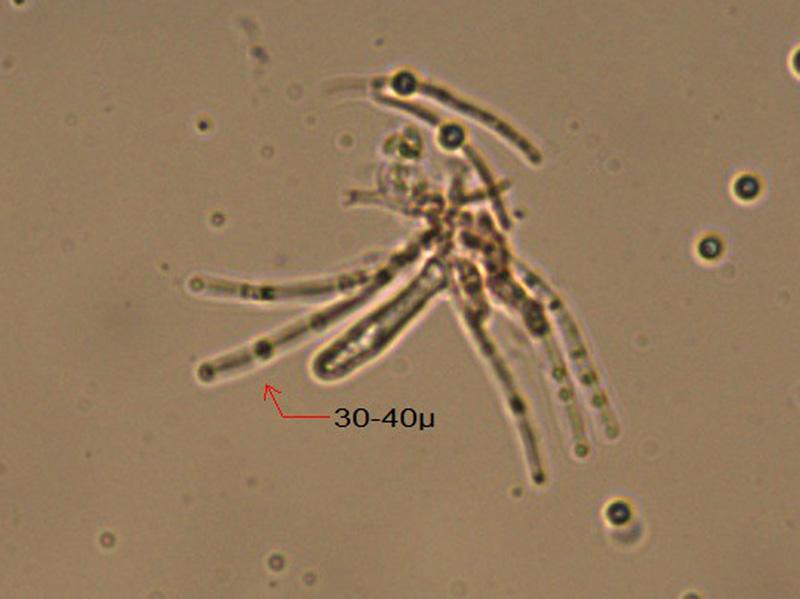
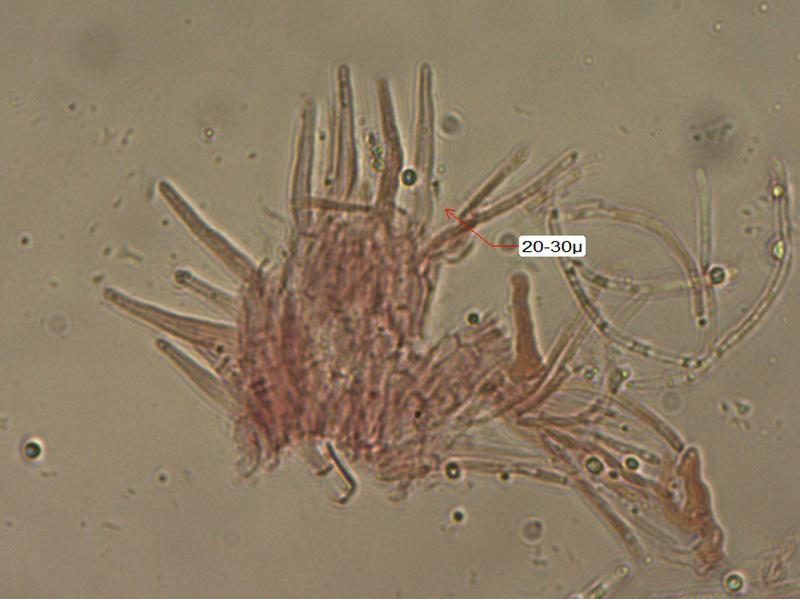
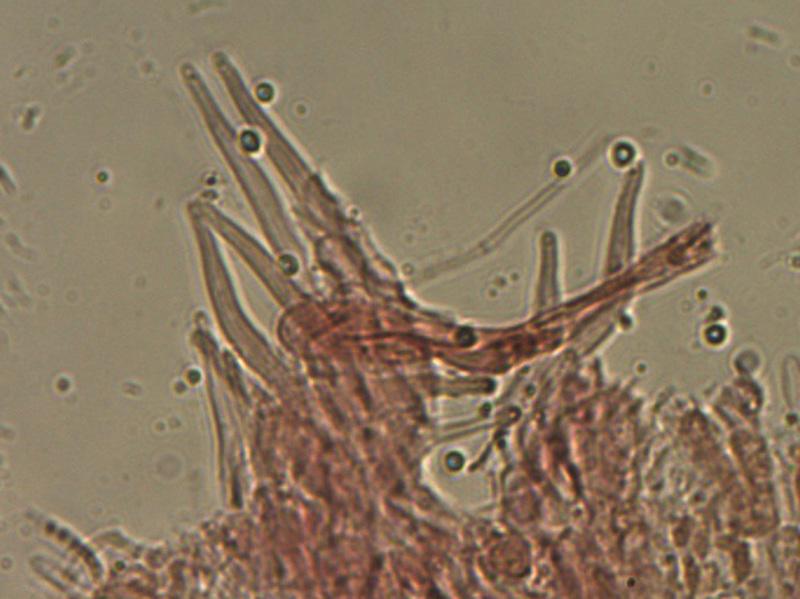

The broad hyphae are another fungus.
definitely not. I see in some hairs an apical minute glassy knob, and that occurs sometimes in Hyaloscypha.
Zotto
Thank you for the suggestion Simon.I will try the anamorph key in Bernicchia
Marc
Good evening Hans-Otto
You are right about the vacuolar bodies although they are not always present.
Is Psilachnum the only choice with VB's?

Looks very much like a Hyaloscypha to me. Haven't seen Psilachnum-droplet often in Hyaloscypha, but occasionally yes, so not impossible. I think Larix is not that well known as a substrate (or maybe Raitviir knew it?). Most Hyaloscyphas show dextrinoid reactions, have you tried that? Works for dried material as well. Can't recall Psilachnums having dextrinoid reactions.
Timo
:-), yep, hairs/excipula should turn something close to maroon / red wine / Earl Grey (no milk) (=dextrinoid). If something is turning blue only then you call it amyloid. But I'll take it that you just very much confirmed it as an Hyaloscypha.
T