
22-04-2026 20:17
 Marian Jagers
Is anyone familiar with the Hyphomycetes genus Pse
22-04-2026 20:54
 Enrique Rubio
Hi to everybody.This Pyrenopeziza grew in moist le
22-04-2026 01:06
 Richard VALERI
Bonjour à tous.Je vous présente cette Nectria s.
21-04-2026 13:36
Gernot FriebesHi,I am out of ideas for this one. I collected Sal
21-04-2026 13:19
Gernot FriebesHi,this Lophodermium on Typha has ascospores measu
21-04-2026 13:05
Gernot FriebesHi,this hyphomycete feels familiar but I was not a
20-04-2026 22:00
 Malcolm Greaves
These pale yellow, hairy ascos were growing on cul
Graphostroma / Diatrype platystoma
Ethan Crenson,
20-12-2018 06:38
A couple of weeks ago in a park in New York City I found an effuse black pyreno growing on Lindera benzoin. It looked like Diatrype so I ran it through the key in Vasilyeva & Stephenson. What I came up with is Graphistroma platystoma.
The ostioles are black discs against a brown stroma. They are not sulcate. I don't believe there is a sterile margin (perhaps by looking at the pictures see if you agree). The sterile tissue between the perithecia is black. (In the fourth picture it may look as though there is white material among the perithecia, but that is just light reflecting off the sectioned perithecia). The perithecia measure about .25mm wide by .5mm tall.
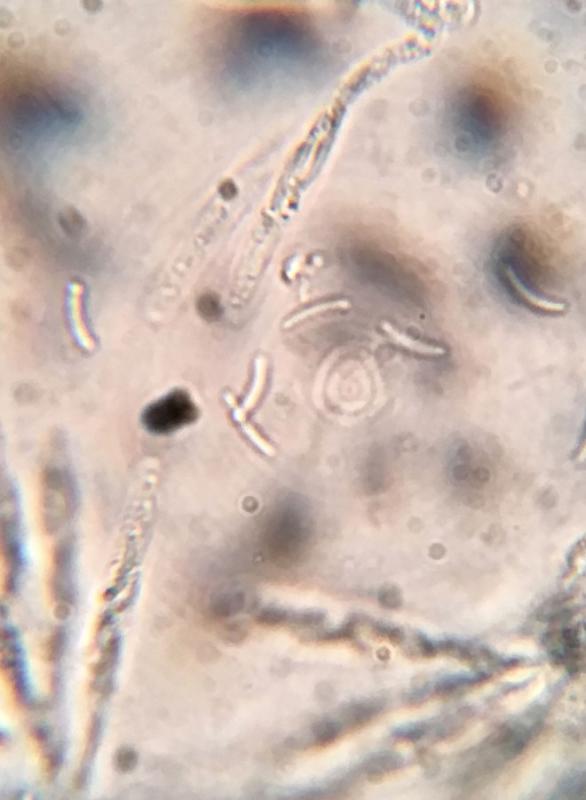
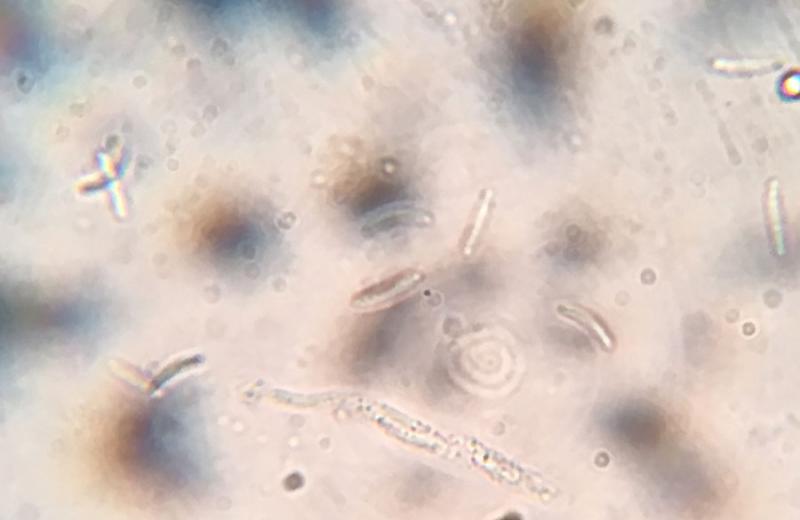
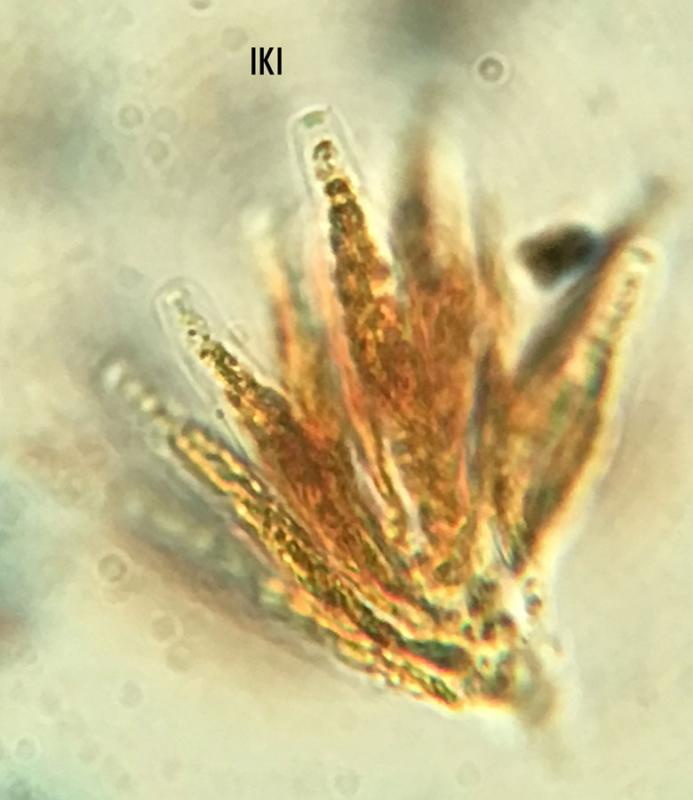
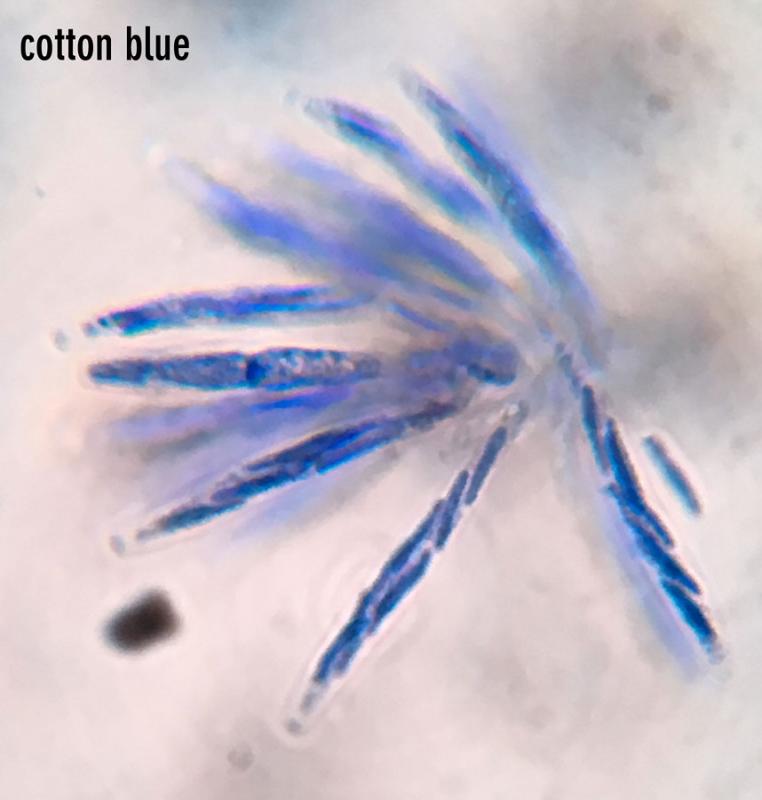
The spore bearing part of the asci is 33-42 x 4.5-5.5µm. The asci apex is, weakly IKI+. Spores are somewhat allantoid, 7-10 by 1-2µm.
I think the other option obtained via the Vasilyeva & Stephenson key is D. atlantica based on the presence or absence of the sterile margin. Has anyone any thoughts on this?
Thank you in advance!
Ethan
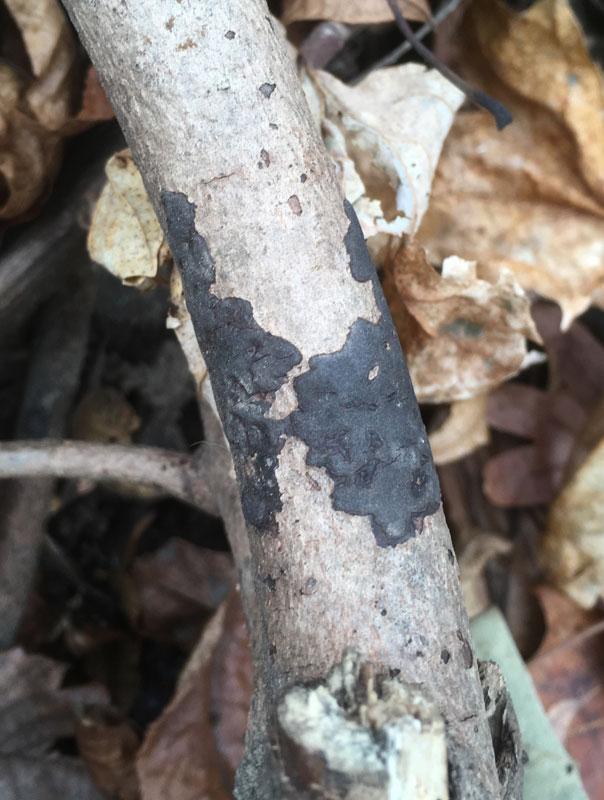
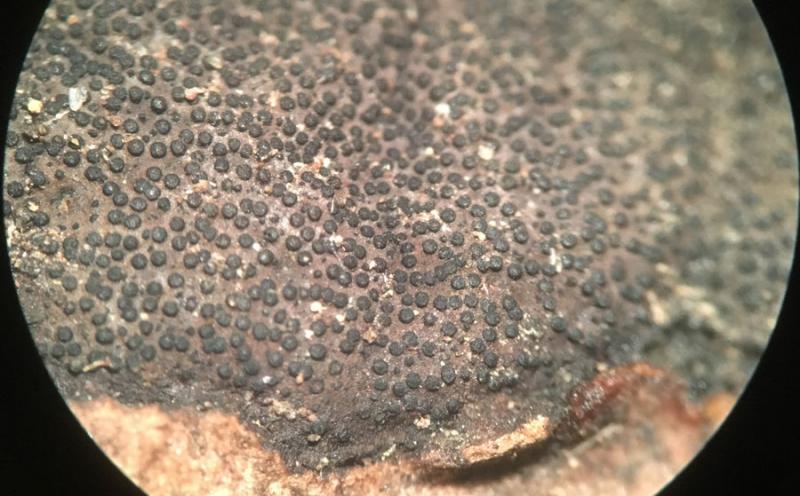
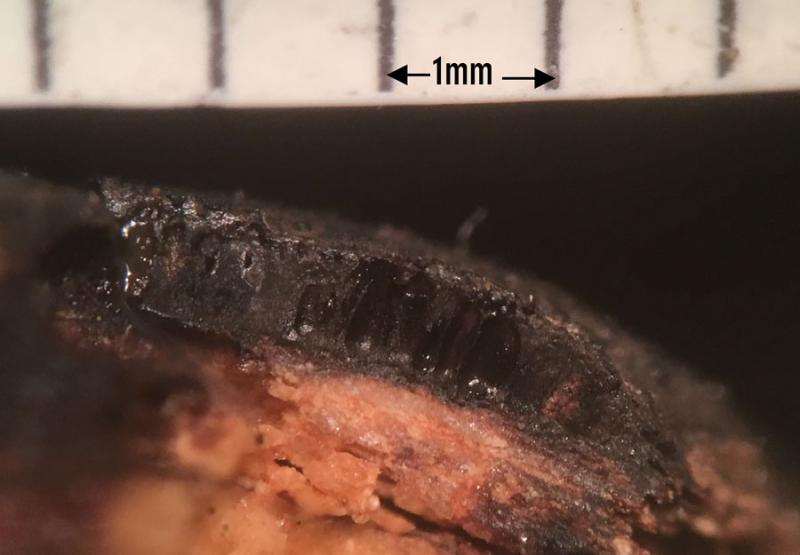
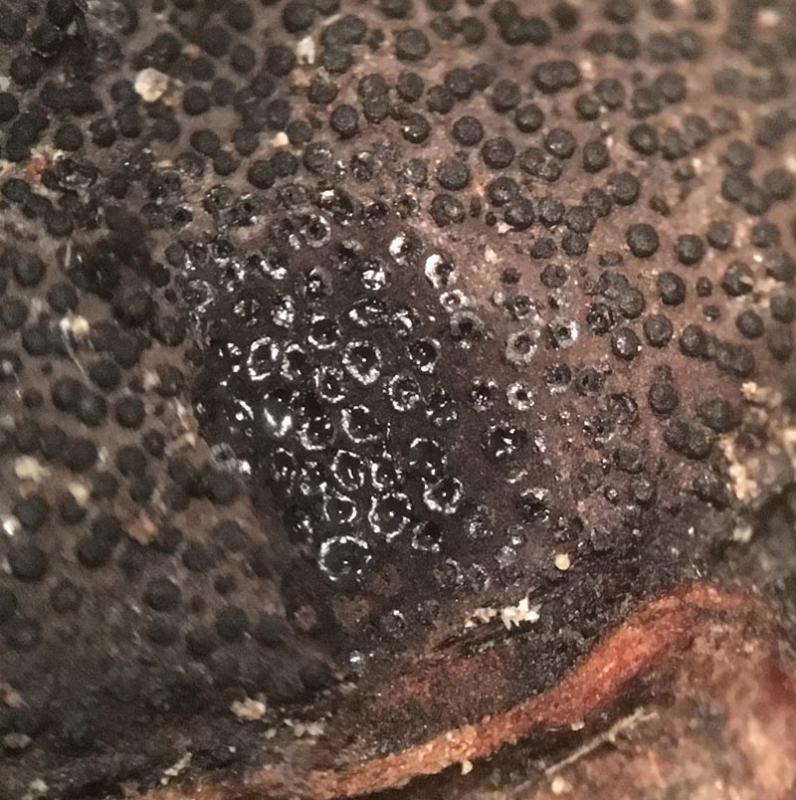
Jacques Fournier,
20-12-2018 16:41

Re : Graphostroma / Diatrype platystoma
Hi Ethan,
the short-stipitate asci are characteristic of G. platystoma, setting it apart from other resembling Diatrypaceous genera.
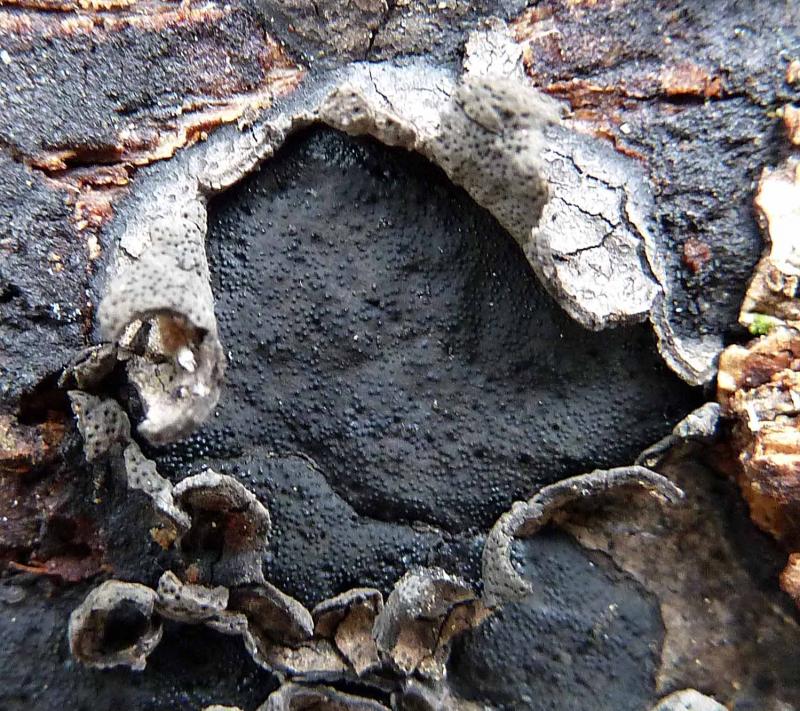
Unlike what Vasilyeva claims, you will not find a true sterile margin on stromata. What you can find at margin is just remnants of superficial "lid" originating from the bark that covers the stroma at early stages, like in Biscogniauxia and Camillea. This tissue is brittle and readily worn off, just leaving some small teeths sometimes visible around the margin of the stroma.
I attach a pic of a stroma still partly covered by its lid.
Hope it helps!
Cheers,
Jacques
Ethan Crenson,
23-12-2018 06:04
Re : Graphostroma / Diatrype platystoma
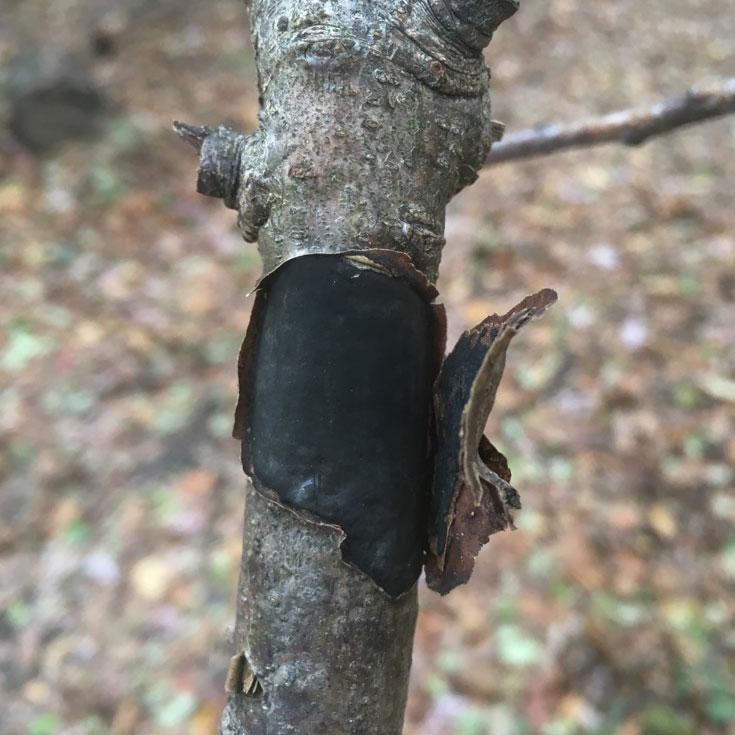
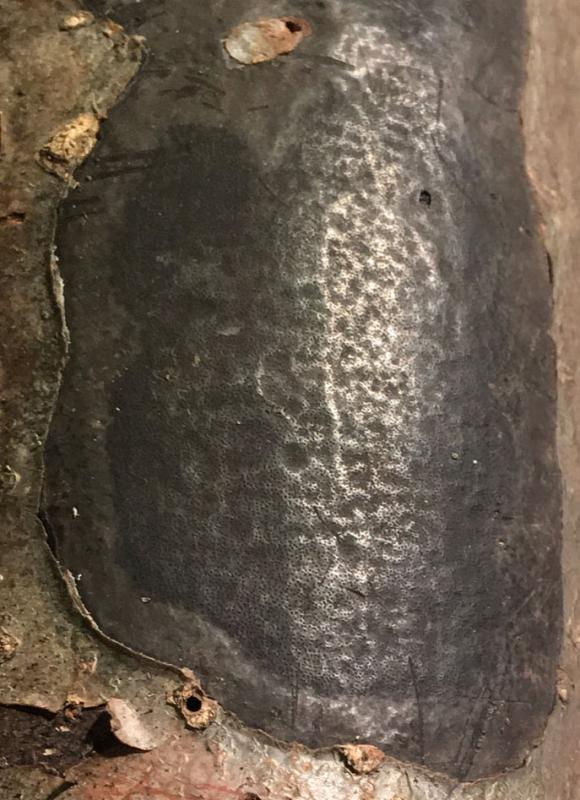
Thank you, Jacques. I have seen examples of the "lid" of tissue. I often see it on Camillea punctulata (for example the photo I have uploaded here of that species--which you first helped me to recognize!). But it was my assumption that the "sterile margin" in G. platystomum refers to an area near the margin where no ostioles appear. Again like C. punctulata, which almost has a sterile rim around the entire edge where there are no ostioles (see picture 2). There should be no sterile margin like that in G. platystomum, correct?
Jacques Fournier,
23-12-2018 21:32
Re : Graphostroma / Diatrype platystoma
yes Ethan, that's right.
misused terms may be confusing whan dealing with morphological details.
Merry Christmas to you and all the forum users,
Jacques