
05-05-2026 22:40
Gernot FriebesHi,I believe this is a Plagiostoma growing on a Sa
04-05-2026 18:13
 Stephen Martin Mifsud
ID request for what seems to be a true aquatic fun
04-05-2026 16:39
Stephen Martin Mifsud
ID request: This specimen was collected in Malta o
28-07-2011 18:31
 Alex Akulov
Dear FriendsToday I made the pdf file of Velenovsk
28-04-2026 20:07
 Lothar Krieglsteiner
... on twig in the air at standing Ceratonia siliq
04-05-2026 09:50
 Castillo Joseba
Me mandan el material seco de Galicia,(España) re
02-05-2026 12:42
Alain BRISSARDBonjour à tousJeuidi 30 avril dernier on m'a remi
02-05-2026 13:06
Pauline. PennaBonjour Please can someone help me with this id
01-05-2026 22:45
 Thierry Blondelle
Bonjour à tous, Une récolte sur bouse séchée d

Hello,
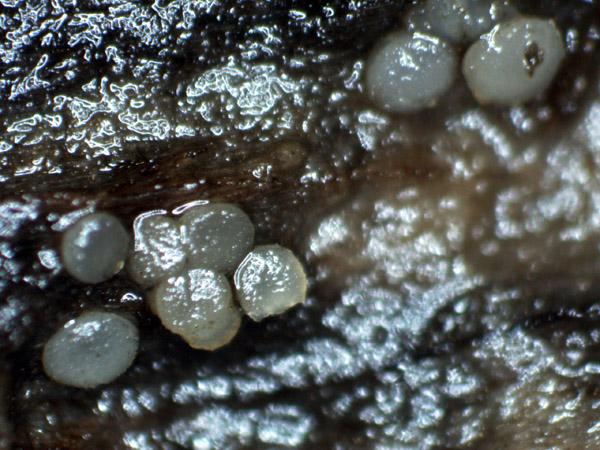
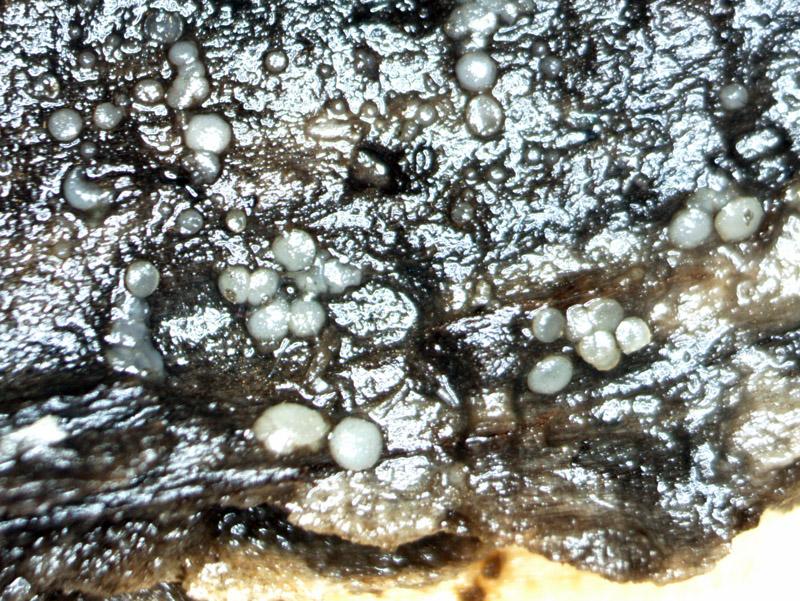
found today on a log of Acer pseudoplatanus or Fagus, lying submerged in a rivulet with fast floating water, 1100 m a.s.l., Bavarian Forest.
Small white cushion-like apothecien growing gregarious.
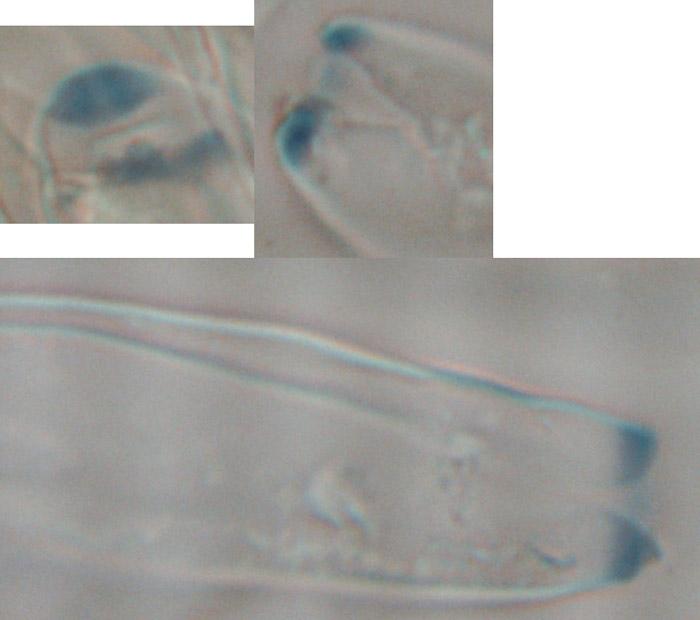
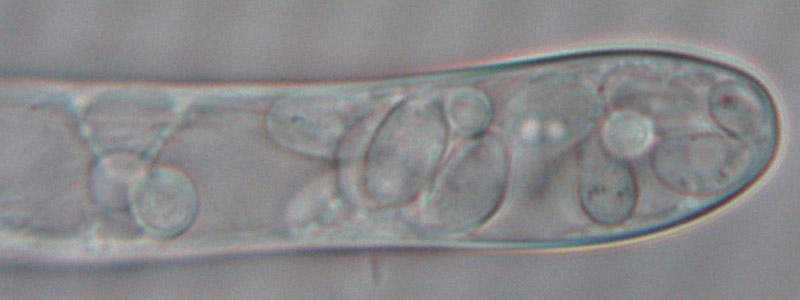
Asci inoperculate, with very thick apical pore IKI bb 3, but obviousely the asci are going to split after spore discharge (similar tto "semi-operculate"?)
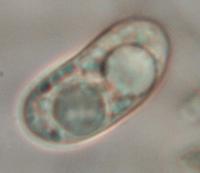
Spores 14-18 x 7-9 µm, some slightly bean-shaped, full of oil drops, may be becoming faintly yellowish with age (not sure ...)
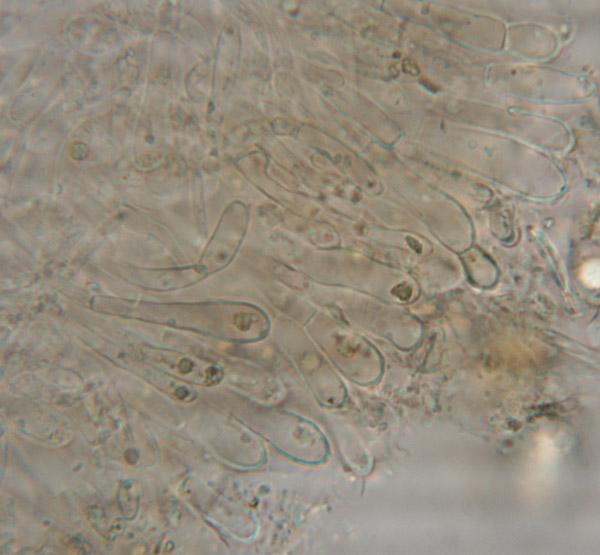
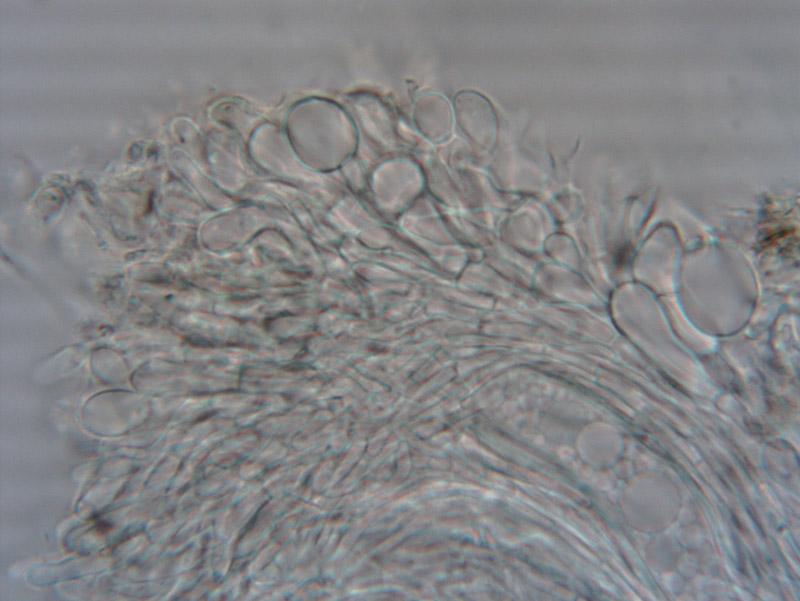
Excipulum like in foto.
Anyone having an idea to that? Looks somehow like a Pezicula to me?!
best regards,
Andreas

I think you collected the same thing as in spring:
http://www.ascofrance.fr/search_forum/53457#
still a very obscure fungus to me!
Zotto
Hello Zotto,
yes, very likely, but this time the asci are mature to overmature and I recognized this splitting of the asci, a thing I never have seen before in any inoperculate fungus. So I hoped it is easier to recognize now ....
The spores become septate with one or ven two septae when overmature, b.t.w.
I have the collection still in fresh state here, if you like I can send it tomorrow.
best regards,
Andreas
Hi Zotto,
may be the collection was in parts yet overmature, but most apothecia looked as if in good condition and there were asci like the one with not yet ruptured apex and there were many spores that seems mature but not overmature. When the spores become overmature and septate the oil drops are gone or nearly so.
The substrate is very likely Acer again, only other possibility is Fagus. But I cut a too thin piece of the branch to verify this now.
It is the same location again as in the spring posting.
this big apical ring, isn't it also similar in Pezicula?
best wishes,
Andreas
In the marginal cells you photographed contents which are perhaps remnants of VBs?
Hello Zotto,
I made some more fotos and checked a possible reaction with cresyl blue.
With CB I was astonished as the apothecia show stron metachromatic reactions. I have no experience with that in ascomycetes, but in basidiomycetes metachromatic reactions are often diagnostic important.
Here especially the subicular hyphae reacted very strongly pink in CB. Also the spores are matechromatic. Unfortunately my microscope camera can not show this metachromatic colours. I made some fotos with the smart phone and will upload them later. But the spore foto may give an impression.
Also the cell bodies in the paraphyses were deep blue in CB and good to see. They are present in some cells but not in others.
The asci are clearly without croziers, but that was obviouse already from the first collection.
In one ascus it was clearly to see that there are more than 8 spores - but I'm not sure wether the spores are developing ascoconidia or wether this is just an accident or wether this is a parasite?!
Some spores are already septate within the ascus though they seem to be still immature.
May be this may help a bit further?
Jani prepared a culture of the fungus and hopefully it will grow and she can sequence it.
Three air dried apothecia will go to Marco thines and he hopefully will sequence this portion. If successful, we will surely be somewhat wiser ... ;-)
all the best and thank you,
Andreas
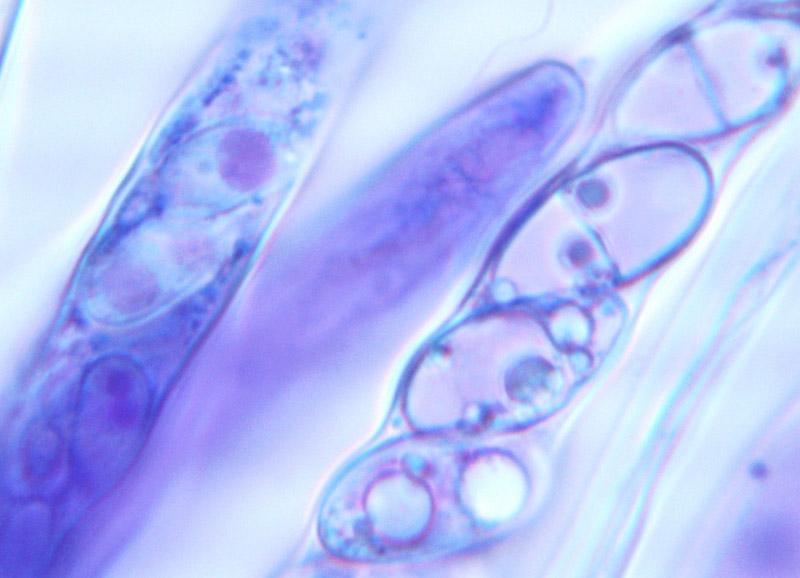
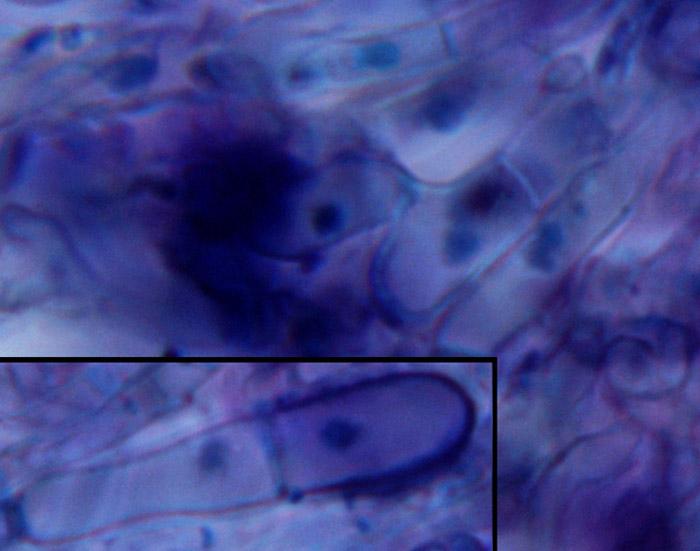
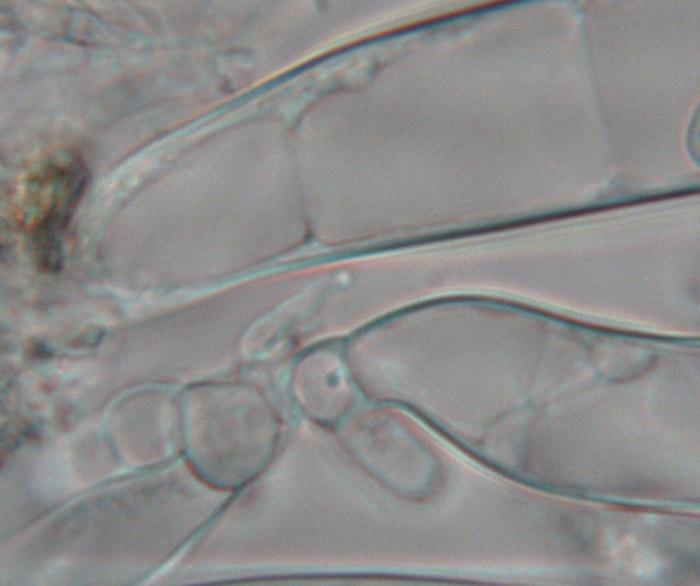
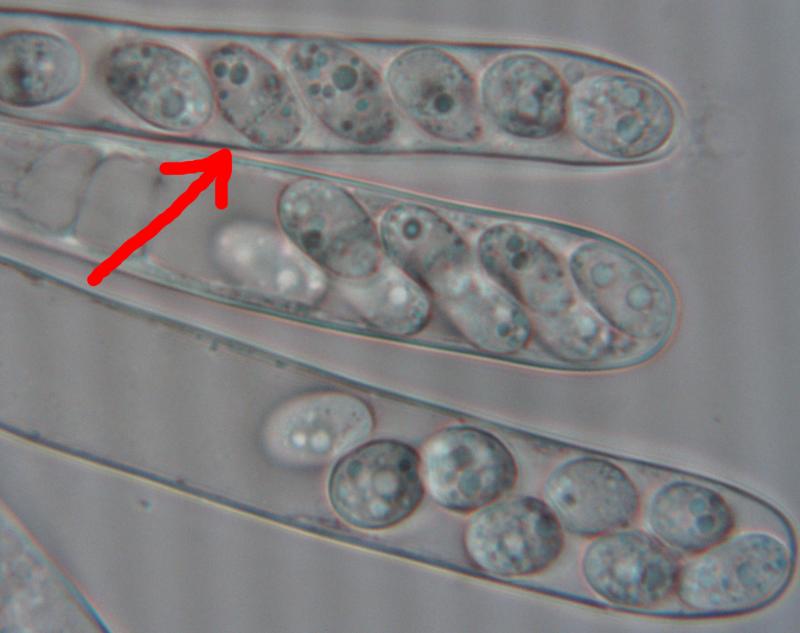
Aqueous Cresyl Blue you should better abbreviate CRB because CB is in use for Cotton Blue in lactic acid. Yes, this is an important reagent, especially spore surfaces are stained in some groups, e.g. in Pezicula.
I suppose that the smaller spores in the asci are an artifact caused by the winter time.
My impression is that the spores are normally ejected when aseptate, and septate submatue spores a result of bad conditions.
I am very curious what culturing and sequencing will bring. Aquatic species have variously been described with curious Ingoldian anamorphs, maybe your fungus is among them.
Zotto
Hi Zotto,
thanks for the hint to CRB and CB, I have to keep that in mind. As I usually write BWB for Baumwollblau I didn't realize that cotton blue and cresyl blue have the same abbreviation ....
What concerns the anamorphs, Christiane Baschien is culturing and sequenzing substrate (leaves and twigs, sterilized and in-situ collected) from the same river plots in which we inverstigate the teleomorphs. So hopefully we can gain a sequence from our teleomorph and it will be likely that we have a match with seomthing from Christianes substrate sequences. Then we at least will know that it HAS an anamorph. And with some luck we even know its identity.
best wishes,
Andreas