
05-05-2026 22:40
Gernot FriebesHi,I believe this is a Plagiostoma growing on a Sa
04-05-2026 18:13
 Stephen Martin Mifsud
ID request for what seems to be a true aquatic fun
04-05-2026 16:39
Stephen Martin Mifsud
ID request: This specimen was collected in Malta o
28-07-2011 18:31
 Alex Akulov
Dear FriendsToday I made the pdf file of Velenovsk
28-04-2026 20:07
 Lothar Krieglsteiner
... on twig in the air at standing Ceratonia siliq
04-05-2026 09:50
 Castillo Joseba
Me mandan el material seco de Galicia,(España) re
02-05-2026 12:42
Alain BRISSARDBonjour à tousJeuidi 30 avril dernier on m'a remi
02-05-2026 13:06
Pauline. PennaBonjour Please can someone help me with this id
01-05-2026 22:45
 Thierry Blondelle
Bonjour à tous, Une récolte sur bouse séchée d
Perithecia on Horse Dung
Malcolm Greaves,
28-11-2018 21:26

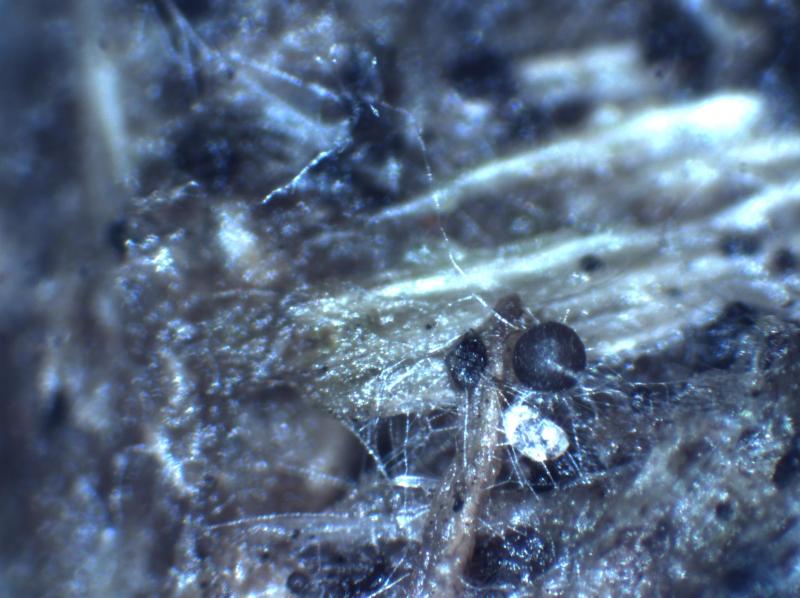
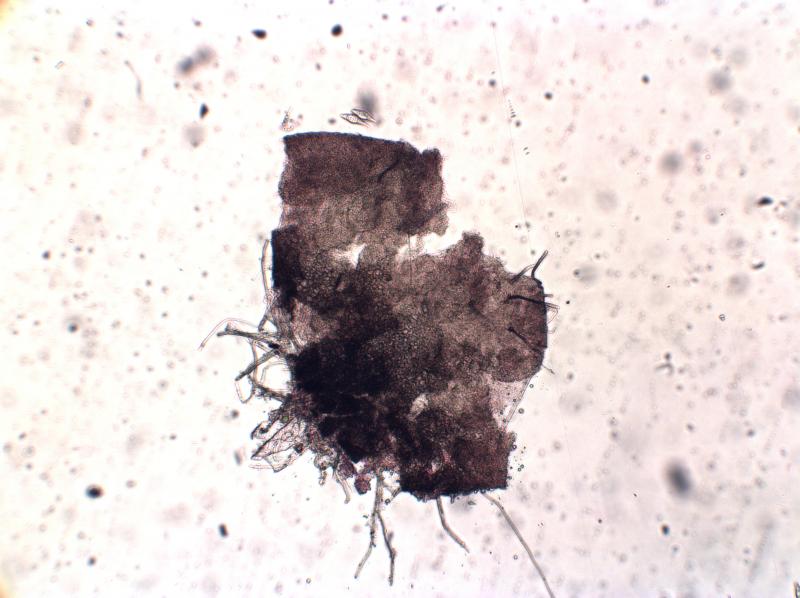
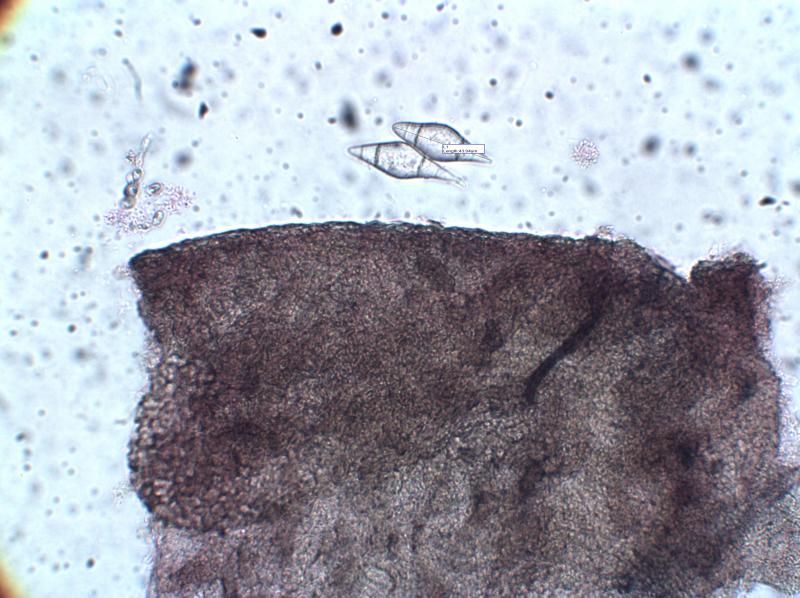
This perethecia c.25mm was on horse dung. The only "spores" that I could find were these elongated septate and tapering ones 43 um long. The could be contamination from outside but if not they are fairly distinctive.
Can anyone help.
Thanks
Mal
David Malloch,
02-12-2018 01:48

Re : Perithecia on Horse Dung
Hello Malcolm,
The perithecia (or cleistothecia) are probably not related to the two spores in your last photo. These are conidia of one of the nematode-trapping hyphomycetes, probably either Candelabrella or Monacrosporium. Both are now known to be anamorphs of Orbiliaceae.
David
The perithecia (or cleistothecia) are probably not related to the two spores in your last photo. These are conidia of one of the nematode-trapping hyphomycetes, probably either Candelabrella or Monacrosporium. Both are now known to be anamorphs of Orbiliaceae.
David
Malcolm Greaves,
04-12-2018 11:43
Re : Perithecia on Horse Dung
Thanks David
Looking at your suggestions and papers provided by Chris Yeates (thanks again Chris) the conidia look to be close to Dactylella probably heptameres.
Mal
No other cleistothecia have developed