
14-04-2026 21:52
Gernot FriebesHi,found on dead leaves of Carex elata. Conidia: 4
14-04-2026 20:31
Gernot FriebesHi,can this be Psilachnum lateritioalbum on Phragm
14-04-2026 05:32
Ethan CrensonHi all, A few weeks back a friend pointed out som
12-04-2026 17:56
 Hardware Tony
Found on dead stems in February earlier this year
12-04-2026 15:52
Gernot FriebesHi,I'm looking for help with this anamorph collect
12-04-2026 12:22
 William Slosse
In a dune grassland in Oostduinkerke (Belgium), on
11-04-2026 15:45
 Zuzana Sochorová (Egertová)
Please, could anyone send me this paper?Moyne G.,
11-04-2026 13:34
Artem PtukhaHello, I am seeking assistance with the identific

11-04-2026 10:19
 Michel Hairaud
Chers amis d'Ascofrance , voici une très bonne no
Stalked yellowy cup
Malcolm Greaves,
01-10-2018 16:46

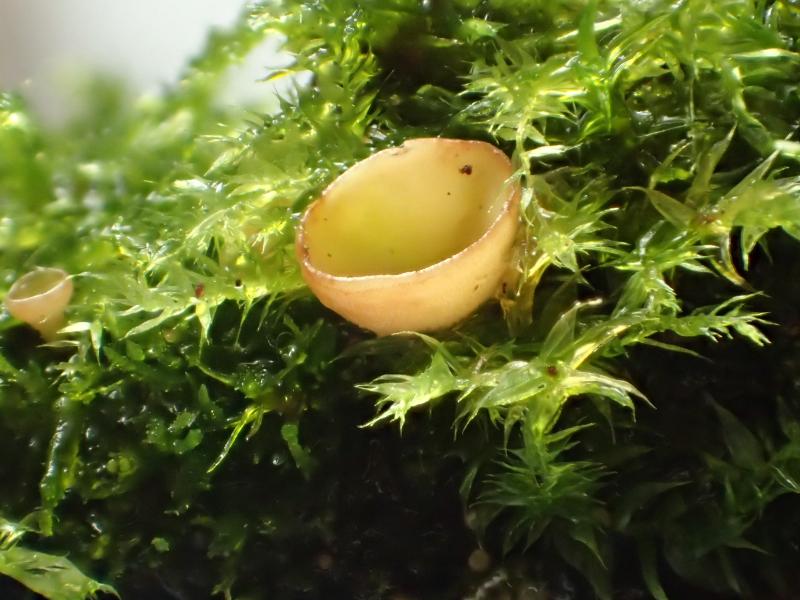
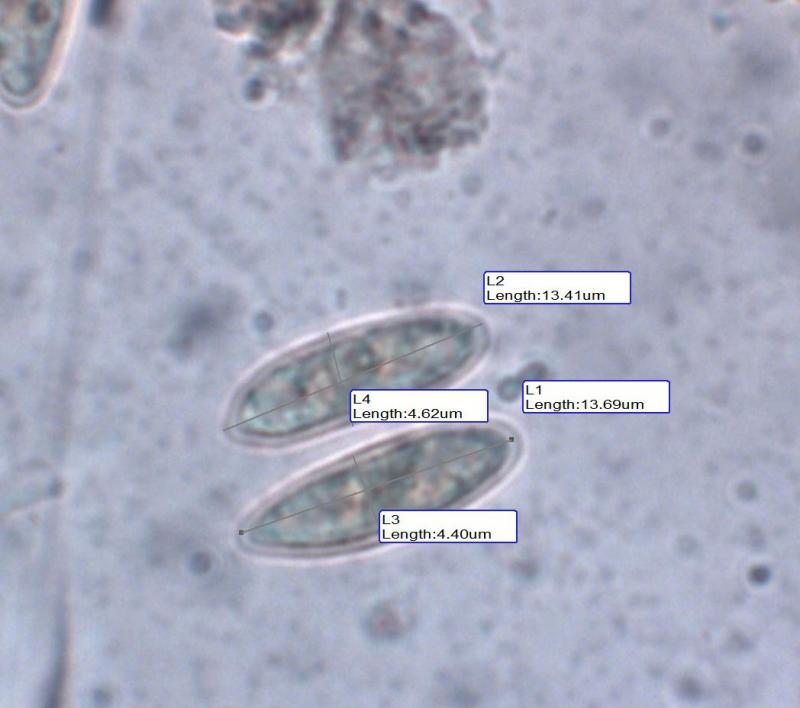
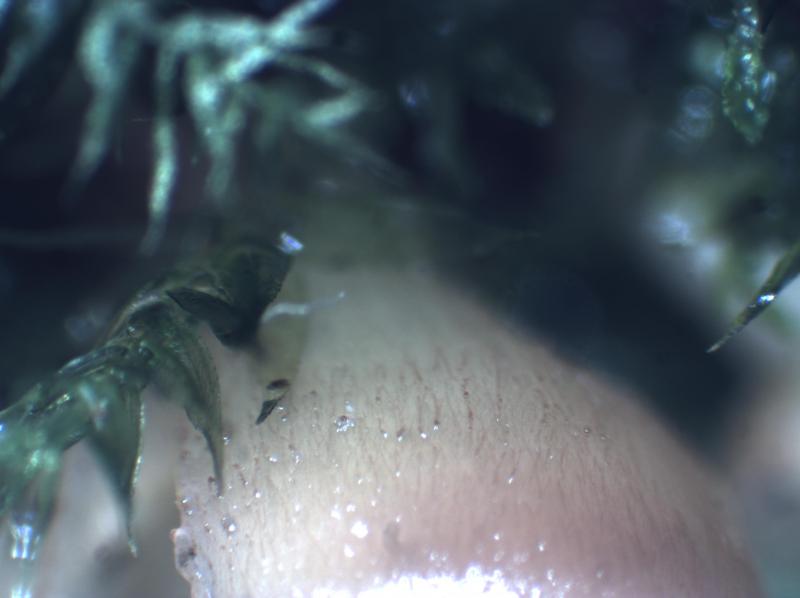
Can someone point me in the right area for this yellow/orange stalked cup. It was on a small branch under Fraxinus and Salix. No hairs but almost striate outer surface. No sign of bluing with meltzers and the spores are 13.5 x 4.5.
Thanks
Mal
Hans-Otto Baral,
01-10-2018 16:58

Re : Stalked yellowy cup
This could be Hymenoscyphus consobrinus, but the spores are too unsharp to see welll their contents, and usually this species has an amyloid ring in Lugol.
The paraphyses should be figured (in living state) and also the ascus base checked for croziers.
Zotto
The paraphyses should be figured (in living state) and also the ascus base checked for croziers.
Zotto
Malcolm Greaves,
01-10-2018 22:00
Re : Stalked yellowy cup
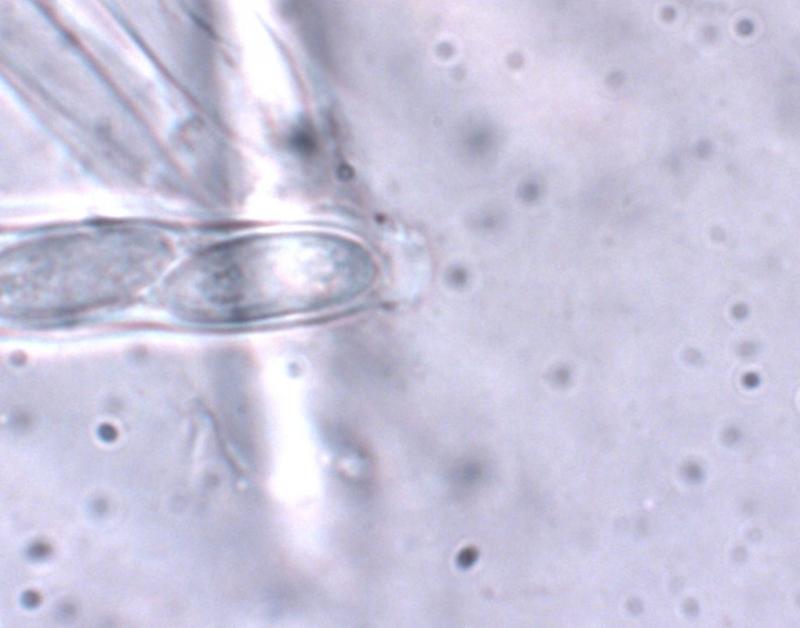
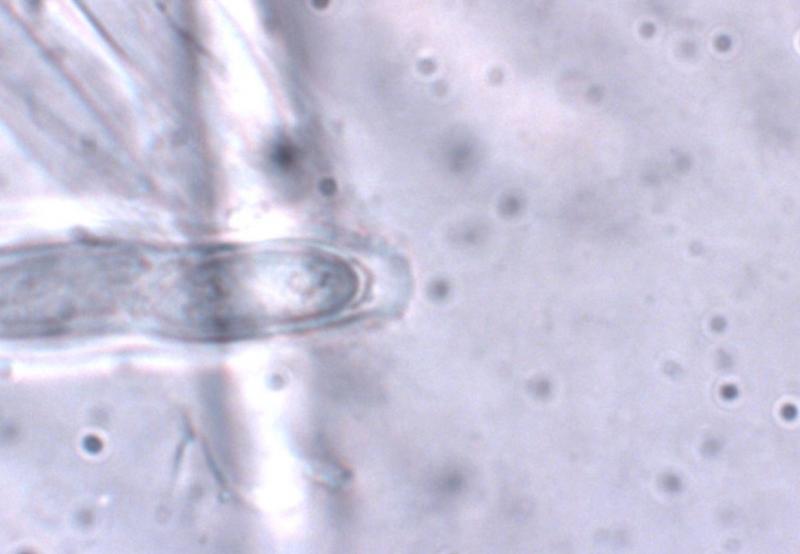
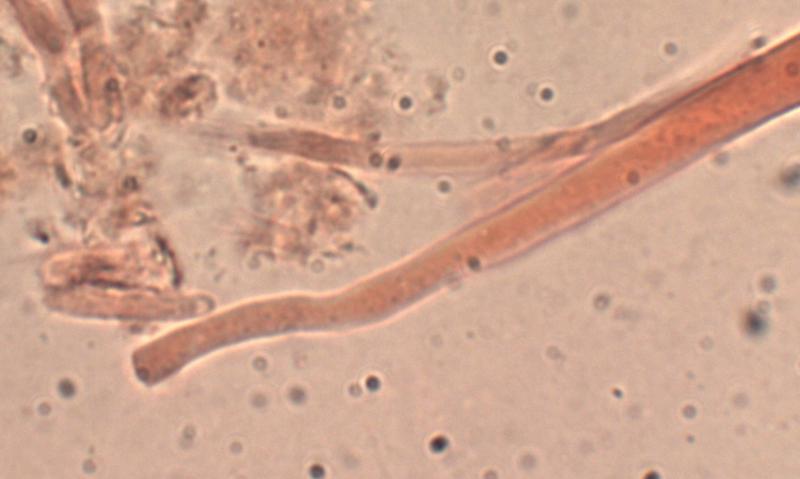
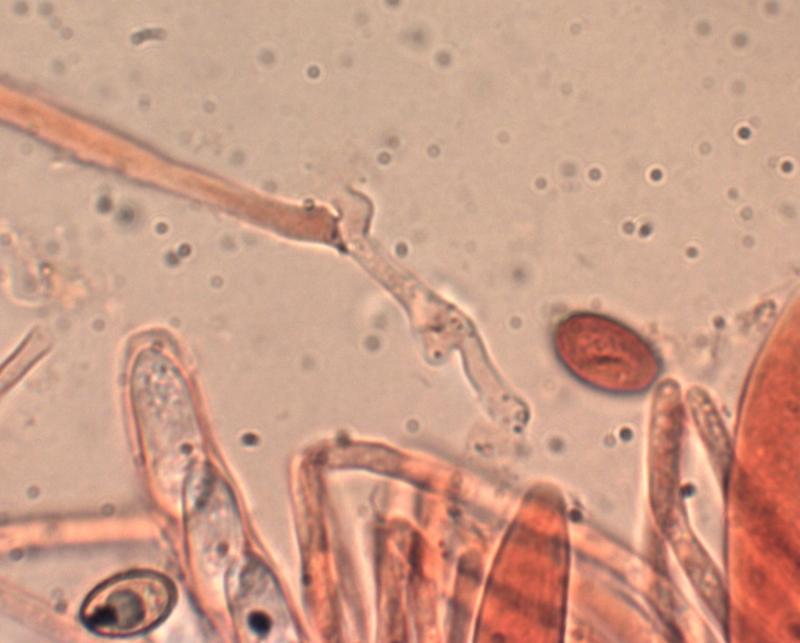
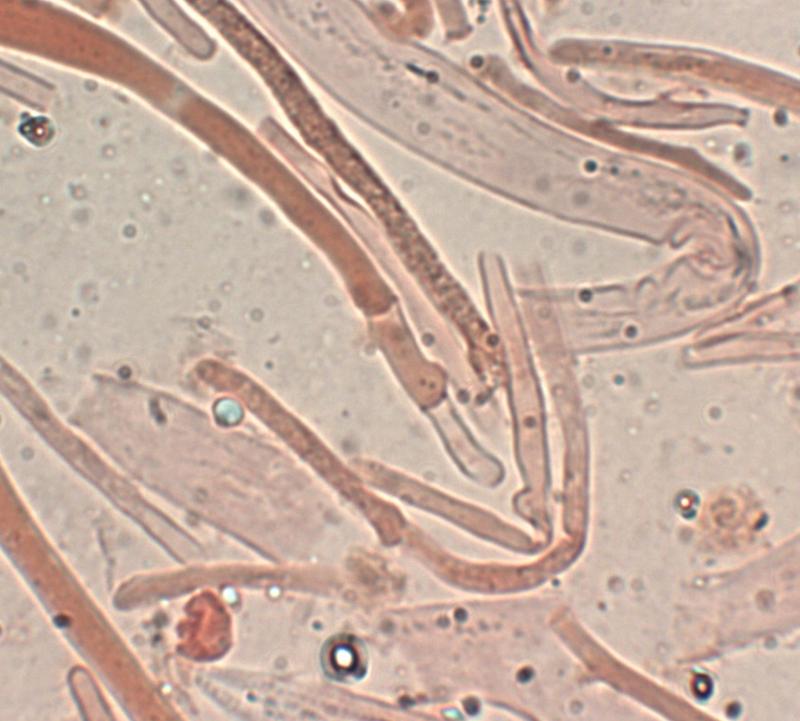
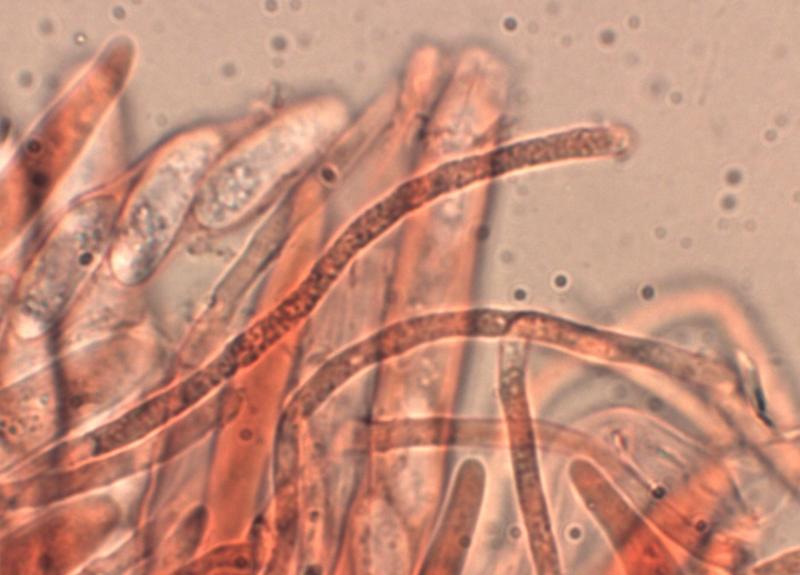
Thanks Zotto. I have tried to get better photos showing the relevant details. There seems to be no reaction in the asci with lugol but the paraphyses which are granular did look to develop a slight brown streak. I have shown the base of the asci but again not sure whether it shows a crozier.
Thanks again.
Mal
Hans-Otto Baral,
02-10-2018 07:34
Re : Stalked yellowy cup
Are your pics in Congo red or in another red stain?
Nothing is alive anymore there. But one image shows a splendid crozier. The third pic looks much like a simple-septate ascus, though, maybe only because the other septum is hidden?
When testing iodine, the surrounding, especially the cytoplasm, should take a yellow-brownish colour, otherwise I would say there isn't enough iodine to provoke a reaction.
Zotto
Nothing is alive anymore there. But one image shows a splendid crozier. The third pic looks much like a simple-septate ascus, though, maybe only because the other septum is hidden?
When testing iodine, the surrounding, especially the cytoplasm, should take a yellow-brownish colour, otherwise I would say there isn't enough iodine to provoke a reaction.
Zotto