
06-05-2026 11:25
 Castillo Joseba
Me mandan el material seco de Galicia (España) re
28-04-2026 20:07
 Lothar Krieglsteiner
... on twig in the air at standing Ceratonia siliq
05-05-2026 22:40
Gernot FriebesHi,I believe this is a Plagiostoma growing on a Sa
04-05-2026 18:13
 Stephen Martin Mifsud
ID request for what seems to be a true aquatic fun
04-05-2026 16:39
Stephen Martin Mifsud
ID request: This specimen was collected in Malta o
28-07-2011 18:31
 Alex Akulov
Dear FriendsToday I made the pdf file of Velenovsk
04-05-2026 09:50
Castillo Joseba
Me mandan el material seco de Galicia,(España) re
02-05-2026 12:42
Alain BRISSARDBonjour à tousJeuidi 30 avril dernier on m'a remi
02-05-2026 13:06
Pauline. PennaBonjour Please can someone help me with this id
Brick-red Mellitiosporiella
Edvin Johannesen,
13-09-2018 13:04
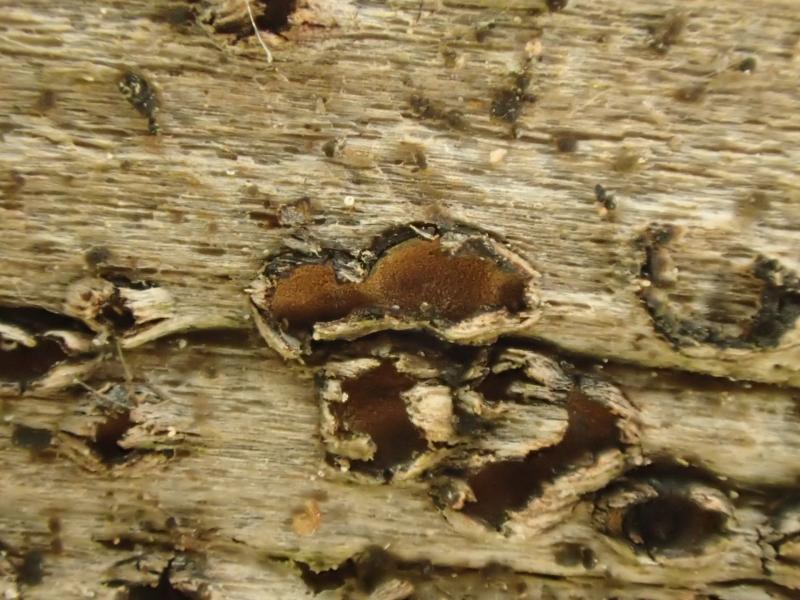
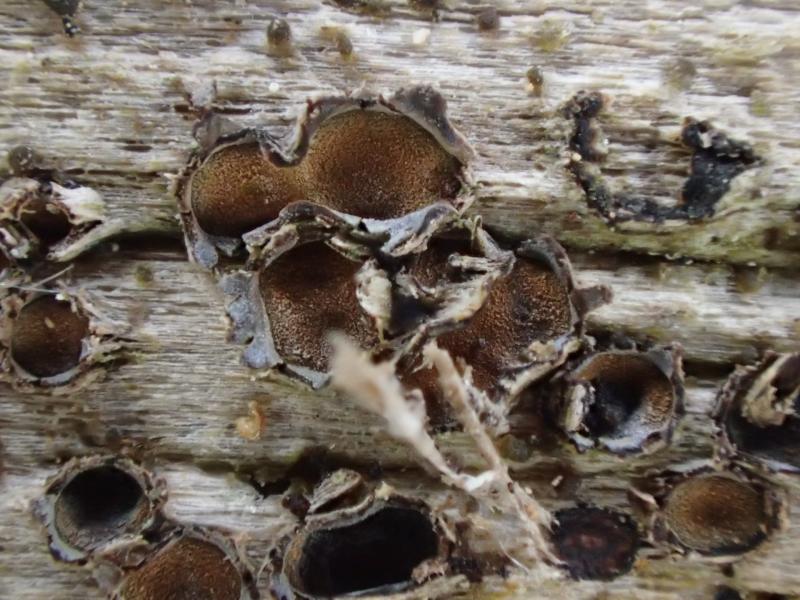
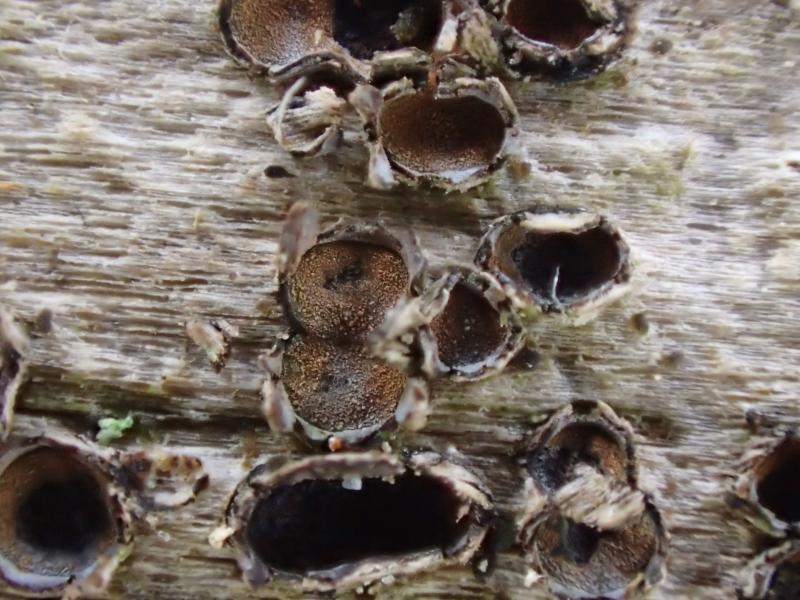
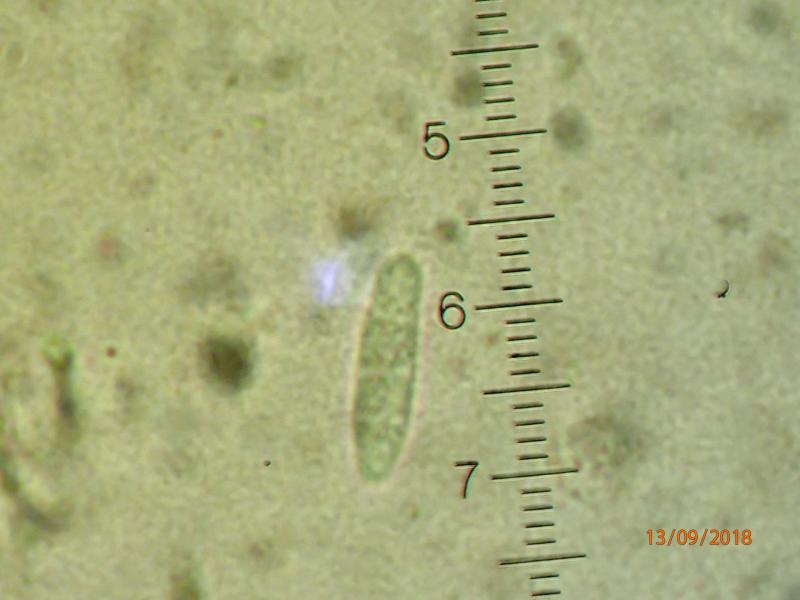
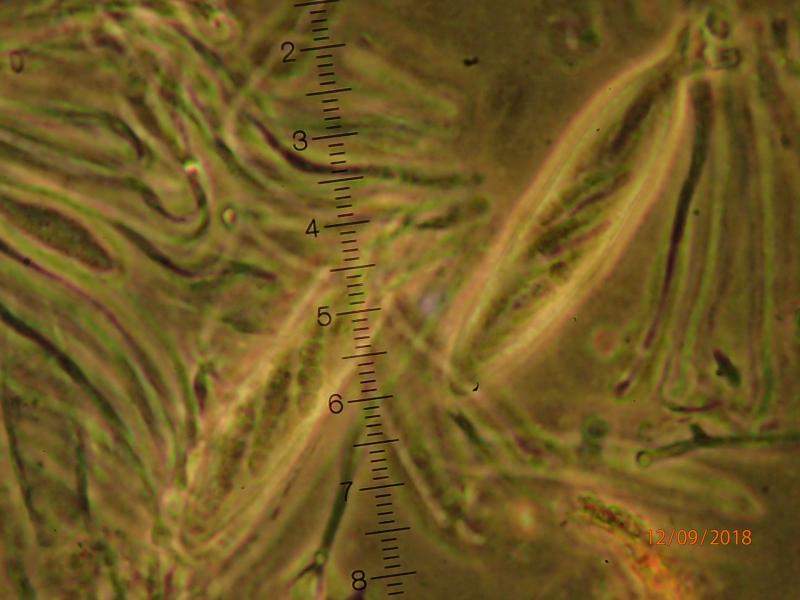
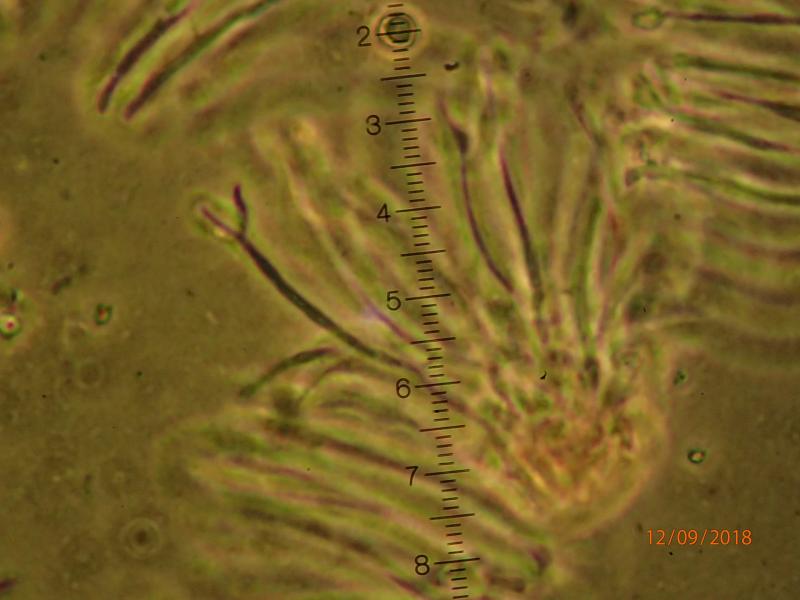
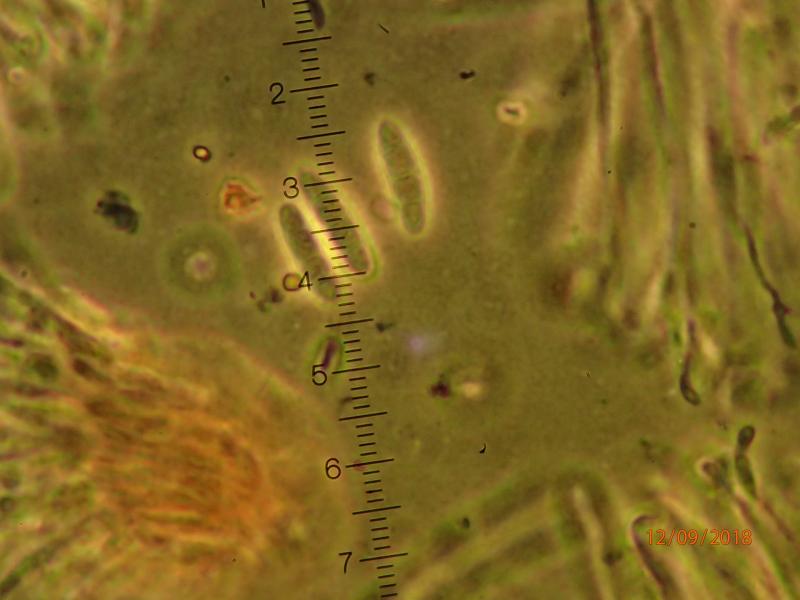
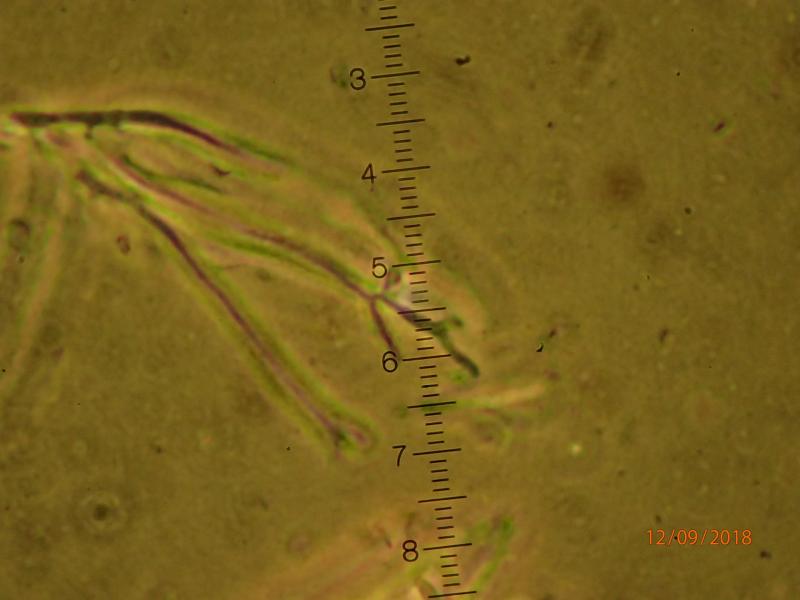
 I have collected a "propolioid" specimen on large fallen trunk of Picea abies in old, mature forest in southern Norway. I find this apparently identical to what is shown in you key to Marthamycetaceae (dated Jan. 2015), Hans Otto, at point 8 in the Mellitiosporiella key (as Mellitiosporiella sp., Leg. Popov from Caucasus, on Carpinus). The discs are brick red (only one of the photos show the real, brick red colour, the remaining appear a bit too brown). Spores are in the same size range as indicated in the key, and appear consistently 3-septate (see photo of single spore in KOH). The paraphyses are frequently branched at the tip (photos). I do not see blue staining at ascus tips with Meltzer. It appears that the spores have several lipid bodies, but I have not given that a thorough study. Do you agree that this seems to be the same species? Has the taxon been formally described yet? Grateful for any help.
Hans-Otto Baral,
13-09-2018 14:27

Re : Brick-red Mellitiosporiella
Hi Edvin
this is great! I only know of Eugene's collection, but yours seems to fit, except that the host wassaid to be Carpinus.
It would be good if you could supply some spore measurements. The scale is 1:1?
The LBs in the spores appear to fit well: some small ones but not a high lipid content.
Melzer is unsuitable for ascomycetes. But in Lugol you will also have a negative reaction, in contrast to many Ostropales with are IKI+ but MLZ-.
Did this grow in Scandinavia?
Zotto
this is great! I only know of Eugene's collection, but yours seems to fit, except that the host wassaid to be Carpinus.
It would be good if you could supply some spore measurements. The scale is 1:1?
The LBs in the spores appear to fit well: some small ones but not a high lipid content.
Melzer is unsuitable for ascomycetes. But in Lugol you will also have a negative reaction, in contrast to many Ostropales with are IKI+ but MLZ-.
Did this grow in Scandinavia?
Zotto
Edvin Johannesen,
13-09-2018 18:13
Re : Brick-red Mellitiosporiella
Thanks! I will do some spore measurements (yes, the scale is 1:1) and provide at this forum. I did have Lugol, but somebody took it at a foray. I guess I have to get some more. Like I wrote, this was found in Scandinavia (Oslo area). Very excited about this :) Has the species been formally described or are these the only two collections known?
Hans-Otto Baral,
13-09-2018 21:27
Re : Brick-red Mellitiosporiella
Sorry, I overlooked the location remark.
As I said, only two collections, yes. I am unaware of a literature report that fits the species.
Zotto
As I said, only two collections, yes. I am unaware of a literature report that fits the species.
Zotto
Edvin Johannesen,
14-09-2018 13:25
Re : Brick-red Mellitiosporiella
Here are some spore measures (in KOH, 1000x oil). It is done "free-hand", since I do not have USB-ocular with measuring SW, so not utterly accurate, but close:
3-septate spores:
11x3
14x3.5
14x3.5
11x3
11x4
14x3
10x3
10x4
10x4
13.5x3.5
11x4
11x3.5
2-septate spores:
12x3.5
13.5x3.5
1-septate spores:
10x3
10x3
Aseptate spores:
8.5x2.5
12x3
9x2
Hope this is useful.
Hans-Otto Baral,
14-09-2018 15:22
Re : Brick-red Mellitiosporiella
Thanks, I will combine them to
1-3-septate 10-14 x 3-4, which is of course in good agreement with Eugene Popov.
The non-septate spores are immature and therefore smaller. I assume asci of this genus eject only septate spores.
I never measured with any electronical device so far, except for from photos with a scale.
So these are in KOH. When was your sample collected? It could easily be that the spores are still alive and when mounted in water they would be larger. For instance, I measured in M. pulchella HB 5511b
alive 11-17 x 3.8-4.7
dead (in KOH) 9.5-15 x 3.5-4.5
1-3-septate 10-14 x 3-4, which is of course in good agreement with Eugene Popov.
The non-septate spores are immature and therefore smaller. I assume asci of this genus eject only septate spores.
I never measured with any electronical device so far, except for from photos with a scale.
So these are in KOH. When was your sample collected? It could easily be that the spores are still alive and when mounted in water they would be larger. For instance, I measured in M. pulchella HB 5511b
alive 11-17 x 3.8-4.7
dead (in KOH) 9.5-15 x 3.5-4.5
Edvin Johannesen,
15-09-2018 08:59
Re : Brick-red Mellitiosporiella
It was collected last Saturday. Thanks for the information about differences in spore size in KOH and water, respectively. I did know there was an effect, but not which way and the extent.