
28-04-2026 20:07
 Lothar Krieglsteiner
... on twig in the air at standing Ceratonia siliq
04-05-2026 18:13
 Stephen Martin Mifsud
ID request for what seems to be a true aquatic fun
04-05-2026 16:39
Stephen Martin Mifsud
ID request: This specimen was collected in Malta o
04-05-2026 09:50
 Castillo Joseba
Me mandan el material seco de Galicia,(España) re
02-05-2026 12:42
Alain BRISSARDBonjour à tousJeuidi 30 avril dernier on m'a remi
02-05-2026 13:06
Pauline. PennaBonjour Please can someone help me with this id
01-05-2026 22:45
 Thierry Blondelle
Bonjour à tous, Une récolte sur bouse séchée d
14-04-2026 05:32
Ethan CrensonHi all, A few weeks back a friend pointed out som
28-04-2026 20:33
Vitus SchäfftleinHello, I found Trochila ilicina on Ilex aquifoliu
Lanzia equiseti?
Johan Myhrer,
22-08-2018 17:52
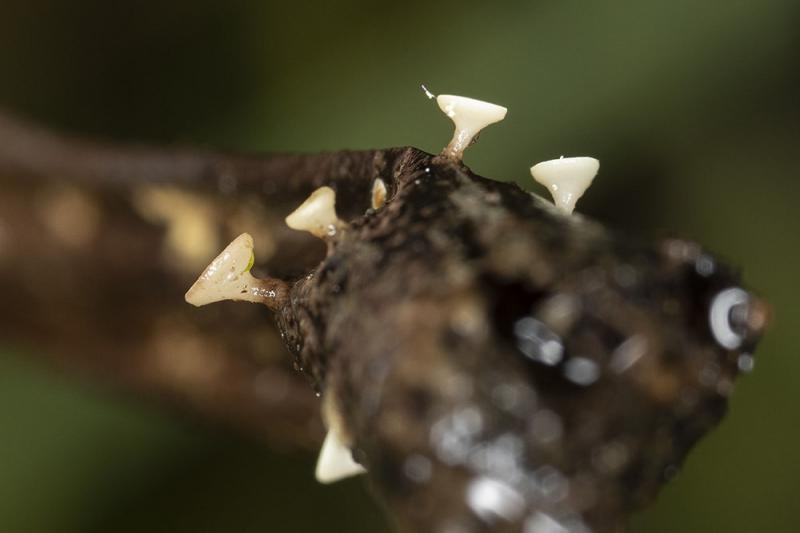
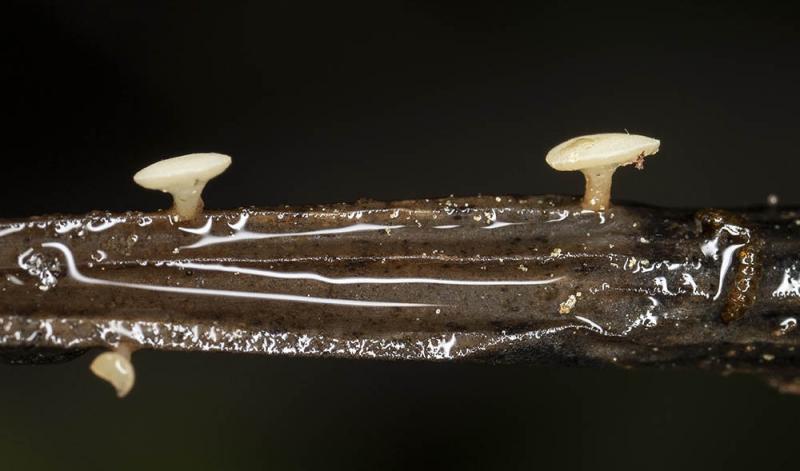
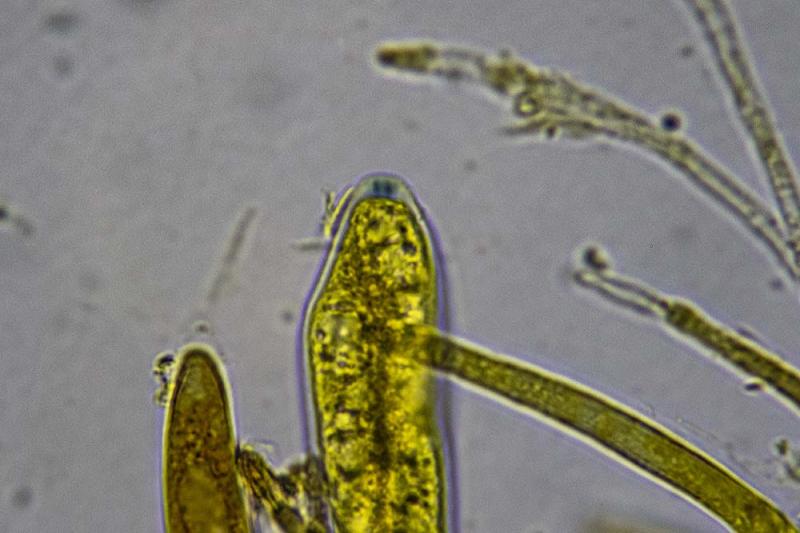
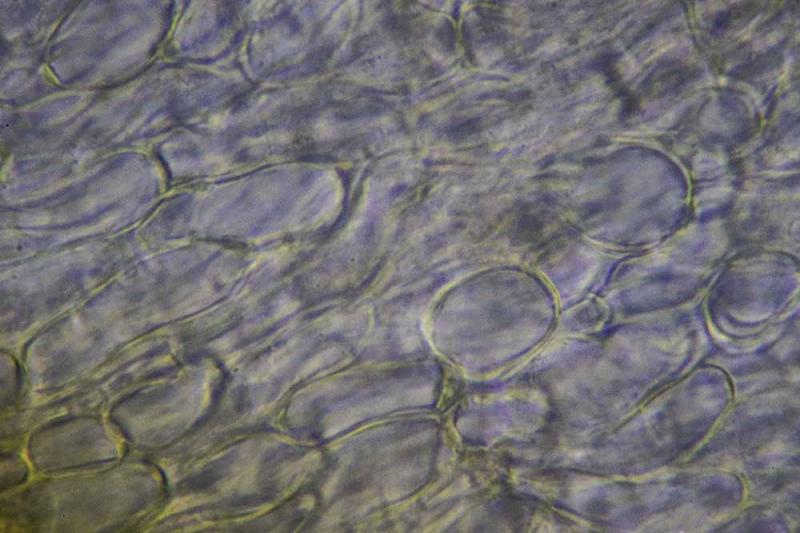
Found these on dead stems of Equisetum fluviatilis standing in water near a slow stream in central Sweden yesterday. Hymenoscyphus seemed probable but the spores where large and "weird".
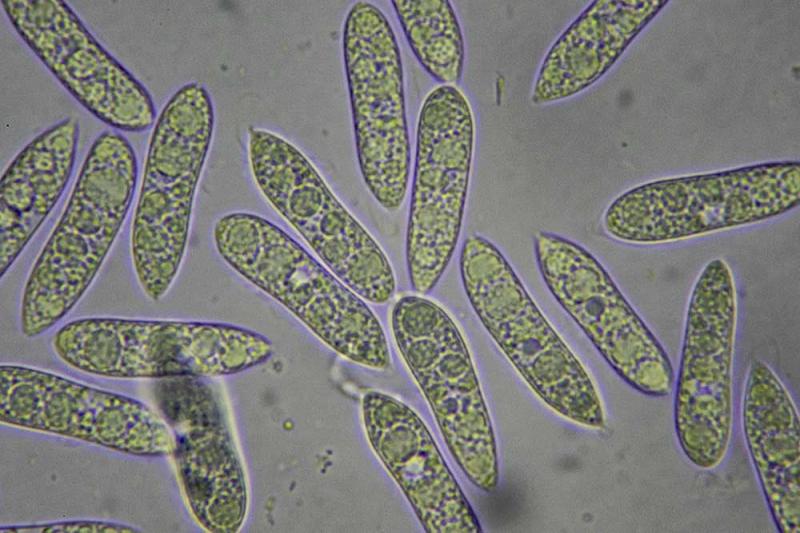
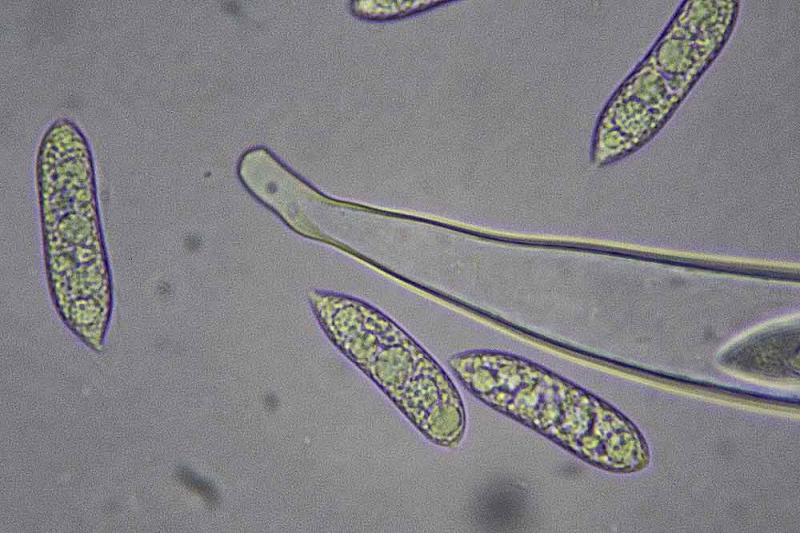
Spores: (29-)30(-32)x(6-)7,5µm
Asci ~130-150µm
Most things are very similar to Marja Pennanens collection from 2010 (http://www.ascofrance.com/search_forum/12546). Can anyone confirm the species, seems to be first collection for Sweden.
Lothar Krieglsteiner,
22-08-2018 18:46
Re : Lanzia equiseti?
Hello Johan,
I do not know what "Lanzia" equiseti is - but your collection looks like a member of the Hymenoscyphus caudatus-complex to me.
Best regards, Lothar
Johan Myhrer,
22-08-2018 20:19
Re : Lanzia equiseti?
There is a "Hymenoscyphus" equiseti, described by Raitviir 1984 as Lanzia equiseti.
François Valade,
22-08-2018 20:34

Re : Lanzia equiseti?
Lothar, look at Hymenoscyphus folder in Zotto's Drive.
Hans-Otto Baral,
22-08-2018 20:38

Re : Lanzia equiseti?
I confirm L. equiseti which has a Hymenoscyphus-type of apical ring, so cannot belong in Lanzia. The spores of this species are not really scutuloid, although those of H. caudatus are also only slightly so. They have an extraordinary size, in any case.
A sequence of an isotype of L. equiseti from Karelia gained by Kadri Pärtel showed that this is a Helotiaceae but not a Hymenoscyphus in the narrow sense. So a very interesting matter.
Zotto
PS. I must correct myself, the spores are indeed slightly to distinctly scutuloid here, while in the type and Marja's sample they are only very indistinctly so.
A sequence of an isotype of L. equiseti from Karelia gained by Kadri Pärtel showed that this is a Helotiaceae but not a Hymenoscyphus in the narrow sense. So a very interesting matter.
Zotto
PS. I must correct myself, the spores are indeed slightly to distinctly scutuloid here, while in the type and Marja's sample they are only very indistinctly so.
Hans-Otto Baral,
03-04-2020 10:34
Re : Lanzia equiseti?
Dear Johan
I am preparing a description of H. equiseti, and I wonder if you have more photos. Especially a mature ascus (you posted only the ascus base).
Important would be to include a scale to your photos. I also wonder about apothecial size and stipe length, data necessary in a description.
Danny Haelewaters obtained a sequence, and we want to prepare a small contribution within a joint larger publication of various authors.
Zotto