
06-05-2026 11:25
 Castillo Joseba
Me mandan el material seco de Galicia (España) re
06-05-2026 17:23
Thomas Læssøehttps://svampe.databasen.org/observations/10594257
28-04-2026 20:07
 Lothar Krieglsteiner
... on twig in the air at standing Ceratonia siliq
05-05-2026 22:40
Gernot FriebesHi,I believe this is a Plagiostoma growing on a Sa
04-05-2026 18:13
 Stephen Martin Mifsud
ID request for what seems to be a true aquatic fun
04-05-2026 16:39
Stephen Martin Mifsud
ID request: This specimen was collected in Malta o
28-07-2011 18:31
 Alex Akulov
Dear FriendsToday I made the pdf file of Velenovsk
04-05-2026 09:50
Castillo Joseba
Me mandan el material seco de Galicia,(España) re
02-05-2026 12:42
Alain BRISSARDBonjour à tousJeuidi 30 avril dernier on m'a remi
This should be easy...
Paul Cannon,
11-06-2018 17:52
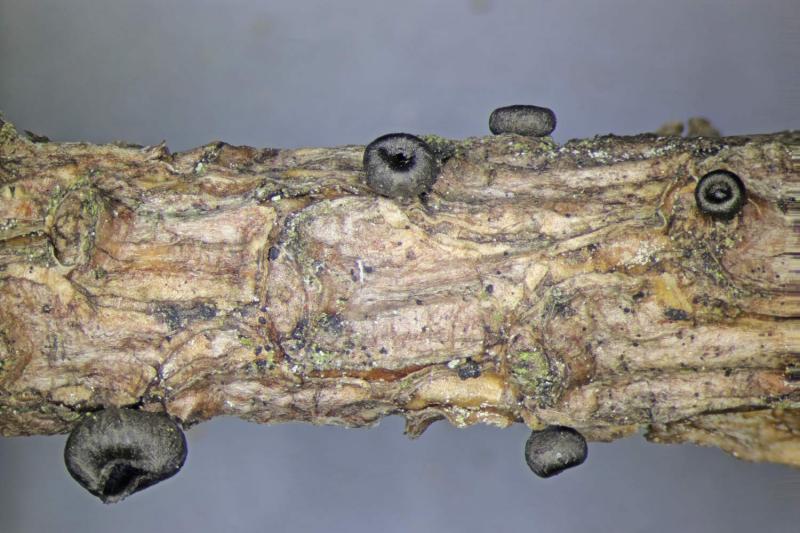
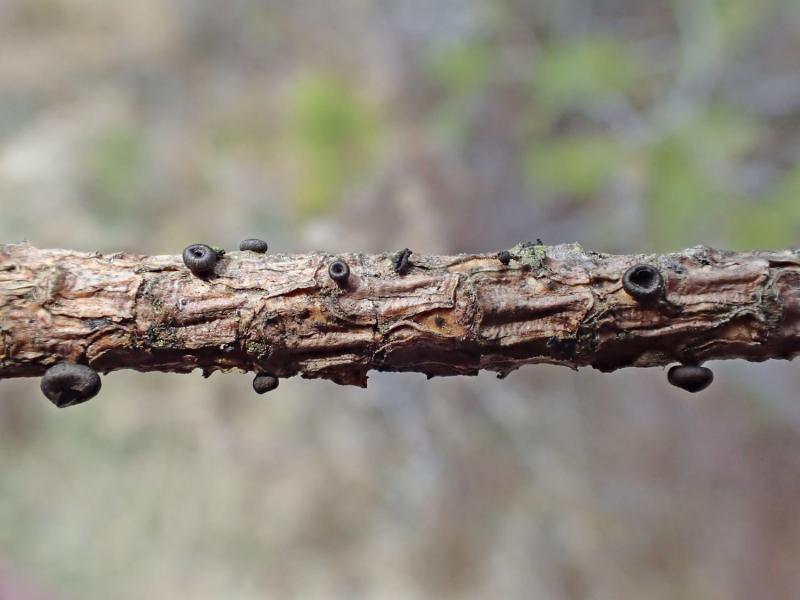
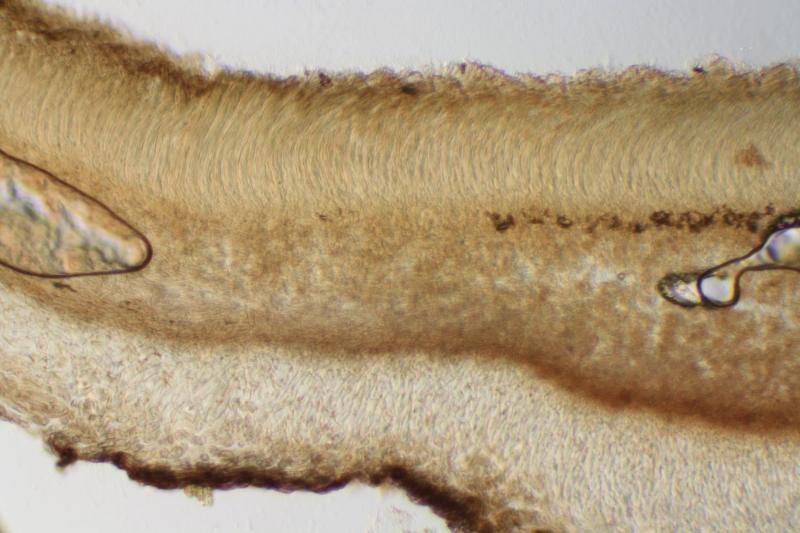
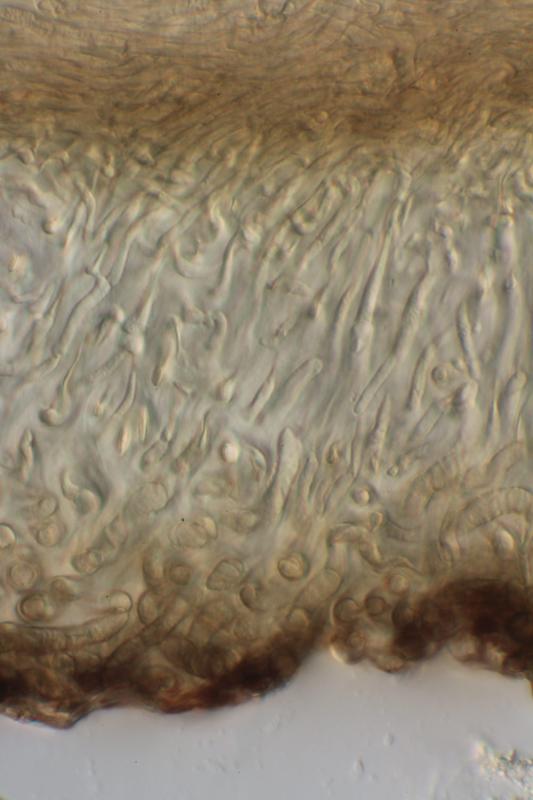
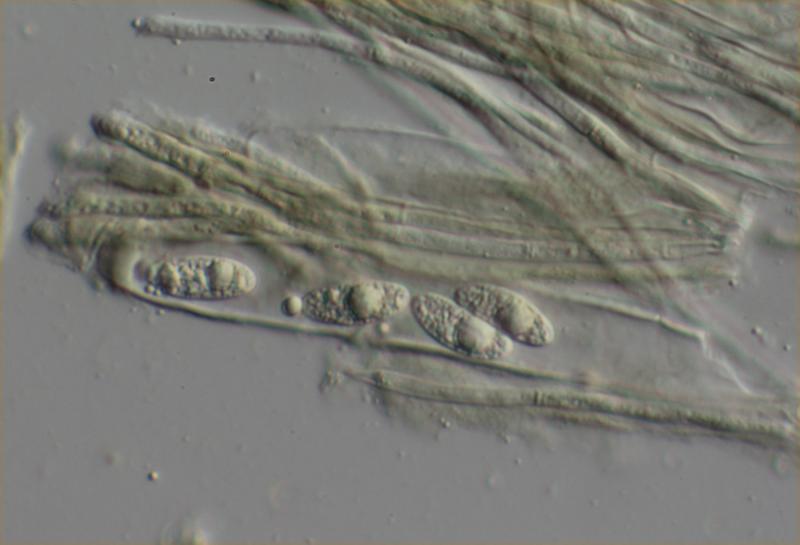
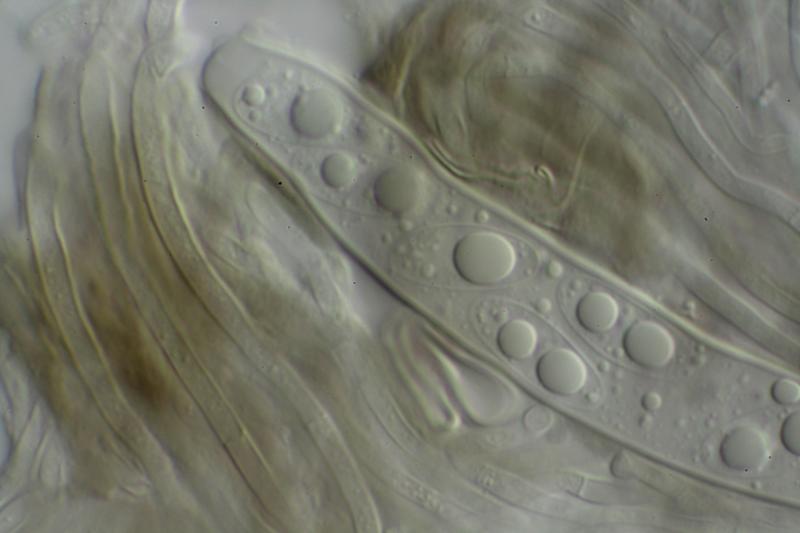
Here is a very distinctive disco on twigs of Pinus sylvestris, from a native pine forest in NE Scotland. It appears to be erumpent from the bark and initially closed, the fruit bodies are slightly stalked and smooth on the outer surface (not scurfy like encoelioid species). They are up to about 2.5 mm diam. The asci do not stain blue in iodine. Unfortunately very few contained mature spores, but those seen are 15-16.5 x 5 µm, hyaline and aseptate. The image at lower magnification is in water, the higher mag image is in warmed lactophenol to check there are no septa.
I have been looking around Tympanis and Godronia, but nothing seems to fit. Any suggestions would be much appreciated.
Best wishes
Paul
Gernot Friebes,
11-06-2018 18:11
Re : This should be easy...
This reminds me of Pseudophacidium piceae. I would have to check if it is known to grow on Pinus...
Best wishes,
Gernot
Best wishes,
Gernot
Quijada Luis,
11-06-2018 18:12
Re : This should be easy...
Not sure, maybe Potebniamyces. If you want I can studied in detail and try to sequence, I have been working this genus a little bit and I have reviewed some types, so if you want, send me an email to lquijull@gmail.com and we can discuss about it
Best wishes
Luis
Best wishes
Luis
Hans-Otto Baral,
11-06-2018 22:27

Re : This should be easy...
Hi Paul
I would throw a third genus in the ring: Ascocalyx. I only know the asexual morph of A. abietis, and that looks much like yours by macroscopy. Regrettably I did not study the excipulum of the cup-shaped conidiomata.
Here the link to my drawing:
https://invivoveritas.de/ascomycetes-illustrations/
go to Helotiales, Godroniaceae
A. abietis is described with 3-septate, cylindrical ascospores unlike yours - but the question is if yours are mature or maybe the species forms septa only in overmature ascospores.
Zotto
I would throw a third genus in the ring: Ascocalyx. I only know the asexual morph of A. abietis, and that looks much like yours by macroscopy. Regrettably I did not study the excipulum of the cup-shaped conidiomata.
Here the link to my drawing:
https://invivoveritas.de/ascomycetes-illustrations/
go to Helotiales, Godroniaceae
A. abietis is described with 3-septate, cylindrical ascospores unlike yours - but the question is if yours are mature or maybe the species forms septa only in overmature ascospores.
Zotto
Paul Cannon,
12-06-2018 10:18
Re : This should be easy...
Thanks to all three of you for your suggestions. We'll try to sequence it at Kew, but as the only collection is not fully mature, it would not make an ideal type specimen if it turns out to be new.
Best wishes
Paul