28-04-2026 20:07
 Lothar Krieglsteiner
... on twig in the air at standing Ceratonia siliq
05-05-2026 22:40
Gernot FriebesHi,I believe this is a Plagiostoma growing on a Sa
04-05-2026 18:13
 Stephen Martin Mifsud
ID request for what seems to be a true aquatic fun
04-05-2026 16:39
Stephen Martin Mifsud
ID request: This specimen was collected in Malta o
28-07-2011 18:31
 Alex Akulov
Dear FriendsToday I made the pdf file of Velenovsk
04-05-2026 09:50
 Castillo Joseba
Me mandan el material seco de Galicia,(España) re
02-05-2026 12:42
Alain BRISSARDBonjour à tousJeuidi 30 avril dernier on m'a remi
02-05-2026 13:06
Pauline. PennaBonjour Please can someone help me with this id
01-05-2026 22:45
 Thierry Blondelle
Bonjour à tous, Une récolte sur bouse séchée d
Massariosphaeria alpigena vs. Pseudomassariosphaeria grandispora
Gernot Friebes,
06-03-2018 15:30
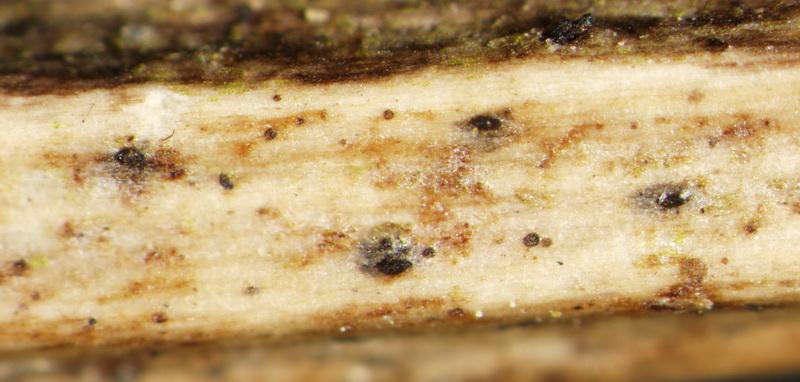
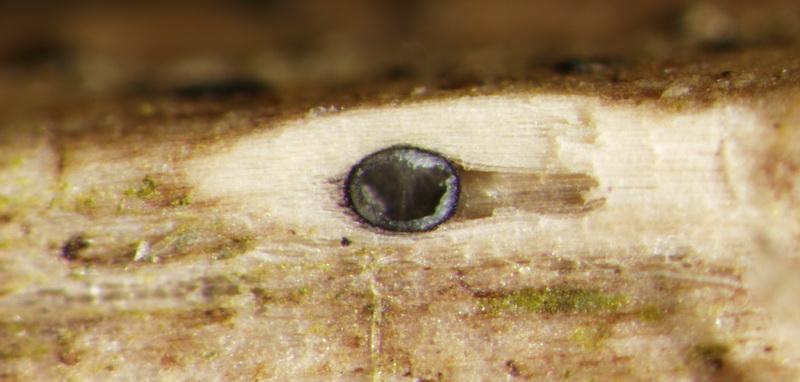
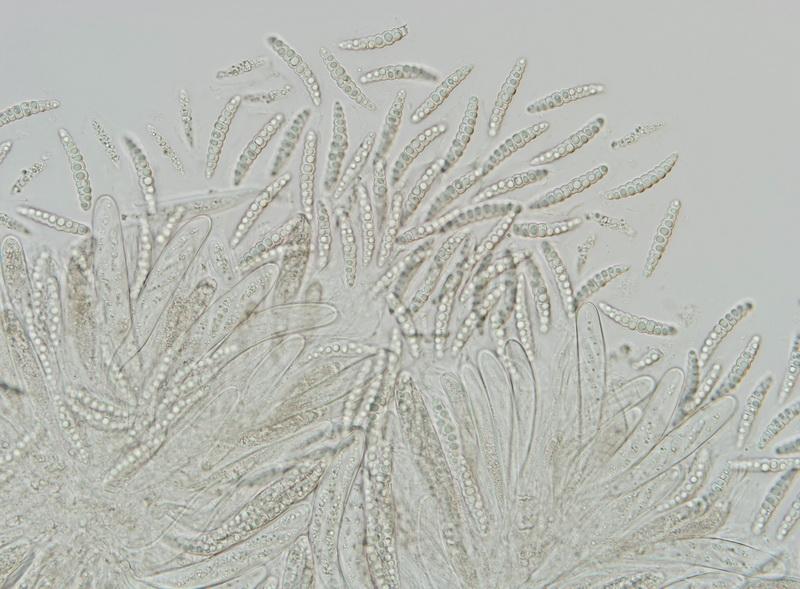
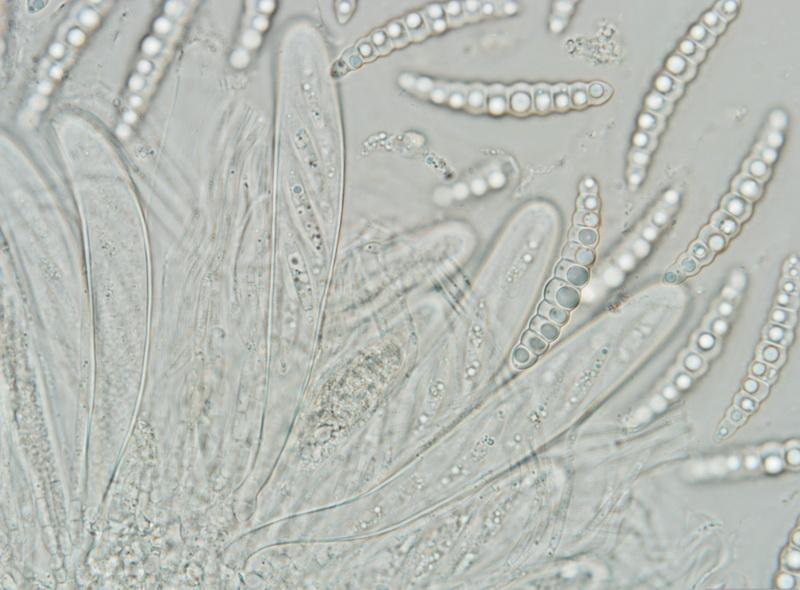
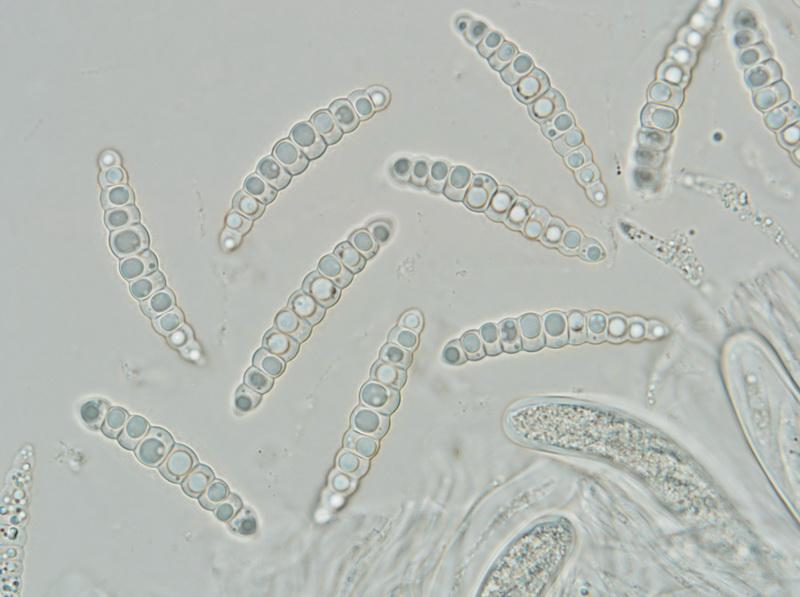
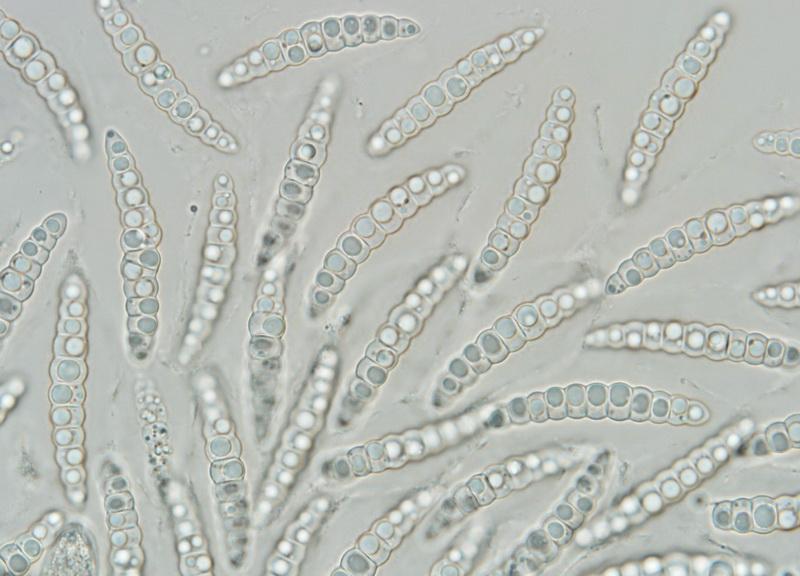
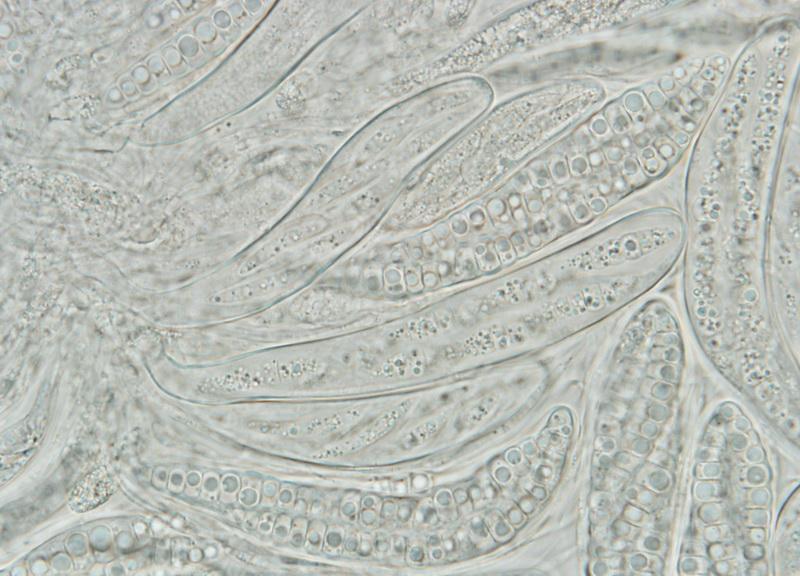
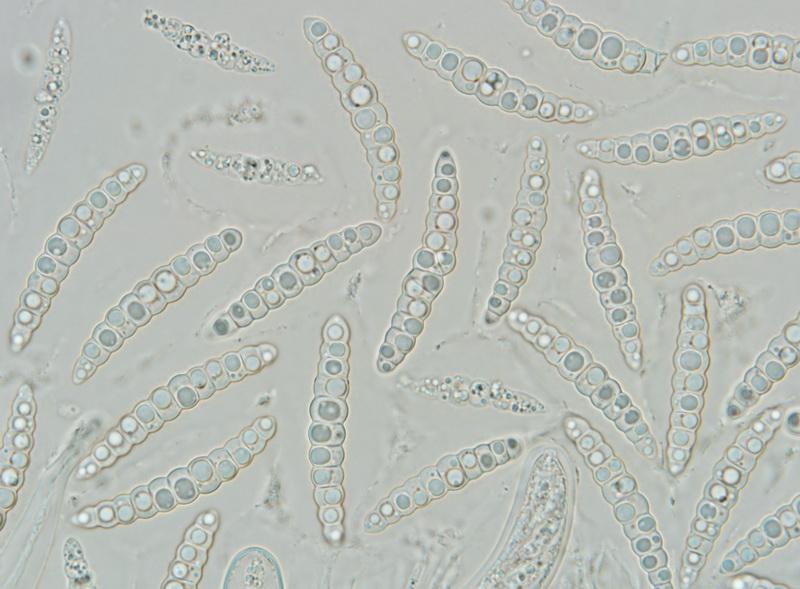
here I have a species that seems very close to P. grandispora but I am not certain how to distinguish it from M. alpigena (Lophiostoma alpigenum). In the literature these species are rarely compared to each other which makes things difficult.
-) Leuchtman (1984) only treats M. grandispora without mentioning M. alpigena.
-) Tanaka & Harada (2004) compare M. alpigena to their newly described species M. megaspora but unfortunately not to P./M. grandispora, which is morphologically probably more similar to M. alpigena.
-) The key in Holm & Holm (1988) does contain both M. alpigena and M. grandispora, but they also mention that M. grandispora might be a synonym of M alpigena. Their description of "Massariosphaeria cfr. grandispora" gives fairly short ascospores of only 32–36 µm in length, thus close to the measurements given in Tanaka & Harada 2004. Leuchtman (1984) gives a much wider range of 33–50 µm, which would include the measurements of M. alpigena in Holm & Holm (1988).
-) Chesters & Bell (1970) only treat M. alpigena (as Lophiostoma alpigenum) without mentioning M. grandispora.
The material that I have at hand grows on Clematis vitalba, which might be in the host range of either species... The ascospores generally have 10–11 septa, a very thick sheath in water, partly slightly fusoid end cells and measure about 43–52 x 7.8–9 µm. Depending on which literature I use I could identify it either as M. alpigena or M. grandispora (now transferred to the genus Pseudomassariosphaeria).
What are your thoughts on this topic? Is there any newer literature that I might have missed?
Best wishes,
Gernot