10-06-2026 21:16
 François Freléchoux
Bonsoir,Le dernier du jour, en attendant votre avi
11-06-2026 19:01
 William Slosse
Hello all,In an attempt to make a culture of a sus
11-06-2026 19:03
 Nicolas VAN VOOREN
Chers membres d'Ascofrance,Le site sera placé en

09-06-2026 18:32
Camille MertensSur morceau de roseau immergé 0,5 - 0,7 mm de dia
10-06-2026 12:54
Steve ClementsBonjour encore, Pouvez-vous m'aider, s'il vous pl
10-06-2026 21:07
François Freléchoux
Toutes les tiges de gentianes jaunes de l'an passÃ
10-06-2026 13:41
François Freléchoux
Bonjour à nouveau, Voici une trouvaille d'hier.
10-06-2026 11:53
Steve ClementsBonjour, This disco is abundant on dead stems of
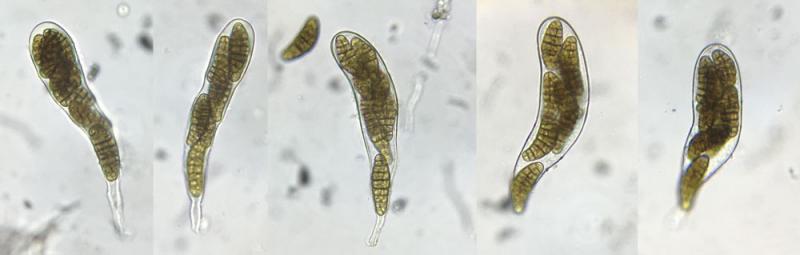
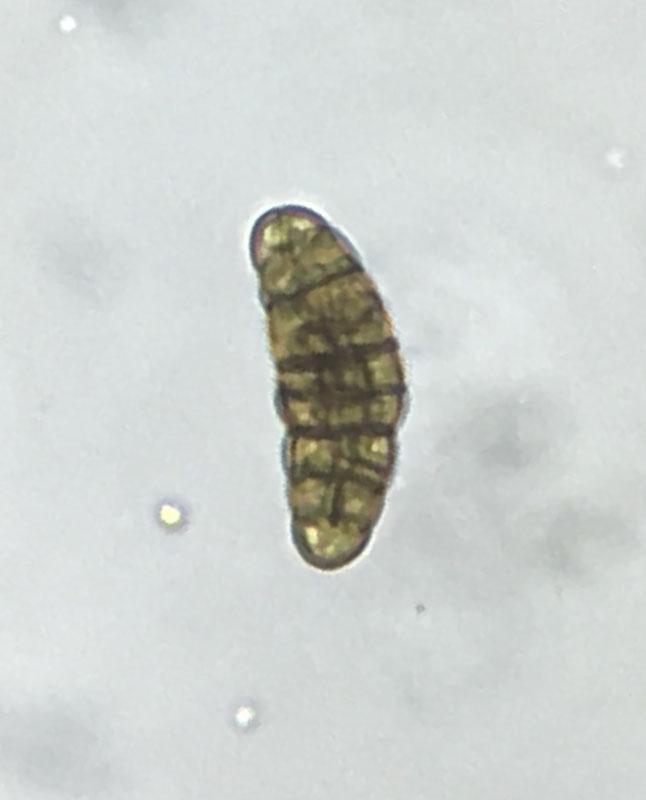
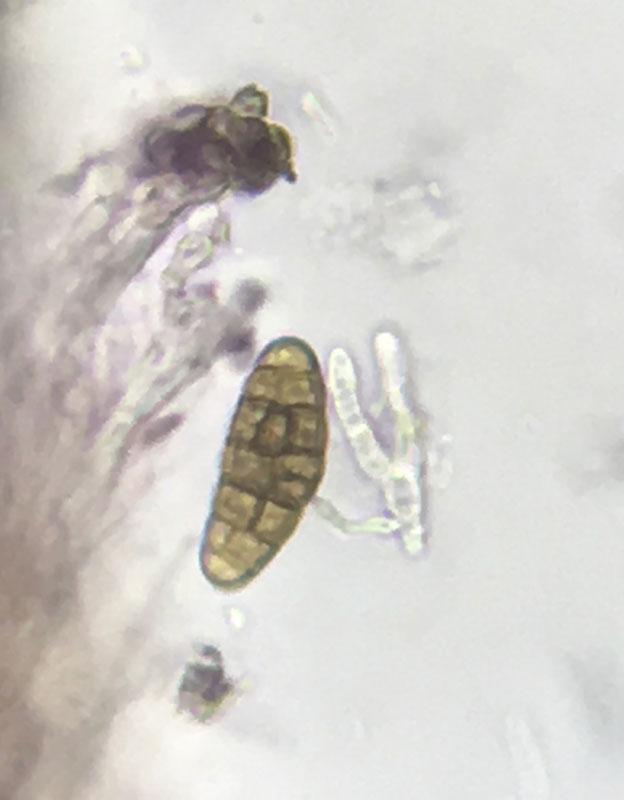
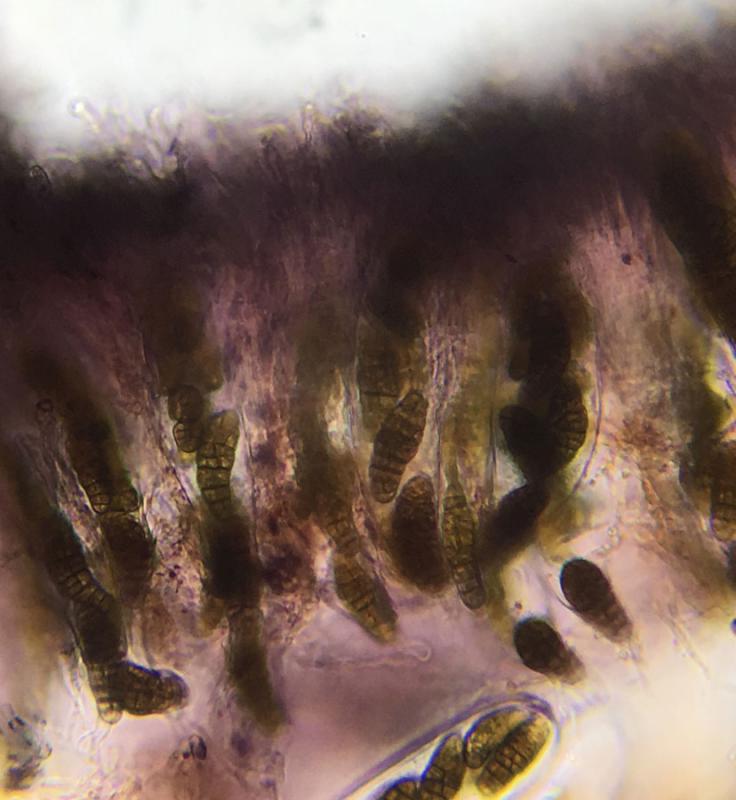
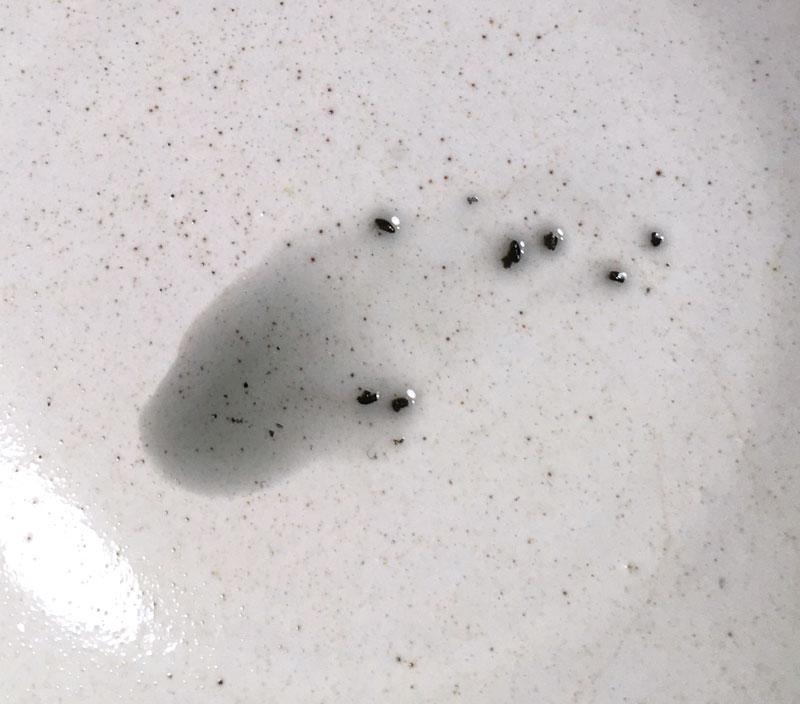

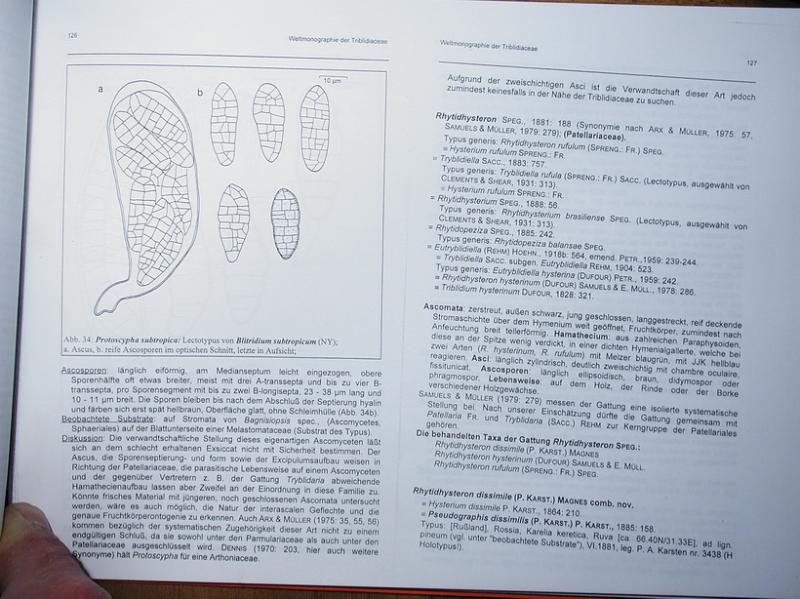
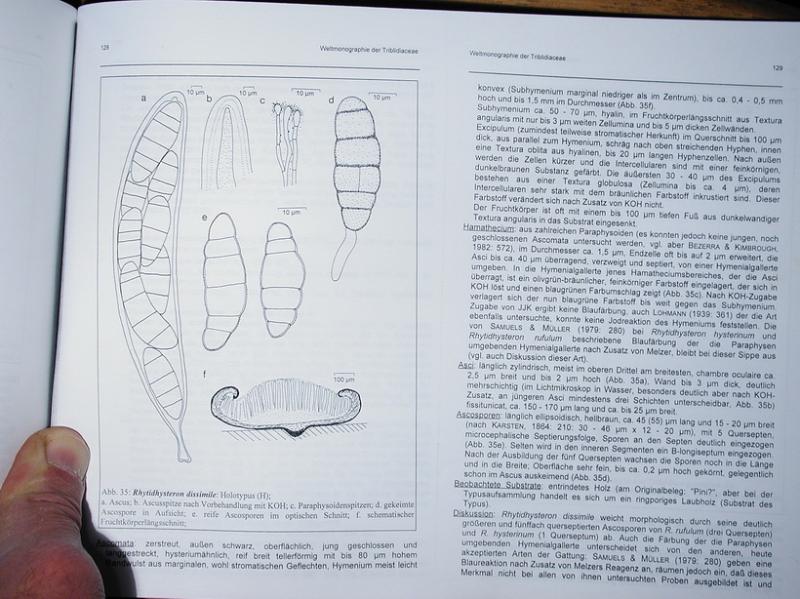
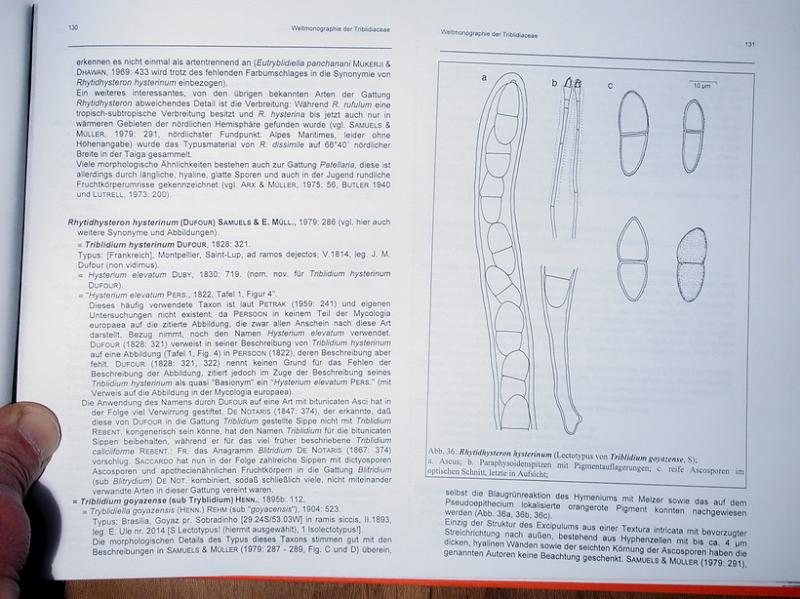
Alain
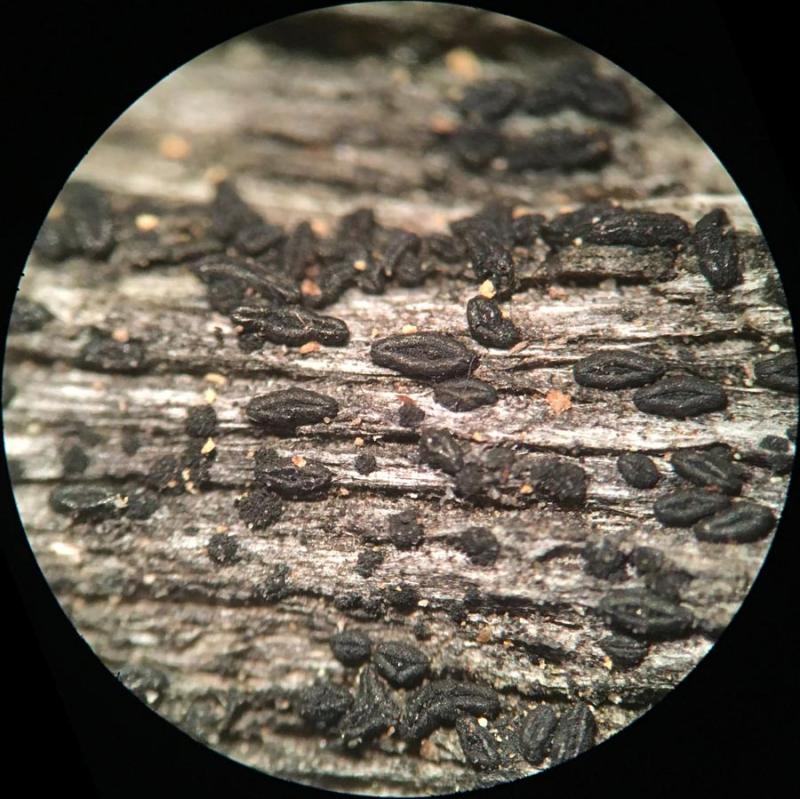
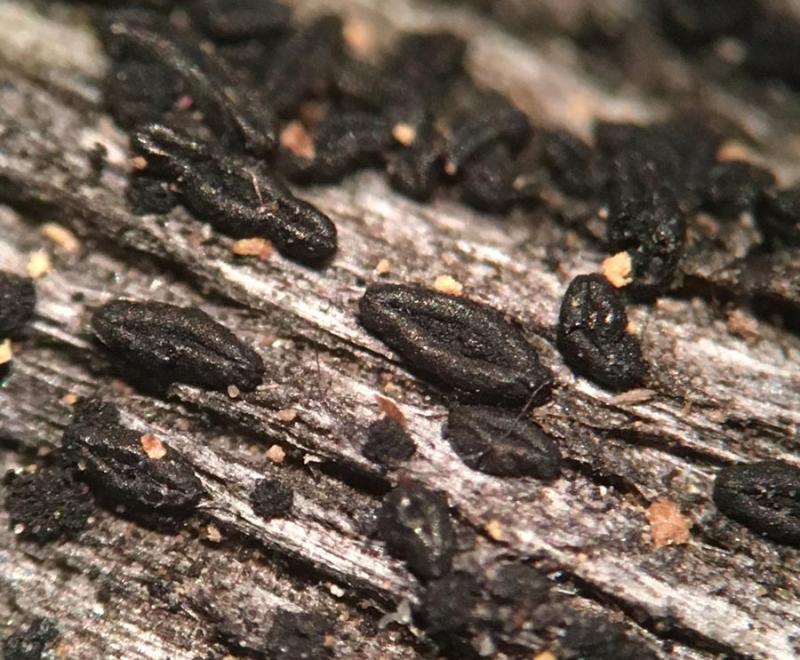
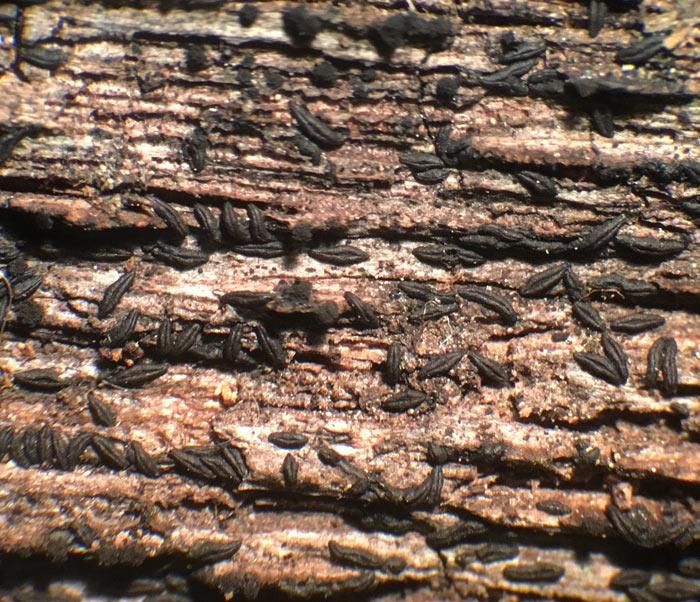
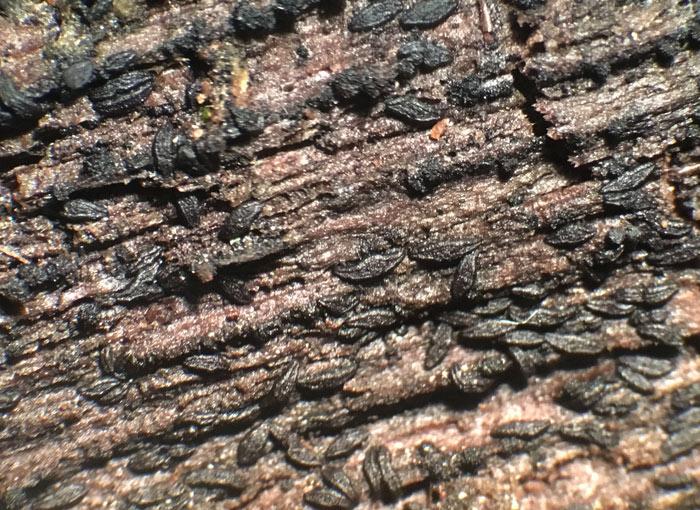
I had not considered them because it seems to me that these hysterothecia open when hydrated. The first and second photos that I posted show the difference, with the second showing the hysterothecia after they have been wet for about 1/2 hour. Eric Boehm's key describes R. dissimile: Ascospores with five or more septa ... but does not provide an illustration or a description. Is it possible for species in Hysterobrevium, Hysterographium or Hysterium to open to the degree that these do?
Thanks,
Ethan
You ask : Is it possible for species in Hysterobrevium, Hysterographium or Hysterium to open to the degree that these do?
Probably not impossible.
In Ellis & Everhart (1892), we ca read about H. vulvatum (syn. in 2018 : H. flexuosum): "Hysterothecia erumpent-superficial, scattered or gregarious, 1-3mm long, straight or flexuous; lips at first closed, then open so as to leave a wide furrow between them, mostly with 1-2 deep striae on each side, often apparently double i.e., with one set within another."
Personnaly, I observe that with H. mori : http://www.ascofrance.fr/search_recolte/2861
Make a difference between Rhytidhysteron and other Hysteriaceae without molecular data is not always so easy.
Good luck !
Alain
Since 2018 I have occasionally come across this Hysterioid with purple pigments in the centrum, mostly in the Northeastern US, but also in Appalachian North Carolina. I found it in Staten Island NYC a few weeks ago.
It appears this is similar to Hysterographium minus. Boehm in the 2009b paper wasn't able to get sequence data for 4 species purported to be Hysterographium including Hg. minus, and left them as species of Hysterographium... "until such time that sequence data are available".
There is a single ITS sequence in GenBank for something labeled Hg. minus, but my collection's sequence does not match it very closely.
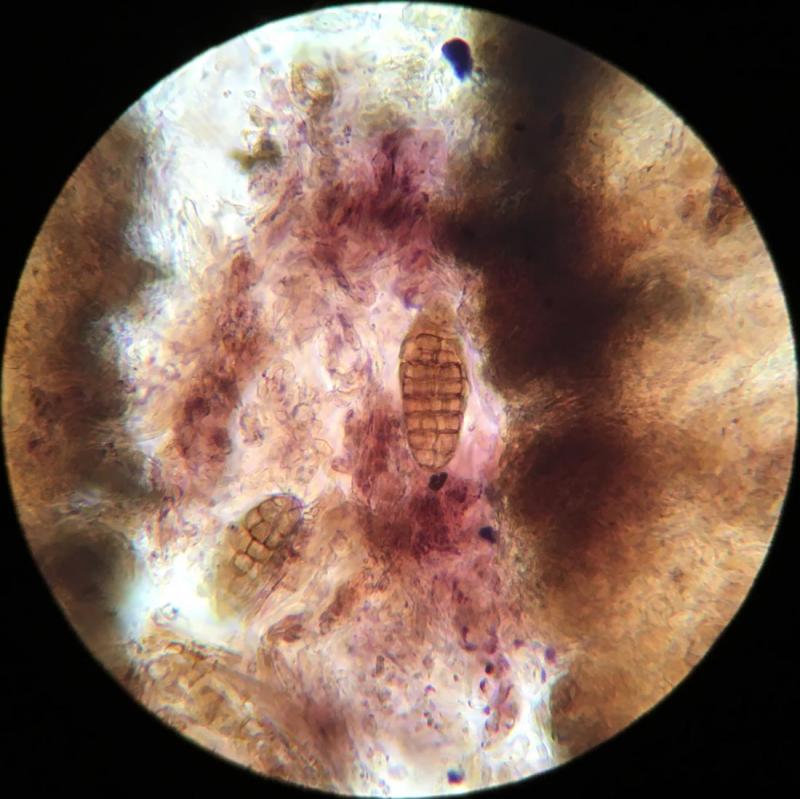
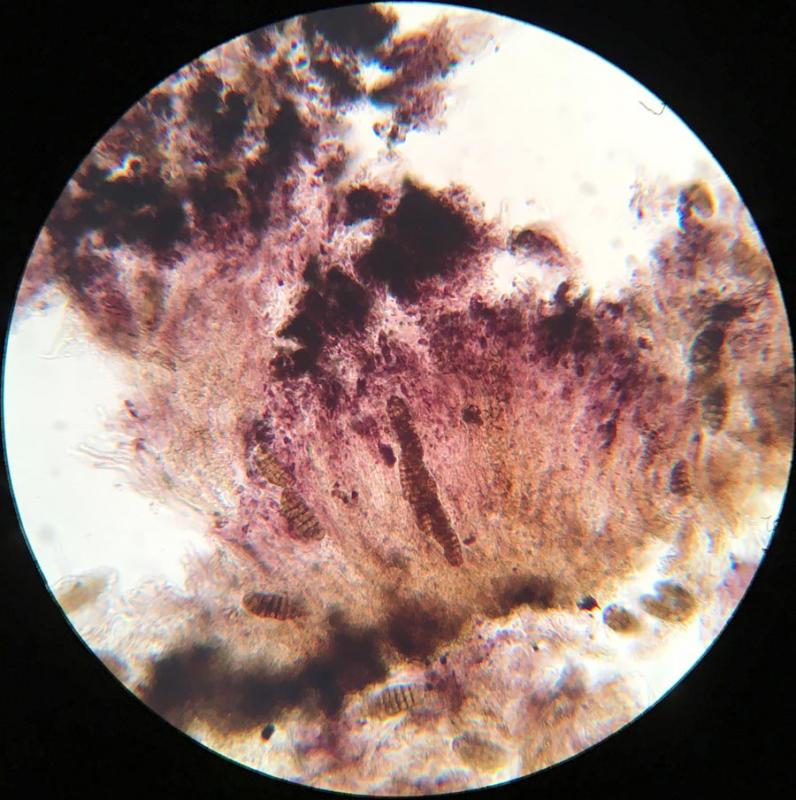
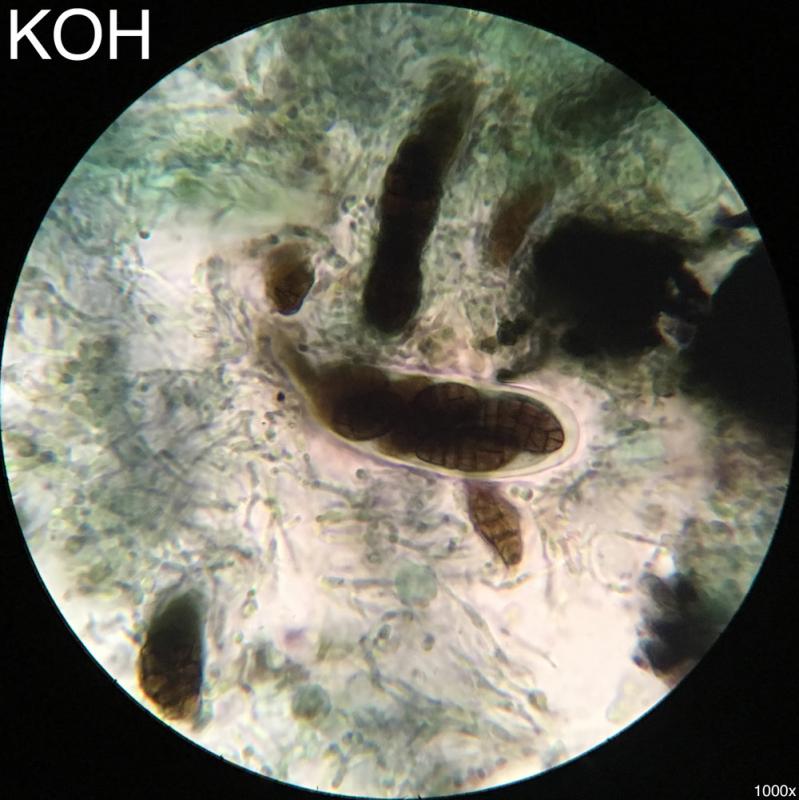
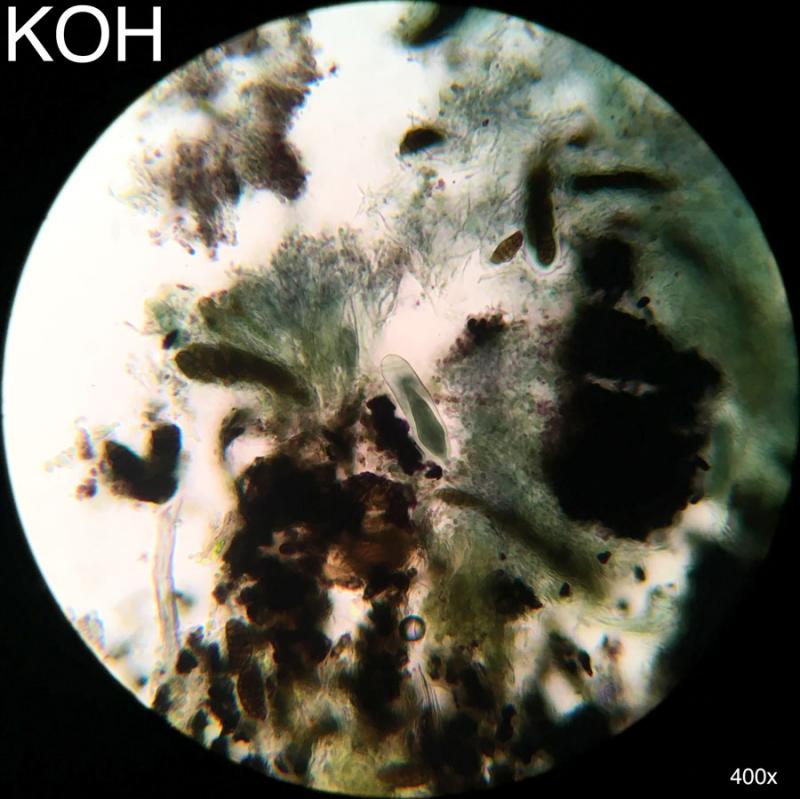
I missed the significance of the green extractable pigments back in 2018 (last photo in my original post). When mounted in 3% KOH the purple pigments become green. In the description for Hg. minus Amano says:
"Asci bitunicate...in 2% KOH staining pale green or greenish white, staining more intensely above" but doesn't explicitly mention purple pigments in the centrum.
Jayasiri and Hyde et. al. transferred Hg. minus to the genus Purpurepithecium, and say:
"Hysterographium minus is morphologically similar to Purpurepithecium murisporum in having pigmented dictyospores with a brick-red epithecium." Brick-red? So perhaps I don't have a match... or perhaps it is a problem in the interpretation of colors... or perhaps the color temperature of the light from my microscope makes my collection look purple?
For my most recent collection from Staten Island:
Asci: 73-75 x 19-21µm, the collection may have been over mature and there were not many asci available.
Spores:
5-9 septate with multiple vertical septa.
30.8-39.5 x 11.3-16.4µm
Me 35 x 13.9µm
Q 2.3-2.9
Qe 2.5
N=10
Lastly, I wonder if this Hg. minus is ever found by anyone else here on AscoFrance? Alain? is this one you have seen?
Ethan