
05-05-2026 22:40
Gernot FriebesHi,I believe this is a Plagiostoma growing on a Sa
04-05-2026 18:13
 Stephen Martin Mifsud
ID request for what seems to be a true aquatic fun
04-05-2026 16:39
Stephen Martin Mifsud
ID request: This specimen was collected in Malta o
28-07-2011 18:31
 Alex Akulov
Dear FriendsToday I made the pdf file of Velenovsk
28-04-2026 20:07
 Lothar Krieglsteiner
... on twig in the air at standing Ceratonia siliq
04-05-2026 09:50
 Castillo Joseba
Me mandan el material seco de Galicia,(España) re
02-05-2026 12:42
Alain BRISSARDBonjour à tousJeuidi 30 avril dernier on m'a remi
02-05-2026 13:06
Pauline. PennaBonjour Please can someone help me with this id
01-05-2026 22:45
 Thierry Blondelle
Bonjour à tous, Une récolte sur bouse séchée d
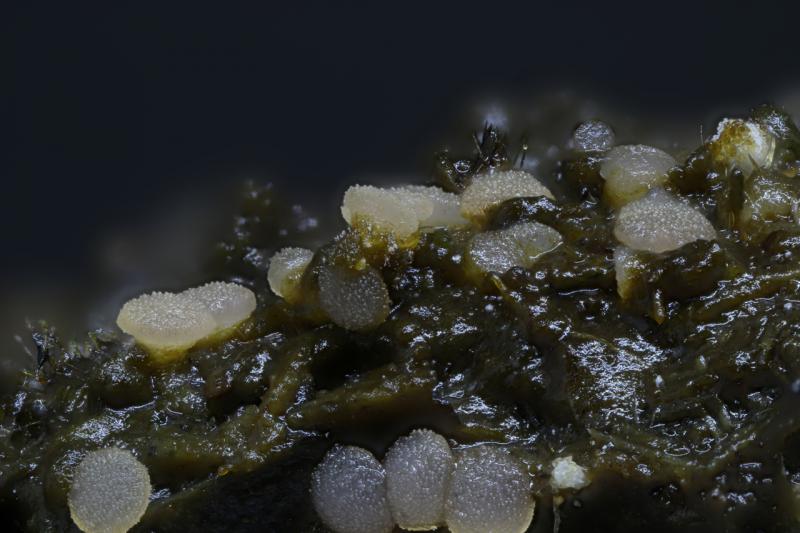
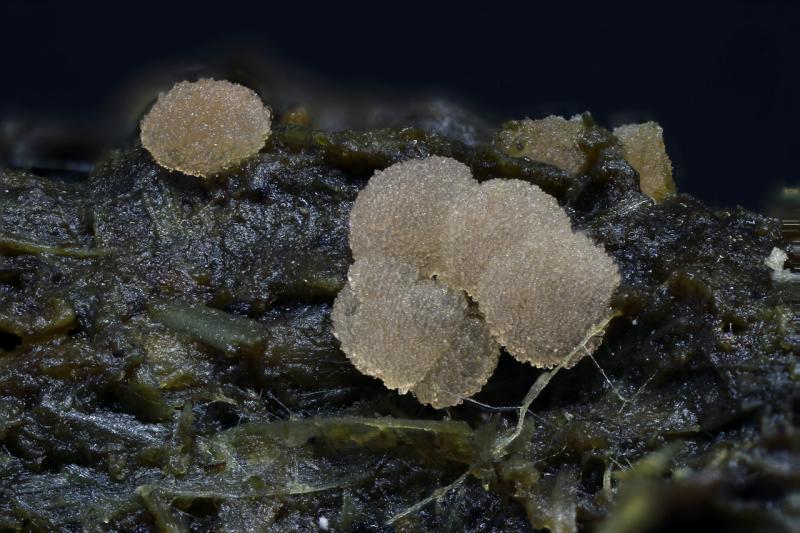
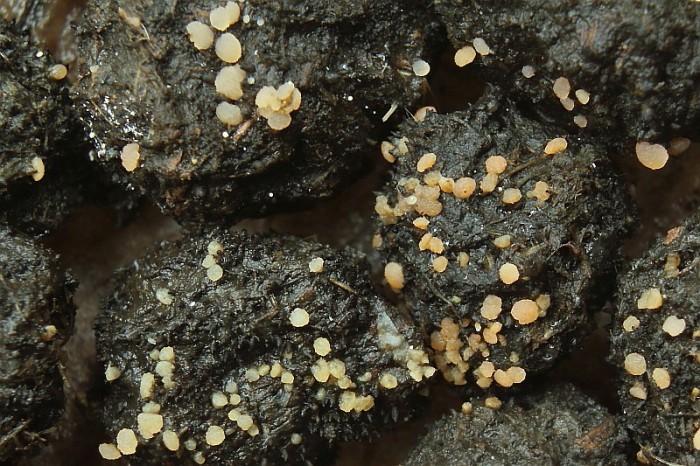
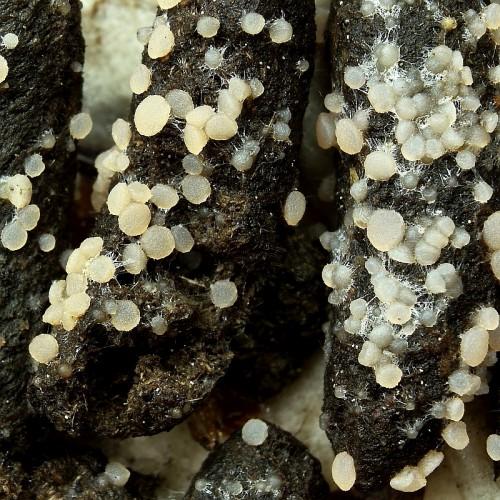
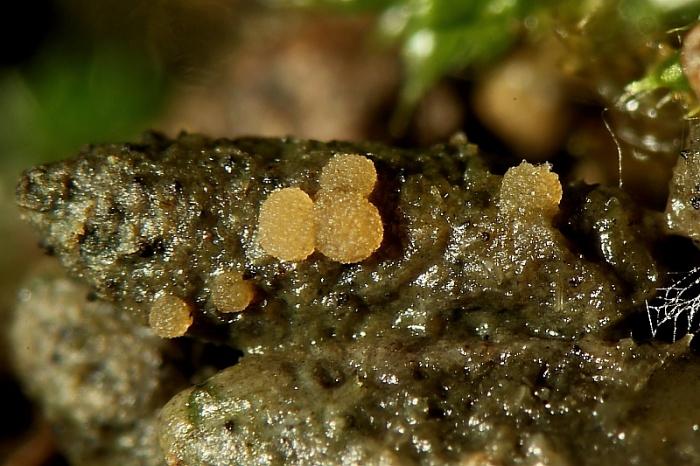
I recently collected and incubated some cow dung from Longshaw in Derbyshire. Several common species were present and identified but I am having difficulty in putting a name to this one. My original thoughts were of a Coprotus but now have doubts.
Fruitbody 0.5 - 1 mm
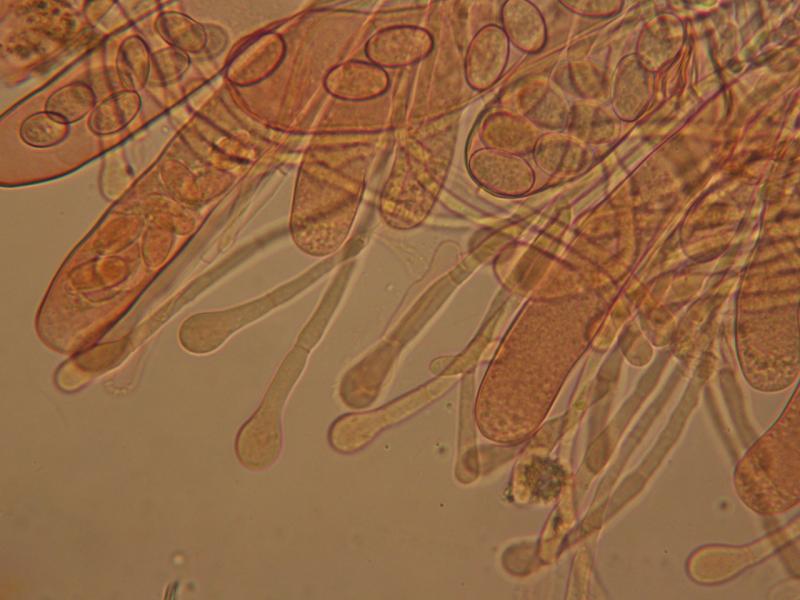
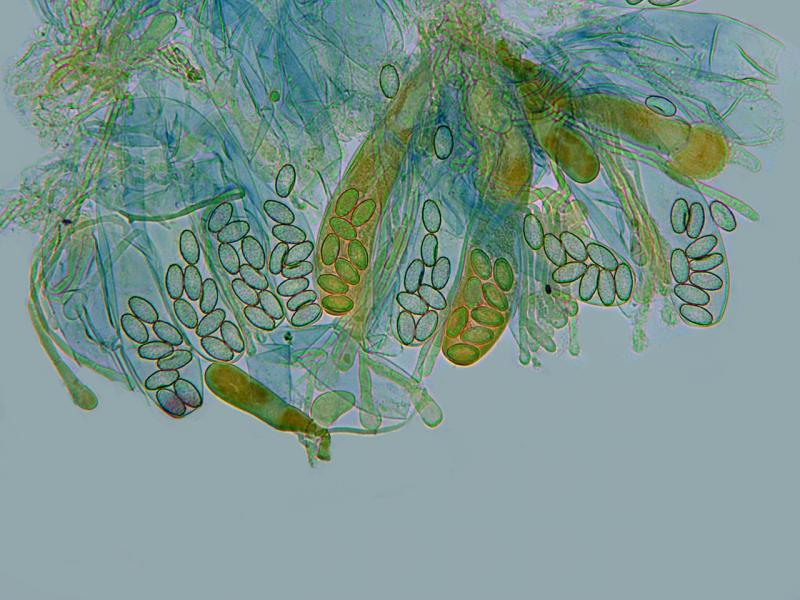
Spore size = 17.2 - 20 x 9.8 - 11 micron
Ascus = 190 - 210 x 24 micron
Mz = Negative
Any help as always much appreciated
Best Wishes - John
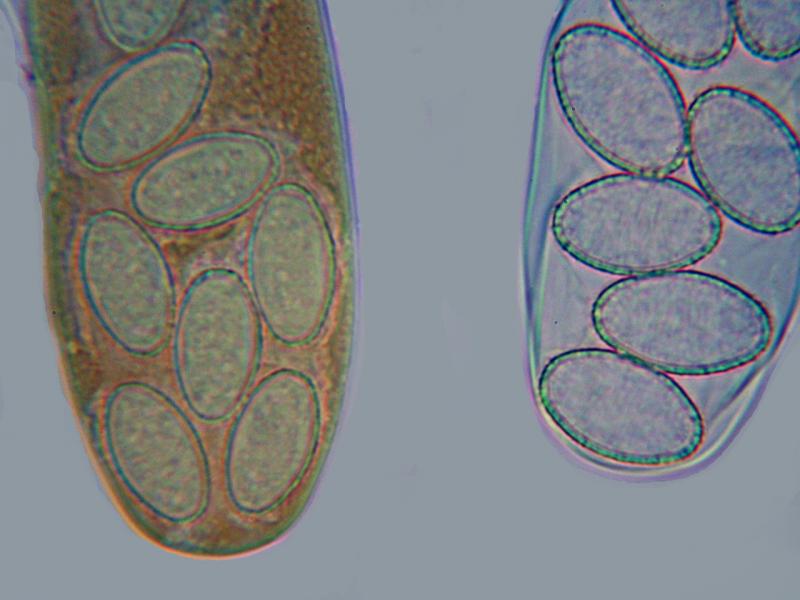
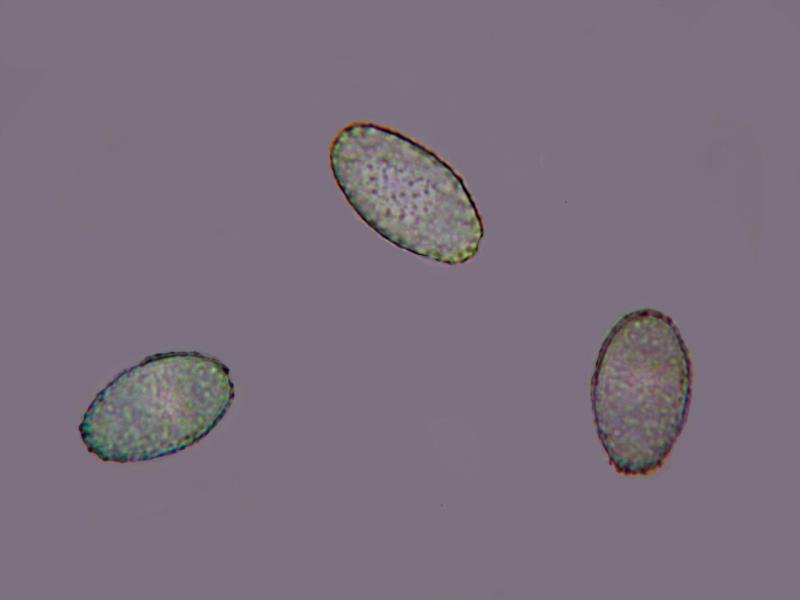


With the granular spores try Thecotheus.
Mal
Beat me to it Nicolas
I had considered Iodophanus. Will re check and look at Thecotheus too

Michel.
You say Meltzers negative but have a couple of photos with strong blue cast was this another stain? Iodophanus stains very strongly in Meltzers.
Mal
I can only put down my comment on a negative reaction to Melzers as another senior moment ;-)

I agree with Iodophanus carneus. But:
I don't think the species is variable, at least I know it rather constant.
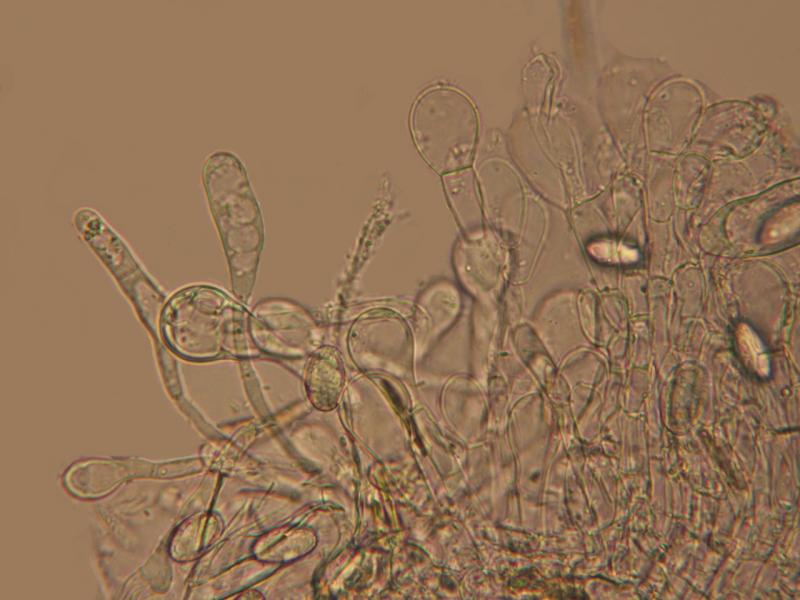
If you have the fungus stil fresh, I beg you to make a mount in tap water without any ingredients:
- The paraphyses should be multiguttulate (strikingly, but don't press on the slide).
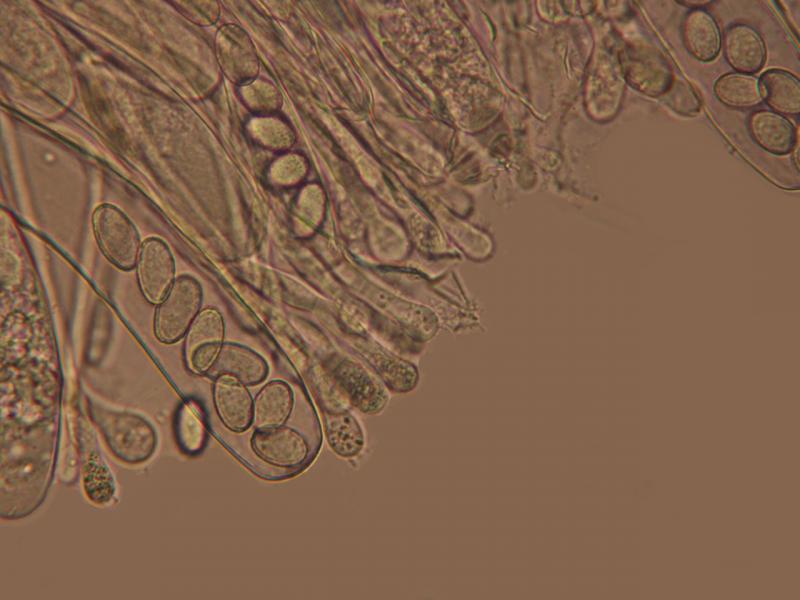
- The asci of this species are somewhat hemiamyloid, which means that Melzer's may be rather negative but Lugol positive, and only when you put it first in KOH, then Melzer gives also a strong bvlue reaction.
Of course, your emptied asci are clearly blue, only those which contain spores are not visibly amyloid.
Zotto
I still have fresh material and will do a tap water mount as you suggest
Best Wishes - John

Greetings Peter.
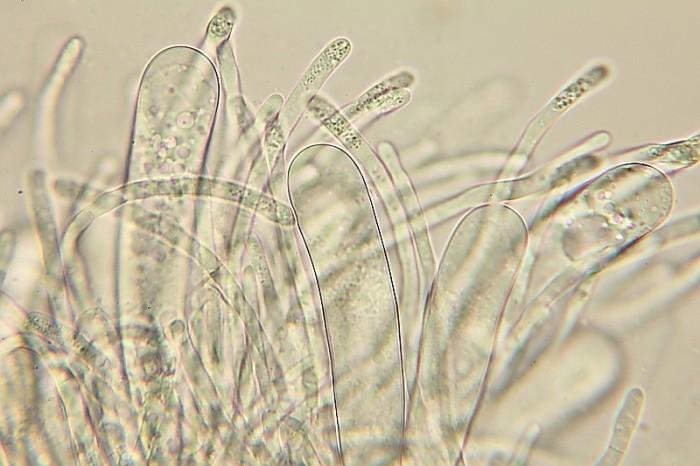
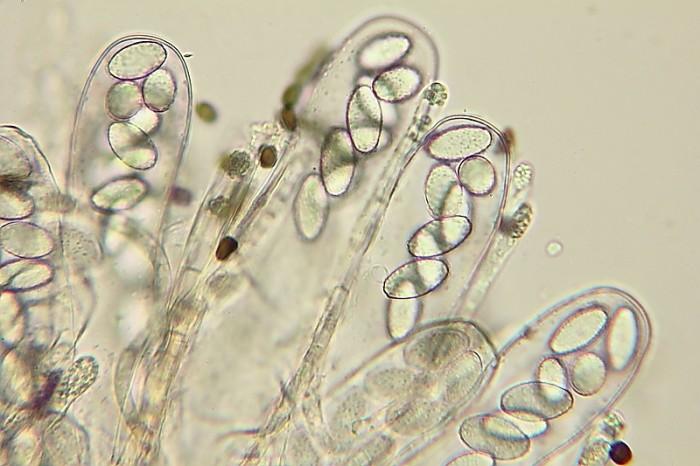
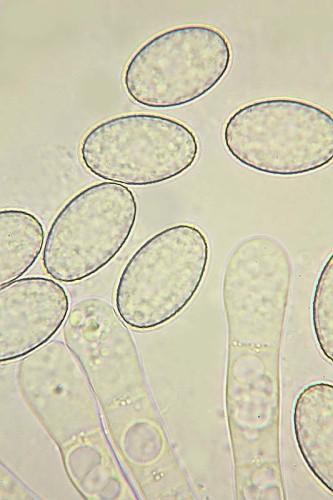
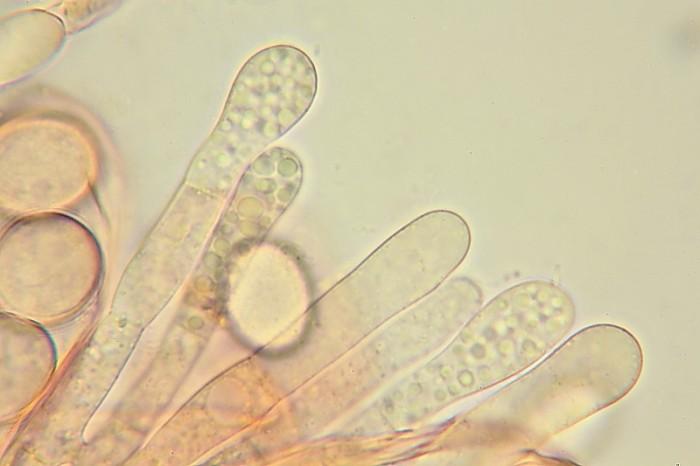
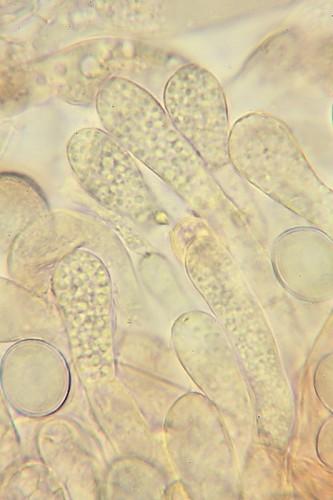
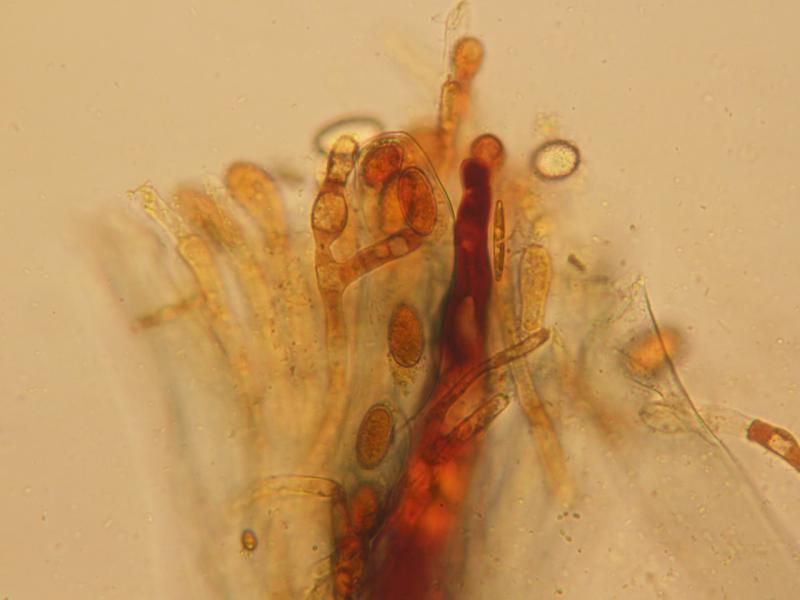
Splendid, the ascus is fully turgescent and I see the guttules in the paraphyses, though not many. The iodine reaction is not spectacular, but it is there.
Zotto
Yes, it was an excellent week at Wentworth Castle Zotto. I learnt so much from so many!