
05-05-2026 22:40
Gernot FriebesHi,I believe this is a Plagiostoma growing on a Sa
04-05-2026 18:13
 Stephen Martin Mifsud
ID request for what seems to be a true aquatic fun
04-05-2026 16:39
Stephen Martin Mifsud
ID request: This specimen was collected in Malta o
28-07-2011 18:31
 Alex Akulov
Dear FriendsToday I made the pdf file of Velenovsk
28-04-2026 20:07
 Lothar Krieglsteiner
... on twig in the air at standing Ceratonia siliq
04-05-2026 09:50
 Castillo Joseba
Me mandan el material seco de Galicia,(España) re
02-05-2026 12:42
Alain BRISSARDBonjour à tousJeuidi 30 avril dernier on m'a remi
02-05-2026 13:06
Pauline. PennaBonjour Please can someone help me with this id
01-05-2026 22:45
 Thierry Blondelle
Bonjour à tous, Une récolte sur bouse séchée d
Using Declerq's Hilberina key (published in Sterbeeckia 2013) it could be Hilberina subcaudata (a species only known from Belgium). Spore length (41-49,5 um; 3-septate spores) varies more than the two specimens examined by Declerq (44-48,5 um). (This species is not coverd by Miller et al. 2014.)
However, on one of the shown images (#307; 2nd) the ostiole looks somewhat sulcate, although not as prominent as shown in the drawing of a similar species, H. moseri in Hilber (1983). [This feature is not mentioned by Miller et al. 2014 who have examined the type material.] Moreover my find lacks the strongly tuberculate outer wall of H. moseri. Spore width (4,5-5,5 um) is somewhat less than given for H. subcaudata (5-6 um) but wider than in L. moseri (4-4,5 um).
Any comments on the identification of this collection would be appreciated.
Eduard
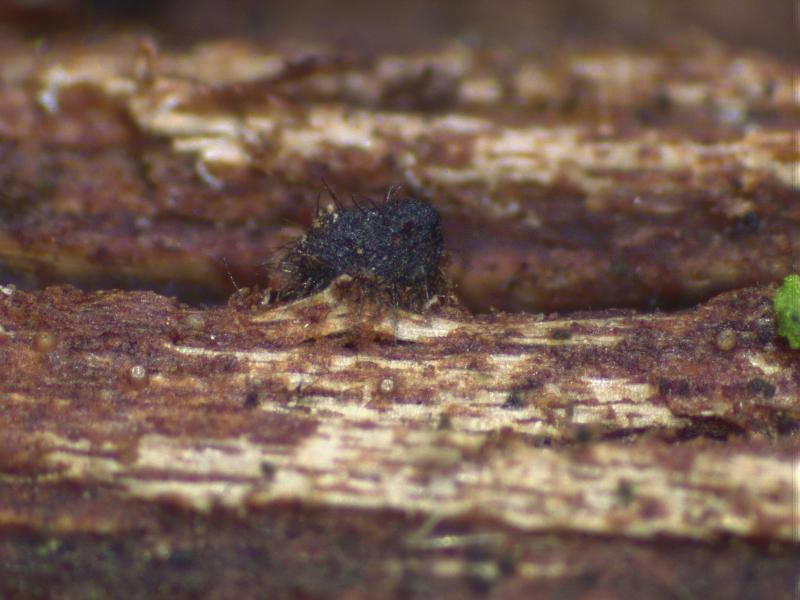
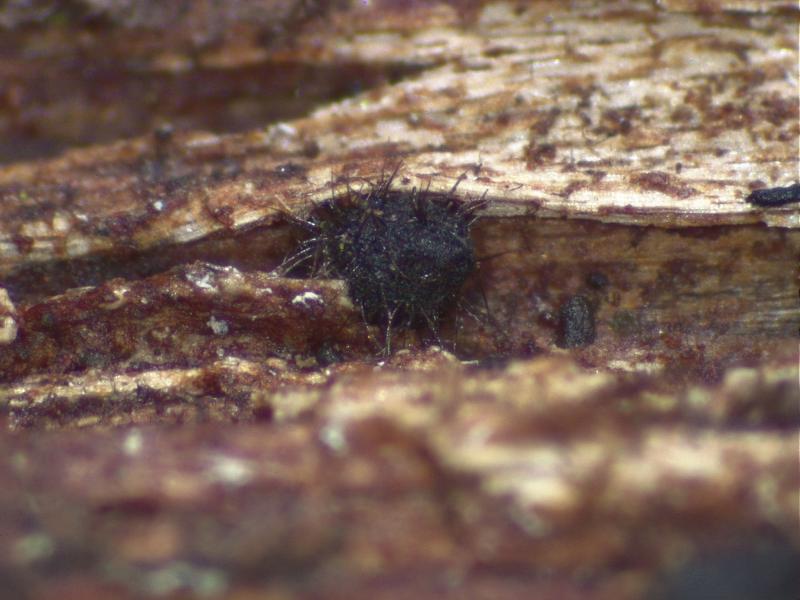
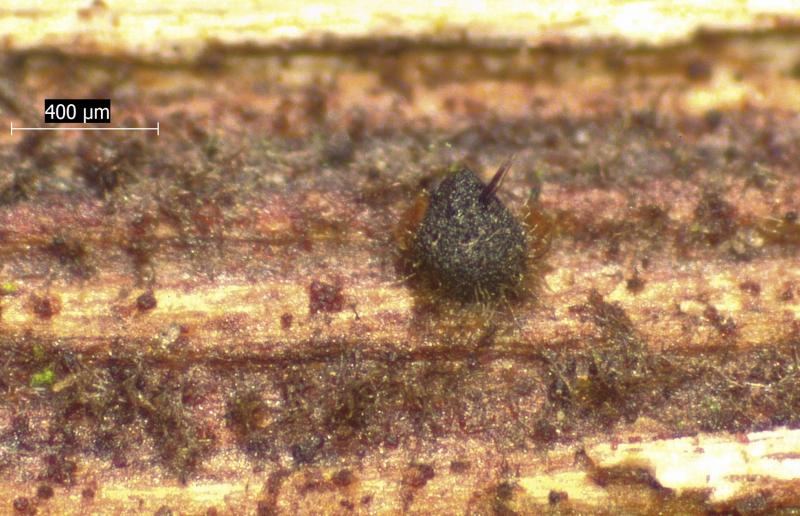
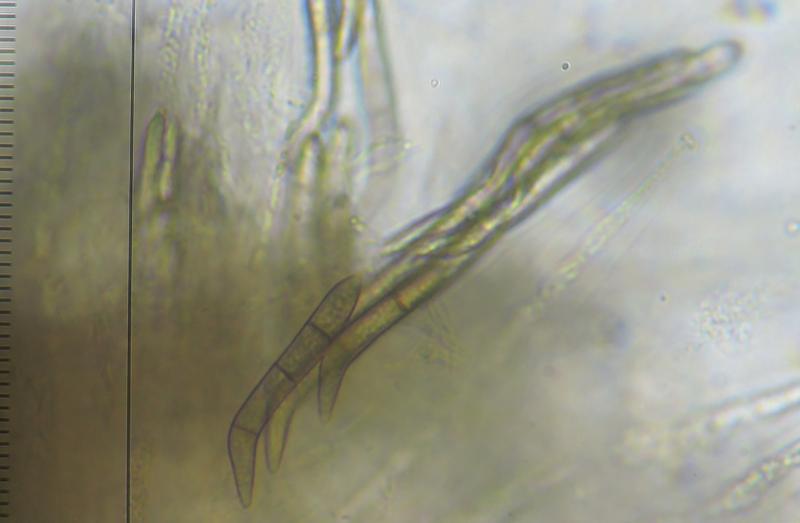
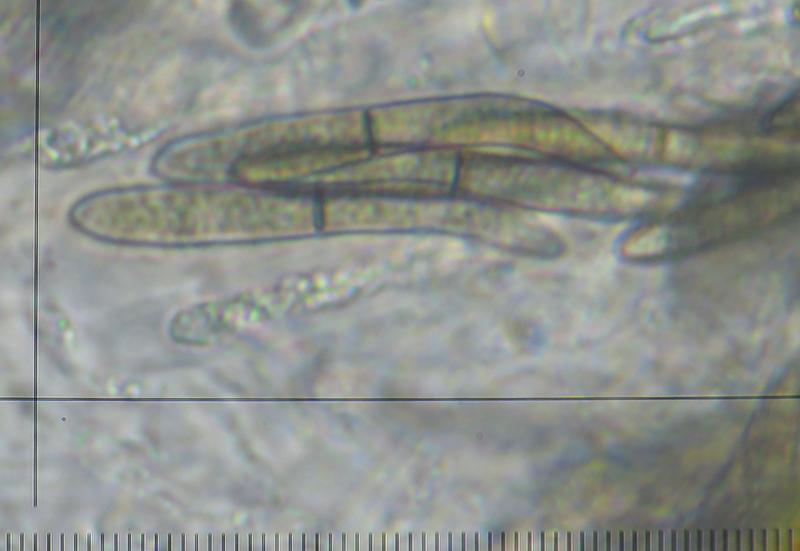
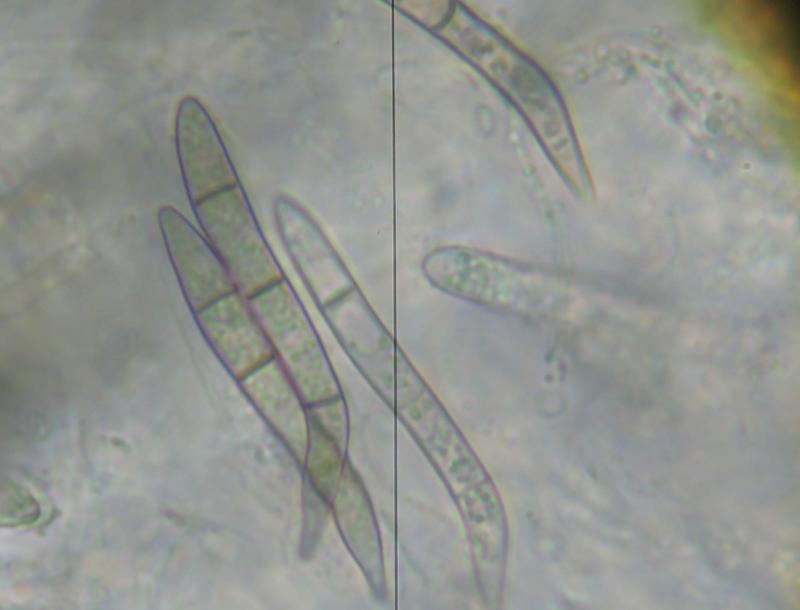

As I have recently done for others, I am happy to sequence your specimen if you could send me 15-20 ascomata in good condition. I have built an excellent DNA database of taxa in the Helminthosphaeriaceae.
Cheers,
Andy
Thank you very much for your offer to sequence the collection. Unfortunately the number of ascomata present is not more than a few. Moreover, they are scattered over a heavy piece of (hardly rotten) wood. I will revisit the collection site soon, hopefully it is possible to collect more material. I will keep you informed by email.
Cheers, EDuard
Cheers,
Andy