28-04-2026 22:51
 Bernard CLESSE
Bonsoir à toutes et tous,Pourriez-vous m'aider à

28-04-2026 21:50
 Pablo Sandoval
Hola a todos,Espero se encuentren bien. Hace mucho
27-04-2026 18:05
 Lothar Krieglsteiner
... still attached at standing tree. The green con
28-04-2026 20:33
Vitus SchäfftleinHello, I found Trochila ilicina on Ilex aquifoliu
28-04-2026 20:07
Lothar Krieglsteiner
... on twig in the air at standing Ceratonia siliq
27-04-2026 20:52
Lothar Krieglsteiner
Found on hanging tiwg of Olea europaea in dried-ou
27-04-2026 18:48
Tony MoverleyCollected 23rd April 2026, Norfolk, EnglandSwarms
27-04-2026 17:41
Lothar Krieglsteiner
.. Algarve, same leaf than the last post. The con
27-04-2026 17:16
Lothar Krieglsteiner
.. Algarve, moist lying.The conidiomata look like
 I took a sample of wood from a rotten stump with Scutellina on and came across these Perithicia. The were black c0.6mm x 0.4 mm. The spores were initially cylindrical 50µ long excluding the a small appendage at each end . Maturing with one swollen (septate?) cell. The asci have a small droplet at the apex.
I have included a photo of what might be hairs but not sure.
Is this Immersiella caudata.
Thanks
Mal
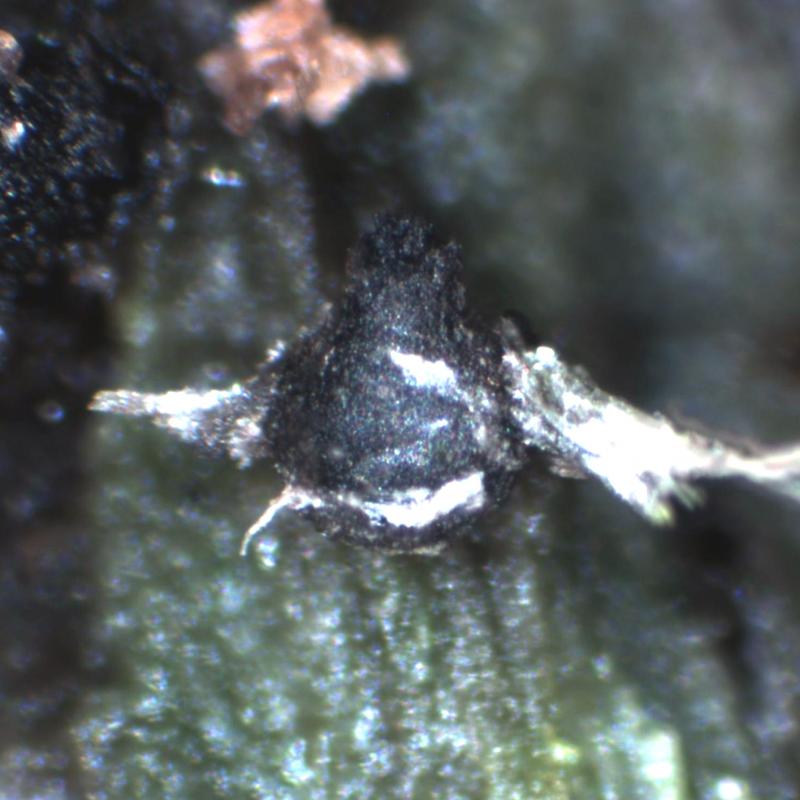
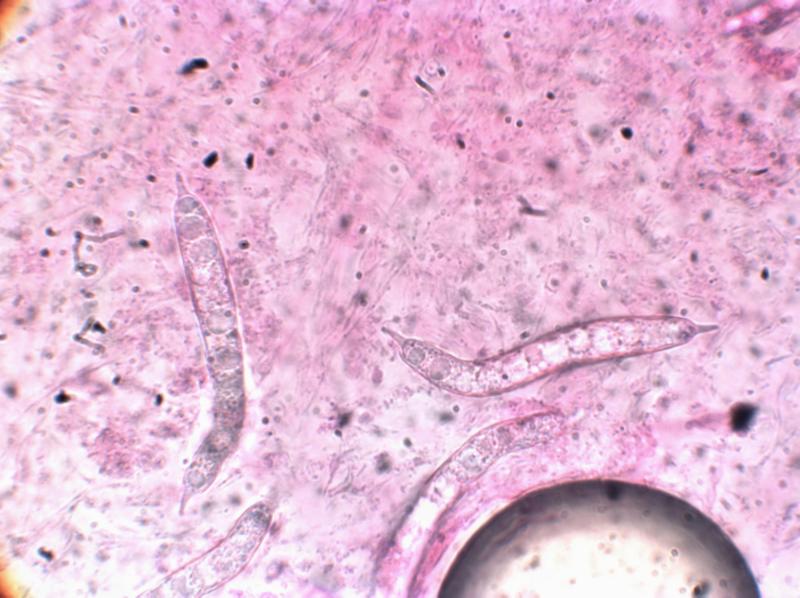
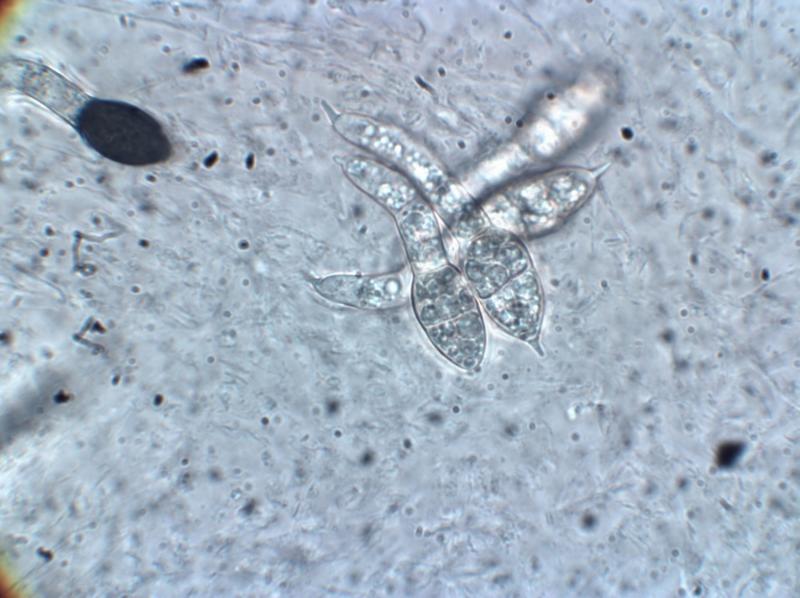
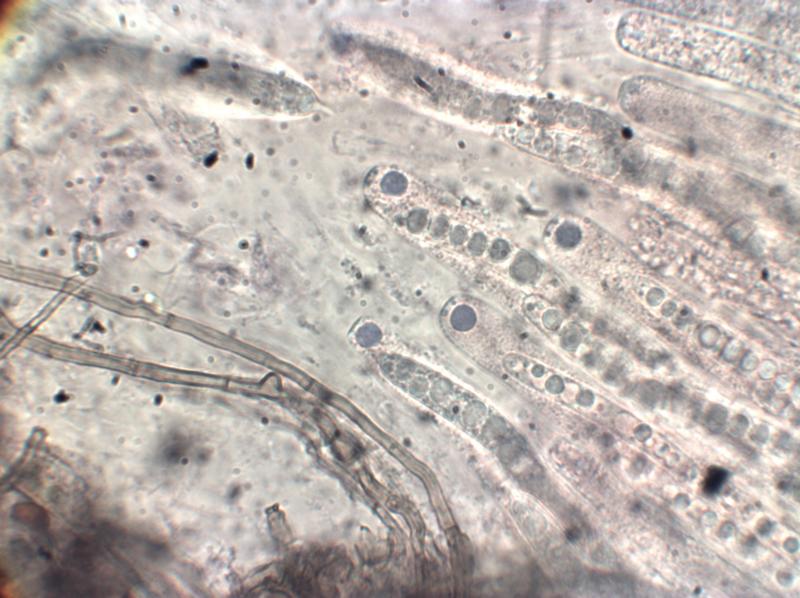
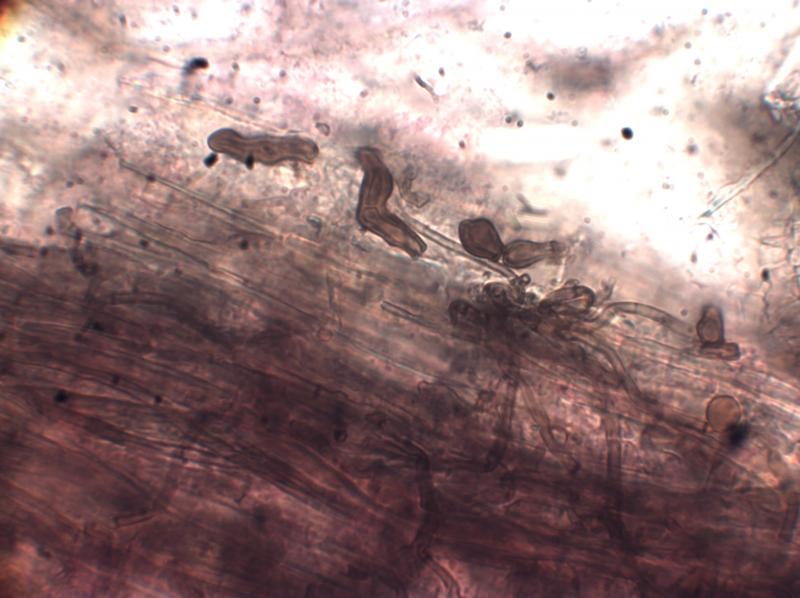

We do not distinguish well the hairs, are they grouped, only at the top or distributed; are they pointed or obtuse? Can you measure the appendages at the ends of the spores and the dark cell above the septum. Also it can be useful to make a cut to observe the wall.
Michel.
The dark "hairs" appear to be just at the top of the Perithicia and are very short thick walled and obtuse. The immature spores are c 50µ long with the small appendage of 5µ at each end. I have struggled to find any fully mature spores (other than the ones on the Scutellinia slide which was binned) but the odd one I have found with a dark swollen end was measured at 17 x 10. I have prepared slides of a few perithecia but none so far have had mature spores but I will try overnight so gather some.
Does that help at all?
Mal
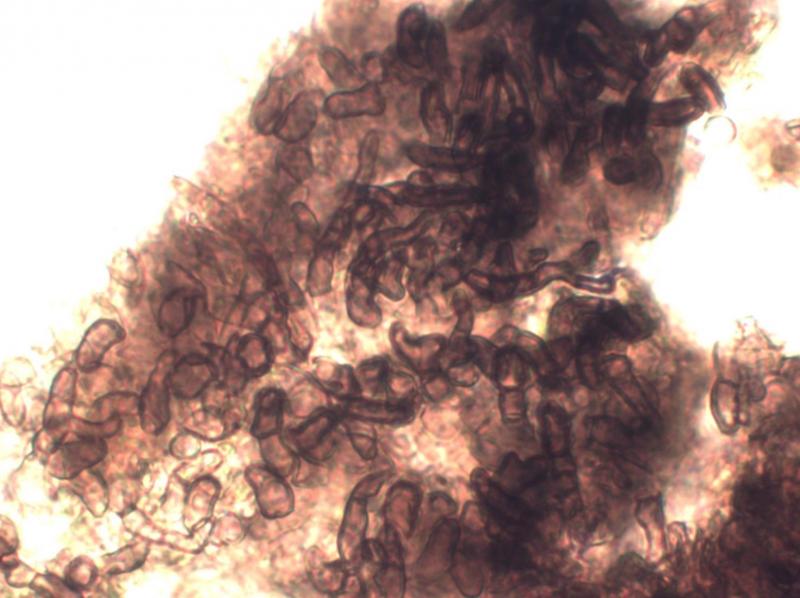
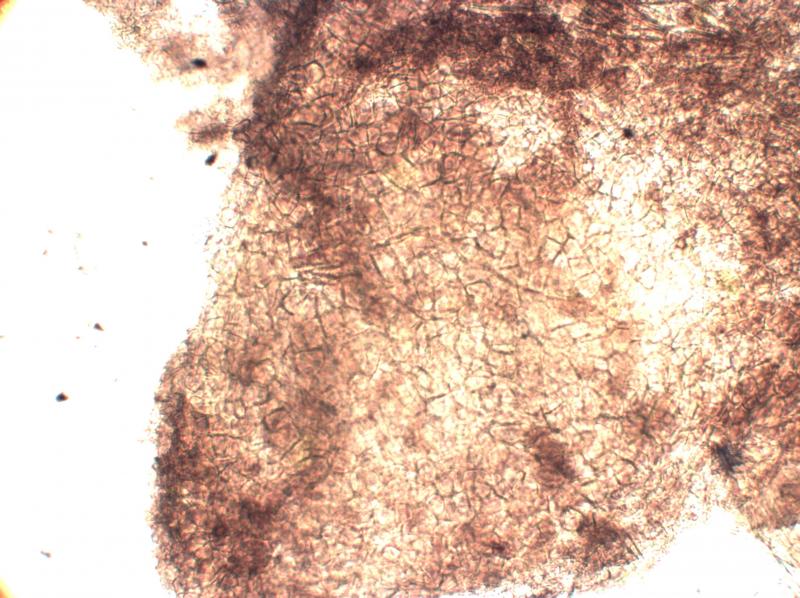

Andy
I was not sure about C.Caudata because the perithecia do not seem to be immersed and I could not really distinguish globules (smooth or more or less ornate).
Thank you.
Michel.
Merci,
Andy
Thanks again
Mal