11-05-2026 12:32
 Bernard CLESSE
Pourriez-vous m'aider à identifier cette héloti
13-05-2026 15:26
 François Freléchoux
Bonjour,Voici une récolte faite il y a quelques j
12-05-2026 15:41
 Nicolas VAN VOOREN
Dear Ascolovers, especially interested in Pezizale
13-05-2026 12:05
 Thierry Blondelle
Bonjour à tous,J'aimerais avoir confirmation de c
10-05-2026 23:17
 Andreas Gminder
Hello,today we found in a moist steep decidous for
28-04-2026 20:07
 Lothar Krieglsteiner
... on twig in the air at standing Ceratonia siliq
27-04-2026 20:52
Lothar Krieglsteiner
Found on hanging tiwg of Olea europaea in dried-ou
11-05-2026 20:22
Lothar Krieglsteiner
on attached twig of standing Ficus caricaquite uns
29-04-2026 10:44
Lothar Krieglsteiner
growing at moist, drying-out soil at the side of a

Hi forum,
I can't identify this hyphomycete on old black Russula.
White synnemata less than 1mm, with subglobose conidial mass, producing ciliate hyalin aseptate conidia, 6-7 x 2 µm, with 4-11 µm long appendages .
Alain
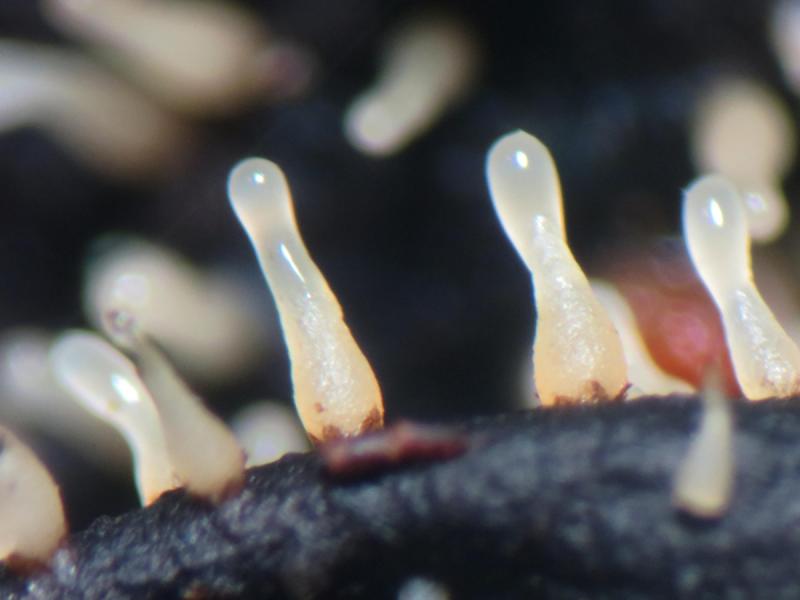
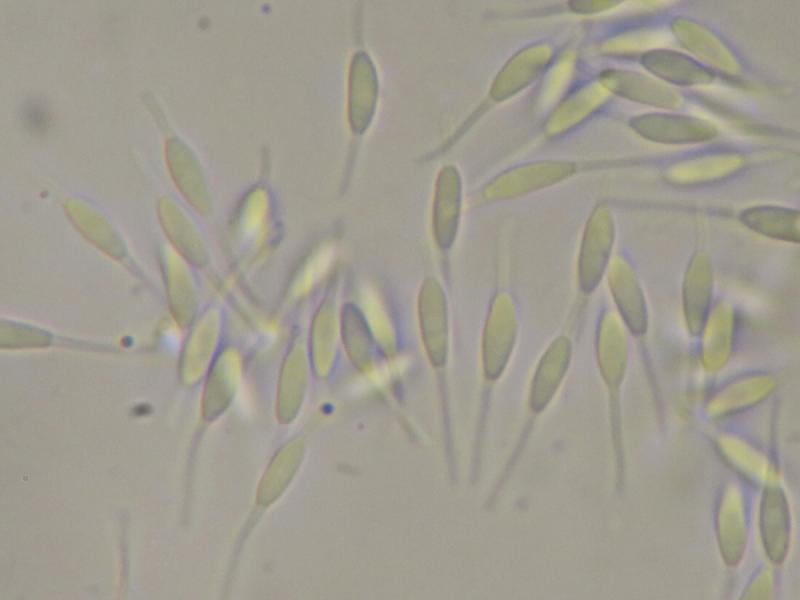


je pense que Jason a raison. Un synnema est porté par un stipe, souvent long, constitué d'hyphes en palissade qui se différencient en cellules conidiogènes au sommet.
Il faudrait voir aussi à quoi ressemblent les cellules conidiogènes, qui se trouvent peut-être à la base de la pycnide.
Une coupe longitudinale de la pycnide s'impose! ça t'apprendra à lorgner les Russules!
Amuse toi bien,
Jacques
Bonjour,
I only find time to answer.
I will do again new microscopy, probably on sunday. I can show you now another picture corresponding probably to the top of synnemata-like.
Alain
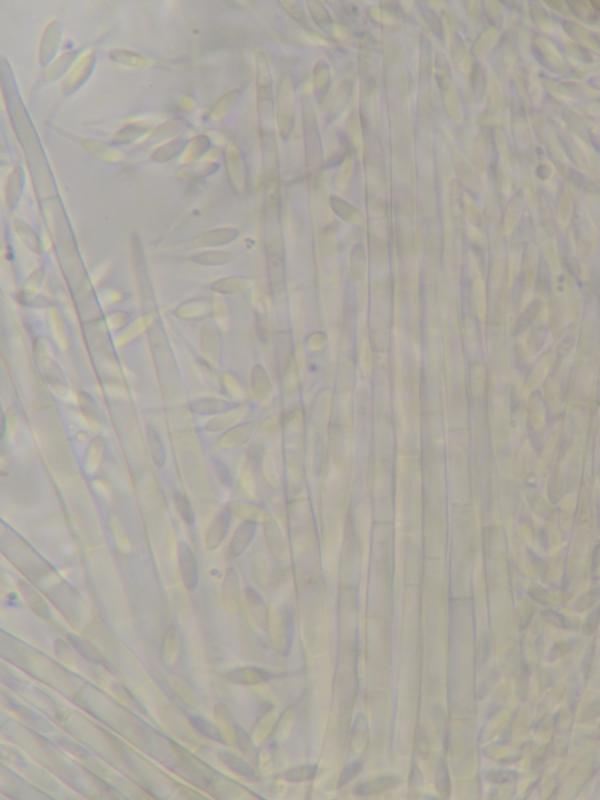

I do not have a speciesname for you,but the synnemateous fungi, the genera, are nice3ly discribed in "Genera of hyphomycetes ", from Seifert and Gams and so.
Best,
Marco

look at Eleutheromyces subulatus. Grows, amongst others, on Russula and blackens the basidiomata.
Cheers,
Hermann
and the winner is... Hermann ! Congratulations.
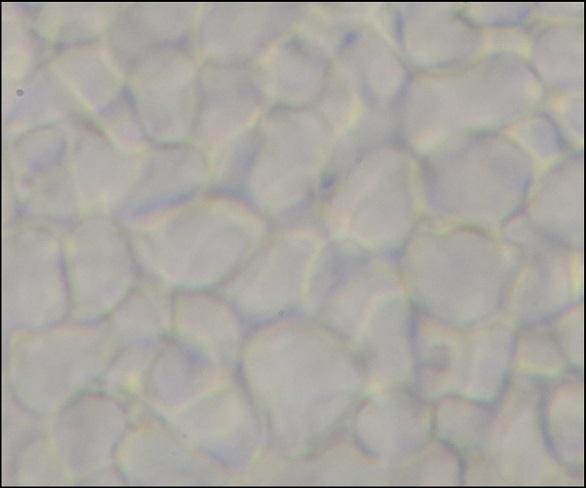
Here are cells of conidiomata wall.
Thank you to all, especially to Hermann, of course.
Alain