
11-05-2026 12:32
 Bernard CLESSE
Pourriez-vous m'aider à identifier cette héloti
13-05-2026 15:26
 François Freléchoux
Bonjour,Voici une récolte faite il y a quelques j
12-05-2026 15:41
 Nicolas VAN VOOREN
Dear Ascolovers, especially interested in Pezizale
13-05-2026 12:05
 Thierry Blondelle
Bonjour à tous,J'aimerais avoir confirmation de c
10-05-2026 23:17
 Andreas Gminder
Hello,today we found in a moist steep decidous for
28-04-2026 20:07
 Lothar Krieglsteiner
... on twig in the air at standing Ceratonia siliq
27-04-2026 20:52
Lothar Krieglsteiner
Found on hanging tiwg of Olea europaea in dried-ou
11-05-2026 20:22
Lothar Krieglsteiner
on attached twig of standing Ficus caricaquite uns
29-04-2026 10:44
Lothar Krieglsteiner
growing at moist, drying-out soil at the side of a
White Cistella on a Betula leaf
Marja Pennanen,
03-10-2017 19:18
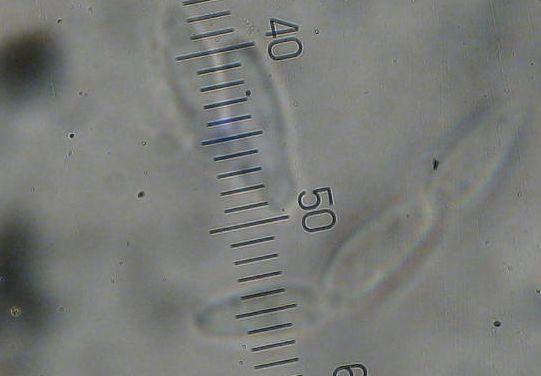
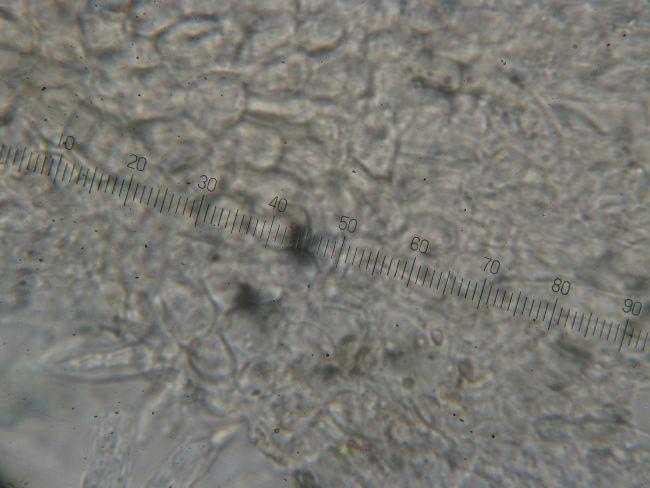
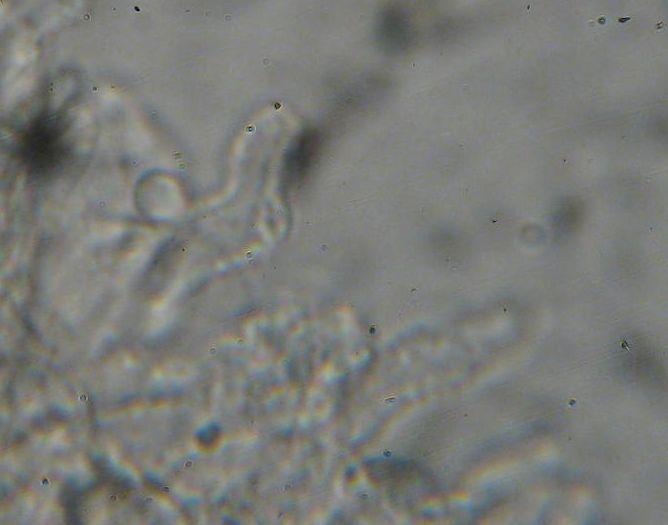
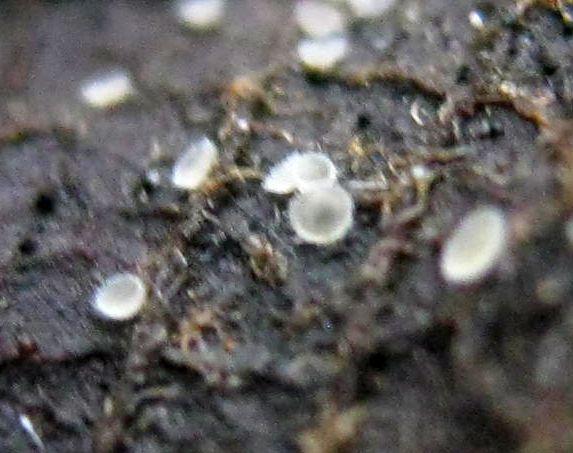
I have just studied a tíny (about 0,2 mm) white hairy one and it is evening, so I can not take macrophotos out, but I took some microphotos and hope they are enought. Anyway these white hairy ones are not easy to take macrophotos of and are often similar to each other, so anyone here can imagine, what they look like ;)
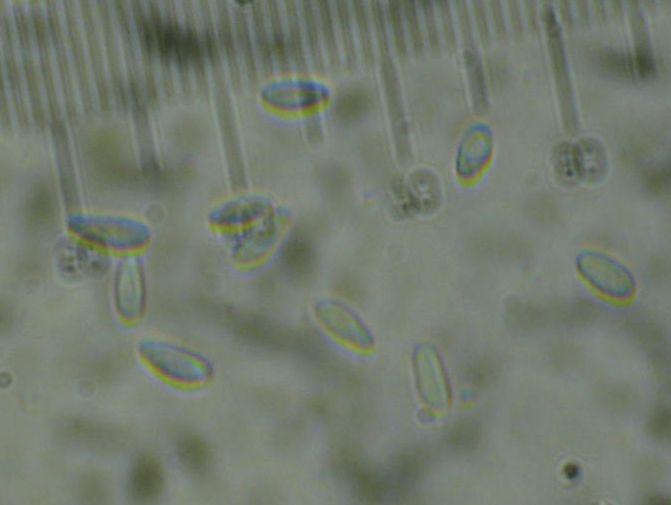
The spores are about 7-10x2-3, the asci are 30-50x5-6, IKI+ blue and paraphyses are cylindric, maybe a bit lanceolate about 2 wide.
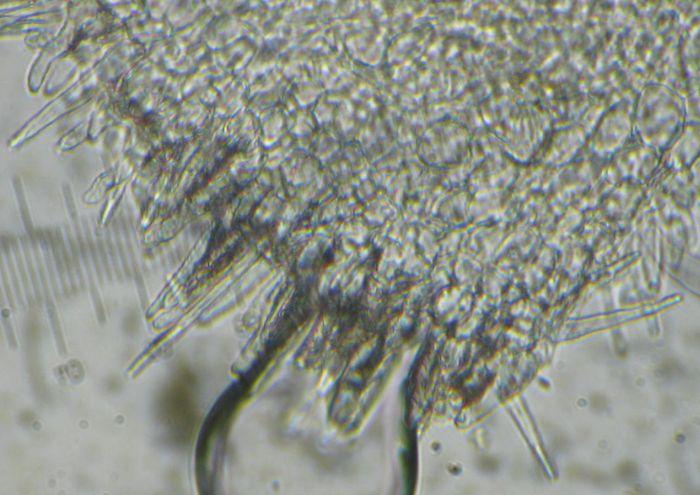
The hairs are conical, maybe bent in the middle and are spiny like Cistella hairs, 15-30x3-5.
The only Cistella, that is close is C. deflexa, but this has much bigger spores. Any other options?
Marja
Hans-Otto Baral,
03-10-2017 20:22

Re : White Cistella on a Betula leaf
Hi Marja!
the only Cistella on leaves with such spores is C. grumosa, but there the asci react red and they have no ctoziers.
Zotto
the only Cistella on leaves with such spores is C. grumosa, but there the asci react red and they have no ctoziers.
Zotto
Marja Pennanen,
03-10-2017 20:42
Re : White Cistella on a Betula leaf
Dear Zotto,
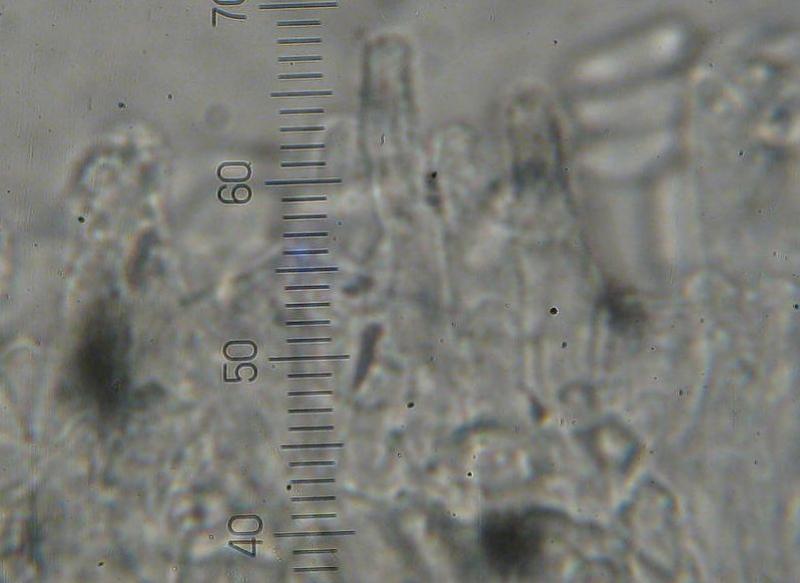
after sending the note it came to my mind to check your CD data. There was C. deflexa on Acer leaves with bigger spores than in Raitviirs opus, not up to 10 but close. and I saw only one spore so big others were up to 8. I even saw some, that were more swollen in the middle. So I'm now pretty sure, that this is Cistella deflexa. Once again the species seems to be new for Finland.
Marja
after sending the note it came to my mind to check your CD data. There was C. deflexa on Acer leaves with bigger spores than in Raitviirs opus, not up to 10 but close. and I saw only one spore so big others were up to 8. I even saw some, that were more swollen in the middle. So I'm now pretty sure, that this is Cistella deflexa. Once again the species seems to be new for Finland.
Marja
Hans-Otto Baral,
03-10-2017 20:46
Re : White Cistella on a Betula leaf
But you should find some hooked hairs. I know deflexa from Populus and Salix, also Acer and Juglans.
Marja Pennanen,
04-10-2017 15:28
Re : White Cistella on a Betula leaf
Dear Zotto,
now I'm even more confused.
I studied something similar from the same area on Salix leaves last night and the first gave similar, but longer hairs. The second today had these spiny ones, too, but also glassy hairs up to 60! There was even a lumen at the base of the hairs-
My first impression, when I studied this Betula one was, that it is glassy haired one, but then saw the spines and turned to find the answer from Cistellas.
The hairs were now glassy after KOH 5%. I have not yet tried a redetermination on glassy ones in Raitviis revised syonopsis, but do that after this.
Maybe the hairs of the ones on Betula leaf were not mature yet.
Marja
now I'm even more confused.
I studied something similar from the same area on Salix leaves last night and the first gave similar, but longer hairs. The second today had these spiny ones, too, but also glassy hairs up to 60! There was even a lumen at the base of the hairs-
My first impression, when I studied this Betula one was, that it is glassy haired one, but then saw the spines and turned to find the answer from Cistellas.
The hairs were now glassy after KOH 5%. I have not yet tried a redetermination on glassy ones in Raitviis revised syonopsis, but do that after this.
Maybe the hairs of the ones on Betula leaf were not mature yet.
Marja
Hans-Otto Baral,
04-10-2017 16:20
Re : White Cistella on a Betula leaf
Yes, these are glassy. But take care, these species may grow mixed!
Marja Pennanen,
04-10-2017 18:16
Re : White Cistella on a Betula leaf
Dear Zotto,
I have found spiny haired Hyalopeziza pygmaea in 2014 on Salix leaves and have determined it with the Revised synopsis of the Hyaloscyphaceae. If I have done that, I can not determine this to be the same. The spores are too big and asci huge compared to those mentioned in that opus. So, this may be some other spiny Hyalopeziza and I have no means to determine this. These will be placed to my herbarium as Hyalopeziza sp.
What do you mean by growing mixed? Maybe mixed species. I have found even small Betula leaves carrying 3-5 different species (Flagelloscyphas, Typhulas, Hymenoscyphuses, Calycellinas, Venturiocistella diversipila etc) and wars of space for living going on grasses...
The weathers here have been very moist this year, so the variety of species is partly peculiar. Some common species have been scanty or absent and some normally scanty or absent species are common, but often mouldy.
Marja
I have found spiny haired Hyalopeziza pygmaea in 2014 on Salix leaves and have determined it with the Revised synopsis of the Hyaloscyphaceae. If I have done that, I can not determine this to be the same. The spores are too big and asci huge compared to those mentioned in that opus. So, this may be some other spiny Hyalopeziza and I have no means to determine this. These will be placed to my herbarium as Hyalopeziza sp.
What do you mean by growing mixed? Maybe mixed species. I have found even small Betula leaves carrying 3-5 different species (Flagelloscyphas, Typhulas, Hymenoscyphuses, Calycellinas, Venturiocistella diversipila etc) and wars of space for living going on grasses...
The weathers here have been very moist this year, so the variety of species is partly peculiar. Some common species have been scanty or absent and some normally scanty or absent species are common, but often mouldy.
Marja
Hans-Otto Baral,
04-10-2017 21:01
Re : White Cistella on a Betula leaf
Yes, and I meant mixed cistelloid species. H. pygmaea is a goiod idea, but you say the spores are too large. You did not giev the size, but from the scale I would say 5 µm?
Marja Pennanen,
06-10-2017 11:10
Re : White Cistella on a Betula leaf
Dear Zotto,
you should multiply the result on the scale by 2. The magnification is mentioned on the photo text, 500x.
The asci should be only 16-20x4-5 and these have them twice as long. The sizes of the description may be from dried specimen. Still can the dimensions be so much smaller? But now, that I start to think about it, the answer must be: yes. Some substrates give much more nutrition. I have noticed big varieties in (micro and macro) sizes of for instance Hymenoscyphus kermesinus on different leaves and different moisture conditions, so it may be possible. We really have had rains here and the conditions have been great to develop big, wet spores.
Once again: Thank you Zotto!
Marja
So now I'm disaponted of not finding anything new for me ;)
you should multiply the result on the scale by 2. The magnification is mentioned on the photo text, 500x.
The asci should be only 16-20x4-5 and these have them twice as long. The sizes of the description may be from dried specimen. Still can the dimensions be so much smaller? But now, that I start to think about it, the answer must be: yes. Some substrates give much more nutrition. I have noticed big varieties in (micro and macro) sizes of for instance Hymenoscyphus kermesinus on different leaves and different moisture conditions, so it may be possible. We really have had rains here and the conditions have been great to develop big, wet spores.
Once again: Thank you Zotto!
Marja
So now I'm disaponted of not finding anything new for me ;)
Hans-Otto Baral,
06-10-2017 11:43
Re : White Cistella on a Betula leaf
o.k., 500x when knowing that at 1000x it is 1:1.
I have for pygmaea *25-33 x 6.5-7.5, but spores are indees small: *5-6 x 2-2.4 (HB 2964).
I am not so sure that size differences can be explained so easily with nutritional sources. But they occur, I recall Psilachnum chrysostigma varying between *5-6 and *6-9.
For H. pygmaea the lit gives 5-7 (probably dead state).
Zotto
I have for pygmaea *25-33 x 6.5-7.5, but spores are indees small: *5-6 x 2-2.4 (HB 2964).
I am not so sure that size differences can be explained so easily with nutritional sources. But they occur, I recall Psilachnum chrysostigma varying between *5-6 and *6-9.
For H. pygmaea the lit gives 5-7 (probably dead state).
Zotto