
09-06-2026 18:32
Camille MertensSur morceau de roseau immergé 0,5 - 0,7 mm de dia
08-06-2026 10:16
 Spooren Marco
I don`t have a clou about this fungus,it is not in
08-06-2026 17:00
François BartholomeeusenGood day everyone, On June 5 2026, I collected de
07-06-2026 15:10
 William Slosse
Hello everyone,On 05-06-26, I found following asco
05-06-2026 11:02
Thomas Læssøehttps://svampe.databasen.org/observations/10596691
07-06-2026 12:09
 François Freléchoux
Bonjour, Voici une brève description de ce qui m
07-06-2026 12:43
Steve ClementsBojour. This was a strange find on a stick on my
12-07-2015 00:05
 Nedim Jukic
This one from the same locality as the previous on
06-06-2026 17:44
Steve ClementsBonjour, This disco was on planed wood 3 x 1.5 cm
I found this Nectria species, which belongs to the N. cinnabarina complex. The dark colour was remarkable for me. Analyzing the spores I found several of it with three septa. So I thought this was N. cinnabarina s. str. But after further search I also found two spores with four septa. According to the key of Hirooka, Rossman and Chaverri: "A morphological and phylogenetic revision of the Nectria cinnabarina species complex" this is Nectria nigrescens.
The name suggests a blackening behavior of the species. But this is not described for this species. The normal colours are brighter like in N. cinnabarina but all species, including N. dematiosa can be more or less darker. The dried sporodochia seem to be darker than the fresh ones. Some of them are black now.
Am I right with N. nigrescens? Are there new scientific findings? Is this a rare or overlooked species?
Sporodochia: short stipitate to sessile, dark red brown, seem to blacken when dried
Ascospores: 12-16 (19) x 4-5,5 µm, mostly 1, sometimes 0 or 2 septate, rarely 3 septate
Best regards
Steffen
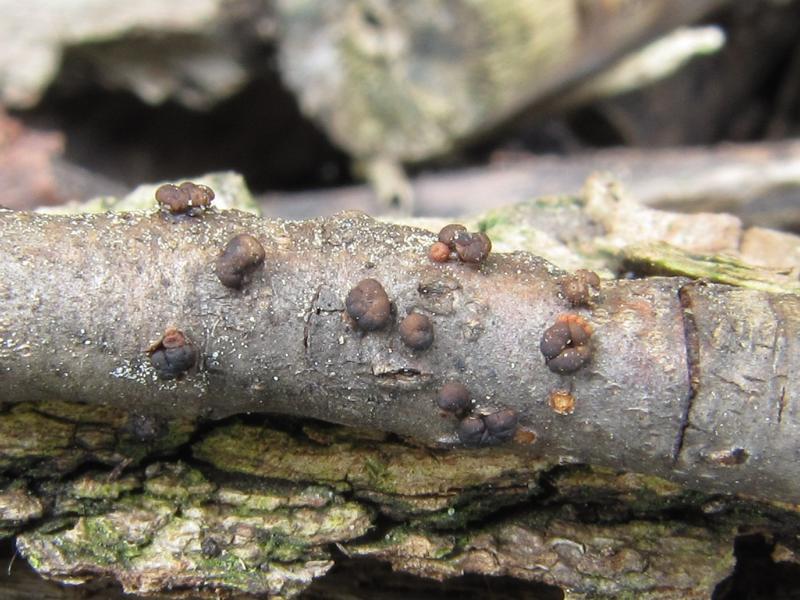
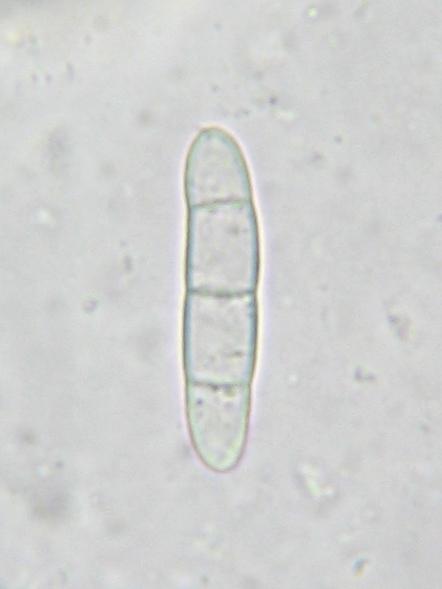
can anybody confirm or refute Nectria nigrescens or suggest another species?
Regards
Steffen
