
11-05-2026 12:32
 Bernard CLESSE
Pourriez-vous m'aider à identifier cette héloti
13-05-2026 15:26
 François Freléchoux
Bonjour,Voici une récolte faite il y a quelques j
12-05-2026 15:41
 Nicolas VAN VOOREN
Dear Ascolovers, especially interested in Pezizale
13-05-2026 12:05
 Thierry Blondelle
Bonjour à tous,J'aimerais avoir confirmation de c
10-05-2026 23:17
 Andreas Gminder
Hello,today we found in a moist steep decidous for
28-04-2026 20:07
 Lothar Krieglsteiner
... on twig in the air at standing Ceratonia siliq
27-04-2026 20:52
Lothar Krieglsteiner
Found on hanging tiwg of Olea europaea in dried-ou
11-05-2026 20:22
Lothar Krieglsteiner
on attached twig of standing Ficus caricaquite uns
29-04-2026 10:44
Lothar Krieglsteiner
growing at moist, drying-out soil at the side of a
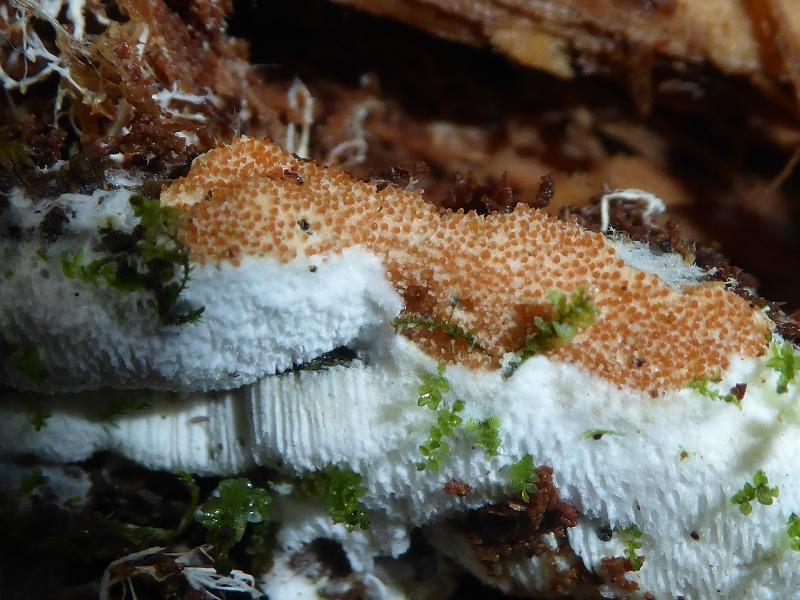
... collected this week by Matthias Theiß during an investigation of logs in nature reserve Zofin (Czech Republic) on a lying log, directly on/beneath Trechispora hymenocystis.
Once there was a key and more good material on Hypomyces in the internet - I saved the link http://nt.ars-grin.gov/taxadescriptions/keys/FrameListAllTaxa.cfm?gen=Hypomyces
but it does not work any more, unfortunately ..
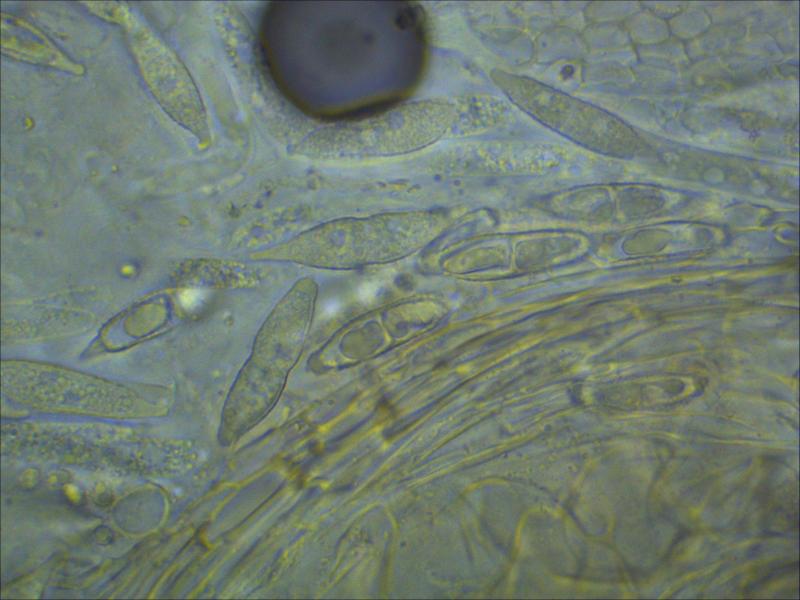
With "Funga Nordica" I come to H. semitranslucens but the spores and its appendages are larger, for instance.
Can somebody provide help?
Best regards from Lothar
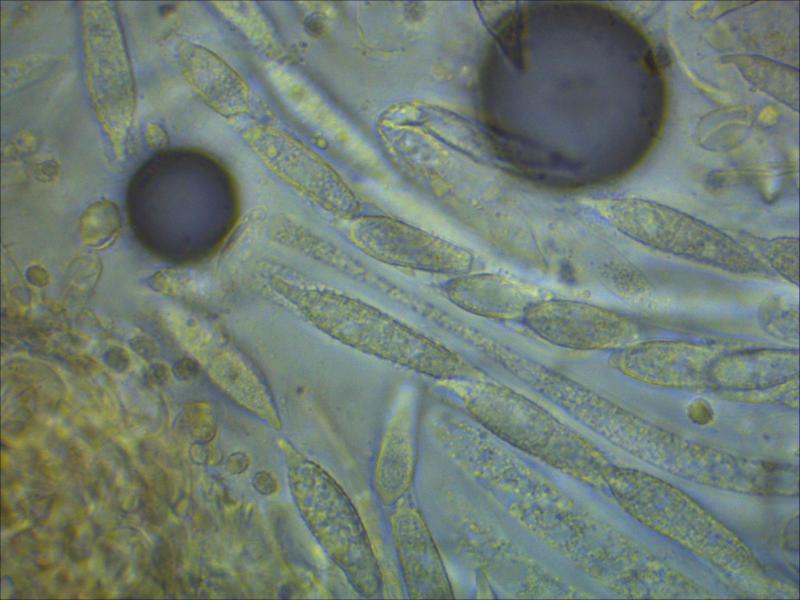
ich bin da keine große Hilfe, aber habt ihr schon die Reaktion der Frk auf KOH 3% getestet ?
Viele Grüße
Thorben
Nein, haben wir nicht. Auf die Idee ist niemand gekommen. Geht das auch noch am Exsikkat? Und was wäre die Quintessenz?
LG von Lothar

Hi Lothar,
could you give complete ascospores size with apical size please ?
I'll send you a paper.
Alain
Hi Alan,
I did only few measurements by now, but I can do this with the program later.
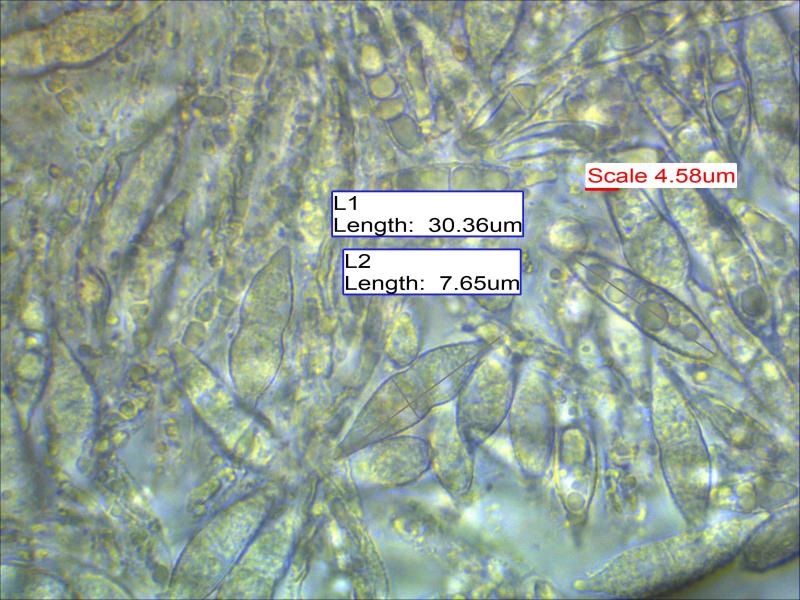
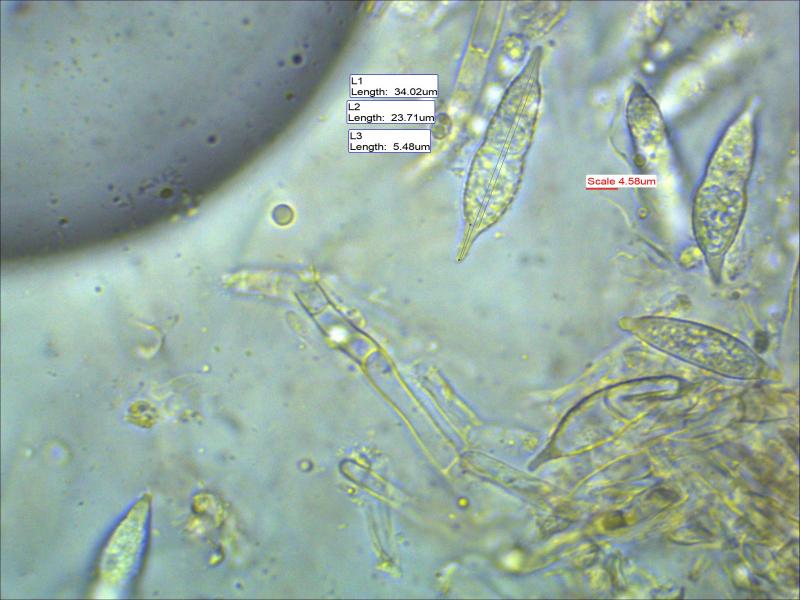
What I already measured:
spore 1:
whole spore size: 34 - spore without appendages: 23,7 - appendage: 5,5
spore 2:
whole spore size: 30,3 - width: 7,6
... just for orientation. I will do more.
Best regards for now,
Lothar
P.S. Thanks for sending, I wait ...
Now I received the paper of Poldmaa & Samuels by Alan - thanks!
After short reading and at first glance I find H. corticiicola to fit best - the form of the spores (measurements are a bit small, but I compare further) and the color and form of the perithecia fit, as well as the host which can be called corticiaceous (although it bears pores). But I will have a closer look later.
Regards, Lothar