
11-05-2026 12:32
 Bernard CLESSE
Pourriez-vous m'aider à identifier cette héloti
13-05-2026 15:26
 François Freléchoux
Bonjour,Voici une récolte faite il y a quelques j
12-05-2026 15:41
 Nicolas VAN VOOREN
Dear Ascolovers, especially interested in Pezizale
13-05-2026 12:05
 Thierry Blondelle
Bonjour à tous,J'aimerais avoir confirmation de c
10-05-2026 23:17
 Andreas Gminder
Hello,today we found in a moist steep decidous for
28-04-2026 20:07
 Lothar Krieglsteiner
... on twig in the air at standing Ceratonia siliq
27-04-2026 20:52
Lothar Krieglsteiner
Found on hanging tiwg of Olea europaea in dried-ou
11-05-2026 20:22
Lothar Krieglsteiner
on attached twig of standing Ficus caricaquite uns
29-04-2026 10:44
Lothar Krieglsteiner
growing at moist, drying-out soil at the side of a
Xylaria cinerea?
Lepista Zacarias,
29-05-2017 19:41
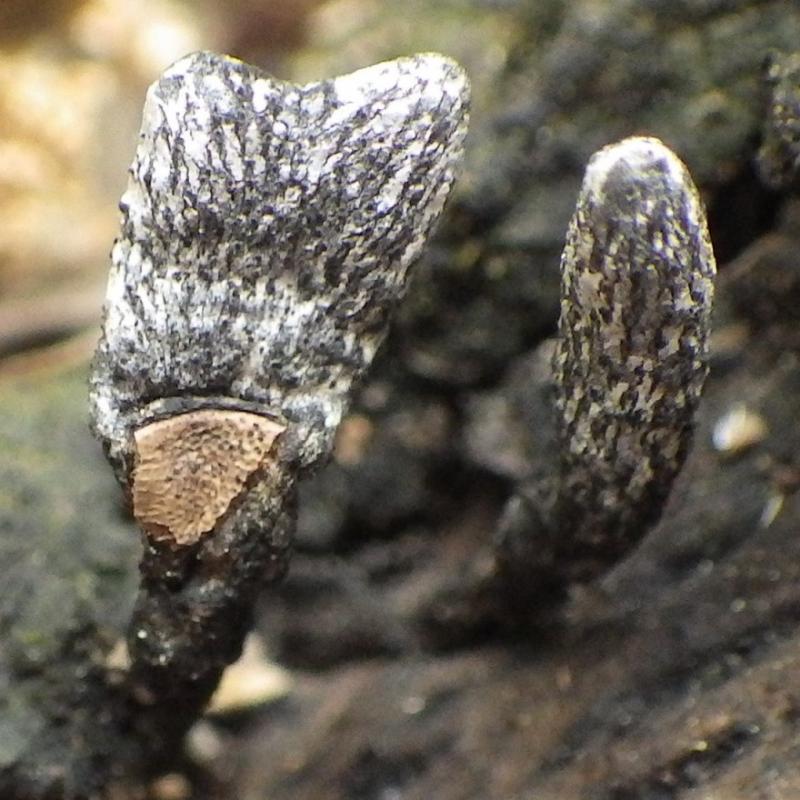
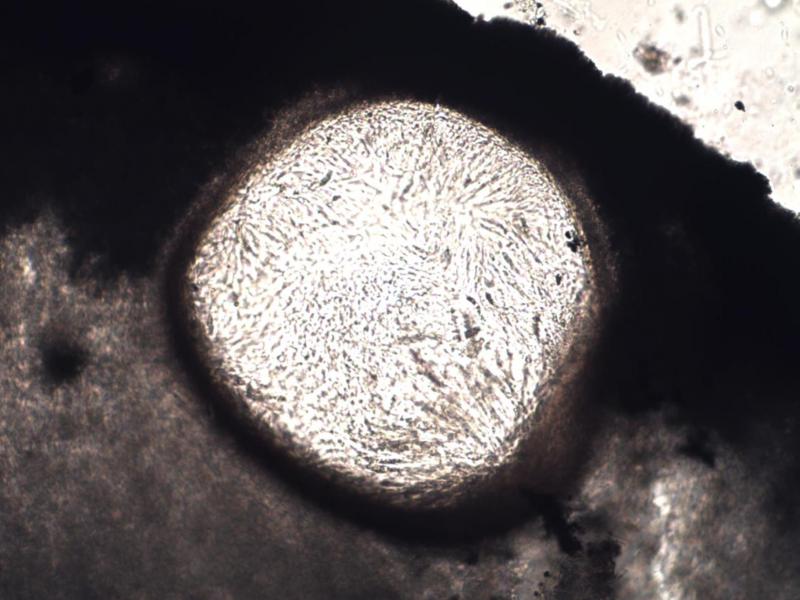
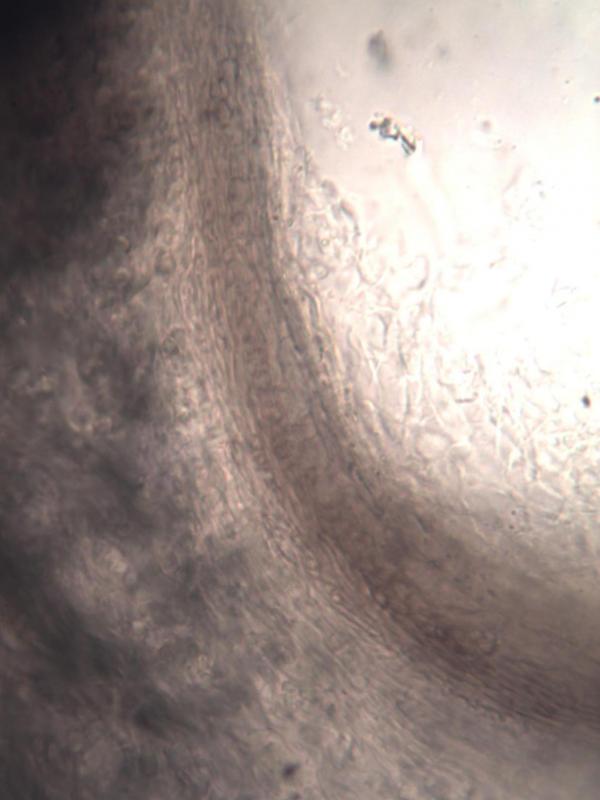
These specimens were growing on the remains of a tree (Quercus I believe). The appearance is similar to others found before and very similar to those of Xylaria cinerea as described in the paper:
Jacques Fournier, Fabienne Flessa, Derek Peršoh, and Marc Stadler: Three new Xylaria species from southwestern Europe, Mycol Progress 10 (1): 33–52, 2011.
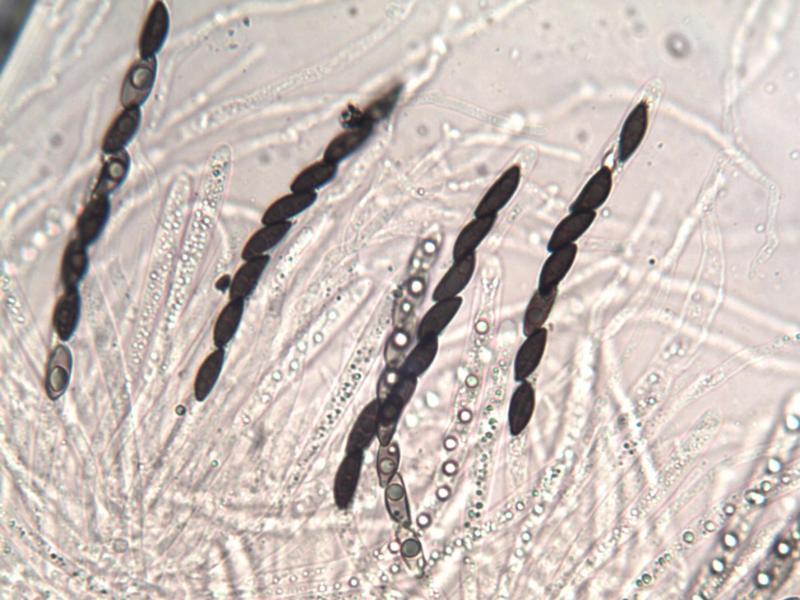
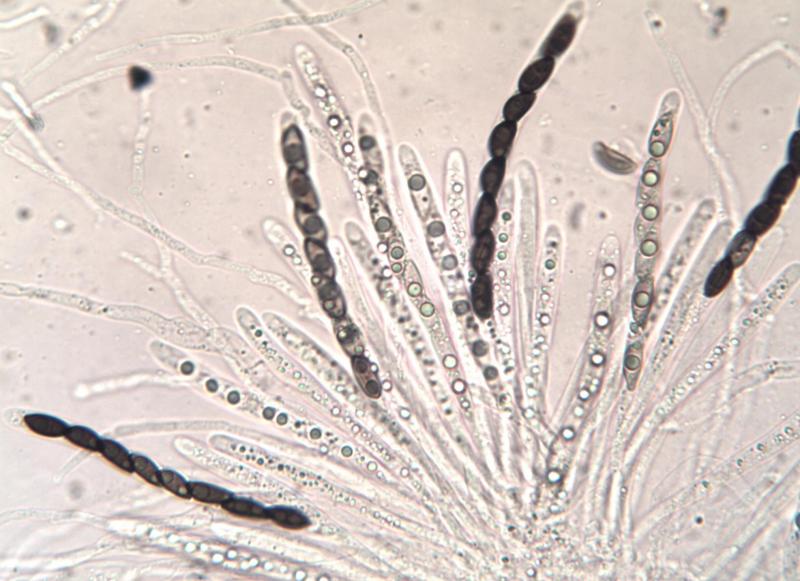
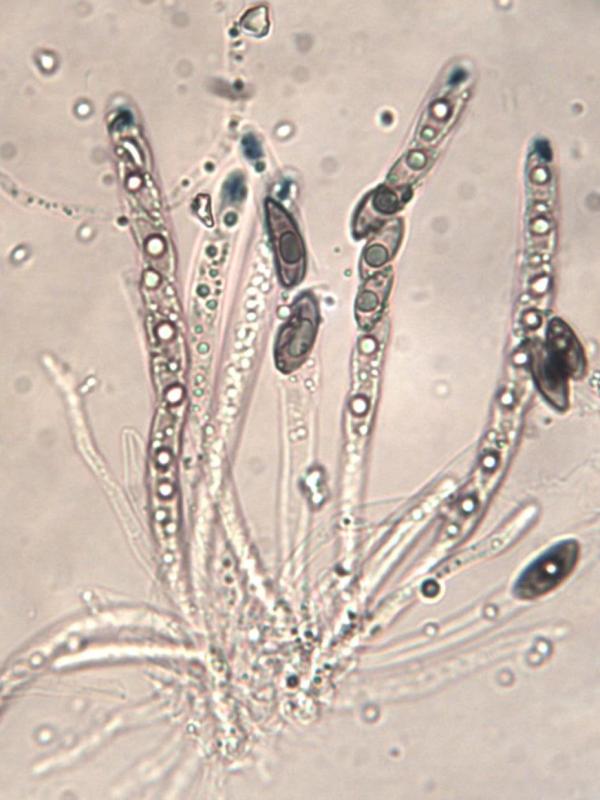
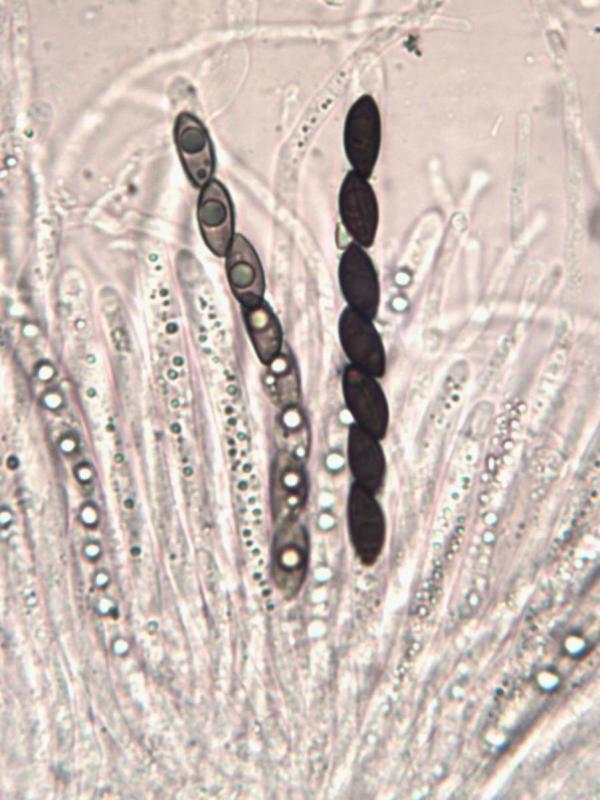
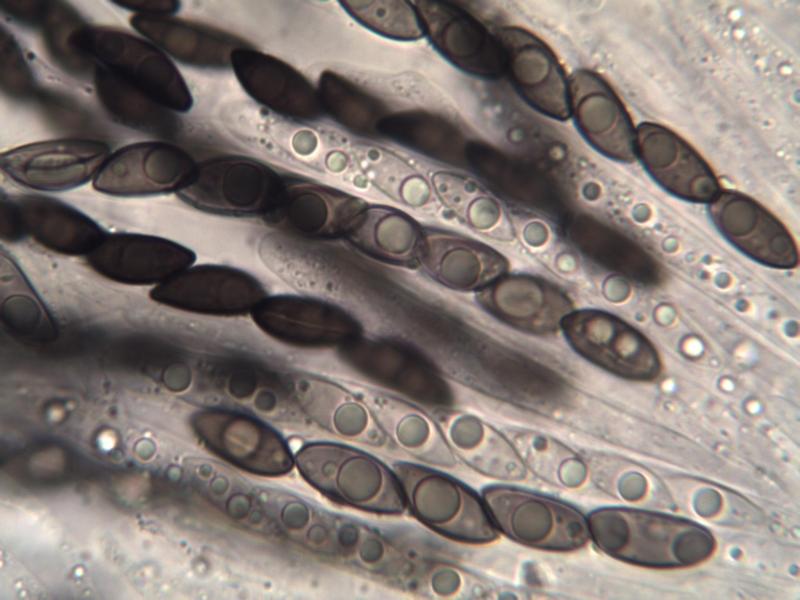
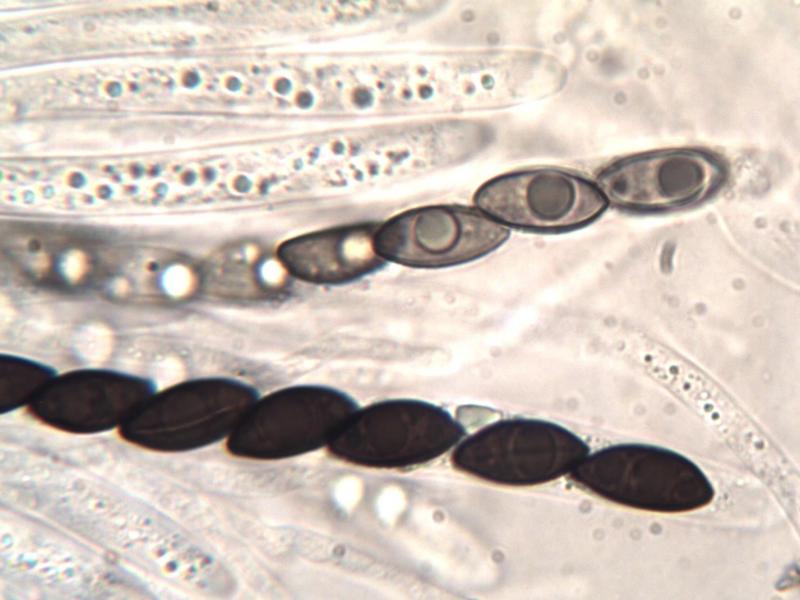
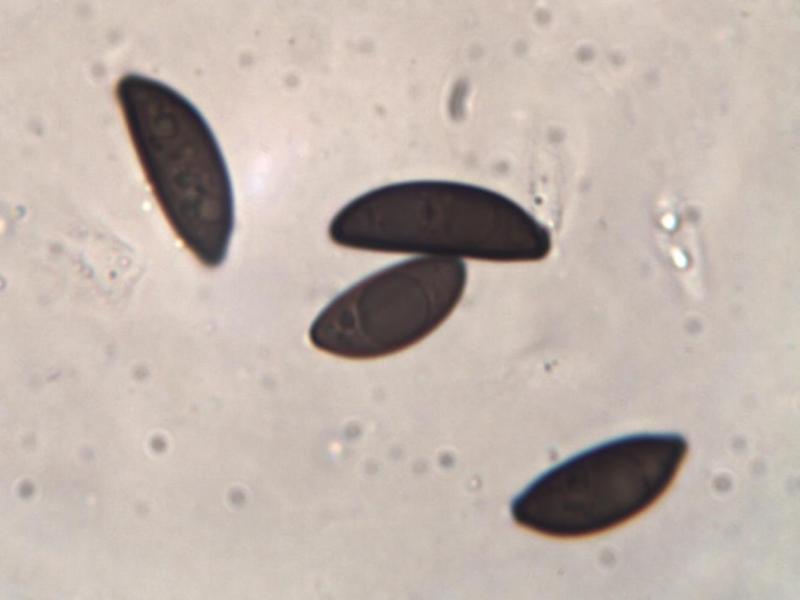
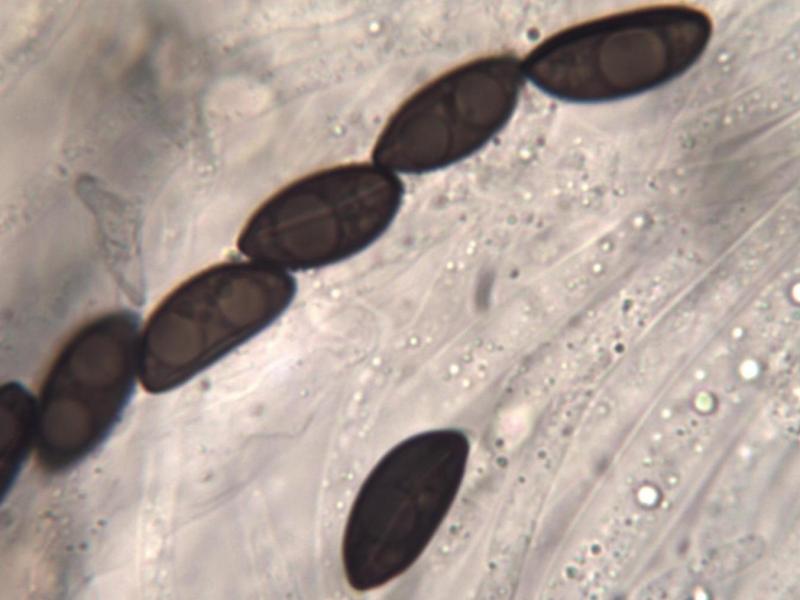
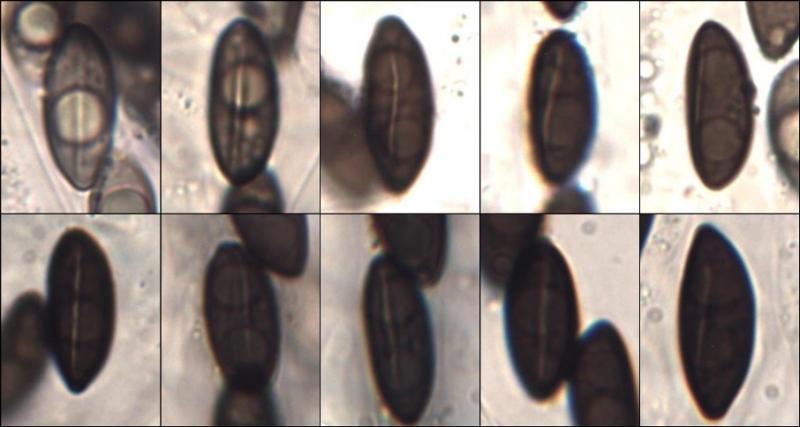
However, the dimensions of the spores do not fit perfectly, since mainly their width are a bit bigger then expected; I measured
(14.1) 14.8 - 17.1 (19.5) × (5.4) 5.6 - 6.9 (7.6) µm
Q = (2.1) 2.3 - 2.9 (3.1) ; N = 37
Me = 16 × 6.2 µm ; Qe = 2.6
whereas the dimensions mentioned in the above cited reference are:
13–17 × 5–6 µm, (M=14.8 × 5.5 µm, n=30).
So, the question is: can this still be X. cinerea? If not, what species can be so similar?
I would appreciate if Jacques can say something; Any other opinion will be welcome as well.
Thanks in advance,
zaca
Jacques Fournier,
29-05-2017 22:20

Re : Xylaria cinerea?
Hi Zaca,
it's when ascospore size fits perfectly that you can have questions.
Dimensions are quite variable, you need to rely on other, less variable characters like the presence of minute black granulations on the surface of the stroma. It is the signature of X. cinerea and I am sure you will find them on your specimen.
Cheers,
Jacques
it's when ascospore size fits perfectly that you can have questions.
Dimensions are quite variable, you need to rely on other, less variable characters like the presence of minute black granulations on the surface of the stroma. It is the signature of X. cinerea and I am sure you will find them on your specimen.
Cheers,
Jacques
Lepista Zacarias,
29-05-2017 22:33
Re : Xylaria cinerea?
Hi Jacques,
Many thanks for your opinion.
As I not used to these characters, that's why I have questions. I think that what you call "minute black granulations on the surface of the stroma" can be already understood on the photo taken in loco, and very well visible with the hand lens. That, together with the whitish background, makes the very distinctive macro appearance of this species, kind of a reticulate with salient dots on the vertices of the reticulas. Is it?
Best regards,
zaca
Many thanks for your opinion.
As I not used to these characters, that's why I have questions. I think that what you call "minute black granulations on the surface of the stroma" can be already understood on the photo taken in loco, and very well visible with the hand lens. That, together with the whitish background, makes the very distinctive macro appearance of this species, kind of a reticulate with salient dots on the vertices of the reticulas. Is it?
Best regards,
zaca
Jacques Fournier,
29-05-2017 22:40
Re : Xylaria cinerea?
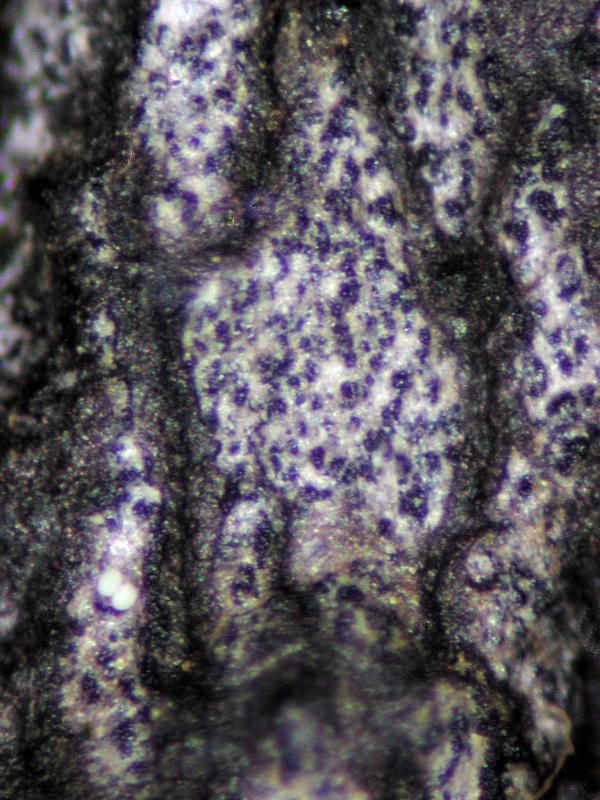
the black dots you can see on your macro photo are the ostioles.
The minute granulations are located on the white scales, you need a good hand lens with good illumination or a stereomicroscope to see them.
See the attached photo
Jacques
The minute granulations are located on the white scales, you need a good hand lens with good illumination or a stereomicroscope to see them.
See the attached photo
Jacques
Lepista Zacarias,
29-05-2017 23:30
Re : Xylaria cinerea?
Hi again,
That's different from what I thought. Presently I have no stereomicroscope or hand lens appropriate, but I will try to see it anyway.
Thanks again and regards,
zaca
That's different from what I thought. Presently I have no stereomicroscope or hand lens appropriate, but I will try to see it anyway.
Thanks again and regards,
zaca
Lepista Zacarias,
30-05-2017 00:23
Re : Xylaria cinerea?
Hi Jacques,
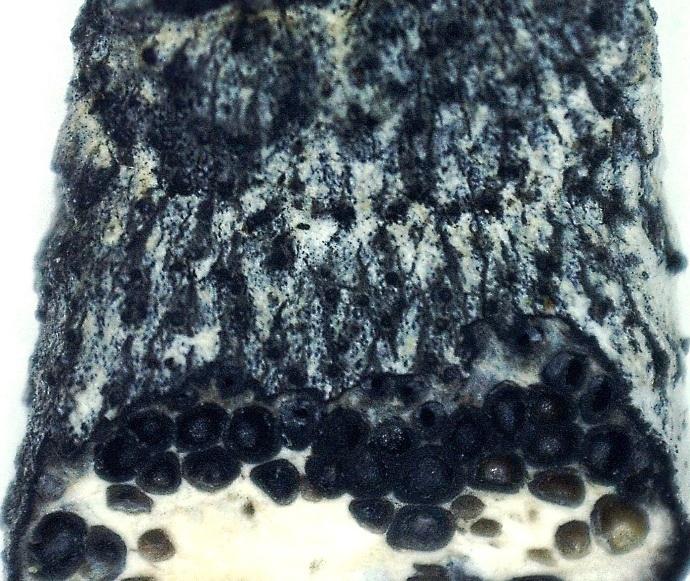
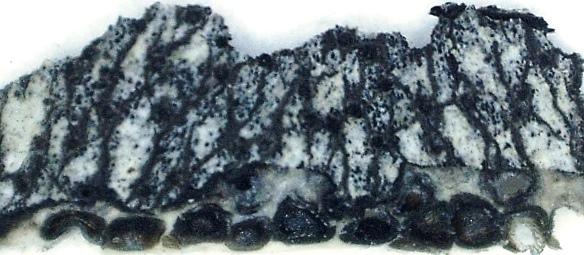
I almost forgot the existence of my bad digital microscope. I attach two photo that NOW seem to correspond to your description of the back minute granulation on the white background.
Thanks and Best regards,
zaca
I almost forgot the existence of my bad digital microscope. I attach two photo that NOW seem to correspond to your description of the back minute granulation on the white background.
Thanks and Best regards,
zaca
Jacques Fournier,
30-05-2017 10:03
Re : Xylaria cinerea?
yes it is.
Good luck,
Jacques
Good luck,
Jacques