
11-05-2026 12:32
 Bernard CLESSE
Pourriez-vous m'aider à identifier cette héloti
13-05-2026 15:26
 François Freléchoux
Bonjour,Voici une récolte faite il y a quelques j
12-05-2026 15:41
 Nicolas VAN VOOREN
Dear Ascolovers, especially interested in Pezizale
13-05-2026 12:05
 Thierry Blondelle
Bonjour à tous,J'aimerais avoir confirmation de c
10-05-2026 23:17
 Andreas Gminder
Hello,today we found in a moist steep decidous for
28-04-2026 20:07
 Lothar Krieglsteiner
... on twig in the air at standing Ceratonia siliq
27-04-2026 20:52
Lothar Krieglsteiner
Found on hanging tiwg of Olea europaea in dried-ou
11-05-2026 20:22
Lothar Krieglsteiner
on attached twig of standing Ficus caricaquite uns
29-04-2026 10:44
Lothar Krieglsteiner
growing at moist, drying-out soil at the side of a
On Thursday, during a seminar, we found a nice lichens with rosy-pink-lilac-brown apothecia in moist stage, in dry stage more ochraceous - on the bark of a living tree, likely Fraxinus, in Germany, Baden-Württemberg, Schwäbischer Wald near Gschwend-Schönberg, Osterbachtal.
I compared pictures and found Mycobilimbia sphaeroides very similar. Under the microscope I found spores of the right shape and form, but most of them are only 1-septate and not 3-5-septate as indicated in Wirth, for instance.
Is it M. sphaeroides anyway or does somebody have a better suggestion?
The paraphyses are guttulate in living stage, as are the spores. The asci seem to be fissitunicate and stain strongly blue with IKI. The first 4 micro-fotos are in water, the next two in IKI, the last two in KOH.
Regards from Lothar
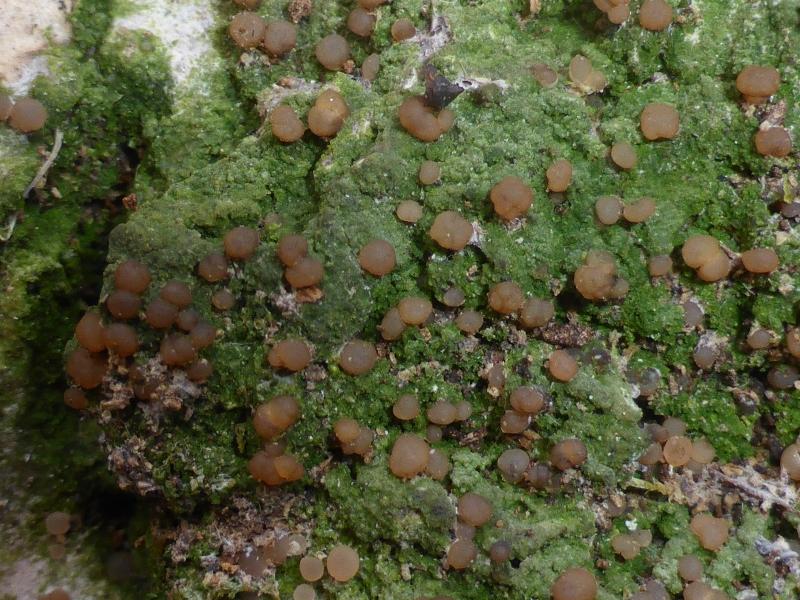
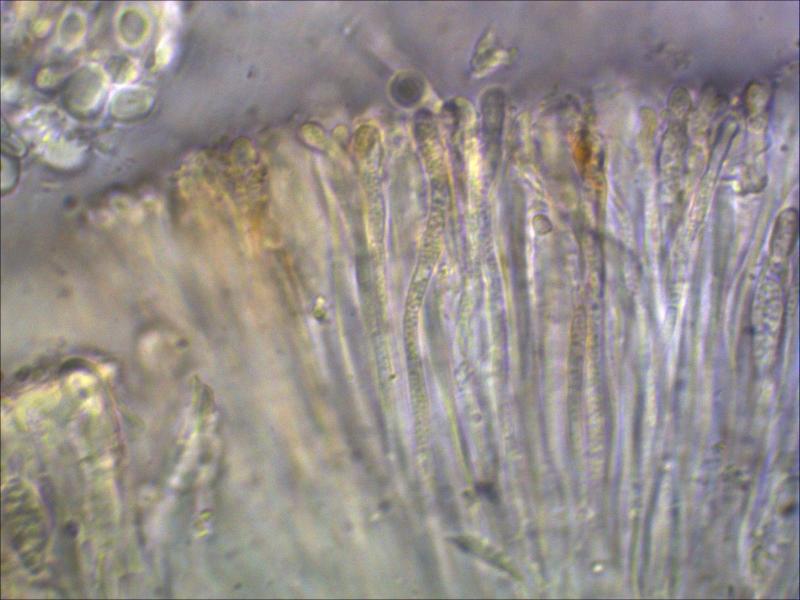
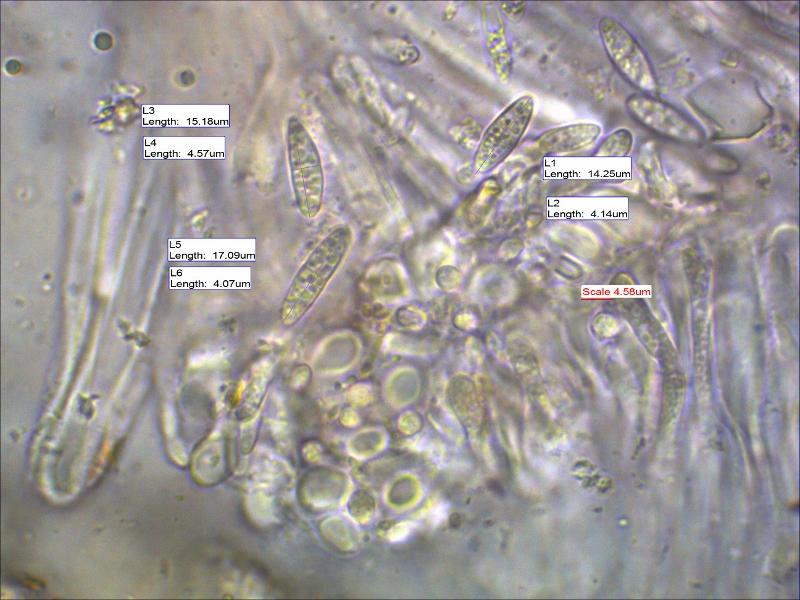
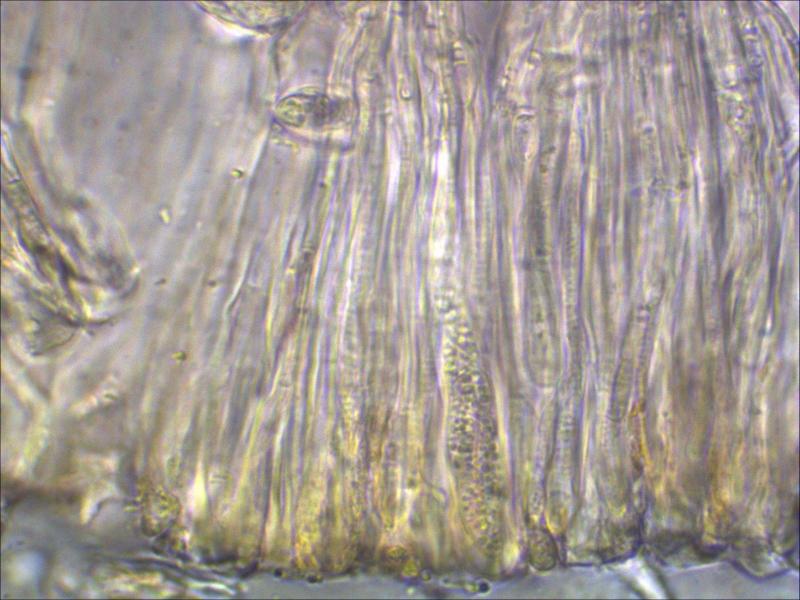
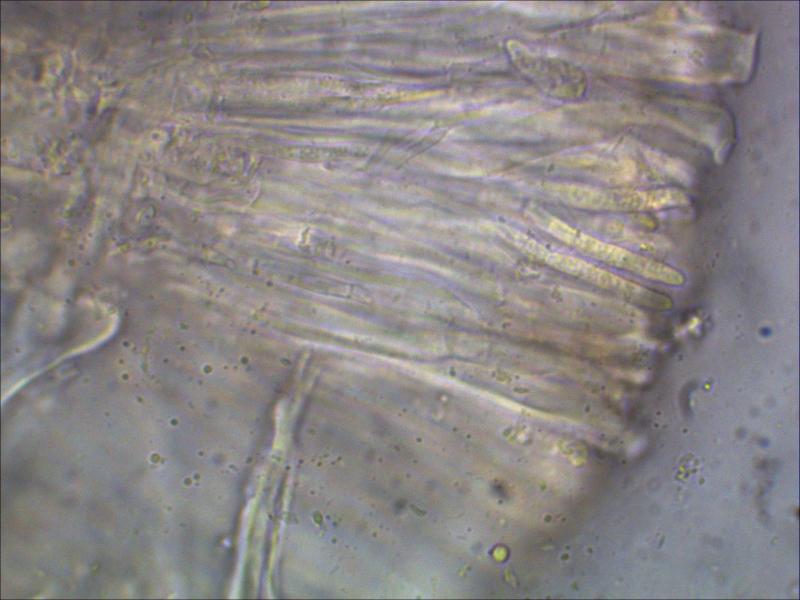
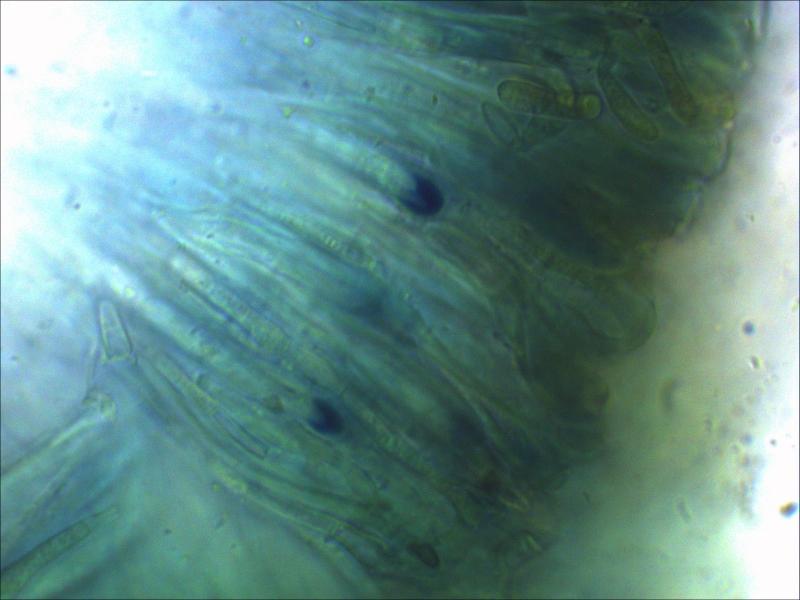
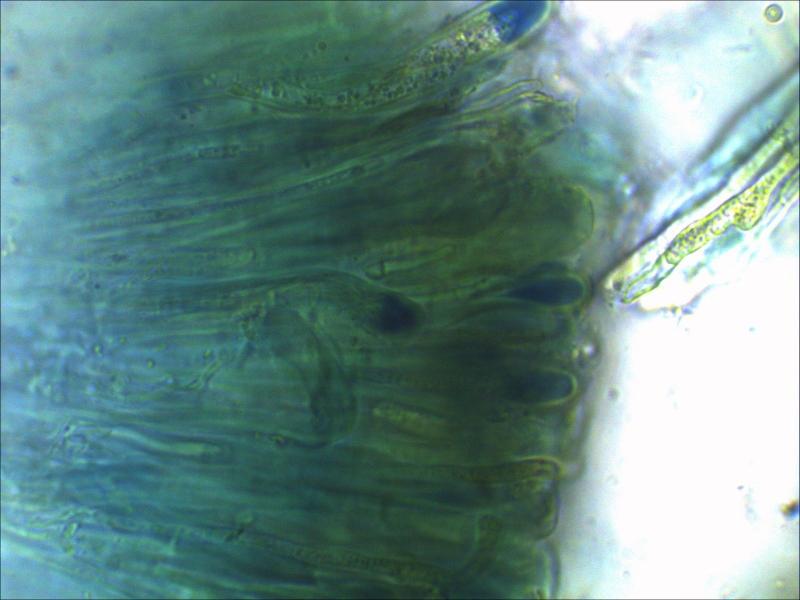
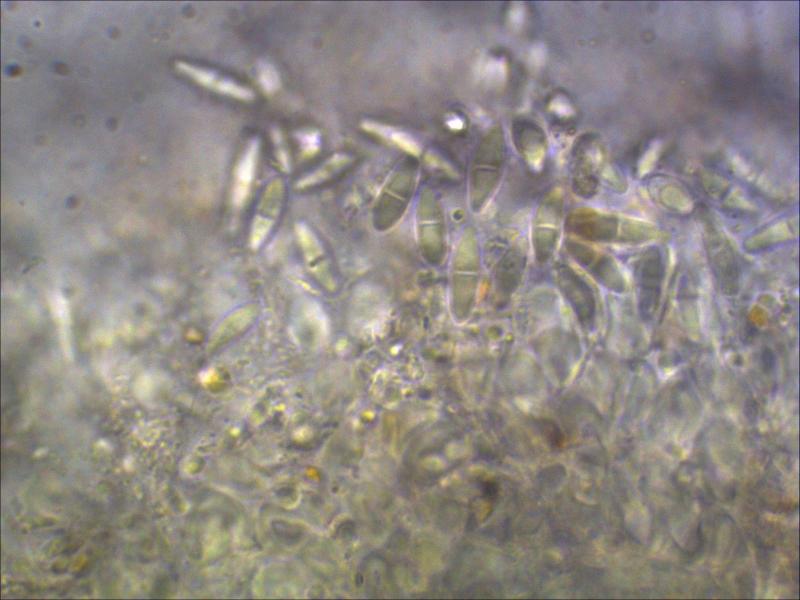
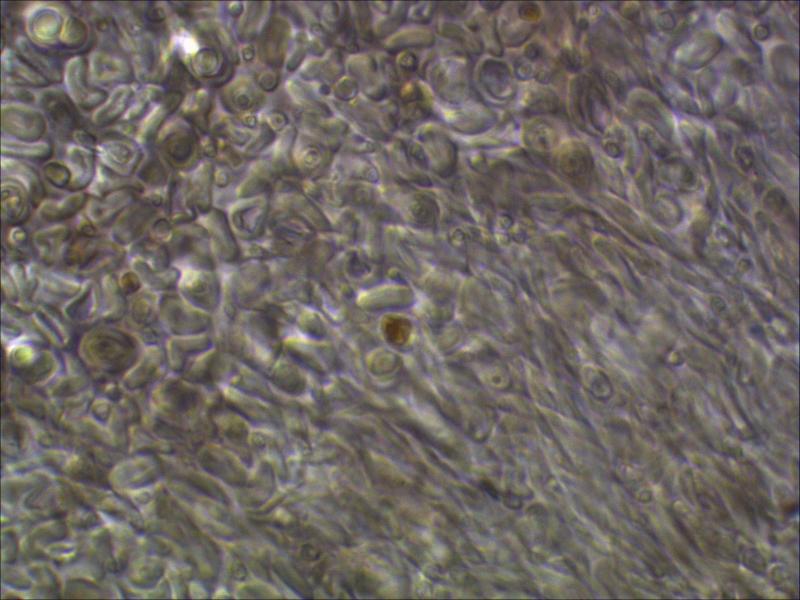
Mycobilimbia pilularis fits quite well, since the macro coincides with your description and the spores are predominantly 1-septate, fusiform-ellipsoid, with dimensions (9.5-)11.5-13.9(-17) x (3.0)4.2-4.3(-5)um. In addition, it uses to grow on Fraxinus and Quercus (maybe others).
Have a look at
http://www.irishlichens.ie/pages-lichen/l-356.html
Best regards,
zaca
Hi Zaca,
thank you very much for your rapid answer!
In Wirth (1995 - "Die Flechten Baden-Württembergs") M. pilularis (Körber) Hepp is included as a synonym in M. sphaeroides (Dickson).
In Wirth (1980 - "Flechtenflora" - UTB Ulmer) a "pilularis" is not included, and Bacidia sphaeroides (Dickson) Zahlbr. is keyed out (page 131) with "sp. 4(-6)-celled, 12-25/4-7"
I do not have further literature on this topic.
So what?
Best regards from Lothar
I just looked in Index of Fungi
Biatora sphaeroides = Mycobilimbia pilularis
Hi Zaca,
where do you take the information about predominantly 1-septate spores? I do not find this on "Irishlichens". Am I only blind? ...
Thanks and best regards, Lothar
The Lichens of Great Britain and Ireland, Smith et al., 2009, BLS;
where Bacidia sphaeroides does not appear. I'm not very familiar with these species, so I can not say anything valuable.
Good luck,
zaca
Hi Zaca,
thank you very much anyway.
I jus found another book in my library :-):
Dobson, F.S. (2011, 6th edition): Lichens. An illustrated guid to the British and Irish species.
So - there I find (on page 281): Mycobilimbia pilularis (= Biatora sphaeroides). And the text: "Spores 1-septate (with a few older spores 3-septate)."
I can find my specimen within this :-)
So I think the determination can be kept - but still I do not know what name is to be used ...
Best regards from Lothar
Best regards, Lothar