11-05-2026 12:32
 Bernard CLESSE
Pourriez-vous m'aider à identifier cette héloti
13-05-2026 15:26
 François Freléchoux
Bonjour,Voici une récolte faite il y a quelques j
12-05-2026 15:41
 Nicolas VAN VOOREN
Dear Ascolovers, especially interested in Pezizale
13-05-2026 12:05
 Thierry Blondelle
Bonjour à tous,J'aimerais avoir confirmation de c
10-05-2026 23:17
 Andreas Gminder
Hello,today we found in a moist steep decidous for
28-04-2026 20:07
 Lothar Krieglsteiner
... on twig in the air at standing Ceratonia siliq
27-04-2026 20:52
Lothar Krieglsteiner
Found on hanging tiwg of Olea europaea in dried-ou
11-05-2026 20:22
Lothar Krieglsteiner
on attached twig of standing Ficus caricaquite uns
29-04-2026 10:44
Lothar Krieglsteiner
growing at moist, drying-out soil at the side of a
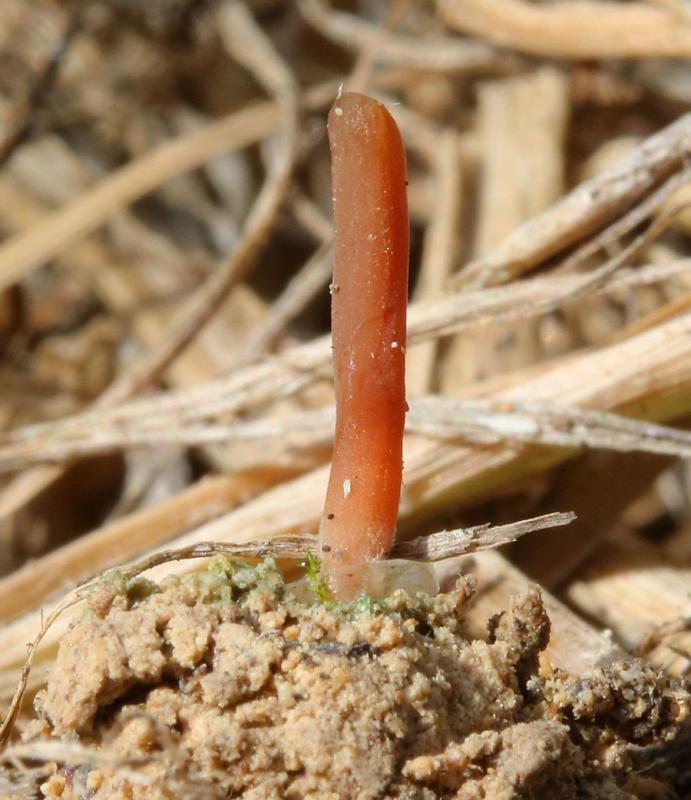
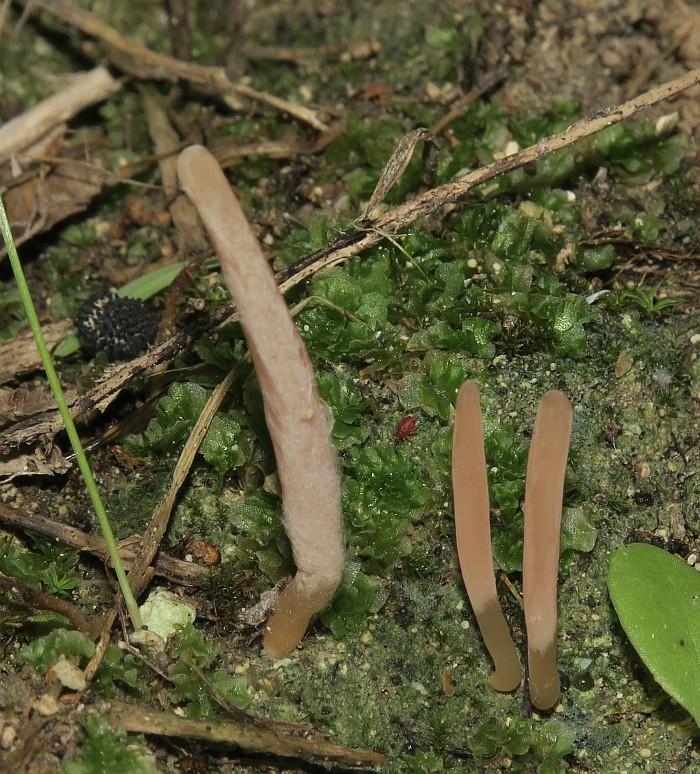
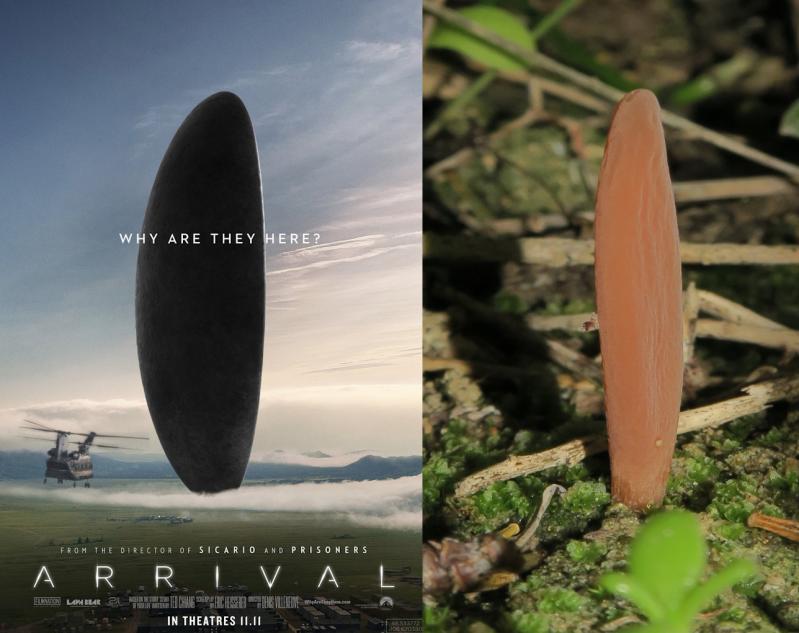
 Today I found this club-shaped unbranched ascocarp on clayey soil sprinkled with moss under Limbarda crithmioides in vegetated rocky shores (prone to sea spray) and it reminded me to Clavulinopsis sp. Young specimens have an interesting pinkish-beige colour which then turns medium tan-brown when adult.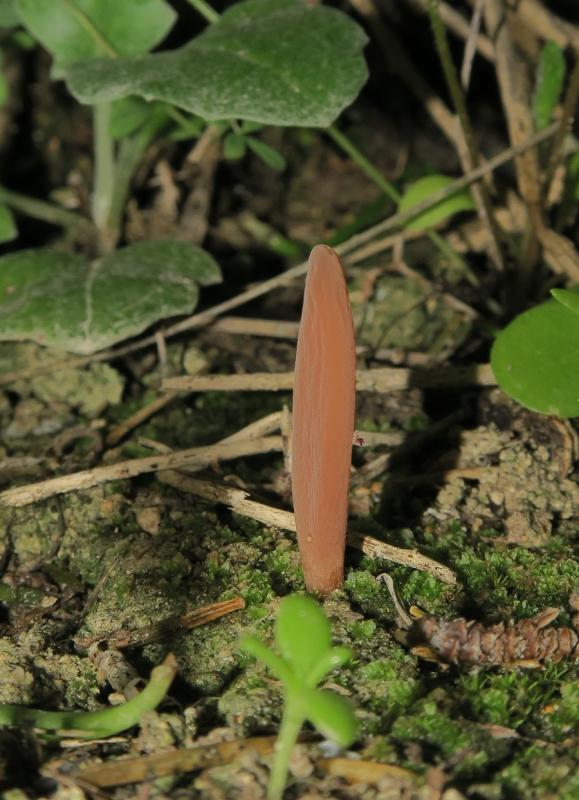
Hi Stephen,
... well - I think if you had done the microscopy already at least a part of your questions would have been solved already.
Your fungus is a basidiomycete - and Clavaria and Clavulinopsis are basidiomycete genera. Exactly: they are Agaricales with reduced cap.
I think your specimen could be Clavaria incarnata or something similar, but surely a Clavulinopsis spec. is also possible. You will know more perhaps after microscopy. Besides the spore characters it would be important to see if there are clamps at the base of the basidia, and how those clamps look like.
Best regards from Lothar ("basidiofrance") :-)
No problem, Stephen - I think such small mistakes can happen to (almost) everybody :-)
Best regards, Lothar
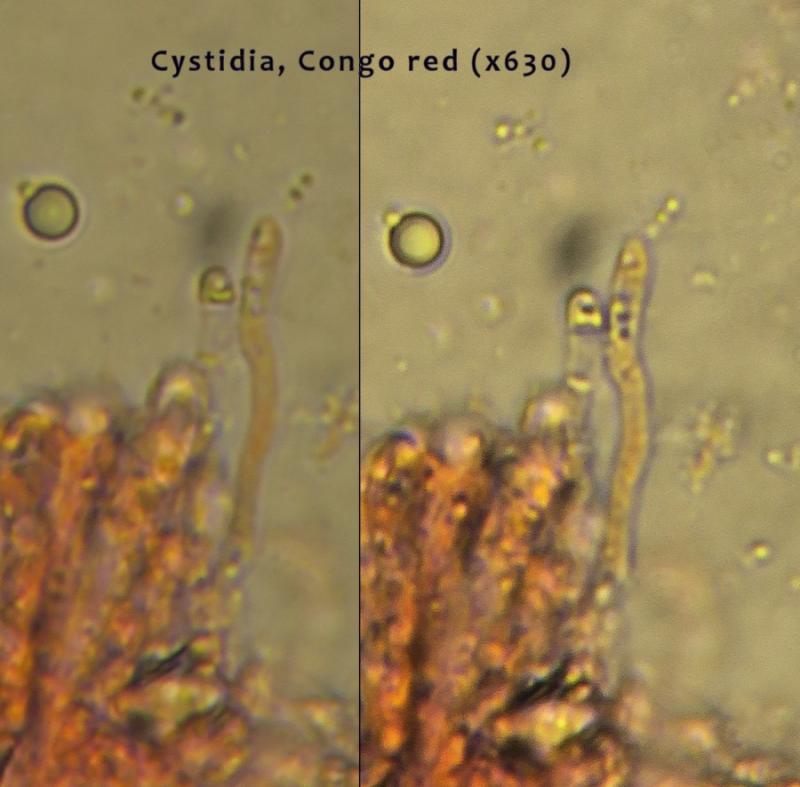
Amongst the unbranched Clavarias, according to a key I followed, I got also into Clavaria incarnata, but I dont know if there are Mediterranean vicariants to it. The colours (including the greyish band at the stipe), the shape and size of the basidioma and the spores matched... the habitat was moss-covered clayey soil so I think half thumb up too. Not much else to examine (Cystidia absent...).
Apologies for posting carelessly this fungus here , but at least I owed my conclusion.
Hi Stephen,
I do not know about such mediterranean vicariants. So I would call the collectionClavaria incarnata for the first at least :-)
Best regards from Lothar
Lüderitz & Böhning also report this species from Schleswig-Holstein: http://www.pilze-schleswig-holstein.de/publikationen/Hotspot%20Fehmarn.pdf
... and back to ascomycetes. :-)
Best wishes,
Gernot
Many thanks also to Giernot for this paper. I am quite convinced that C. messampica is a better taxon for the Mediteranean region, but it seams that the closely related species with the C. incarnata complex can be concluded by DNA sequencing.
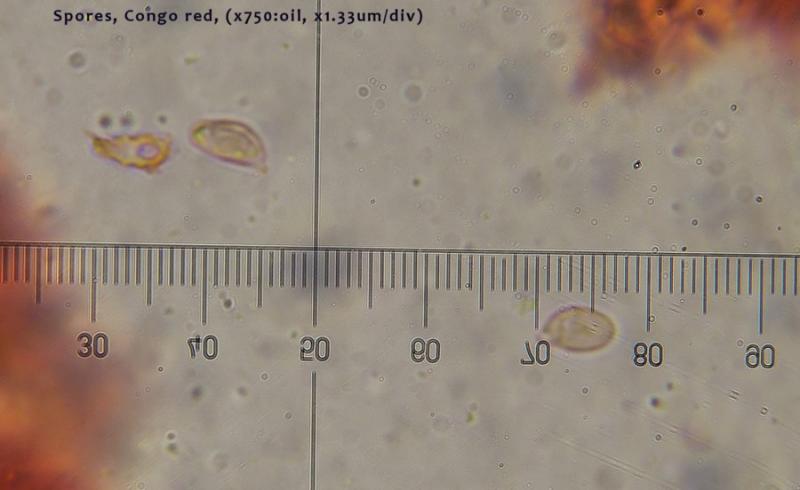
I have compared the microscopy and it looks very close. I've finally observed some cystidia and basidia and they match. I couldn't really see the tiny forked-structure at the base of the basidia, but I think that's now not determinant seeing that the other characters match. Spores 6.5-8.5um (-9.5um) and same lachrymoid shape. I could find only one difference according to the text of the paper pinned in previous post, where the authors claim the exsiccate becomes paler, while in my case, specimens became darker, like pinkish medium brown when dried out. Another diffirence, if significant, and also different from C. incanata is that all specimens observed (6) were less than 3cm, while the other species are over 5cm, up to 8cm (incarnata) and 13cm (messapica).
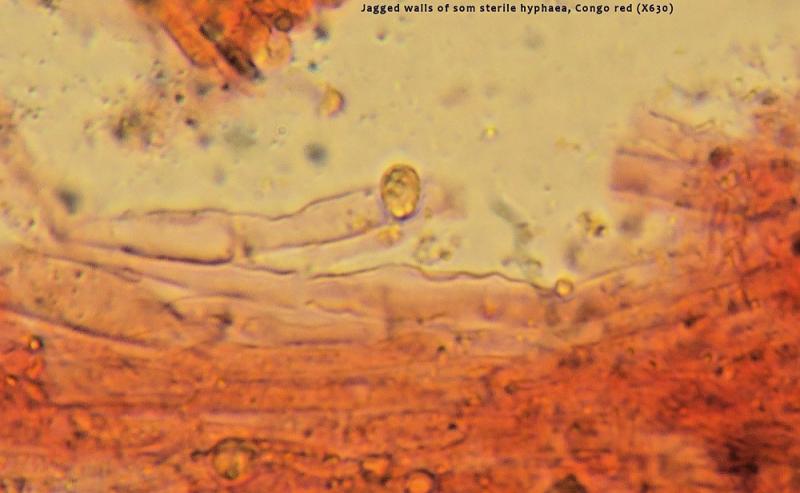
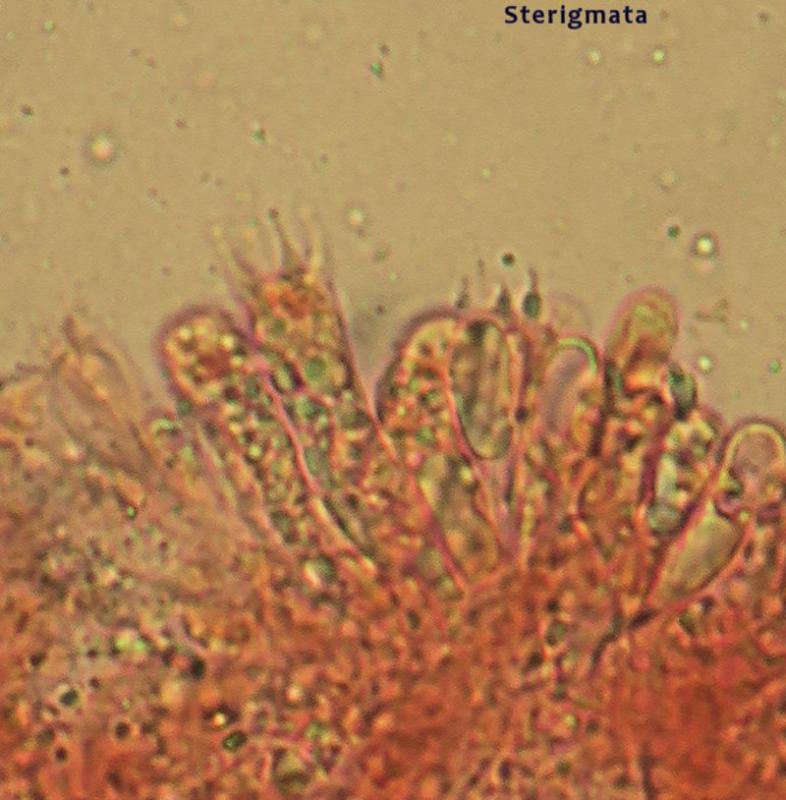
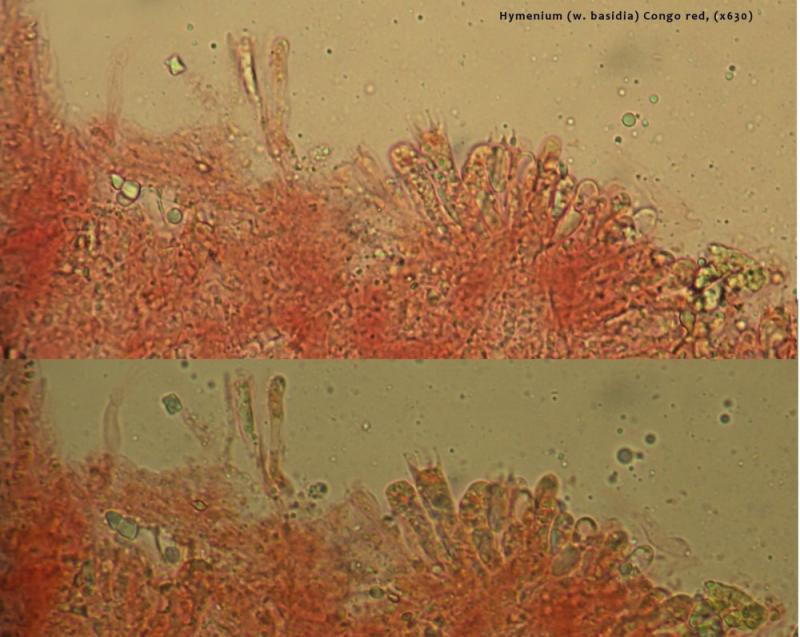
I leave you with some images, they are not so good because the cells do not attain the stain so well and are very hyaline.