
10-05-2026 23:17
 Andreas Gminder
Hello,today we found in a moist steep decidous for
14-05-2026 05:36
Ethan CrensonHi all, I haven't paid much attention to Lachnu
16-03-2011 14:31
roman vargas albertoHi. I would like some opinion about this Peziza
11-05-2026 12:32
 Bernard CLESSE
Pourriez-vous m'aider à identifier cette héloti
13-05-2026 15:26
 François Freléchoux
Bonjour,Voici une récolte faite il y a quelques j
12-05-2026 15:41
 Nicolas VAN VOOREN
Dear Ascolovers, especially interested in Pezizale
13-05-2026 12:05
 Thierry Blondelle
Bonjour à tous,J'aimerais avoir confirmation de c
28-04-2026 20:07
 Lothar Krieglsteiner
... on twig in the air at standing Ceratonia siliq
27-04-2026 20:52
Lothar Krieglsteiner
Found on hanging tiwg of Olea europaea in dried-ou
11-05-2026 20:22
Lothar Krieglsteiner
on attached twig of standing Ficus caricaquite uns
 Hi to everybody
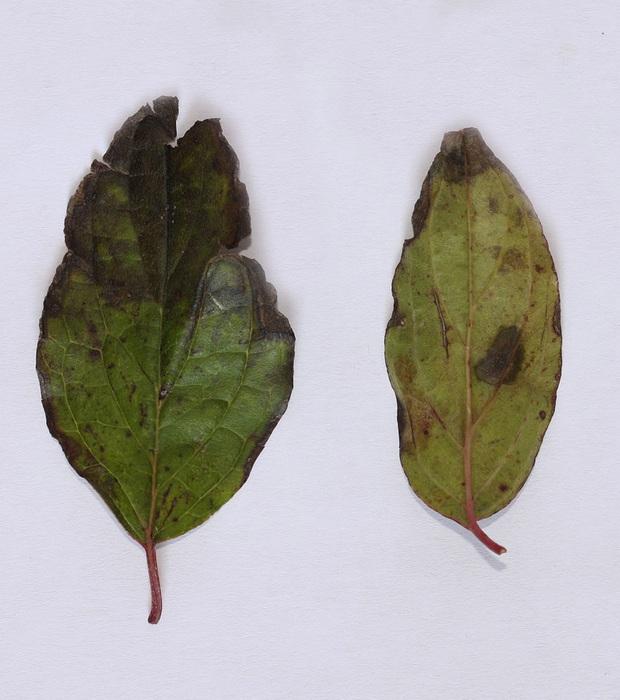
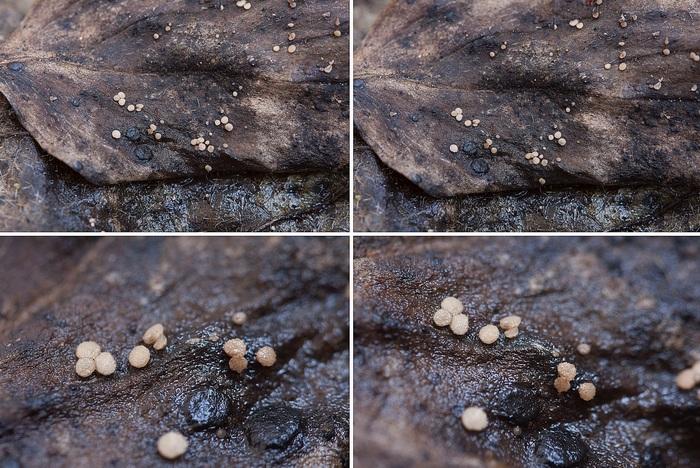
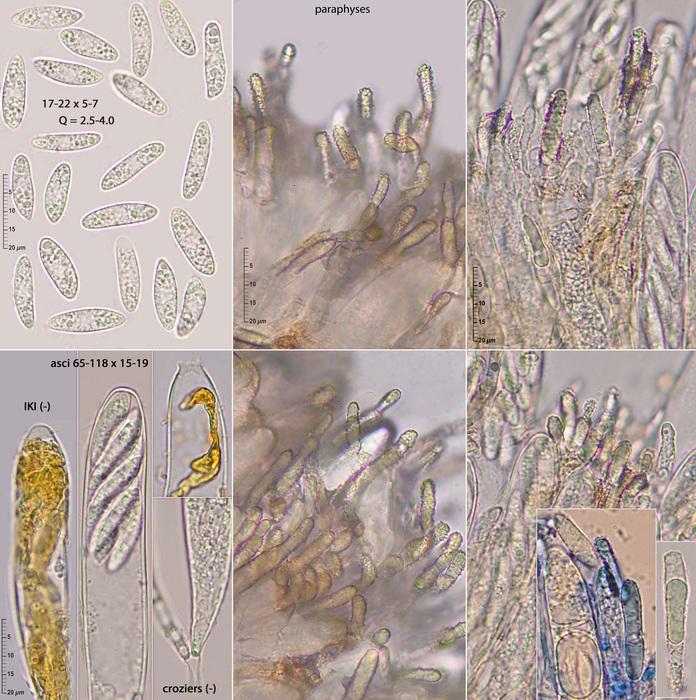
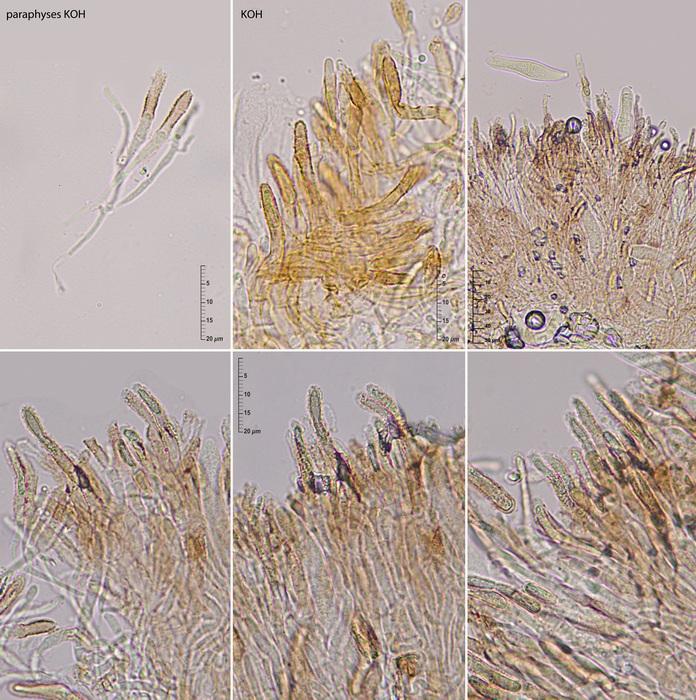
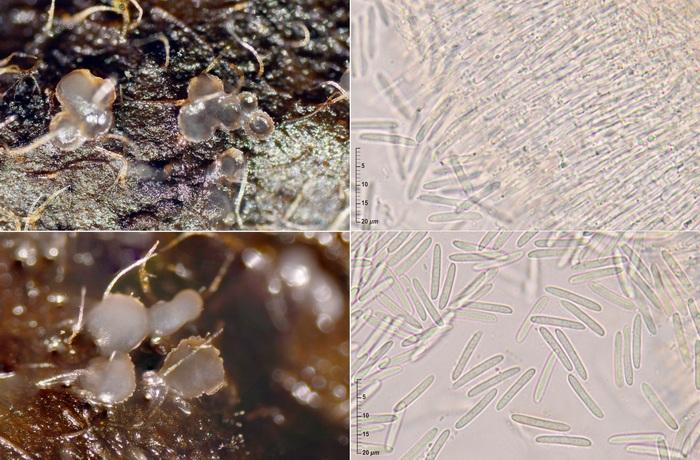
Some time ago my friend M. Tapia, from Navarra (NE of Spain) sent me this strange, gregarious, turbinate, 0.2-0.5 mm in diam., pale grayish-brownish with brownish pruinose hymenium surface by the existence of a brownish, verruculose, granulate, matter that not dissolves in KOH, growing on old leaves of Cornus sanguinea.
The apothecia seems to be glabrous, and many leaves have hyaline or translucent gelatinous conidiomata perhaps belonging to his asexual morph.
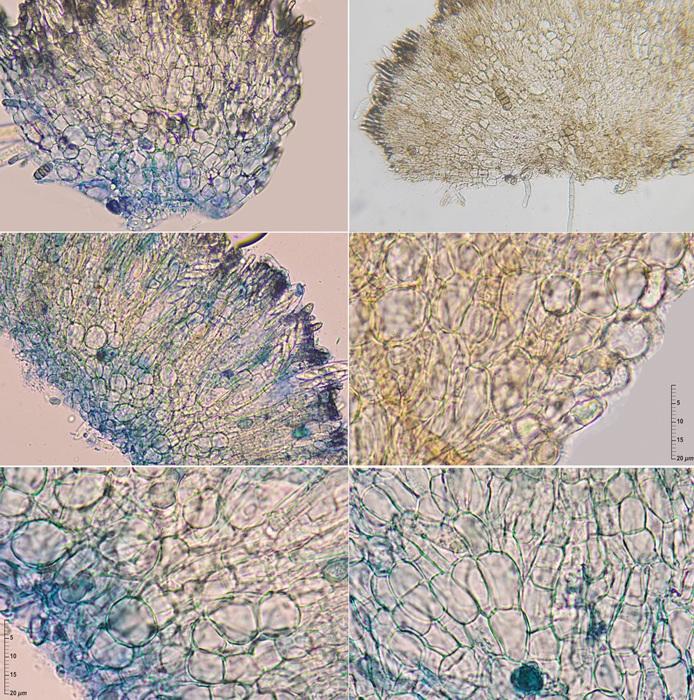
The asci are IKI negative, with no croziers and the ascospores do not turn darker. I could see that some paraphyses have VBs that stain in cresyl blue. Excipulum made by prismatical to roundish cells.
Some idea will be wellcome
Thanks again
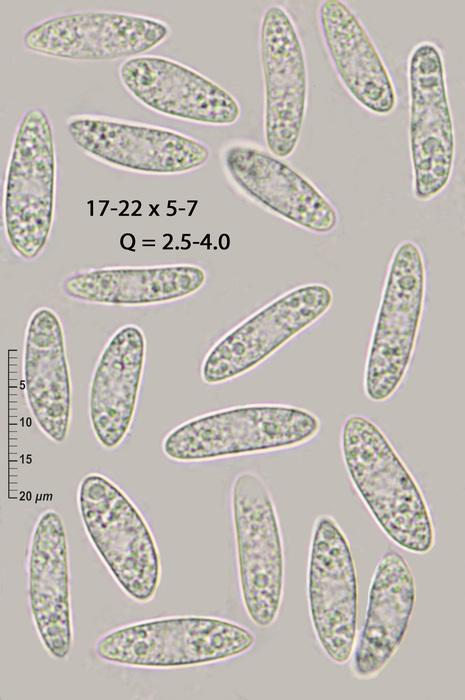
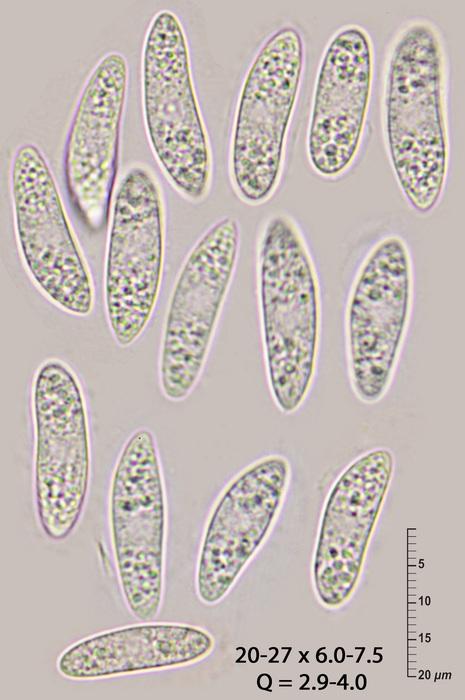

I have nothing in my database on Cornus leaves with such spore size.
Only the anamorph reminds me of a Pilidium.
Thanks again
PD. If you want, I could send you the images at higher resolution
Hi Enrique,
yes - as Zotto said a very interesting fungus. It reminds me of a Trochila or something like this, but if Zotto is quiet about the genus, I should be quiet, too ....
Could you add the finding-date? It could be interesting for other people to look for this fungus - as Cornus sanguinea is a very widespread host.
Thanks and best regards from Lothar
P.S. Rehm (1896) describes a Naevia carneopallida (Rob.) growing on Cornus sanguinea-leaves. Unfortunately, the data do not fit at all ...

The paraphyses reminded me of a Coronellaria species but I think that ENrique you tried CRB and that it does not produce the same reaction .
Bravo anyway (again)
Amitiés
Michel
Coronellaria is a nice idea, but I am used to see multiguttulate contents in that genus.
Zotto
Coronellaria is a nice idea, but the paraphyses are not multiguttulate and lacks an hemiamyloid apical apparatus in the asci. The collection was made on novemebre 17 2016. This collection should be sequenzad, but my study was made with somewhat old specimens. Maybe on next year Mikel will be able to collect newly this fungus.
Thanks to all.