
11-05-2026 12:32
 Bernard CLESSE
Pourriez-vous m'aider à identifier cette héloti
13-05-2026 15:26
 François Freléchoux
Bonjour,Voici une récolte faite il y a quelques j
12-05-2026 15:41
 Nicolas VAN VOOREN
Dear Ascolovers, especially interested in Pezizale
13-05-2026 12:05
 Thierry Blondelle
Bonjour à tous,J'aimerais avoir confirmation de c
10-05-2026 23:17
 Andreas Gminder
Hello,today we found in a moist steep decidous for
28-04-2026 20:07
 Lothar Krieglsteiner
... on twig in the air at standing Ceratonia siliq
27-04-2026 20:52
Lothar Krieglsteiner
Found on hanging tiwg of Olea europaea in dried-ou
11-05-2026 20:22
Lothar Krieglsteiner
on attached twig of standing Ficus caricaquite uns
29-04-2026 10:44
Lothar Krieglsteiner
growing at moist, drying-out soil at the side of a
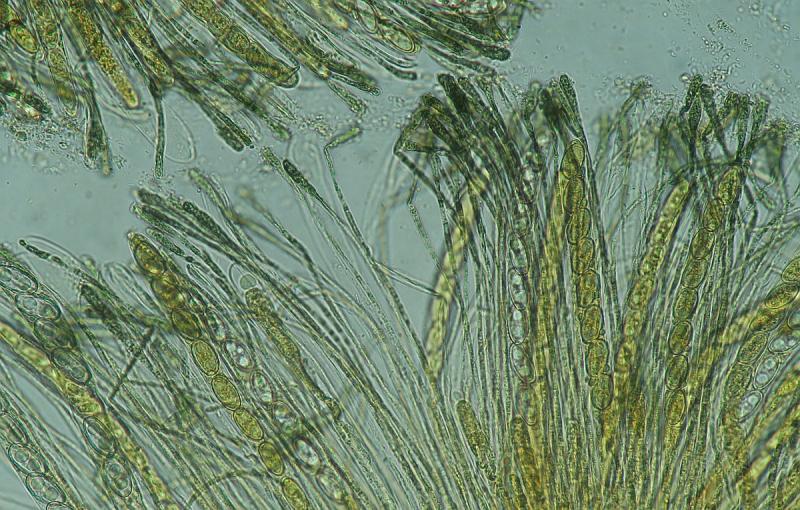
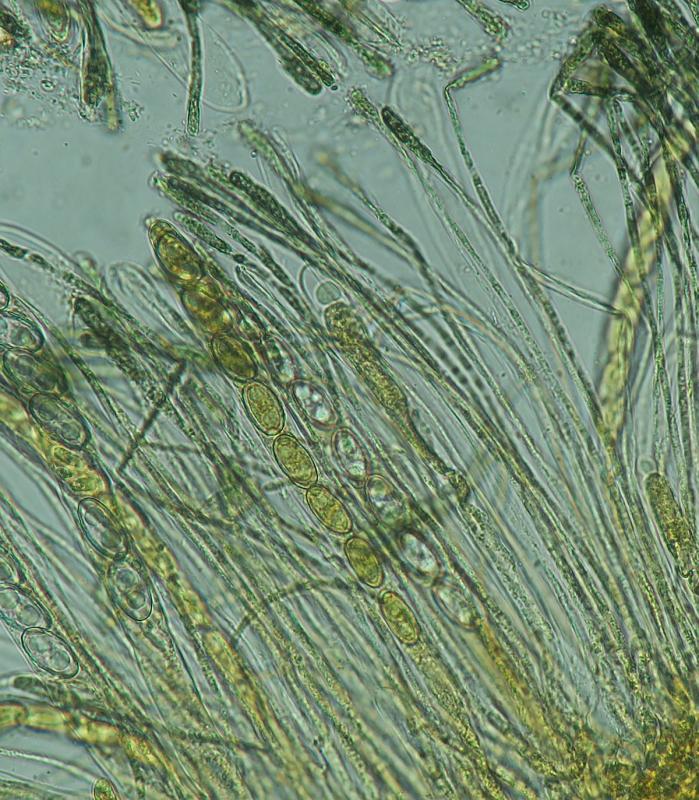
 Hi, I believe this asco is Aleuria aurantia but there are two characters which I have a little doubt. The size of the ascomata are pretty small (5-10mm) and more importantly, the spores lack the reticulate surface, they are just smooth. These were found on clayey calcareous soil with burnt stems of Arundo and debris.
Micro characters:
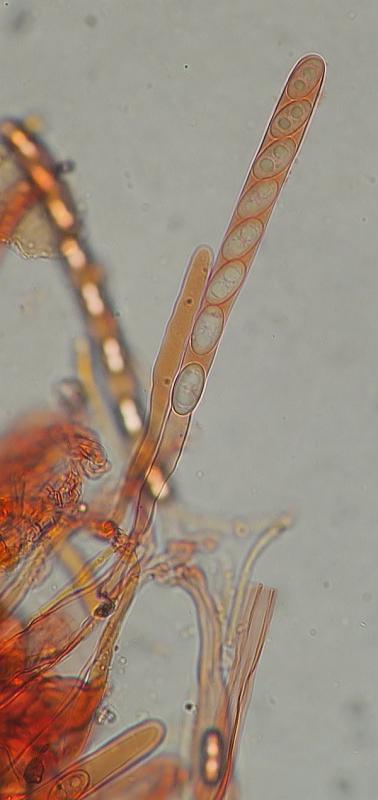
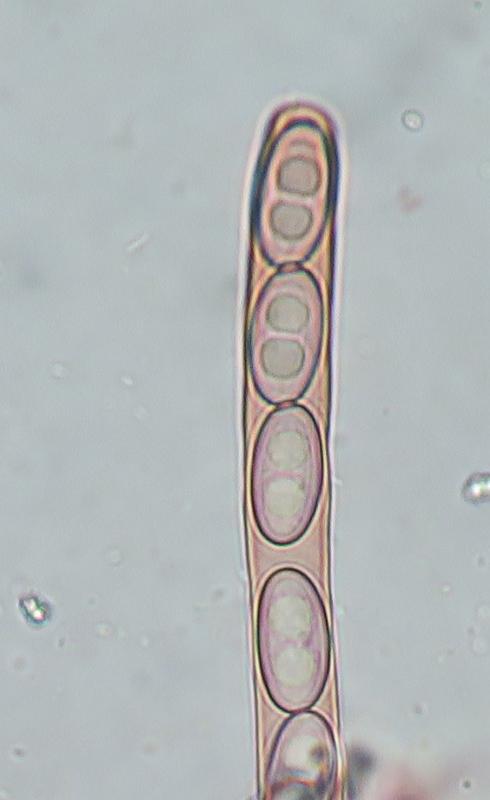
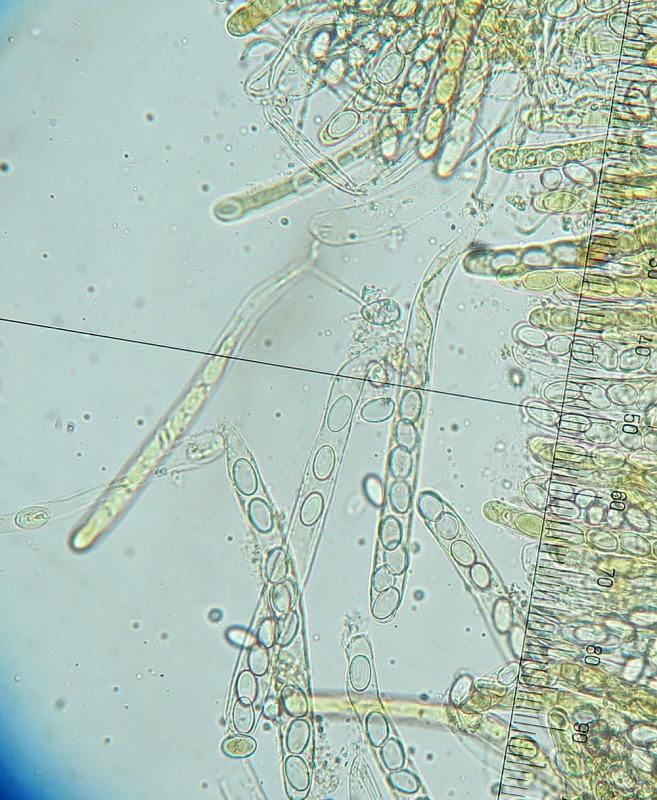
Ascum
Ascospore release: Apical orifice without operculum
Shape: Cylindrical, slender, rounded obtuse apex, narrowing gradually towards the base which often exhibits an abrupt curviture at the base.
No. of Spores: 8
Operculum: Not observed
Tunic (Wall): Uni-tunicate
Ascum length (range): 142 - 205 µm
Ascum length (mean): 168 µm
Ascum width (range): 10 - 12 µm
Ascum width (mean): 11.1 µm
Ascum L:W ratio: 15.1
Iodine reaction (J +/J -): J -ve
Orifice: Observed, shallow.
Remarks
Spore
Spore length (range): 14.68 - 18.82 µm
Spore length (mean): 17.2 µm
Spore width (range): 7.0 - 9.3 µm
Spore width (mean): 8.5 µm
Spore Q factor (range): 1.79 - 2.19 µm
Spore Q factor (mean): 1.98
Spore shape : Fusoid-elliptical, widest at the centre with two identical rounded poles
Spore septa: Aseptate
Spore surface: Appears smooth
Oil bodies: Two, identical spherical oil bodies, located close to each other at the centre, sometimes seen with a tiny curved apiculum
Remarks: Spores arranged obliquely
Excipulum (medullary): Spherical to obtusely angular hyphae, 25-45 µm wide
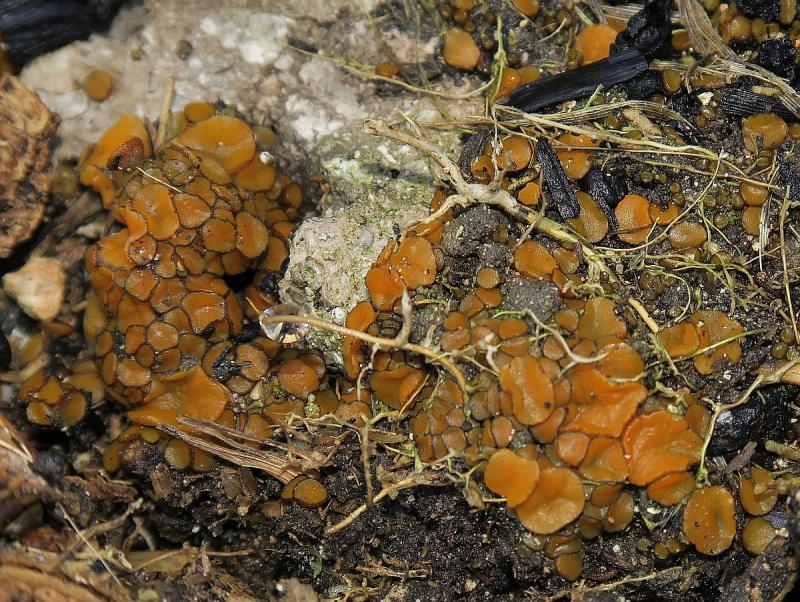
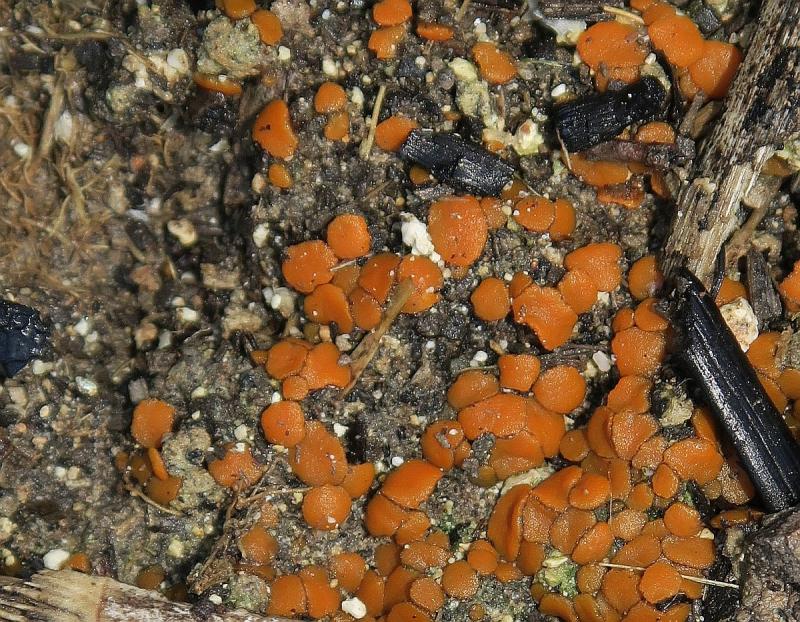
Hi Stephen,
surely this is not Aleuria aurantia.
First: the apothecia have dark margins - if Aleuria, then one could think of A. cornubiensis (Melastiza chateri)
Second: the spores seem to be fully smooth, with large oil drops.
Third: you yourself write of a burnt substrate.
This makes me think of a species of Anthracobia.
Let one of the more competent persons say something about the species.
Best regards from Lothar
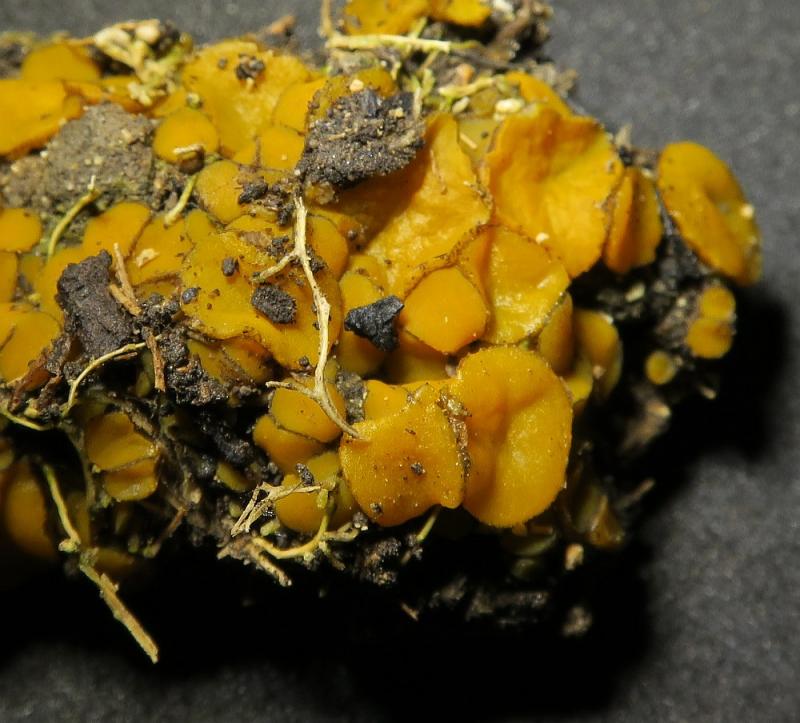
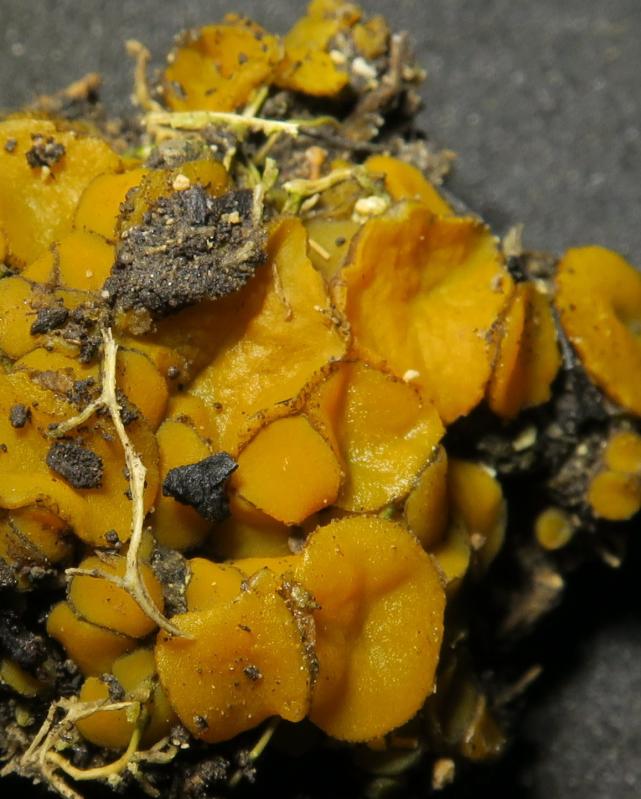
http://www.mycodb.fr/fiche.php?genre=Anthracobia&espece=nitida&numphoto=7&source=list&filter=&numfiche=255
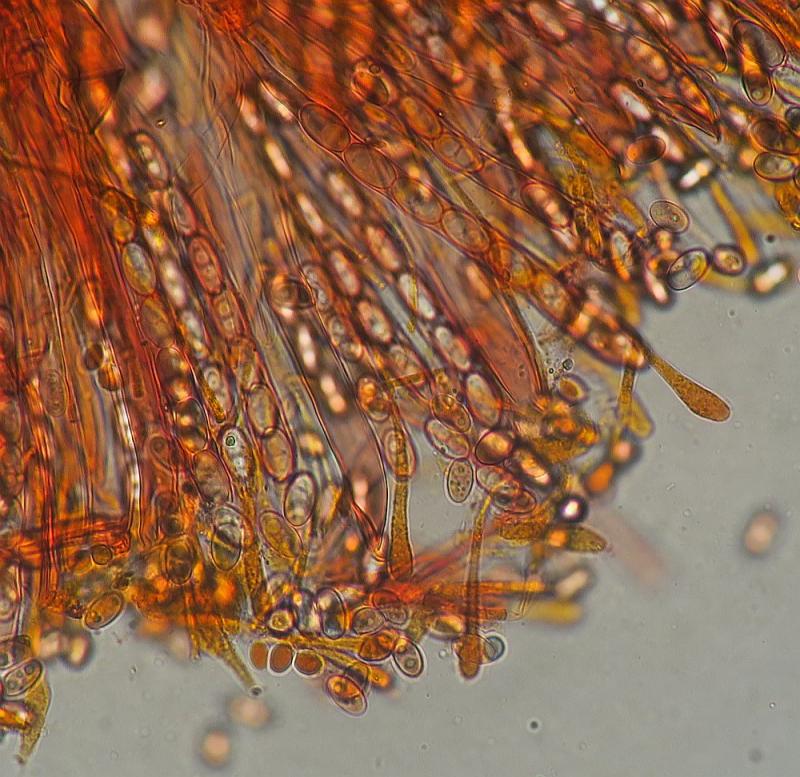
According the account above, A. nitida has the same spore size (16)17-18(19) and the characteristic orangish deposits on the paraphysis apices, same as this specimen. See photo attached.
I would label this Anthrocobia nitida unless there are other species to be considered and outside the key I consulted.
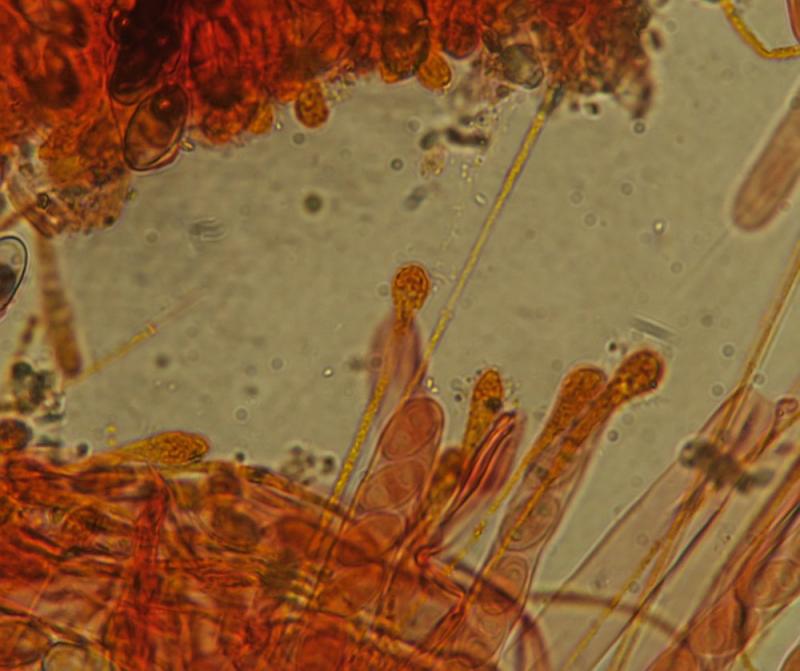

there is a key to carbonicolous discomycetes by R.Dougoud here: http://ascomycete.org/en-us/taxonomy.aspx
The hairs may be very short (just 30-40 um) and they appear on your macrophoto as the brown "dots" near margin. The same is on the first photo from the link you've posted. Unfortunately, the three yellow to orange Anthracobias with ellipsoid spores are best distinguished by their hair size. Spore size overlaps a lot.
Viktorie
I jumped in for Anthrocobia p.p. within the key and I think this species is between A. nitida and A. macrocystis which are differentiated, as you said, by the length of the hair and the size of the spores. My 'smaller' spores favours A. nitida but the hairs would confirm 100%.
Thanks Viktorie