11-05-2026 12:32
 Bernard CLESSE
Pourriez-vous m'aider à identifier cette héloti
13-05-2026 15:26
 François Freléchoux
Bonjour,Voici une récolte faite il y a quelques j
12-05-2026 15:41
 Nicolas VAN VOOREN
Dear Ascolovers, especially interested in Pezizale
13-05-2026 12:05
 Thierry Blondelle
Bonjour à tous,J'aimerais avoir confirmation de c
10-05-2026 23:17
 Andreas Gminder
Hello,today we found in a moist steep decidous for
28-04-2026 20:07
 Lothar Krieglsteiner
... on twig in the air at standing Ceratonia siliq
27-04-2026 20:52
Lothar Krieglsteiner
Found on hanging tiwg of Olea europaea in dried-ou
11-05-2026 20:22
Lothar Krieglsteiner
on attached twig of standing Ficus caricaquite uns
29-04-2026 10:44
Lothar Krieglsteiner
growing at moist, drying-out soil at the side of a
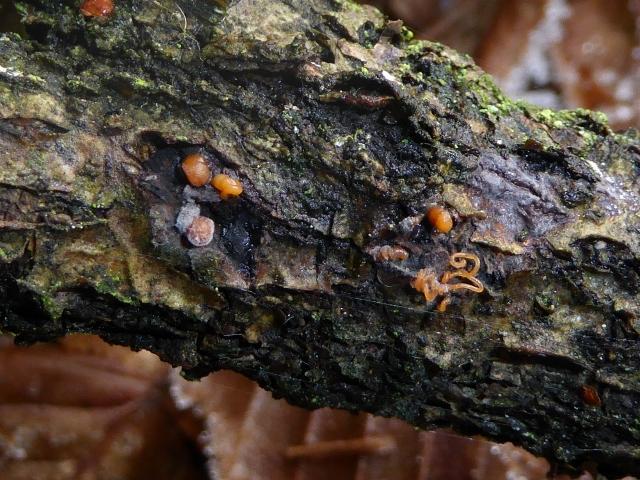
In the Eifel National Park I also found this anamorph - it looks like Libertella faginea to me, but it grew on Quercus. I do not find an Eutypella (Libertella)-species growing on Quercus. What do you say?
Best regards from Lothar
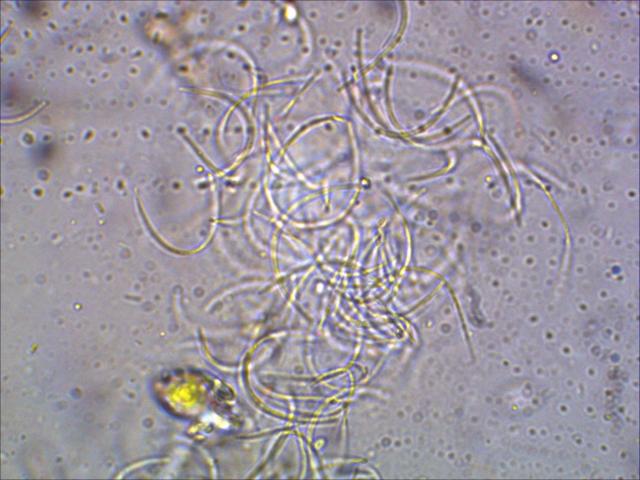
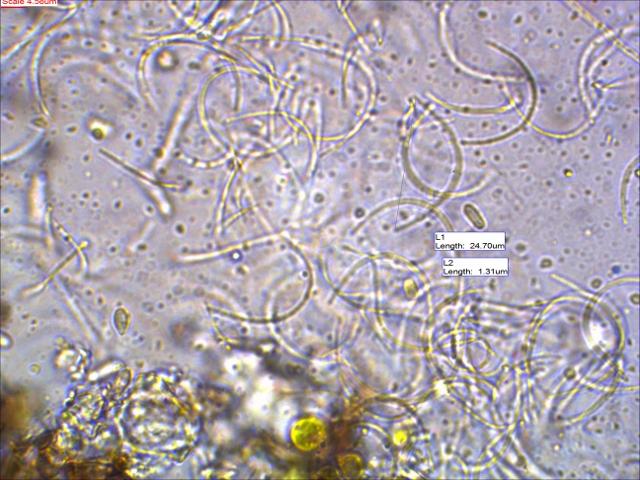
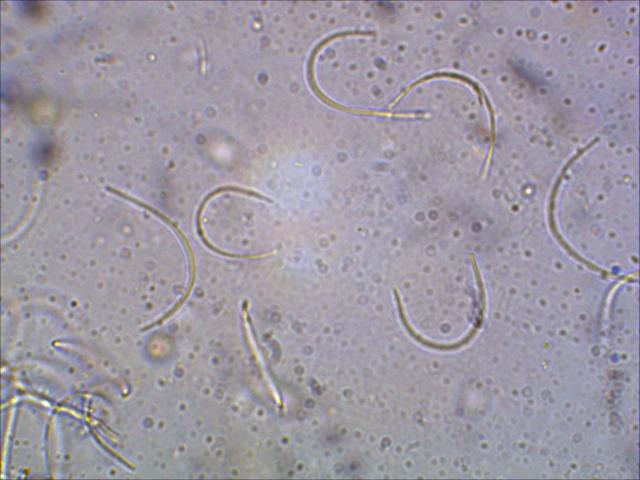

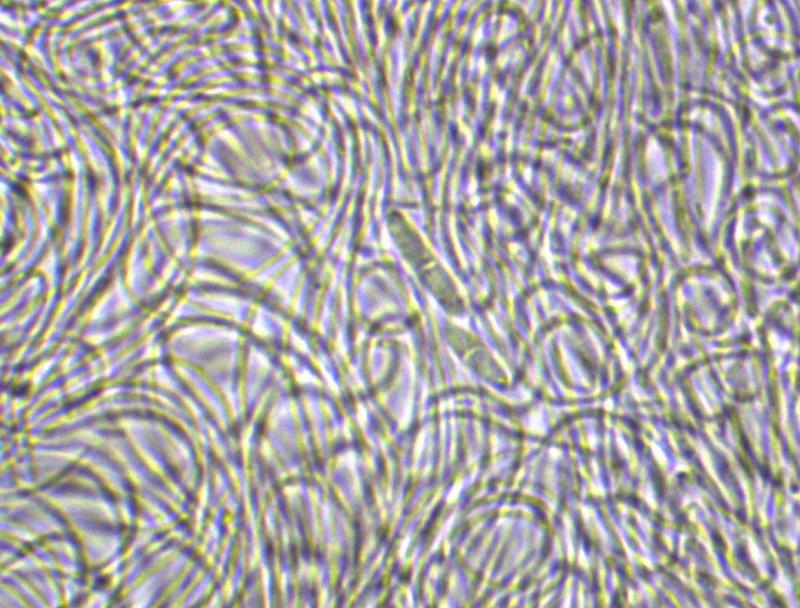
Did you check Phomopsis? I've noticed some samples might only have alpha-conidia's, so why not some with beta-conidia's only? It seems to me I see a single alpha-conidia.
Maybe put another conidiomata under the microscope, one never knows.
Proportions of alpha and beta conidia's are maybe dependant of climatic conditions of the period of sampling. It's the hypothesis I make after following some stations.
Cheers - LUC.
Hi Luc,
thank you very much for your proposal - and: you seem to be right.
Only today I found the time to put another piece of the fungus under the lens. First I (again) thought there would be only one sort of conidia - millions of the long, curved B-conidia.
But after some search I found few (only at about 5 or 6 places in my slide) other conidia that could perhaps be the A-conidia of the Phomopsis. They measure about 10/2 µm.
Phomopsis belongs to Diaporthe - then on Quercus to D. leiphaemia? What do you think?
Best regards from Lothar