

30-05-2026 21:12
Philippe PELLICIERSur branche de mélèze (Larix) près de la neige,
31-05-2026 10:35
Hulda Caroline HolteHello,I collected this species growing on a rather
25-05-2026 16:35
 Bernard CLESSE
Bonjour à toutes et tous,J'ai trouvé récemment,
29-05-2026 15:35
daniel FERREBonjour à tous,Je voudrais votre aide pour cette
28-05-2026 16:15
James MitchellHello,Does anyone have the original publication of
28-05-2026 11:06
Thomas Læssøehttps://svampe.databasen.org/observations/10596750
23-05-2026 11:44
 Charles Grapinet
Hello, I am having trouble identifying this copro
25-05-2026 16:44
François BartholomeeusenHi forum members,During an excursion organised by
26-05-2026 21:25
Dirk GerstnerHello everyone, I'm completely stumped by this li

Hi again
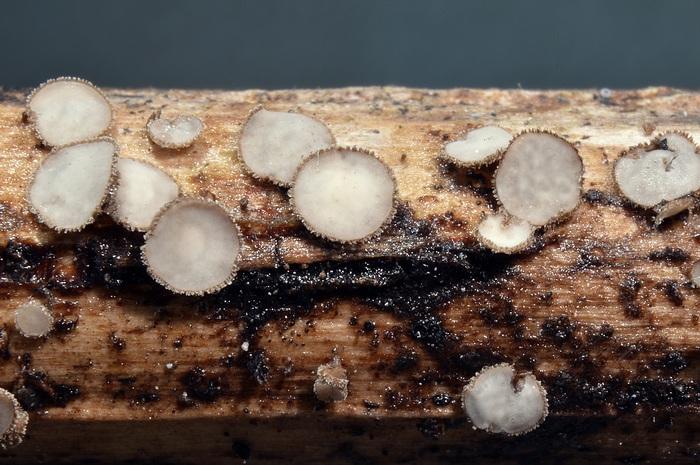
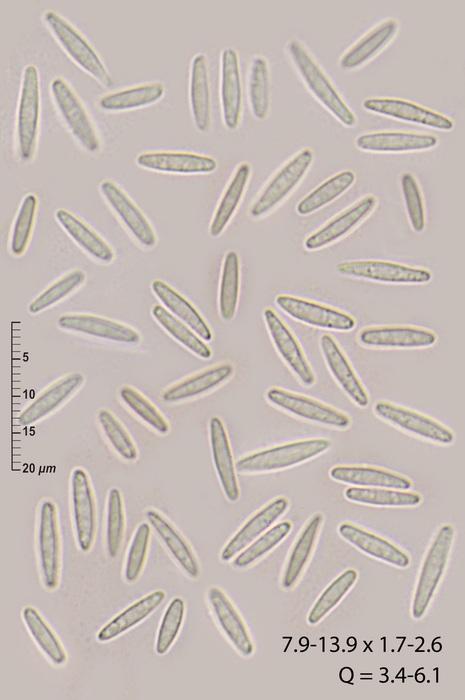
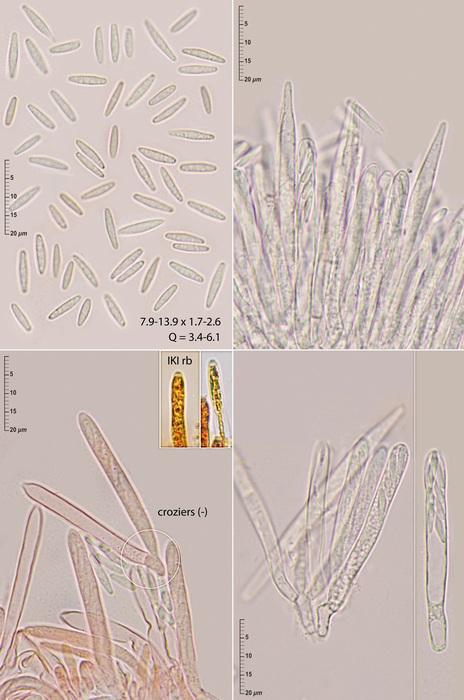
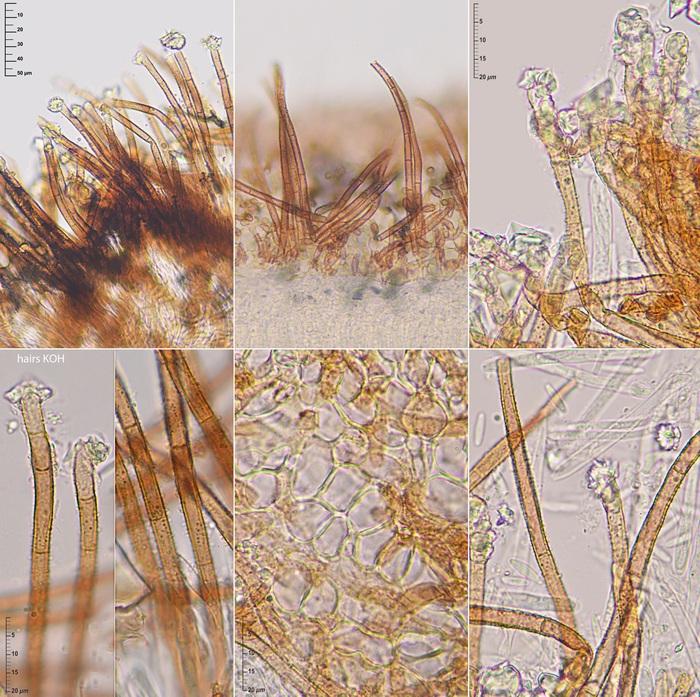
The brownish hairs of these narrowly sessile apothecia are sepate, granulate, with crystal drusses at their tips, so I think it could belong to the genus Brunnipila. But I don't find a taxon that fits well with my collection, because the asci are IKI rb and don't have croziers at their bases. The paraphyses are broadly lanceolate and exceed the hymenium level.
This fungus grew on subalpine environnement (1700 m) on a decorticated branch of an ericaceous plant, maybe Geista florida.
Have you some ides for me?
Thanks again

But there is a sample that has H-:
Brunnipila aff. calyculiformis, 20.VI.2013, by Ruben Martinez Gil, on twigs and leaves of Quercus ilex at 1200 masl in northern Spain, in La Rioja. Ap. up to 1.5 mm, spores 8-12 x 1.5-2.5 µm. Hairs 150-175 µm long.
maybe it is the same.
Forgot to mention B. latebricola on Rhododendron which likewise is H+.
Also a sample as calyculiformis from Collado La Farrapona, on Vitis idaea (?, as Erica), by Jens Petersen was H+.
Hi Zotto
Certainly Ruben's collection is very close...
Many thanks