
12-04-2026 12:22
 William Slosse
In a dune grassland in Oostduinkerke (Belgium), on
11-04-2026 15:45
 Zuzana Sochorová (Egertová)
Please, could anyone send me this paper?Moyne G.,
11-04-2026 13:34
Artem PtukhaHello, I am seeking assistance with the identific

11-04-2026 10:19
 Michel Hairaud
Chers amis d'Ascofrance , voici une très bonne no
11-04-2026 10:10
Michel Hairaud
Dear Ascofrance members, here is some very good ne
10-04-2026 23:22
Gernot FriebesHi,ascospores are 1- to 3-septate, approximately
10-04-2026 15:51
William Slosse
Hello everyone, On 08/04/26, I found a growth sit
09-04-2026 15:25
Jac GelderblomOn bare soil between mosses Ifound an asco I deter
09-04-2026 13:55
Thomas Læssøehttps://svampe.databasen.org/observations/10589176
Gelatinous yellow disco with Bulbillomyces
Steve Clements,
11-07-2016 11:24
On a trouvé cette petite disco gélatineuse avec Bulbillomyces sur un bâton dans un fossé. Qu'est-ce que c'est? Je n'ai aucune idée!
Hi,
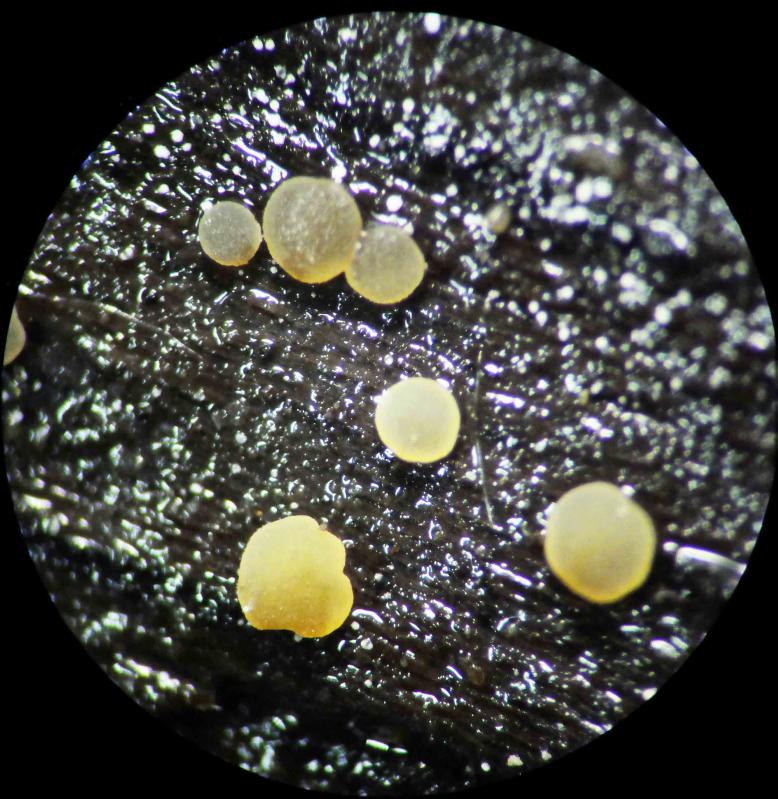
This little disco was found growing together with what looks like the early stages of Bulbillomyces on a stick in a ditch at Longshaw, Northern England, early June.
Numerous discs, yellowish, translucent, drying ochre-brown, sessile, very gelatinous , up to 0.7 mm diameter.
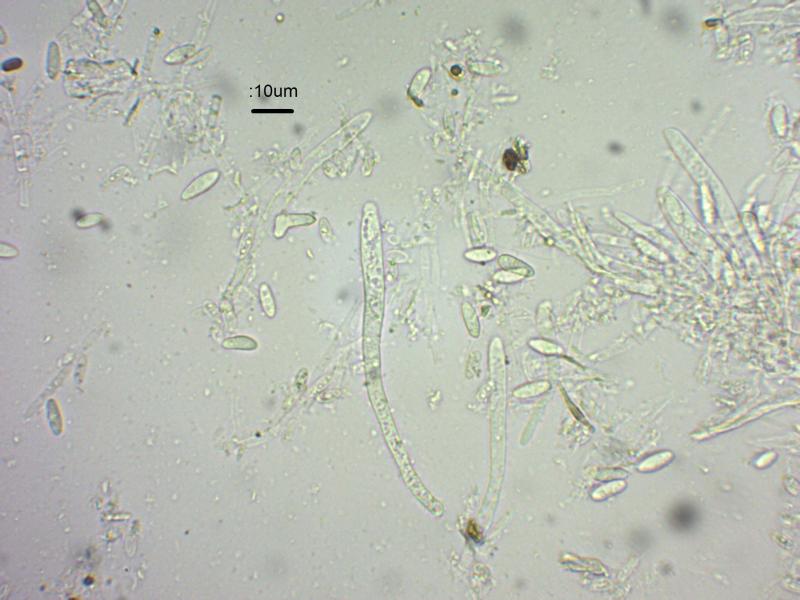
Spores from squash preparation were approx 8-11 x 3-4, with few small droplets.
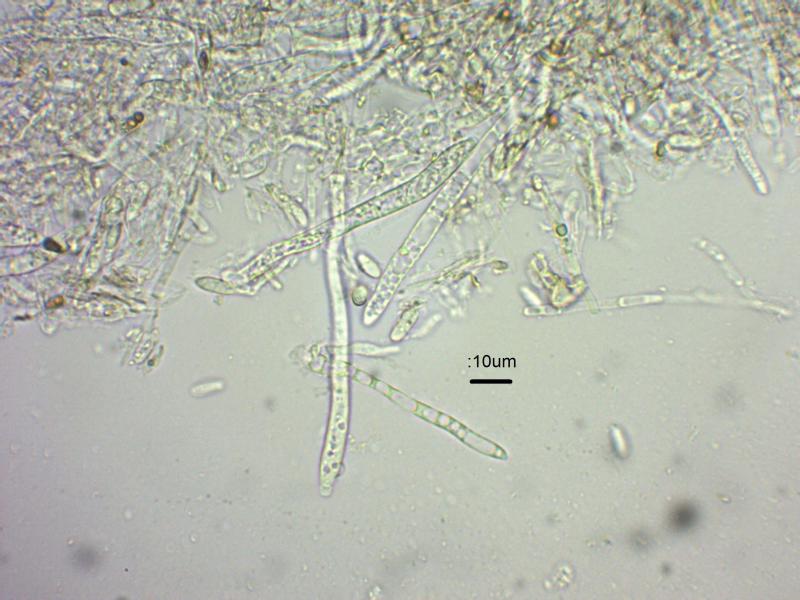
Asci were 75-80 x 5-8, inoperculate, with tips blueing in Lugol.
Paraphyses seemed to be cylindrical, 2 wide, septate.
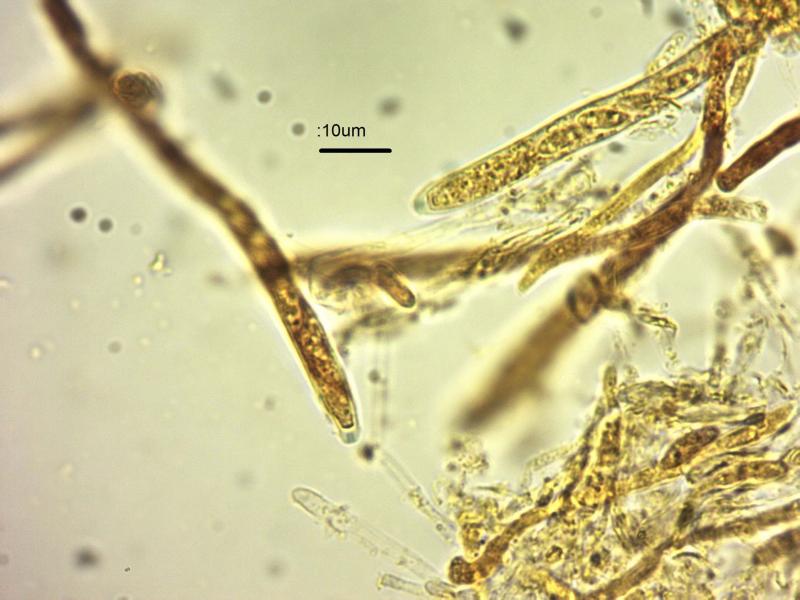
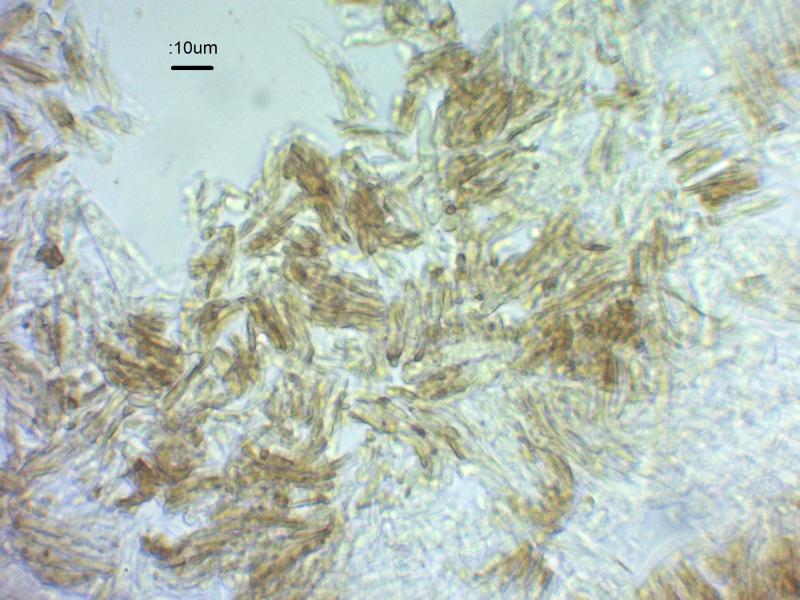
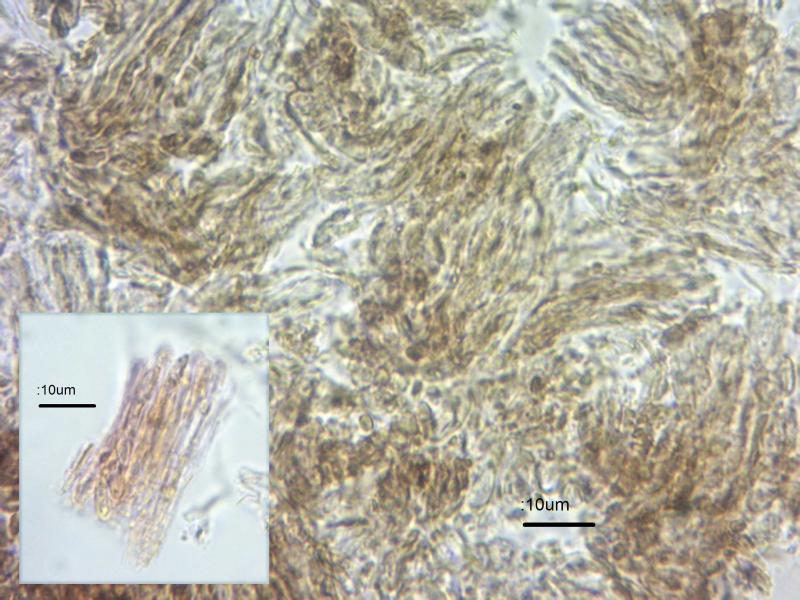
No hairs were seen. Non-hymenial cells were hard to separate, they looked to be roughly columnar, gelatinised and brownish.
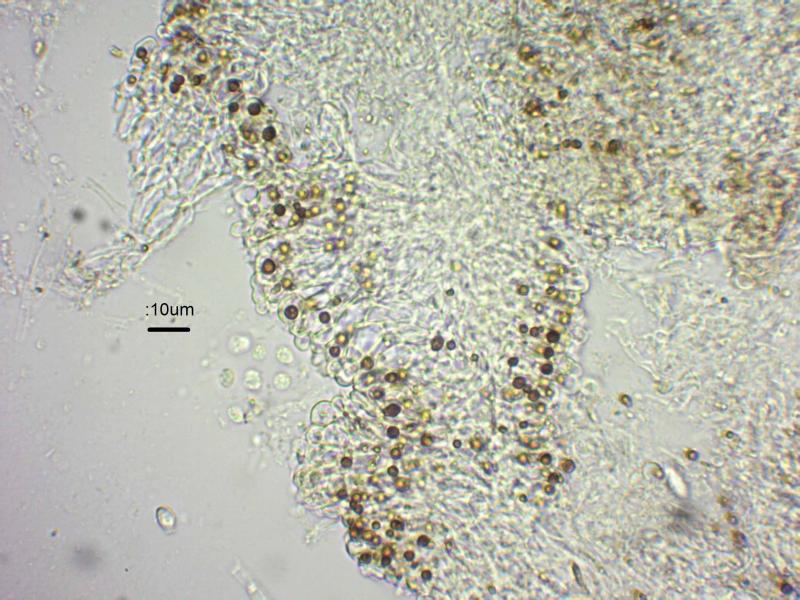
There were some odd-looking brown inclusions in some cells.
Superficially Paraorbiliopsis minuta looks similar, but that has a well-defined disc edge, large droplets in larger spores and forked paraphyses, and is described as being whitish in colour.
Any help would be appreciated,
Cordialement,
Steve
Hans-Otto Baral,
11-07-2016 12:36

Re : Gelatinous yellow disco with Bulbillomyces
These odd bron inclusions ar important. I feel that also the paraphyses contain them, but hyaline, and they turn brown with age. These VBs are in every paraphysis if you avoid squashing. Perhaps you can try a section with a razor blade?
My only idea is Phaeohelotium imberbe (=Hymenos. imberbis). The excipulum should be of angular isodiametric cells.
Zotto
My only idea is Phaeohelotium imberbe (=Hymenos. imberbis). The excipulum should be of angular isodiametric cells.
Zotto
Steve Clements,
11-07-2016 14:55
Re : Gelatinous yellow disco with Bulbillomyces
Hi Zotto,
Many thanks, as usual.
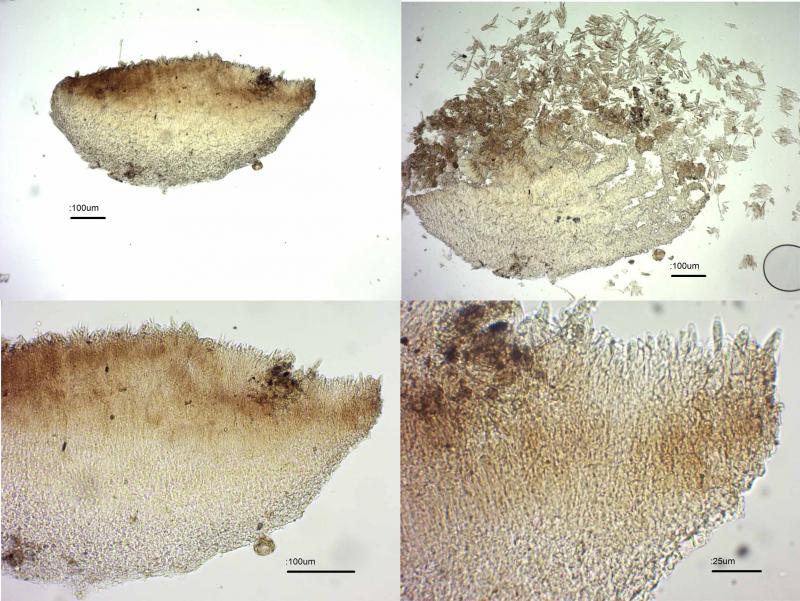
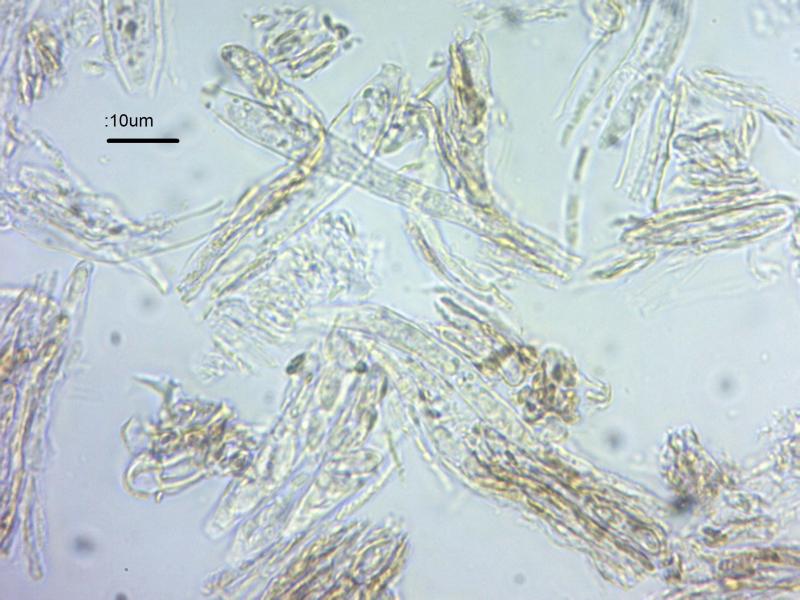
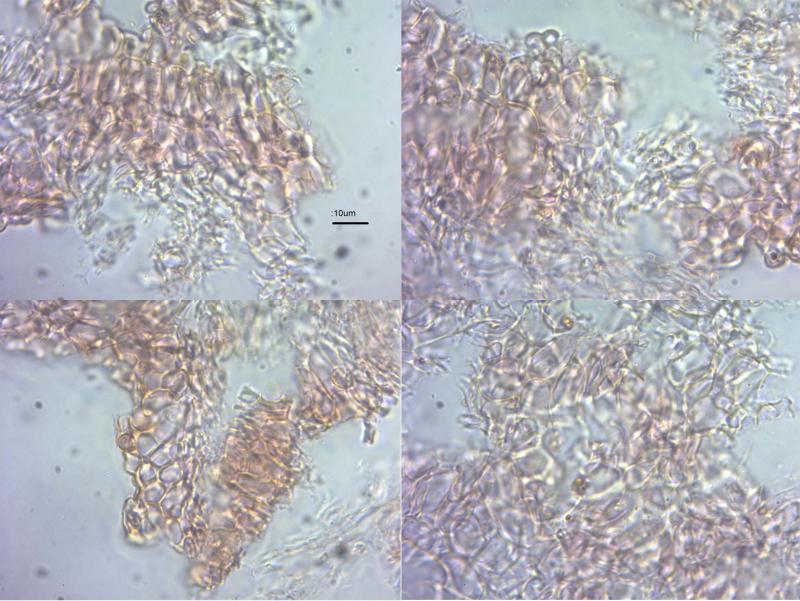
I have managed to get a section from the edge of a disc. It seems to be of 3 layers. Hymenial layer, then a brownish subhymenial layer of rough columnar cells, then an outer layer of angular rounded cells (excipulum, I presume). All the structures were very difficult to separate by squashing as the ascocarp is very gelatinised.
Best regards,
Steve
Many thanks, as usual.
I have managed to get a section from the edge of a disc. It seems to be of 3 layers. Hymenial layer, then a brownish subhymenial layer of rough columnar cells, then an outer layer of angular rounded cells (excipulum, I presume). All the structures were very difficult to separate by squashing as the ascocarp is very gelatinised.
Best regards,
Steve
Hans-Otto Baral,
11-07-2016 15:52
Re : Gelatinous yellow disco with Bulbillomyces
It is bad that all elements are dead on yoiur pics now. The angular cels would be o.k., but their size is not clear to me. If it is really gelatinized then it might actually be something else. Sorry, without vital cells i cannot help.
Zotto
Zotto
Steve Clements,
11-07-2016 18:48
Re : Gelatinous yellow disco with Bulbillomyces
J shall keep my ascos growing in an incubator in future!
Cheers,
Steve
Cheers,
Steve