21-03-2026 15:13
Lepista ZacariasHello everyone, Does any one know of any literatu
20-10-2017 09:23
Garcia SusanaEste otro crecía en el mismo trocito de madera qu
20-03-2026 16:16
 Edvin Johannesen
These 0.5 mm diam. acervuli were breaking through
19-03-2026 19:34
 Filip Fuljer
Hello everyone,a few days ago I collected this str
19-03-2026 18:25
 William Slosse
Good evening everyone, On 18/03/26 I found a few
17-03-2026 10:09
 François Freléchoux
Bonjour, Voici la description rapide d'un petit d
19-03-2026 17:50
 Enrique Rubio
Hi to everybodyThese thiny, blackish pseudothecia
Cryptodiscus sp.
Elisabeth Stöckli,
21-05-2016 09:45
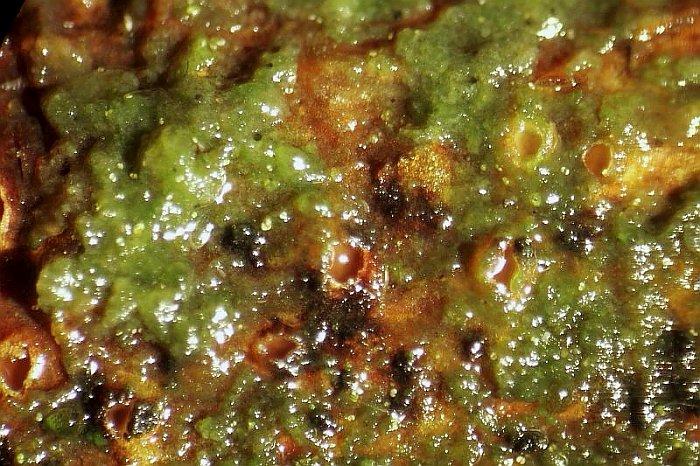
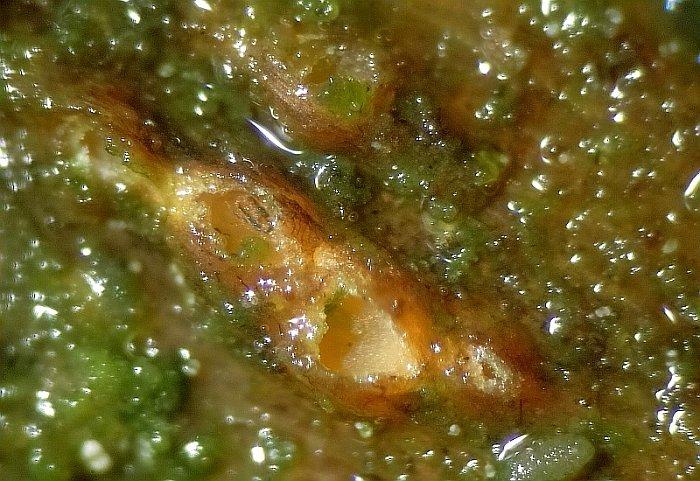
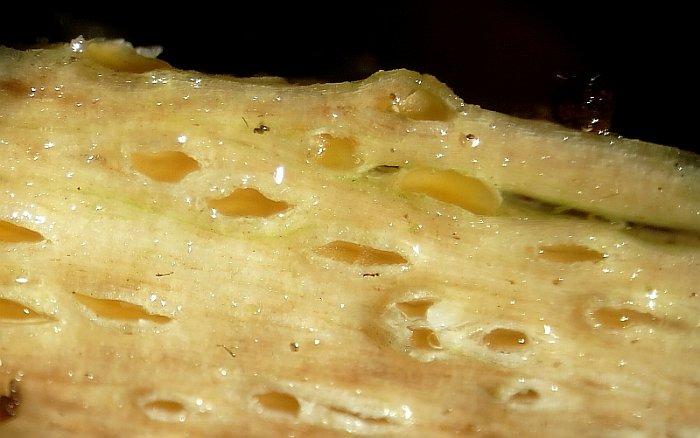
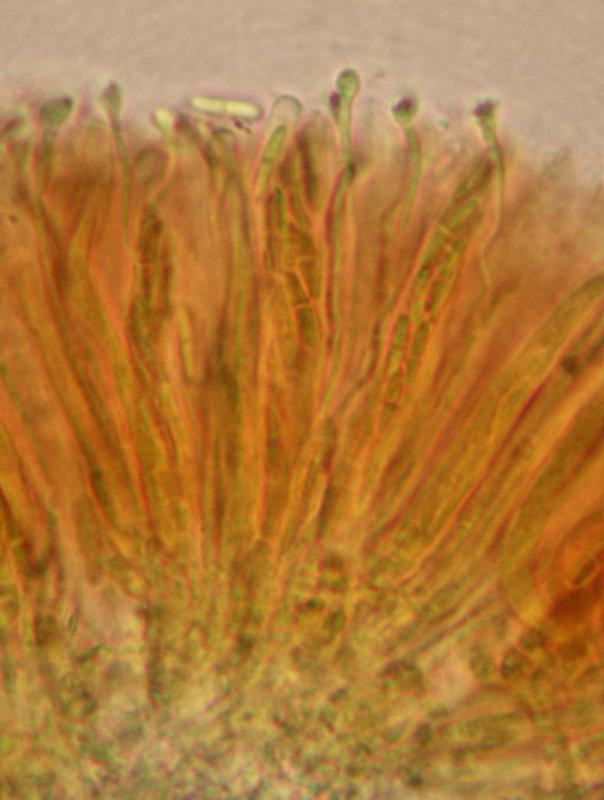
Trouvé au sol sur branches cortiquées de Pinus sylvestris, apothécies 0.3-0.7mm, immergée dans le bois, hyménium rose à brun rougeâtre, asques 48-55x7-8µm, IKI-, octosporés, spores lisses, hyalines, 9-11x1.8-2.3µm, 1 cloison, paraphyses filiformes, septées et renflées au sommet.
Merci pour votre aide.
Elisabeth
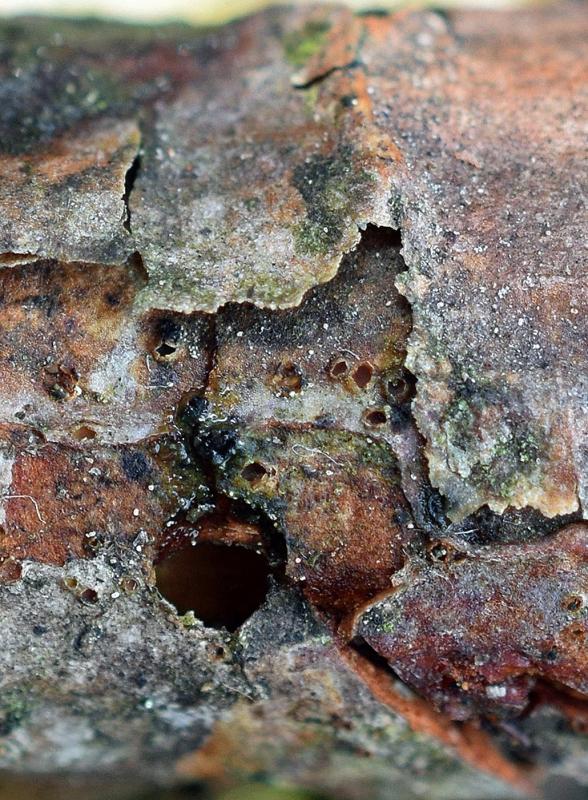
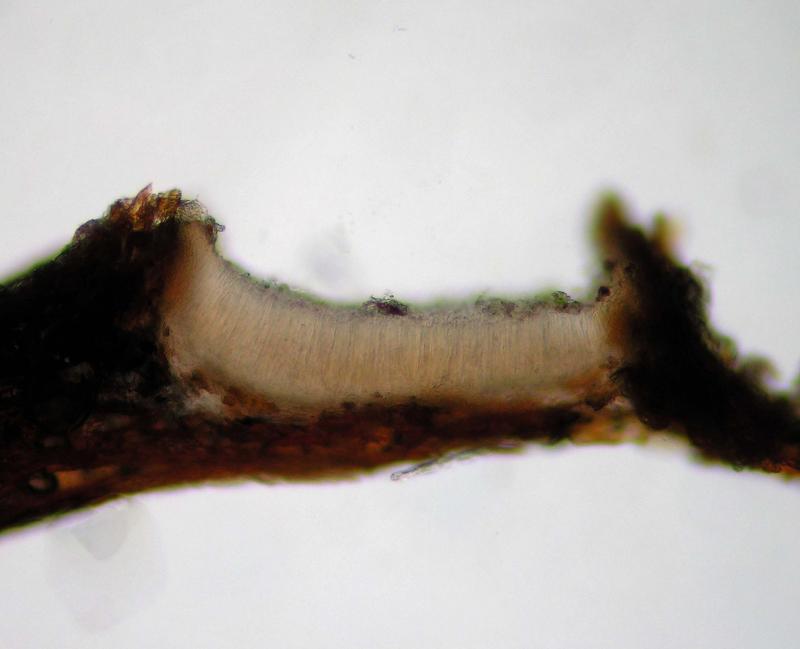
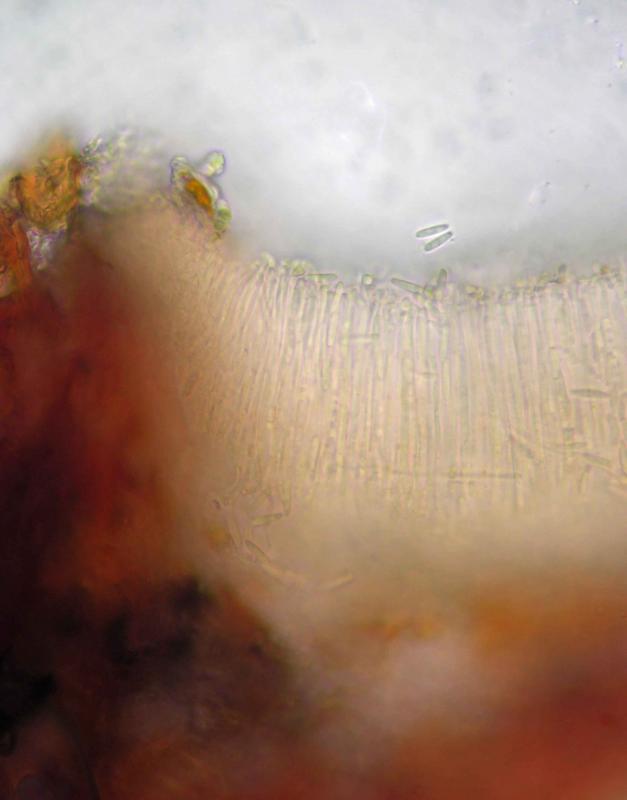
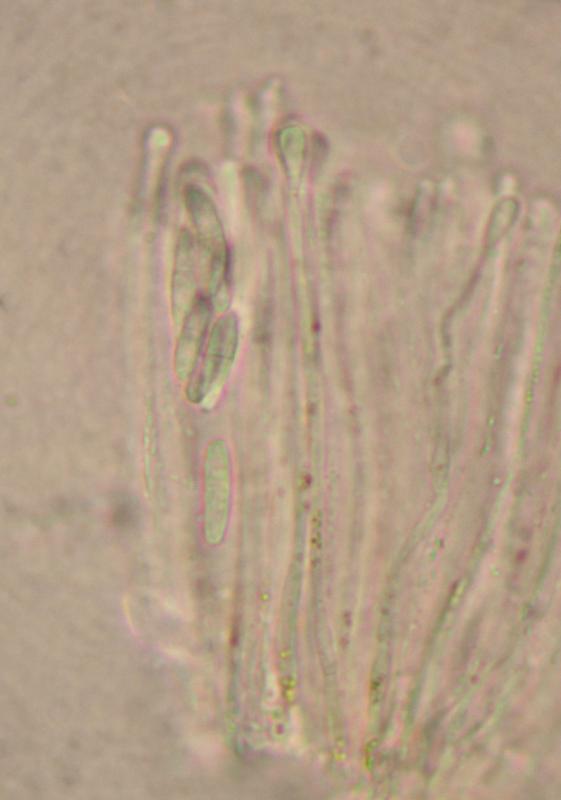
Gernot Friebes,
21-05-2016 13:48
Re : Cryptodiscus sp.
Hi Elisabeth,
the one-septate ascospores point towards C. foveolaris or C. pini, see here for more information: http://www.fungaldiversity.org/fdp/sfdp/FD38-3.pdf
Best wishes,
Gernot
the one-septate ascospores point towards C. foveolaris or C. pini, see here for more information: http://www.fungaldiversity.org/fdp/sfdp/FD38-3.pdf
Best wishes,
Gernot
Hans-Otto Baral,
21-05-2016 21:08

Re : Cryptodiscus sp.
I have identified C. foveolaris about 50x, always on angiosperm branches. So I think this is C. pini, also based on the brownish colour.
Gernot Friebes,
21-05-2016 21:20
Re : Cryptodiscus sp.
Baloch et al. mention a wide variety of hosts for C. foveolaris, including Pinus sylvestris:
"Substrate: on decorticated wood of deciduous trees (Betula sp., Corylus avellana, Populus tremula, Quercus sp., Salix caprea) and conifers (Picea abies, Pinus sylvestris)."
I also have two collections on Pinus sylvestris which I identified as C. foveolaris in my fungarium.
Cryptodiscus pini should have apothecia with dark brown margins which I can't really see on the photo. Maybe it's necessary to remove the bark to uncover them.
Best wishes,
Gernot
"Substrate: on decorticated wood of deciduous trees (Betula sp., Corylus avellana, Populus tremula, Quercus sp., Salix caprea) and conifers (Picea abies, Pinus sylvestris)."
I also have two collections on Pinus sylvestris which I identified as C. foveolaris in my fungarium.
Cryptodiscus pini should have apothecia with dark brown margins which I can't really see on the photo. Maybe it's necessary to remove the bark to uncover them.
Best wishes,
Gernot
Hans-Otto Baral,
21-05-2016 21:30
Re : Cryptodiscus sp.
O.k., Elisabeth Baloch's report on conifers I did not remember. C. pini is actually darker, with blackish margin, but my many phtos of C. foveolaris hae all a white margin. Elisabeth's samples has a light fox-brown margin. Also her spores are partly narrower than 2 µm and partly curved, both typical of pini. So what to conclude? Intermediate taxon?
Gernot Friebes,
21-05-2016 21:49
Re : Cryptodiscus sp.
Yeah, I'm not sure either based on the information we have. Seems like a difficult case!
Best wishes,
Gernot
Best wishes,
Gernot
Elisabeth Stöckli,
23-05-2016 10:41
Re : Cryptodiscus sp.
Hello Gernot und Zotto
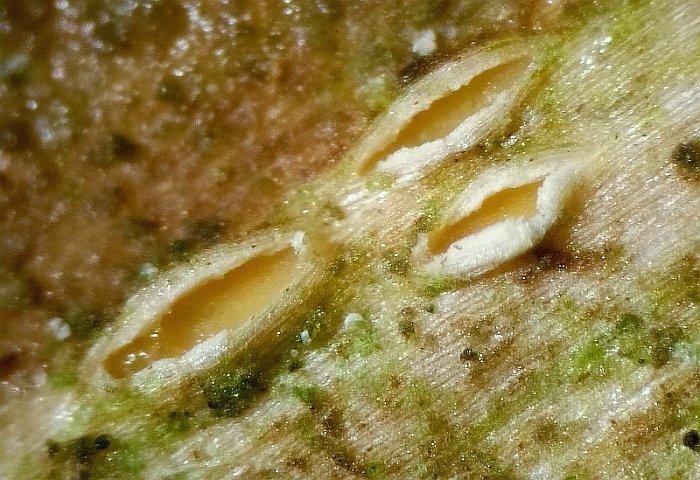
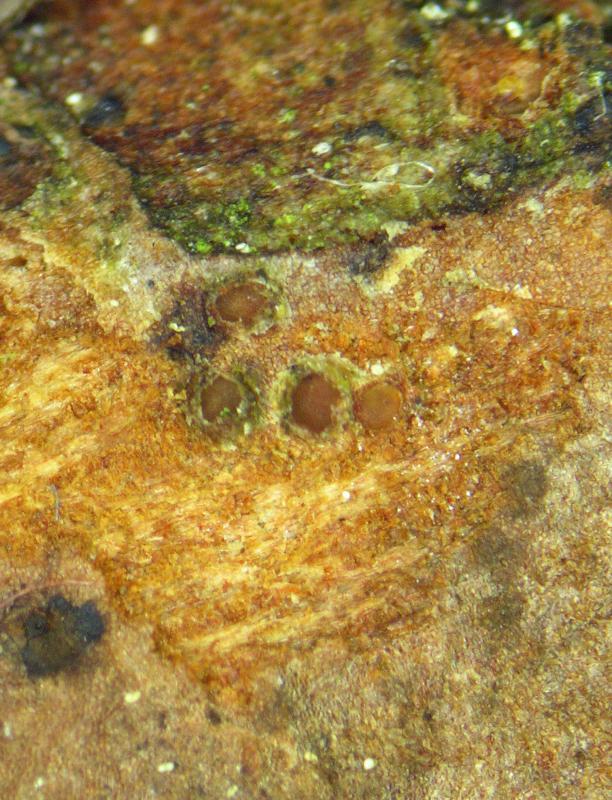
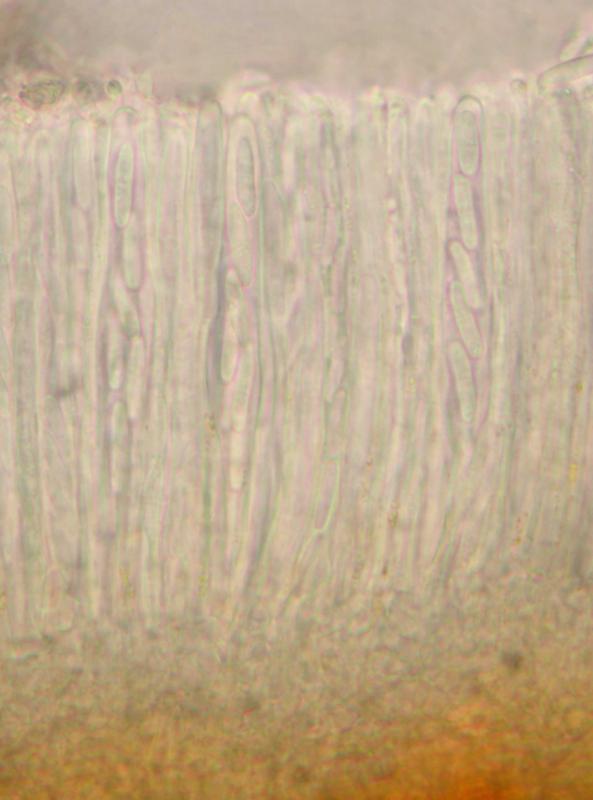
Vielen Dank für eure Rückmeldungen. Anbei ein Foto ohne Rinde und dem Fruchtkörper rechts mit abgeschnittenem Rand. Zusammen mit der Mikroskopie denke ich es ist C. foveolaris.
Elisabeth
Vielen Dank für eure Rückmeldungen. Anbei ein Foto ohne Rinde und dem Fruchtkörper rechts mit abgeschnittenem Rand. Zusammen mit der Mikroskopie denke ich es ist C. foveolaris.
Elisabeth
Hans-Otto Baral,
23-05-2016 10:57
Re : Cryptodiscus sp.
Also ich kenne C. foveolaris zwar so nicht, oft war der irgendwie in eine Richtung verlängert, aber kommt auch rundlich vor. Die Hymeniumsfarbe, die von Carotinoid-Tröpfchen herrührt, würde aber in der Tat passen.
Peter Püwert,
23-05-2016 21:19

Re : Cryptodiscus sp.
Hallo in die Runde,
die Wirtsliste hier in der Region ist schon beachtlich: Acer, Cornus, Crataegus, Fagus, Fraxinus, Malus, Pinus, Prunus, Rosa, Salix, Taxus, Tilia, Syringa. In den letzten Jahren haben wir uns weniger um diese Art gekümmert, da käme bestimmt noch mehr zusammen.
Rundliche Apothezien hatten wir nicht so oft, überwiegend die von Zotto schon genannten langgezogenen.
Herzliche Grüße
Peter Püwert.
die Wirtsliste hier in der Region ist schon beachtlich: Acer, Cornus, Crataegus, Fagus, Fraxinus, Malus, Pinus, Prunus, Rosa, Salix, Taxus, Tilia, Syringa. In den letzten Jahren haben wir uns weniger um diese Art gekümmert, da käme bestimmt noch mehr zusammen.
Rundliche Apothezien hatten wir nicht so oft, überwiegend die von Zotto schon genannten langgezogenen.
Herzliche Grüße
Peter Püwert.