
03-05-2026 10:57
 Castillo Joseba
Me mandan el material seco de Galicia (España) re
02-05-2026 12:42
Alain BRISSARDBonjour à tousJeuidi 30 avril dernier on m'a remi
02-05-2026 13:06
Pauline. PennaBonjour Please can someone help me with this id
01-05-2026 22:45
 Thierry Blondelle
Bonjour à tous, Une récolte sur bouse séchée d
28-04-2026 20:07
 Lothar Krieglsteiner
... on twig in the air at standing Ceratonia siliq
14-04-2026 05:32
Ethan CrensonHi all, A few weeks back a friend pointed out som
28-04-2026 20:33
Vitus SchäfftleinHello, I found Trochila ilicina on Ilex aquifoliu
30-04-2026 10:28
Rot BojanHello, by appearance I would say that I am dealing
Diatrype sp. (D. polycocca?)
Gernot Friebes,
17-04-2016 13:38
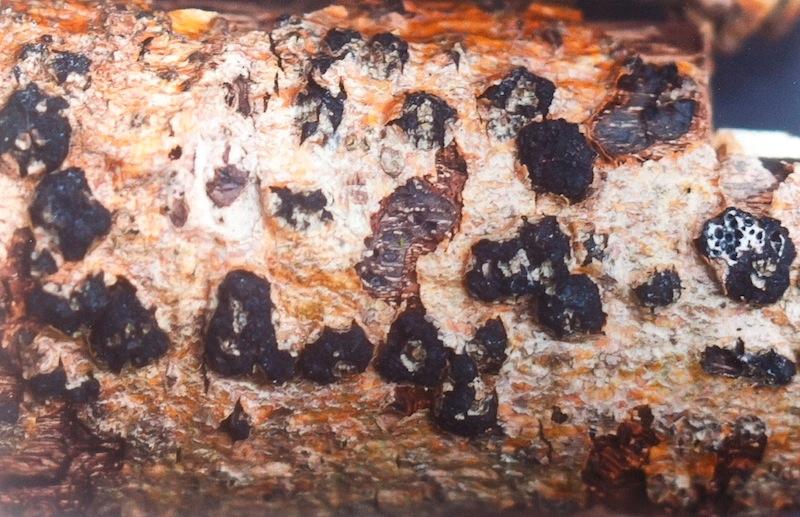
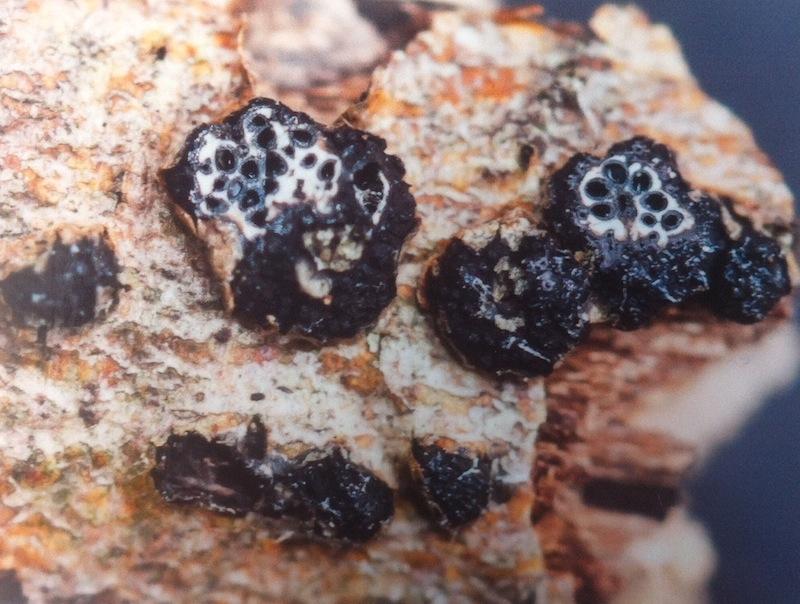
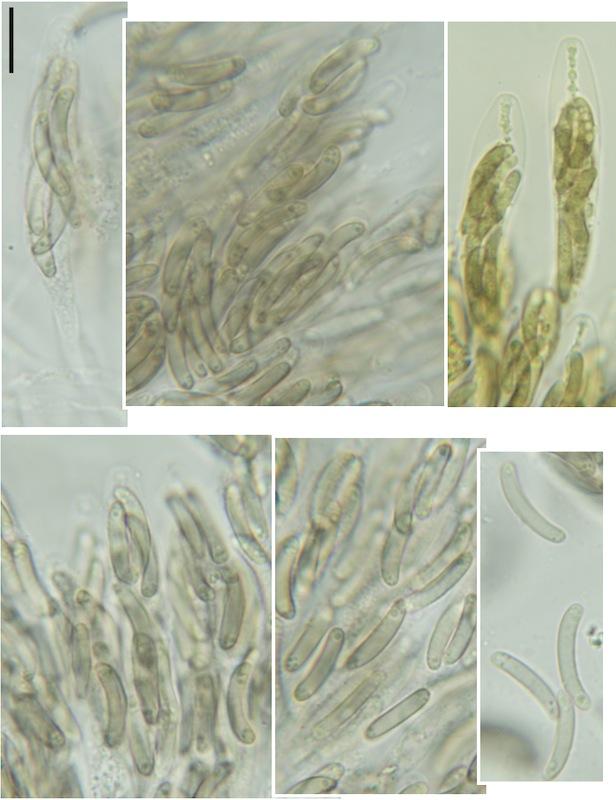
this Diatrype was found by a friend and I promised to have a look at it even though the host is unfortunately unknown. However, the ascospores are interesting – there shouldn't be many species with ascospores that big (about 12–14(16) x 2.2–2.5(3) µm). In combination with the asci that appear to be Melzer-, using the key by Rappaz, I arrive at D. polycocca. If anyone has experience with this species or another suggestion I would be happy to hear your opinion!
Best wishes,
Gernot
(macrophotos are not mine)
Jacques Fournier,
17-04-2016 14:40

Re : Diatrype sp. (D. polycocca?)
Hi Gernot,
I never encountered this species but I agree with you it is very likely D. polycocca as described by Rappaz, even the geographical location fits well. I suggest you check the diameter of ostiolar necks, which is often a reliable character, much more than their height. A pity the host was not recorded.
Nice find!
Jacques
I never encountered this species but I agree with you it is very likely D. polycocca as described by Rappaz, even the geographical location fits well. I suggest you check the diameter of ostiolar necks, which is often a reliable character, much more than their height. A pity the host was not recorded.
Nice find!
Jacques
Gernot Friebes,
17-04-2016 17:40
Re : Diatrype sp. (D. polycocca?)
Many thanks, Jacques! I will do as you suggest and check the ostiolar necks.
Best wishes,
Gernot
Best wishes,
Gernot