

05-05-2026 22:40
Gernot FriebesHi,I believe this is a Plagiostoma growing on a Sa
06-05-2026 11:25
 Castillo Joseba
Me mandan el material seco de Galicia (España) re
06-05-2026 17:23
Thomas Læssøehttps://svampe.databasen.org/observations/10594257
28-04-2026 20:07
 Lothar Krieglsteiner
... on twig in the air at standing Ceratonia siliq
04-05-2026 18:13
 Stephen Martin Mifsud
ID request for what seems to be a true aquatic fun
04-05-2026 16:39
Stephen Martin Mifsud
ID request: This specimen was collected in Malta o
28-07-2011 18:31
 Alex Akulov
Dear FriendsToday I made the pdf file of Velenovsk
04-05-2026 09:50
Castillo Joseba
Me mandan el material seco de Galicia,(España) re
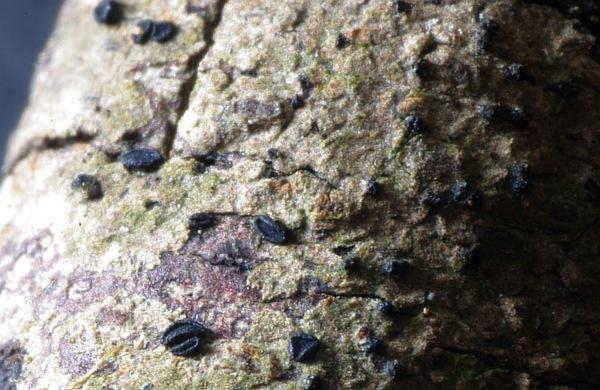
Durella connivens ?
Carmel Sammut,
13-01-2016 21:53
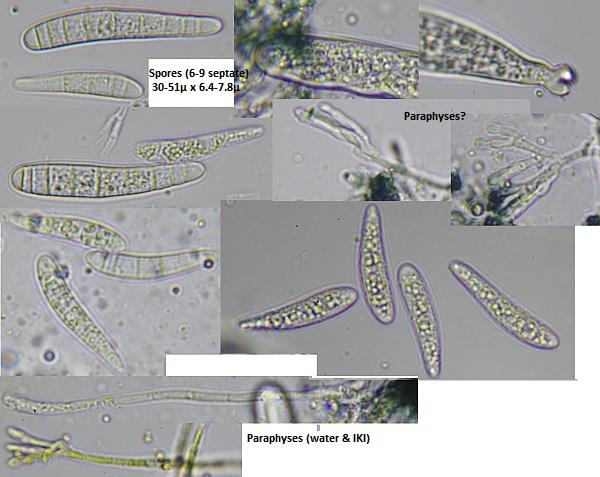
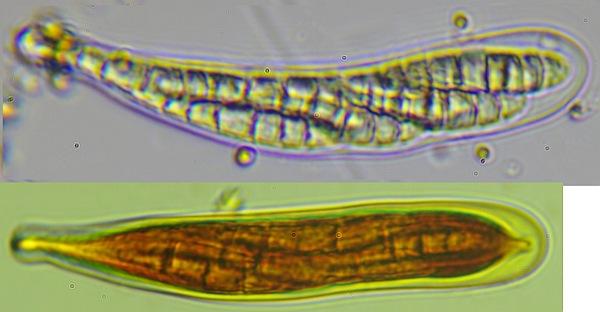
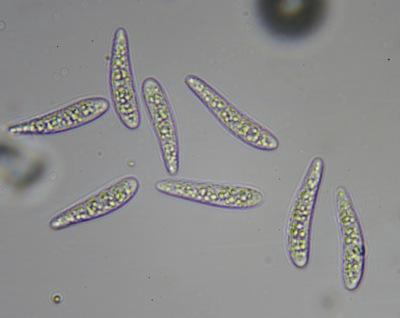
Spores 6-9 septate, 30-50µm x 6.4-7.8µm
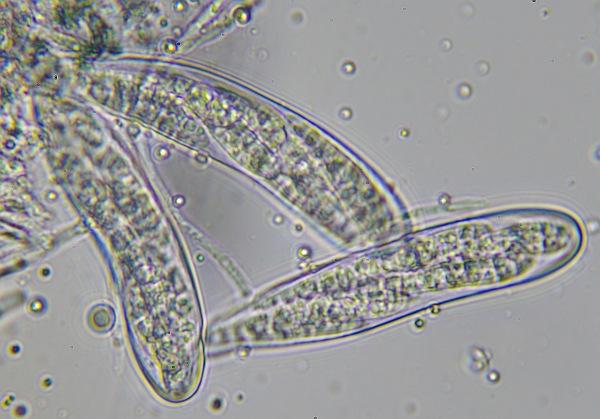
Asci 8 spored IKI -ve,
Paraphyses branched with a few simple ones
It looks like a Durella species and D. connivens seems to fit well
Hans-Otto Baral,
13-01-2016 21:59

Re : Durella connivens ?
... but it isn't :-)
It is Patellaria atrata. (or "crassispora" because the exudate looks more bluish than olive)
Zotto
It is Patellaria atrata. (or "crassispora" because the exudate looks more bluish than olive)
Zotto
Carmel Sammut,
13-01-2016 22:29
Re : Durella connivens ?
Thanks Zotto.
I did consider Patellaria atrata, but the mature spores did not have the large oil drops which seem to be typical to that species.
Re. 'crassispora' I am not aware of a species with that epithet in Patellaria.
I did consider Patellaria atrata, but the mature spores did not have the large oil drops which seem to be typical to that species.
Re. 'crassispora' I am not aware of a species with that epithet in Patellaria.
Hans-Otto Baral,
14-01-2016 09:34
Re : Durella connivens ?
Exactly, the multiguttulate spore content is typical of P. crassispora ined. But that species has wider spores than you indicate, about 8-10 µm.
Carmel Sammut,
14-01-2016 12:03
Re : Durella connivens ?
Thanks Zotto for the clarification.